
Categories
Industry Trends

Chefs As Trusted Messengers: How chefs feed community trust and how you can, too

A chefโ€™s recommendation is more than a selling point. Itโ€™s an opportunity to rebuild trust and drive change. 

From chefs’ specials to viral recipes, what a chef recommends means more now than ever. Whether itโ€™s a new ingredient or an issue they advocate for, people care whatโ€™s cooking.ย 

Why? Every restaurant visit is a small exercise in trust. If a chef suggests a dish, a customer orders it not because theyโ€™ve studied its origins, ingredients, or technique. They try it because they trust the chef.

That trust is powerful. It can help to shape what and how people eat. It is fundamental in systems change and development, a binding agent โ€” an essential ingredient of growth, societal well-being, and governance. Trust is also sorely lacking in so many institutions today, and much more difficult to add than a bit of salt.

The food service sector occupies a unique position between producers, policymakers, and consumers, making it a powerful driver for healthier and more sustainable food choices. Restaurants are increasingly serving as educational spaces and cultural conduits. In the halls of the United Nations, school canteens, community kitchens and boardrooms, chefs are showing up to deliver important recommendations.

Chefs have been recognized as agents of change for decades. But today they have a bigger platform than ever to drive change, as trusted messengers in their communities and in the global movement towards good food for all. In this article, we explore how building trust, insights from behavioral science, and global initiatives are providing chefs everywhere with opportunities to make an impact.

Trusted Messengers: Chefs deliver more than food & flavor
WHAT IS A TRUSTED MESSENGER?

Weโ€™re borrowing the term from public health. Trusted messengers are who people turn to for reliable, unbiased information. They can take many forms, from individuals to organizations. Be it a local health clinic, hairdresser, preacher or chef, who communities consider to be trusted messengers varies based on shared experience, identity, values, and built relationships. They earn this confidence by participating in and understanding culture. Their position and perceived credibility means they can deliver messages that make sense to their community, messages that are more likely to have influence. 

Beyond being respected sources of information, trusted messengers are also conduits, helping to deliver information across their network. They are essential in communicating the needs and concerns of their community to others. They help to center values by sharing them in an authentic way, and by doing so, ensure that our food systems are grounded in lived experience and wellbeing, not just technical solutions.

Who delivers a message matters. They are the bridge between information and action. Whether or not the messenger is trusted makes all the difference.

CHEFS & THE STATE OF TRUST

We donโ€™t really need references to write that trust, broadly, is at a low point. The research might still stun. The 2026 Edelman Trust Barometer finds that 70% of the global surveyโ€™s 33,938 respondents across 28 nations are hesitant or unwilling to trust someone who has different values, information sources, approaches to societal problems, or backgrounds than them. Optimism is at a low, too, with just 32% of people globally believing the next generation will be better off.ย 

While trust in institutions, media, and others wanes, greater transparency is also being demanded, especially when it comes to food. Despite the pessimism, people care about and are actively seeking information on what they eat. The question is: who do people trust enough to listen to?

In the face of a global food crisis, the news isnโ€™t always easy to swallow. But who would shoot the messenger when theyโ€™re bringing you a delicious meal? Perhaps this is one of the many reasons behind why chefs make strong trusted messengers, and why recent research shows that food service professionals are increasingly viewed as trusted voices. 

The new Consumer Observatory Trust Report from EIT Food – The State of Trust in Europe’s Food System tracks how trust has evolved between 2021 and 2025 across five key Food System actors: farmers, retailers, restaurants and caterers, manufacturers, and public authorities. Key findings from the report include:

  • Farmers continue to lead on trust: 68% of Europeans trust them in 2025.
  • Retailers are regaining trust, now at 54%.
  • Restaurants and caterers see the biggest gain, rising from 48% to 53%.
  • Authorities and manufacturers are improving, yet remain among the least trusted actors.
  • Transparency, competence, and care are the key drivers of trust recovery.

The Edelman Trust Barometer survey has also shown gains in food influencers as trusted voices, especially when it comes to leveraging relationships to boost institutional trust. A key finding in Trustโ€™s 2026 report illustrated that trusted voices in food can open doors. People who trust influencers say they would trust or consider trusting a company they currently distrust if it were vouched for by someone they already trust, such as a food or lifestyle influencer (62%, among the 48% who trust an influencer). In a time when consumer confidence is desperately lacking, who or what a chef gets behind can also help to broker trust.

The data show that chefs yield power. As connectors and food culture custodians, they serve as a direct link between diverse food systems actors through their daily interactions with food producers and diners alike. Their expertise and credibility give them a unique platform to educate on topics ranging from nutrition and biodiversity to local sourcing and agroecology. Their reach helps shape food choices across the food web.

Food is deeply connected to emotion, memory, and personal histories. As storytellers, chefs make tangible what usually gets lost in technical jargon or policy dialogue. Through the universal language of food, they translate complex issues into relatable, actionable messages that resonate with decision makers, from heads of household to heads of state.

Rising trust in restaurants, caterers, and food influencers demonstrates the growing influence of chefs as trusted messengers. It also offers an opportunity to inform how we can rebuild trust, centering identity, values, and community engagement. Trust is a prerequisite for meaningful behavior change. By understanding where and why trust is making gains, communities, advocates, and policymakers can better support the movement towards healthier and more sustainable diets.

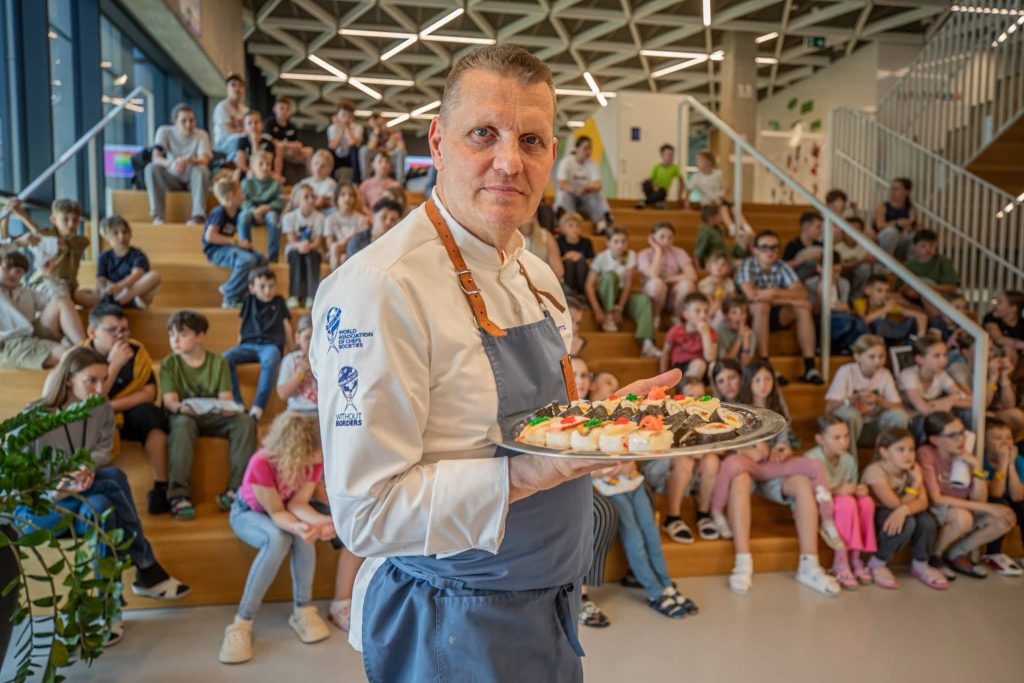
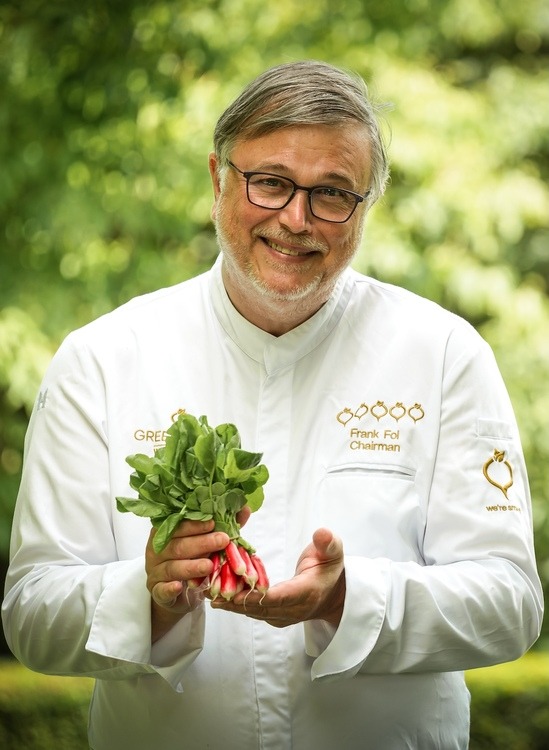
Chef Frank Fol - Founder & Chairman, Weโ€™re Smart World
Worldchefs
 ยฉ Wim Demessemaekers

Today, everyone has to take action to make our planet a better place. Working on sustainability can be done with little action: more plants in your food, less waste, using blue water to cook, grey water to clean, etc. Every small action makes a difference. Letโ€™s do this together.

Chef Frank Fol, Founder & Chairman, Weโ€™re Smart World, FAO 2026
Photo ยฉ Wim Demessemaekers
TRUST & CHANGING WHAT WE EAT: LEVERAGING BEHAVIORAL SCIENCE

We know that cost, convenience, and taste are top considerations when it comes to consumer choices. Yet even in a cost-of-living crisis, 88% of consumers consider trust to be just as important as price and quality. Chefs, as trusted messengers, can inform these choices. People listen to chefs; they act on their recommendations. This is a bigger deal than most might realize.

What we choose to eat has far-reaching impacts on both markets and climate. Consumersโ€™ purchasing decisions account for about 60% of the worldโ€™s GDP and constitute nearly half of food-related greenhouse gas emissions. The food environment impacts how people make these choices, and while it can be forced using strategies like taxes and bans, these measures only go so far. To get to the root, we need to change behavior.

When it comes to shifting consumer food decisions, research shows that positive and engaging experiences do more than fear-based messaging. The emerging field of culinary psychology explores how memory, culture, emotion, and environment shape what and how we eat. Chefs influence behavior through many different methods, including menu architecture, plating, portion perception, and sensory cues, to create satisfying, health-conscious experiences while maintaining peopleโ€™s sense of autonomy. Essentially, they make change fun rather than fearful.

Stelios Kiosses, psychotherapist, Course Director at the University of Oxford, and author of Culinary Psychology: Food Choices and the Mind-Body Connection, is a pioneering voice in the emerging field of culinary psychology. With over three decades of clinical experience, Stelios explores how food is inseparably connected to how we think, feel, and live. In this podcast, he discusses the ways chefs and culinary experiences can influence wellbeing, behavior, and satisfaction.

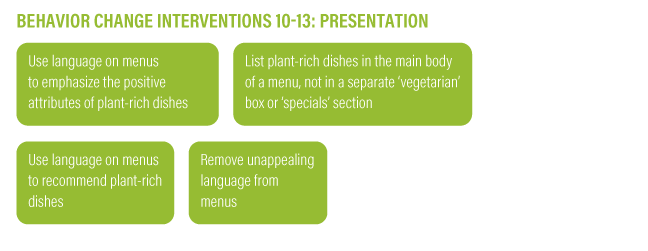
Everyday success stories and the latest research show that co-creating behavioral change interventions with restaurants works. Simple strategies, like using more appealing language to describe a plant-rich dish, are helping to accelerate better consumer choices. For example, Panera Bread swapped the menu item name “Low Fat Vegetarian Black Bean Soup” to “Cuban Black Bean Soup” in trial markets and saw a 13% sales boost. Simple. Ditching โ€œ-ismsโ€ and making plant-rich dishes the default in schools, hospitals, businesses, and workplaces is yielding remarkable results, too. With the help of behavior science, simple changes like these are having a big impact.

WRIโ€™s Better Buying Lab outlines the top 23 โ€˜behavior changeโ€™ strategies drawing on cutting edge academic research into how people choose food, as well as insights from experts in the food service industry about what works and what doesnโ€™t. 

Behavioral change interventions in the food service sector have great potential in the puzzle toward healthier and more sustainable food choices, shifting consumer choices in a positive and engaging way. Chefs, as key voices working at the systems level, have a huge part to play. 

From changing menus to participating in global initiatives, chefs are putting behavior change playbooks into action, leveraging behavioral science and using their expertise to cultivate trust and connection through transparency, competency, and care.

Transparency, Competency, Care: Feeding community trust

The recently released EIT report outlined transparency, competence, and care as the key drivers of trust recovery. When you think about it, those three elements are essential to the way professional kitchens operate. 

To be successful, chefs need to bring transparency, competence, and care into every part of their work, from procurement and menu development to food safety and plating. Opportunities to lean into these priorities and to build trust show up in their daily decisions and interactions with suppliers, colleagues, and diners. 

With a larger platform than ever to effect change, chefs around the globe are channeling their expertise, credibility, and platforms to empower communities and help to redesign a better food system. International initiatives like FoodChoices4Life and the World Food Forumโ€™s Young Chefs Programme are working in collaboration with Worldchefs to grow the movement through education, mentorship, and practical guidance for culinary professionals everywhere. Emergency food relief efforts between World Central Kitchen and World Chefs Without Borders are showing the public that when systems fail, we can trust that chefs will be on the frontlines to feed their communities. And so many local programs are making social impact a key part of their culinary practice.

Through global initiatives and the actions of an increasing number of culinary associations, schools, and industry leaders, the food service sector continues to build skills to feed greater community trust, within the industry and beyond.

โ€œThis initiative is an incredible opportunity to work with young chefs from across the globe as they champion sustainable food systems in their communities, tackling issues such as food waste, nutrition, biodiversity, food heritage, and womenโ€™s empowerment,” says Jordann Norbert, Chief Executive Officer at EcoFood Training and Certification Agency and mentor for the FAO World Food Forum Young Chefs Programme (YCC). Learn more about the YCC here.

Takeaways

Chefs are more than food influencers. They are trusted messengers, policy advocates, and system shapers. Their expertise and storytelling capacity are powerful resources in achieving good food for all. By leveraging their influence, chefs can foster shared experience and community trust, impact behavior change and consumer habits, and reach policy and decision makers. From immigration reform and school meals to supporting small-scale producers and protecting biodiversity, chefs are actively engaged in issues that matter most.

As business owners, market drivers, and community builders, empowering their potential as trusted messengers is essential in recovering trust across the food web and working together towards a healthy, fair, and delicious food future. 

Education is fundamental in this process. Open source resources to educate chefs on sustainable practices and behavioral science are bringing more culinary professionals into the fold. Mentorship and training programs like the Young Chefs Programme are equipping the next generation of industry leaders with the networks and know-how needed to tackle the worldโ€™s biggest challenges. All of this work is recovering trust โ€” and recovering hope.

Systems change requires that we work together, and that requires trust. Chefs are connectors at every point in the food system and invite diverse voices to the table. Their invitation to action helps to drive meaningful engagement across communities, sectors, and demographics, and fights back against insularity.

Where can we build trust and connect to find common ground? The chefโ€™s table is a great place for both. 

Resources

Education is essential to continue to grow the movement and to strengthen every chefโ€™s capacity as a trusted messenger and changemaker.

Worldchefsโ€™ is offering three upcoming webinars as part of the FoodChoices4LIFE initiative:

The Mindful Kitchen. Designed for future-forward culinary professionals, the series explores how chefs can lead the transition toward more sustainable food systems through climate-smart kitchen practices, menu design, and guest engagement.

Across three connected episodes, top global experts will show how to bridge the gap between global food systems, daily kitchen operations, and consumer menu psychology, giving chefs practical tools to cut costs, eliminate waste, and inspire climate-smart dining.

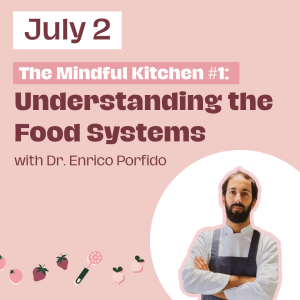
The series begins on July 2, 2026, with The Mindful Kitchen #1: Understanding the Food Systems, featuring Dr. Enrico Porfido from the Universitat de Barcelona. This foundational webinar explores the global farm-to-fork network, the role of food policies, and how chefs can use menus and guest experiences to encourage climate-smart dining.

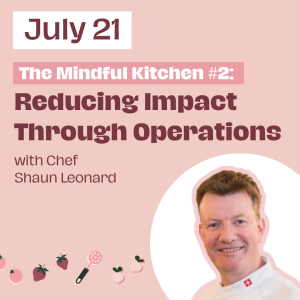
On July 21, 2026, Chef Shaun Leonard of BHMS Swiss Culinary Academy leads The Mindful Kitchen #2: Reducing Impact Through Operations. Focused on zero-waste kitchen strategies, the session will cover full-product utilization, food waste tracking, upcycling techniques, and building a sustainability-driven kitchen culture.

The series concludes on July 28, 2026, with The Mindful Kitchen #3: Facing the Guest, presented by Chef Shonah Chalmers. This session dives into menu psychology, sustainable menu engineering, and subtle guest communication techniques that help drive climate-smart choices in food service environments.

Please note: Signing up for the first webinar will automatically register you for all three.

Learn more about FoodChoices4Life in the latest edition of Worldchefs Magazine: Issue 32.
About FoodChoices4LIFE

FoodChoices4LIFE is a European initiative empowering citizens and food professionals to accelerate climate action and behavioral change in food systems. Building on the legacy of previous EU LIFE projects, this initiative promotes healthier, more sustainable diets through education, awareness campaigns, and practical tools.

About the FoodChoices4LIFE Partners

Worldchefs:
Worldchefs is a non-political professional organisation, dedicated to maintaining and improving the culinary standards of global cuisines.
We accomplish these goals through education, training, and professional development of our membership. As an authority and opinion leader on food, Worldchefs represents a global voice on all issues related to the culinary profession.

EUFIC (Coordinator):
The European Food Information Council (EUFIC) is a consumer-oriented non-profit organisation, founded to make the science behind food and health more accessible and easier to understand among the public.
Our mission is to produce science-based content to empower and facilitate healthier and more sustainable diets and lifestyles among European citizens.

University of Tuscia:
University of Tuscia, founded in Viterbo in 1979, rapidly developed into a well-established cultural reference. With over 10,000 students and 200 faculty members, it is recognized for research in forestry, climate change, and innovation in food systems, including food loss and waste reduction. The Department for Innovation in Biological, Agri-food and Forest Systems is now engaged in the FoodChoices4Life project.


Interested in advocacy?

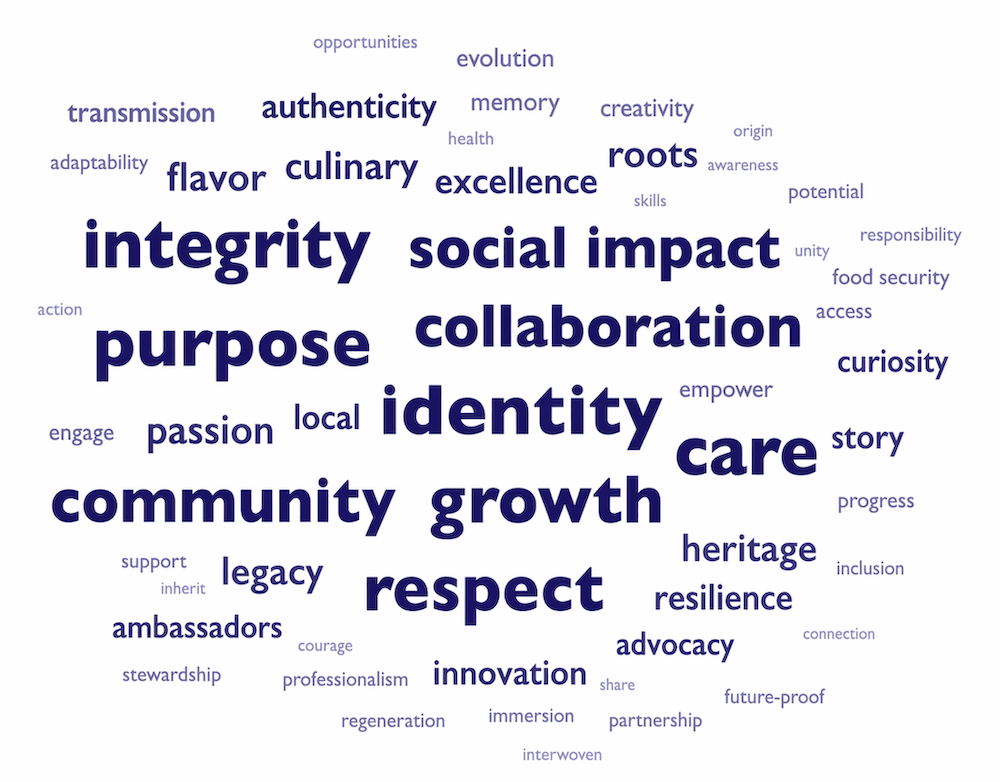
We asked Worldchefs’ national associations, Education Partners, and Executive Committee to share words that reflect the priorities of their members at this moment. Here’s what matters most to chefs. It’s one reason to stay optimistic.

If you are interested in getting involved in global advocacy, or if you have a local project to share, we want to hear from you.

Contact the Worldchefs team to talk more about the many ways you can get involved in advocacy related to a wide range of topics.

This article was authored by Clare Crowe Pettersson.
Categories
Industry Trends

We Need More Women in Senior Leadership: Closing Hospitalityโ€™s Gender Gap

More than half of the hospitality workforce are women, yet they remain hugely underrepresented in leadership roles. To fix the gender equity gap in our industry, we need systemic change.

The hospitality industry runs on talent, creativity, and care, and globally, women provide more than half of it. They make up over 50% of the hospitality and F&B workforce. Yet despite being the majority to help power the industry, women are significantly underrepresented in leadership and decision-making roles. This paradox is at the heart of hospitalityโ€™s gender gap; one that the industry can no longer afford to ignore.

In this article, we explore why gender disparity persists regardless of the critical role women play in the culinary world, and what that means for the industry in practical terms.

Leaving Talent on the Table: Todayโ€™s Hospitality Workforce
LABOR FORCE & LEADERSHIP GAP

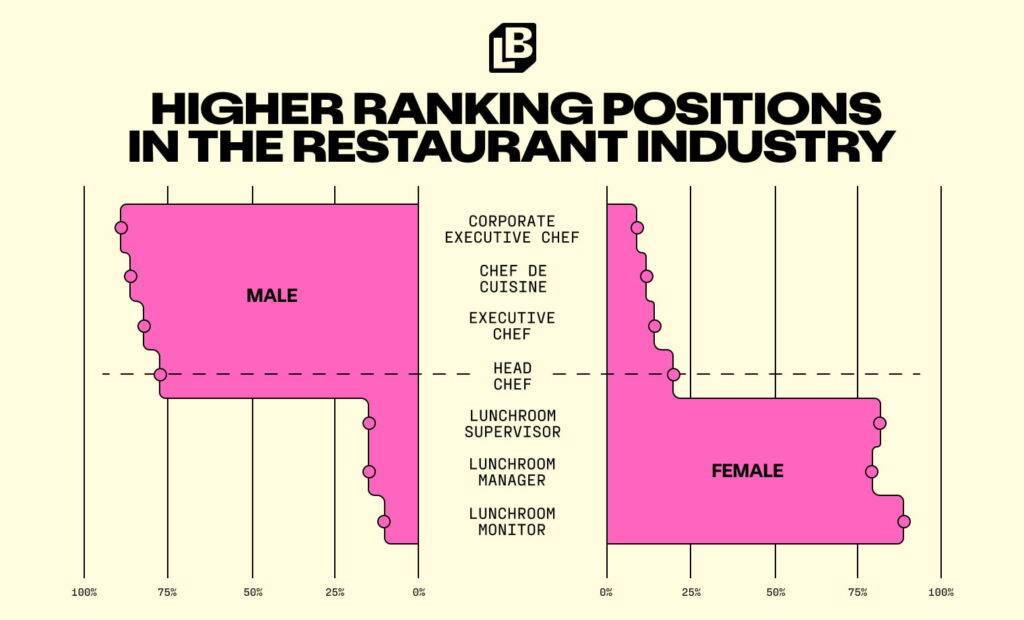
In the hospitality industry, women hold one leadership position for every 10.3 men. Women make up just 33% of management positions in restaurants, and only 19% of chefs and head cooks are women. In the US, 79.3% of chefs identify as male, while 35.6% identify as female. 9.1% of corporate executive chefs are women, while 90.9% are men.

Fewer higher ranking positions in the restaurant industry, such as head chef or executive chef, are held by women, from Zippia 2022 data.
RECOGNITION GAP

Representation in awards and recognition also lags behind. Just 6% of Michelin-starred restaurants are led by women. In 2025, of the 22 new one-starred restaurants in the UK, only one was awarded to a female chef patron โ€“ Chef Emily Roux. The percentage of the Worldโ€™s Best 100 restaurants with a female head chef scratches by at 6.5%. For every female-led Michelin-starred establishment, there are 16 run by men.

Leaving the stars aside, the 2024 State of Gender Equality in the Travel and Hospitality Industry report found that a staggering 63% of female respondents believe they must work harder for recognition and acceptance because of their gender compared to 22% of male respondents who feel the same. A 2022 study from MIT found that female employees are also less likely to be promoted than their male counterparts, despite outperforming them and being less likely to quit. 

GENDER-BASED PAY GAP

The gender-based pay gap is persistent in the hospitality industry, and itโ€™s moving in the wrong direction. A 2023 report found that the gender pay gap in hospitality increased from 4.2% to 5.2% over the previous year. According to Equality in Tourism, women in tourism earn approximately 14.7% less than men. 

In the US, the average annual salary for chefs and head cooks in 2025 was $45k for men versus $35k for women. In Europe, a study published in 2025 found that the gender wage gap in hospitality management ranges from 5.1 % to 23.8%.

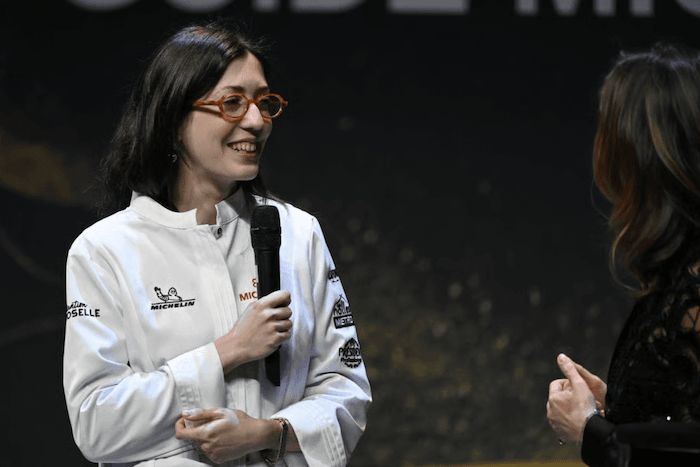
Chef Valentina Giacobbe, winner of the 2025 MICHELIN Young Chef Award for her restaurant Ginko in Lille, France. Photo credit: AFP
Invisible Labor, Not-So-Invisible Problems

In hospitality, some of the most essential leadership work is rarely listed on a job description. Culture building, conflict mediation, keeping a team calm under pressure, and so many more tasks, are the invisible backbone of a thriving kitchen team. Research shows that this invisible labor disproportionately falls on women, who are expected to absorb stress, maintain morale, and smooth interpersonal dynamics while their contributions remain undervalued. When structural systems fall short, women pick up the slack.

The qualities most associated with effective leadership today โ€“ emotional intelligence, adaptability, cross-functional collaboration, and long-term thinking โ€“ are the very qualities that have historically been feminized and dismissed as โ€œsoft skills.โ€ Yet modern leadership science has made clear that these are high-impact competencies linked to stronger team performance, resilience, and innovation. 

Studies show that purpose-driven women leaders consistently rely on empathy, calculated risk-taking, a bias toward action, and achievement orientation across their careers. They excel in both generating ideas and executing them, driven by a deep commitment to purpose and to the people around them. Broader organizational research echoes this: women leaders are more likely to demonstrate participative decision-making, ethical sensitivity, and collaborative leadership styles โ€“ traits that correlate with stronger organizational outcomes. 

Despite this, what problems are still preventing women from rising to the top?

FALSE STEREOTYPES

A study published in the European Journal of Travel Research found that ingrained stereotypes and sexism continue to be a huge issue in the culinary field. False gender stereotypes, like being less resilient to stress, lacking in authority, or emotional sensitivity, negatively impact womenโ€™s career advancement, leaving many on the lower rungs of hospitality roles. What chefs wear can come under scrutiny, too, with something as simple as a sequined chef jacket causing a stir. 

All too often, women in kitchens, even those in change, are overlooked in search of a male authority figure. The McKinsey’s 2024 Women in the Workplace study found that women leaders are 1.5x more likely than male leaders to have their judgment questioned, and are twice as likely to be called “too aggressive” when demonstrating the same assertiveness valued in their male counterparts.

THE โ€œOLD BOYโ€™S CLUBโ€

Studies also show that the โ€œold boyโ€™s clubโ€ continues to pose a problem for women working in the hospitality industry. It excludes women from informal and formal networks, making the glass ceiling further out of reach. With mentorship a key ingredient to a successful career, inclusive networking plays a critical role in helping women advance in the hospitality sector.

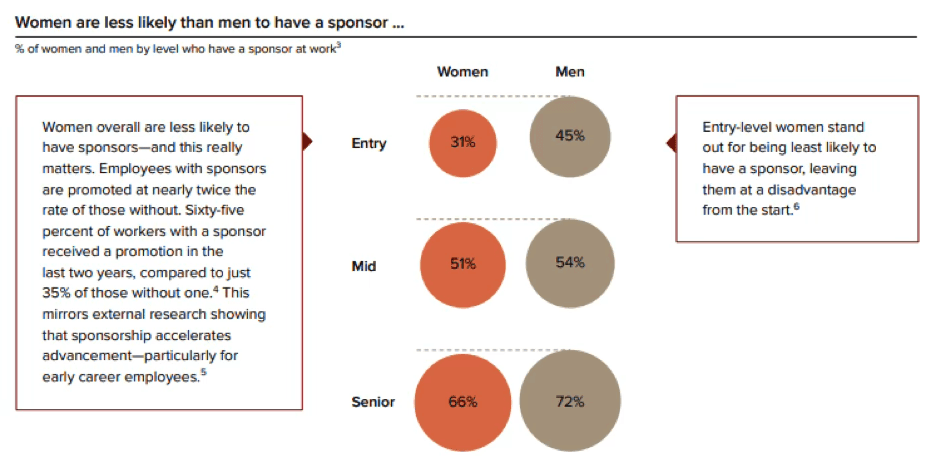
Women are less likely than men to have a sponsor, from Women in the Workplace 2025 annual report.
Deep Dive: A Data-Informed Look at Why Gender Disparity Is Bad Business
Women in Leadership: A Good Decision

Research has found that women in leadership improve decision-making. A 2023 study, conducted by the University of California and Copenhagen Business School and published in the Harvard Business Review, listened to board members from more than 200 publicly traded companies in the US and Europe. 

The results? Women come to meetings better prepared, more willing to ask in-depth questions, more open to different points of view, and concerned with accountability and making the right choice as a group rather than worrying about how they might be perceived. 

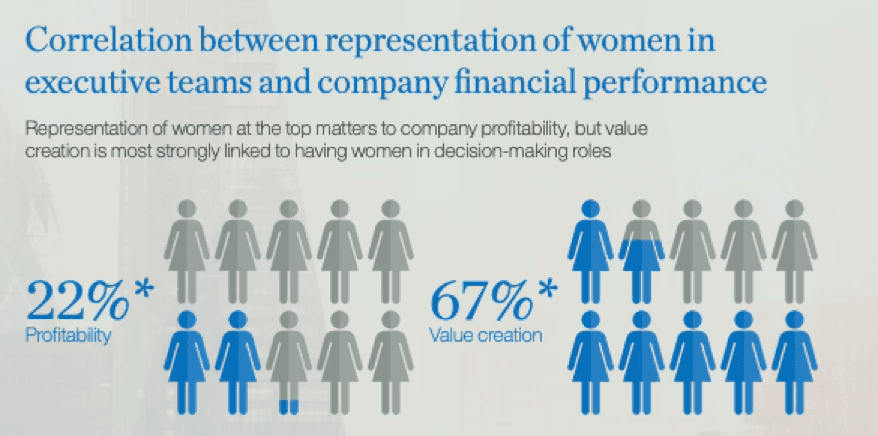
Having more women in decision-making roles matters most for long-term value creation, from McKinsey & Company.
Bias is Expensive

Inclusive environments equals better performance. Research shows that the firms with higher gender diversity in upper management are more likely to achieve better financial and sustainability performance. Inclusive, gender-diverse workplaces drive measurable performance gains and are significantly more likely to outperform less inclusive peers, with higher productivity, increased innovation, stronger employee retention, and nearly 63% greater profitability and productivity.

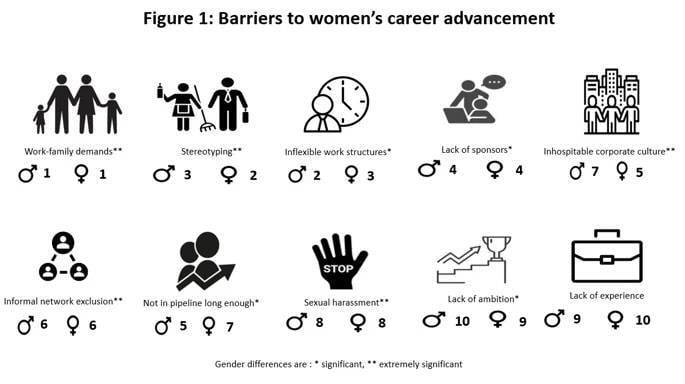
Side Dish: How do men and women see these barriers differently? A recent study offers insights.

A recent study by EHL Insights found substantial differences in the way male and female hospitality managers understand research-backed factors related to womenโ€™s career advancement. While women (and substantial data) report that opportunities have stagnated, men perceive that womenโ€™s opportunities to reach top management levels have greatly improved.

While men still hold much of the decision-making power, how will anything change if they donโ€™t see the not-so-invisible problem? 

Barriers to womenโ€™s career advancement, from EHL Insights.
On the Line: Lessons from Women Who Lead

Letโ€™s hear from female voices on the line. What have they learned from their experience in leadership?

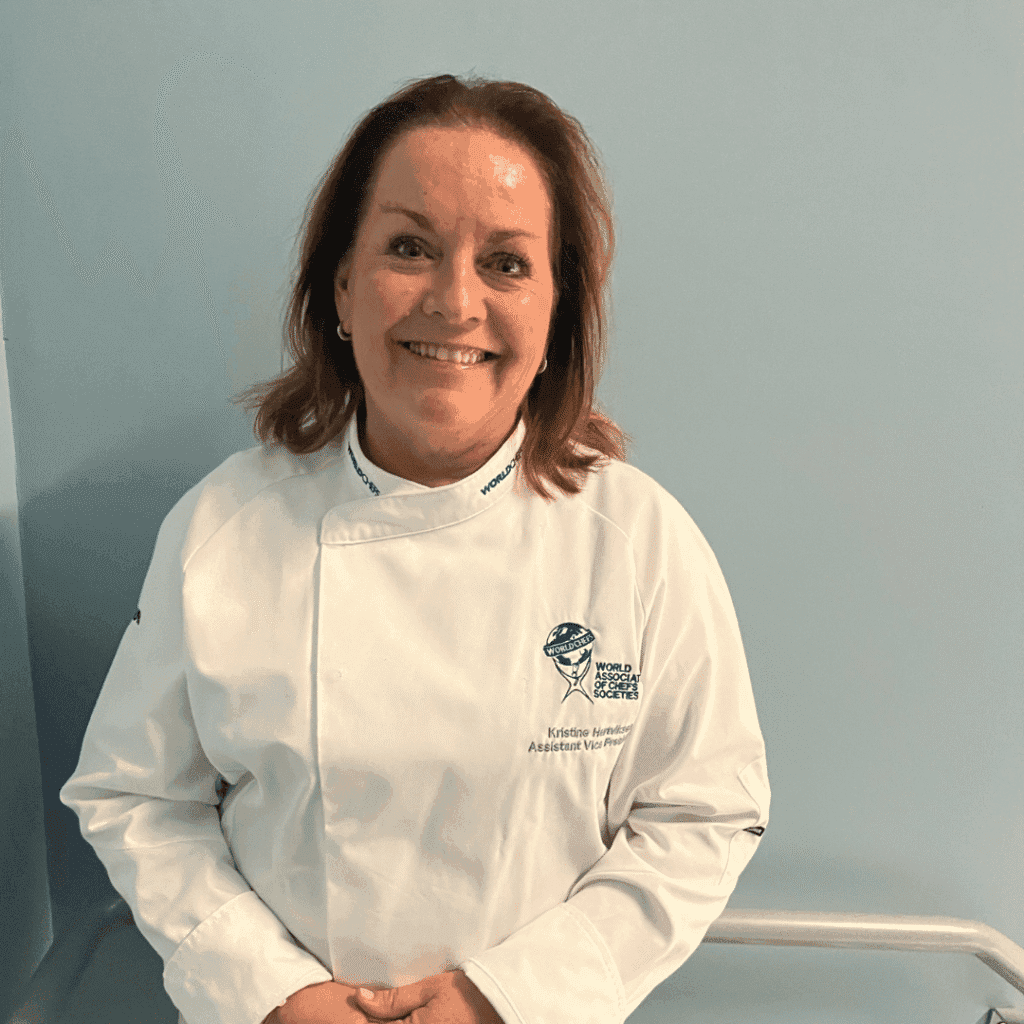
Chef Kristine Hartviksen

Executive Committee Member at Worldchefs and Head of Innovation at NorgesGruppen, Norwayโ€™s largest grocery company

WHAT WE NEED: I was the first woman in the Nordics to be president of their chef association. I have been fighting and I thought at times โ€œOh, I don’t want to do this anymore.โ€ It has been tough. When I started [my career], I must be honest, [Worldchefs] was an old gentlemenโ€™s club. Itโ€™s different now. We still need to have more of a mix on the board, a mix of age, women and men, experiencesโ€“more voices. Everyone is important. Women and men, we think differently, so the mix is important. 

HER ADVICE: It only takes one idiot in the room to try to break you down, so have good mentors, people who you can trust, and then ignore the idiots. You must trust yourself and have a mentor. Call me, Iโ€™m going to help. We are stronger together.

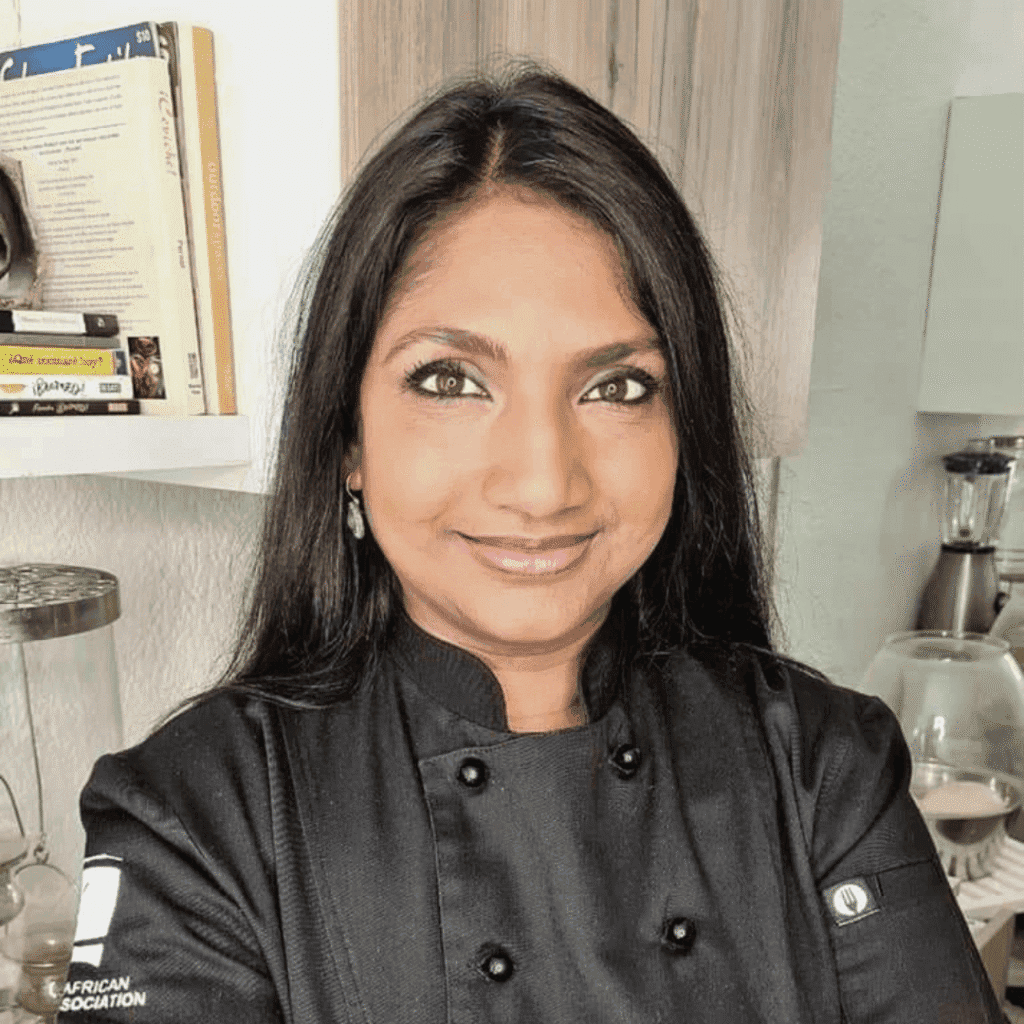
Chef Zana Alvarado

Women in Culinary, South African Chefs Association (SA Chefs)

WHAT WE NEED: We need to speak up. Because if itโ€™s not just your colleague today, it could be your daughter or your wife next month. 

HER ADVICE: We need to focus more on mentorship. That is incredibly vital for career growth. 

Connie Lau

Director of Operations & Projects, Worldchefs (World Association of Chefsโ€™ Societies), France

WHAT WE NEED: We need to stop treating gender equity as a โ€œwomenโ€™s issueโ€ and start treating it as a leadership and governance standard. That means transparent pathways to senior roles, fair recognition of contribution, and leadership cultures that value both results and people. There isnโ€™t one โ€œcorrectโ€ way to manage; it depends on the situation, the culture, and the people in front of you and women should not have to lead like men to be taken seriously. In a global chefsโ€™ association, cross-cultural intelligence matters: respect is built through tone and intent. Most importantly, leadership is never about one person. It is about the team you build and the trust you earn. 
HER ADVICE: Find mentors and sponsors who could actively advocate for you and create opportunities, not just offer guidance. And when you can, do the same for someone else. Donโ€™t wait to be โ€œreadyโ€; take the seat, do the work, and build credibility through consistency. Be firm when the situation requires it, but donโ€™t confuse toughness with effectiveness. Stay curious, learn, and adapt to todayโ€™s realities and never forget that real leadership is measured by the people you develop and bring along with you.

WHAT WE NEED: The biggest challenge is breaking down the ‘old boys’ club’ mentality in the industry. 

HER ADVICE: The mentorship experience [is] transformative.

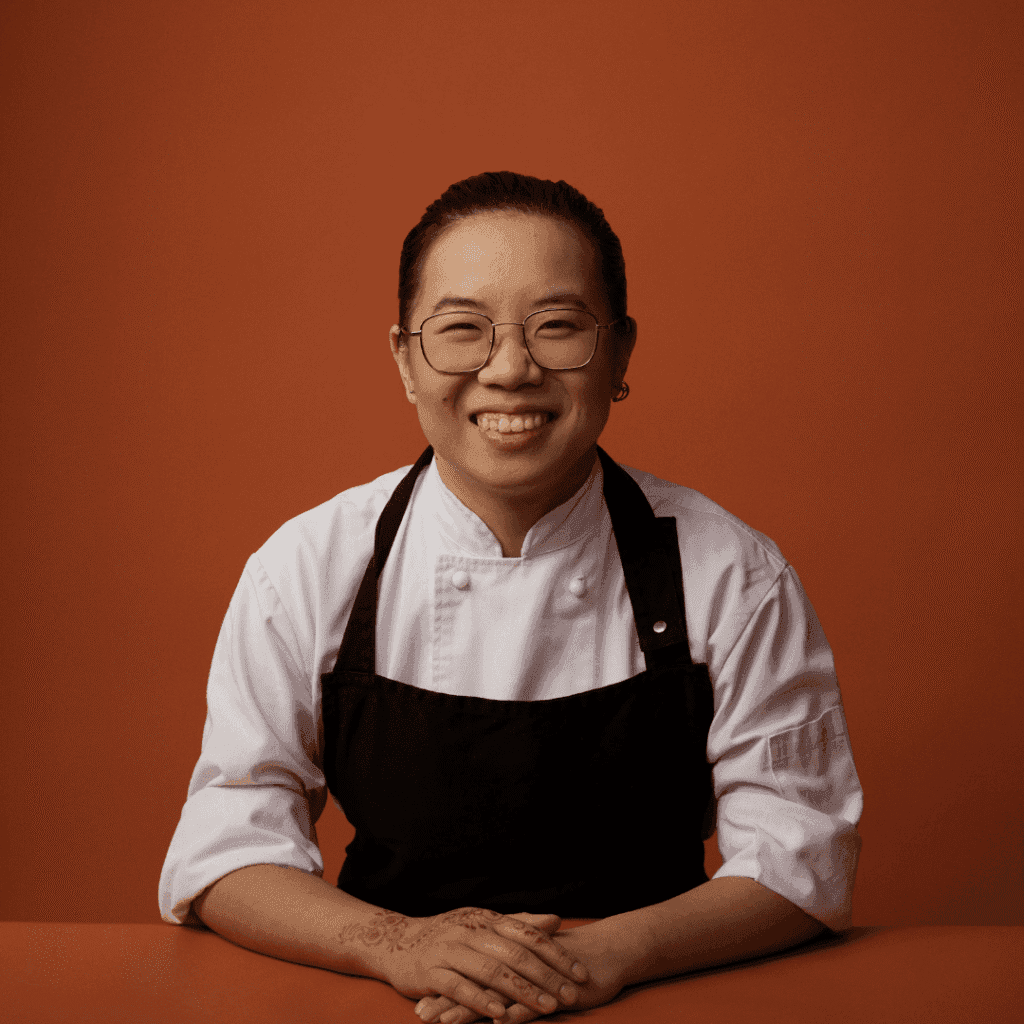
Chef Kimberly Tang

Young Chefs Club Australia Co-Chair & World Chefs Without Borders Committee Member

WHAT WE NEED: The workplace is really responsible for creating that positive culture. Getting rid of harassment in workplaces. It’s about creating stronger mentorship with senior chefs and junior chefs and getting rid of that divide.

HER ADVICE: I definitely have to thank all the mentors I’ve had previously to make up the chef I am today and the person I am today. The mentors that have guided me through these competitions made me want to also mentor future generations. 

Young Chef Constantina Papaioannou

2026 Global Young Chefs Challenge Competitor, National Culinary Team of Cyprus

She will compete at the Finals during the 2026 Worldchefs Congress & Expo in Wales this May.

WHAT WE NEED: The industry is in need of many other female chefs and leaders. Growing up I was very lucky to have various female mentors around me such as my grandmother who inspired me to keep going and follow my dream. 

HER ADVICE: My advice to other female chefs is to always believe in yourself and keep trying to achieve your goals. 

Breaking the Demi-Glace Ceiling: Systemic Change or Bust

Dig into the history of the culinary profession and youโ€™ll find itโ€™s riddled with the same story. We know the Auguste Escoffiers, and the Rosa Lewises and Marthe Distels of the world are forgotten. Search for related articles and you will come up with thousands, hundreds of thousands, of related writing. 

The pandemic undid years of progress towards gender parity in leadership. While brands including Marriott, Hilton and Accor have pledged to increase female representation in leadership roles, according to the 2025 Women in the Workplace study, only half of companies are prioritizing womenโ€™s career advancement, part of a multi-year trend in declining commitment to gender diversity. 

Despite the challenges faced, women arenโ€™t going to stop at the demi-glace ceiling. Theyโ€™re taking their chefsโ€™ knives to it, from smashing stereotypes in corporate kitchens to owning their own businesses. In the US, one-half of restaurant businesses are owned by women and 49% of restaurant firms are at least 50% owned by women, according to recent data from the National Restaurant Association. Women entrepreneurs in culinary are hungry for change, and they arenโ€™t waiting for someone else to make it happen.
Mentorship & networking are key

Many women in hospitality attribute their achievements to mentorship. Look no further than the women profiled above for evidence of the impact a support network can have on navigating challenges and seizing new opportunities. In a global survey, 71% of businesswomen said their mentor was influential in their career advancement. Women with mentors are promoted five times more often and are 33% more likely to be seen as strong performers in the workplace.

Then there is this statistic: Men apply for jobs when they meet 60% of the qualifications, while women wait until they meet 100%. Mentorship can help address this, providing women with the right kind of support to ensure they go after what they deserve.

Access to strong professional networks is overall one of the most powerful accelerators of womenโ€™s career growth in hospitality. Mentorship, in particular, gives women the guidance, visibility, and confidence needed to navigate structural barriers. When women are connected to peers and seasoned leaders who champion their development, they are far more likely to advance. Expanding these networks and ensuring women have real pathways into them is essential for progress.

More than anything, we need to address the structural barriers holding women back. As long as the systems shaping career progression remain biased, women will continue to do the work without receiving the power, recognition, or opportunity that matches their contribution. Addressing these structural barriers means redesigning how we hire, promote, mentor, and value leadership itself. It requires shifting from relying on the invisible labor of women to building cultures where emotional intelligence, collaboration, and inclusive leadership are recognized as strategic assets, not gendered expectations.

When the industry embraces structures that support womenโ€™s advancement, itโ€™ll do more than correct an imbalance. We need more women to unlock the full creative and economic potential of the global hospitality workforce.

Despite the figures and the major work still left to overcome regarding gender, there is so much inspiring action from individuals and organizations committed to closing the gender gap in hospitality. With passion and persistence, women wonโ€™t be stopped. Where they donโ€™t have a seat at the table, theyโ€™re setting their own.

Check out the resources below for more.

More Women!

Looking for more on women in the industry? Keep reading:

Building a More Inclusive Future in the Culinary Industry


While the kitchen has long been perceived as a male-dominated space, the tides are shifting, and together we are building a better, more inclusive future.

Discover the dedication, resilience, talent, and innovation of women shaping our industry today.

Why Mentorship Matters Now More Than Ever in the Culinary World


Mentorship could be a key piece of the puzzle to solving the gender gap, making sure that the industry doesnโ€™t leave talent on the table when it comes to hiring for leadership roles.

Read our recent article to learn more.

Empowering Women in the Culinary Industry


In an exclusive interview, Chef Zana Alvarado of SA Chefs highlights key action points to address gender disparities in the culinary world and support equity in a male-dominated industry. 

Additional Resources

Have a resource or women-led initiative to share? Get in touch.

Network at Worldchefs Congress 2026

Find your next mentor at Worldchefs Congress in May. In addition to connecting directly with industry experts and experienced professionals, youโ€™ll hear from several female leaders, including:

  • Sian Wyn Owen, the Executive Head Chef of The River Cafe, one of Londonโ€™s most iconic Michelin-starred Italian restaurants. Sian is a regular guest on Ruth Rogersโ€™ podcast Ruthieโ€™s Table 4.
  • Chef Shonah Chalmers CCC, B.A.Sc., WCCE, the Chair of the Worldchefs Feed the Planet and Sustainability & Inclusivity Committee. A culinary educator and sustainability advocate, Shonah is known for championing regenerative and locally sourced โ€œhero ingredientsโ€ in modern recipe development. 
  • Rosalyn Ediger, the founder and CEO of The Culinary Diplomacy Foundation of Canada. In addition to this role, since 2017 Rosalyn has been a passionate Culinary Arts Instructor at her alma mater, Southern Alberta Institute of Technology.

And so many more.

Register now to join the international chef community for Worldchefs Congress & Expo 2026, taking place 16 -19 May 2026 in Newport, Wales.

Photo credits and captions

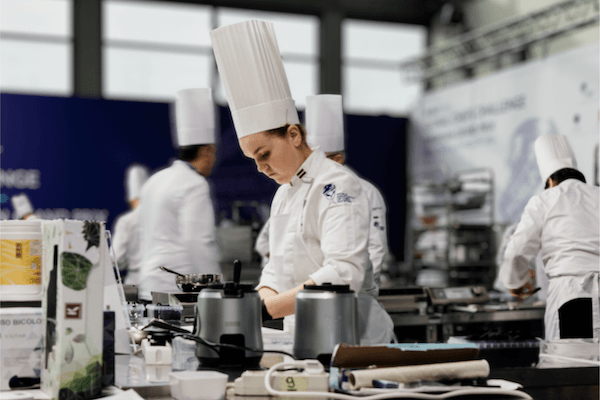
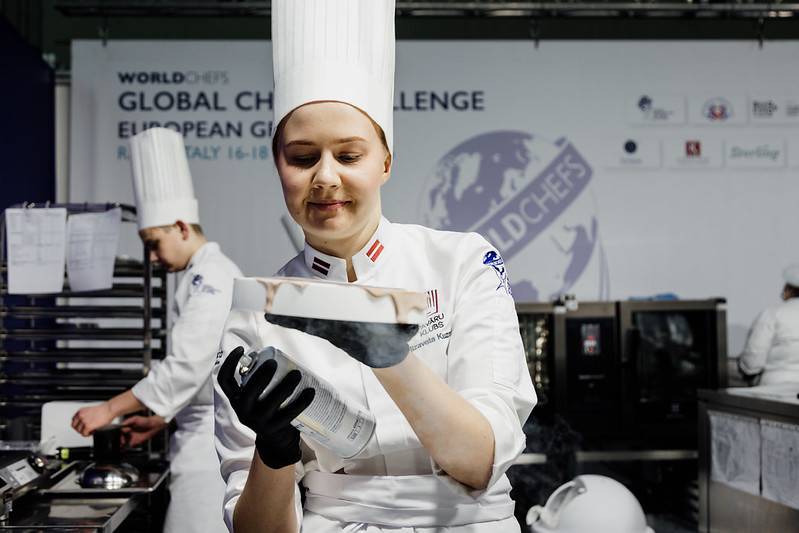
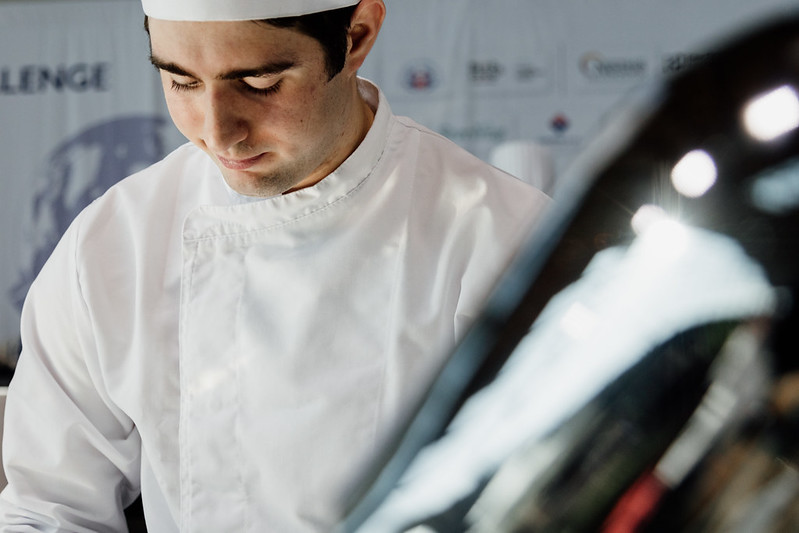
Featured image: Competitor at the 2025 Global Chefs Challenge European Grand Prix semi-finals.

Written by Clare Crowe Worldchefs Editor.

Categories
GCC - Young Chefs Industry Trends

Why Mentorship Matters Now More Than Ever in the Culinary World

Mentorship: the secret ingredient to industry success?

When you read a chefโ€™s bio, it usually includes who they worked for. If theyโ€™ve been lucky, it might read something like this:

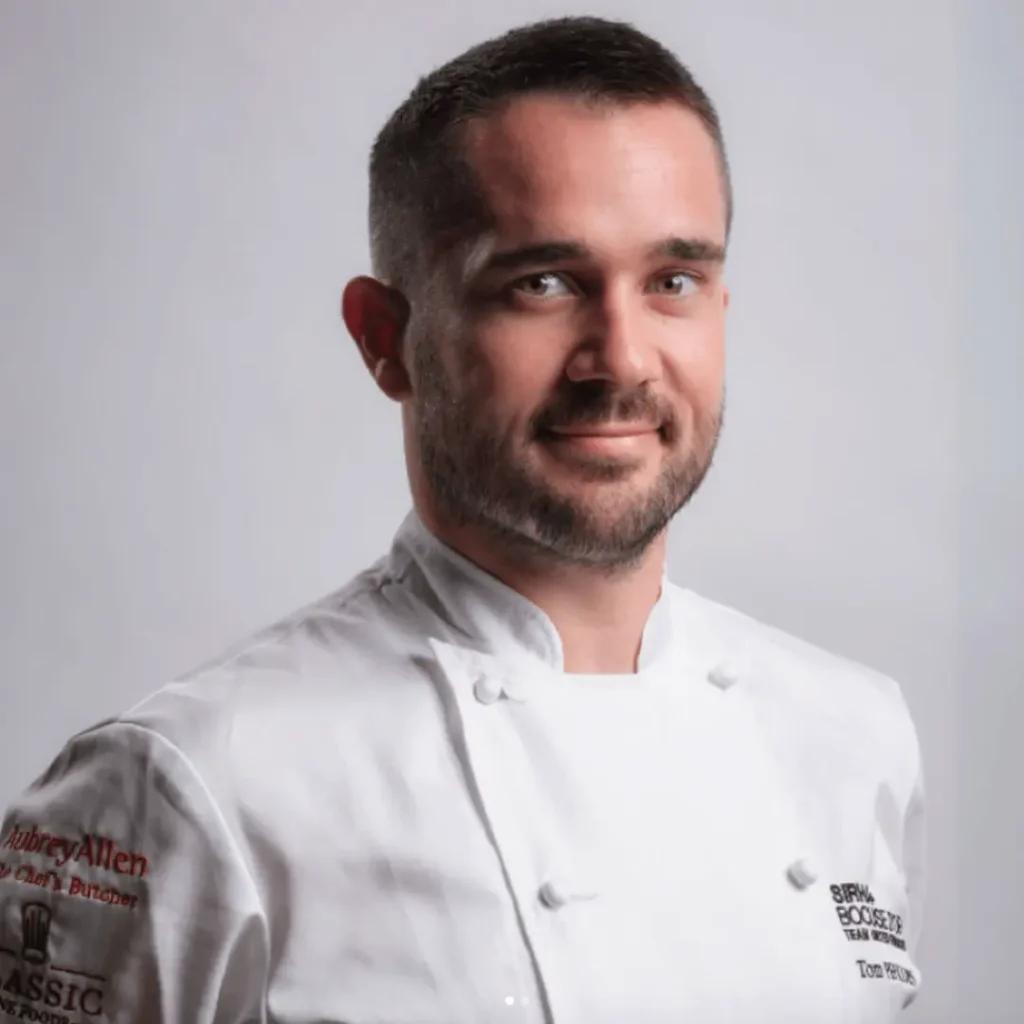
Tom Phillips trained at The Ritz in London, before moving on to Simon Roganโ€™s Lโ€™Enclume in the Lake District and Thomas Kellerโ€™s Per Se in New York. He later returned to London to join Restaurant Story, working alongside chef patron Tom Sellers. 

Tom Phillips, Executive Chef at Restaurant Story.

Meet Tom and hear more about his career journey โ€œFrom Newport to the Bocuse dโ€™Or Stageโ€ at Worldchefs Congress & Expo this May.

While this might not be immediately read as mentor-protรฉgรฉ relationships, the value is clear. Where a chef worked and for whom is a big part of how their skills are perceived. For some, itโ€™s like a badge of honor. A well-known mentor can signal potential, legitimize a chef in the eyes of colleagues and consumers, and inspire culinary professionals to aspire to excellence in an effort to be a part of a shared legacy.

A big-name mentor in your bio might get you noticed, but the benefits run a lot deeper than PR. In this article, weโ€™ll explore why mentorship matters now more than ever in the culinary world.

An Underrated Resource for Todayโ€™s Hospitality Landscape

Mentoring is an underrated resource and an under-recognized skillset. According to recent data, 76% of people think mentors are important, but only 37% actually have one.

You can be a great chef but not know a thing about how to inspire someone or guide them towards a long-term perspective on career. It takes time to cultivate skills to mentor and manage people, and the willingness to continue to learn from protรฉgรฉs, too. According to the latest data from Deloitte, many managers only spend 13% of their time developing the people who work for them, and more than one-third (36%) are not sufficiently prepared to be people managers, suggesting that more learning and development is needed across each stage of a personโ€™s career.

Mentoring represents one of many skills that are increasingly expected by todayโ€™s hospitality landscape. Culinary professionals need to be multifaceted to respond to an evolving industry, one changed by the pandemic and shifting generational expectations. From small businesses to large commercial kitchens, chefs need to demonstrate strong managerial and leadership skills, as well as operational and administrative skills. Success also often depends on being savvy when it comes to social media, culinary arts tourism, and the latest culinary trends. With so many things to consider in building a successful career, culinary professionals need diverse guidance.

While the culinary arts has traditionally been rooted in vocational training and hands-on apprenticeship, across the globe, industry leaders, educators, and employers report that traditional technical training alone is insufficient to meet these shifting demands. 

The need for meaningful and intentional mentorship is stronger than ever, a kind of mentorship to strengthen career development by offering specific expertise, insights, and opportunities, whether near or far.

judges africa & middle east global chefs challenge
Worldchefs Certified Judges with Global Chefs Challenge competitors.
Deep Dive: A Data-Informed Look at Why Mentorship Matters Now More Than Ever

Mentorship delivers clear strategic value, for employers, mentors, and mentees alike. Itโ€™s no wonder why 98% of Fortune 500 companies invest in structured mentorship programs and report higher engagement, stronger pathways for leadership development, and higher retention rates as a result.

Especially now, with automation and AI quickly reshaping day-to-day activities, both employers and customers are searching for connection and adaptive, human-centric skills. Mentorship can help to keep a balance in check by creating opportunities for dialogue around new technologies, approaches, and ways of working. By bridging tradition and innovation and helping to connect perspectives across generations, cultures, and specializations, mentorship can be a key driver for growth, for both the industry and its individuals.

Strengthening Team Culture and Employee Retention


Studies show workplaces with structured mentorship see higher retention rates for mentees (72%) and mentors (69%) compared to other employees. Especially for the new generation of workers, a focus on learning is essential. In a 2025 survey from Deloitte, when asked the strongest reasons for choosing to work for their current employer, Gen Z put learning and development in the top three, with specific mention of wanting greater guidance, inspiration, and mentorship from their managers. 

Mentorship also can also be a part of efforts to address mental health in the kitchen. Mental wellness is an increasingly visible challenge for chefs worldwide, and the value of mentor relationships shows up in this area as well. Studies show 45% of employees feel uncomfortable discussing mental health concerns with their managers. Mentorship builds trust and provides emotional scaffolding, reminding chefs that they are not alone and that their contributions are valued. Data shows that 89% of employees with mentors say colleagues value their work, versus 75% without mentors. All this from knowing someone has their back.

Side Dish: Gen Z’s Career Expectations

86% of Gen Z and 84% of millennials consider mentorship from experienced colleagues to be a key tool for career growth.

9 in 10 Gen Zs (89%) and millennials (92%) consider a sense of purpose to be important to their job satisfaction and well-being.

Promoting Skills Transfer

Mentorship is at the heart of craft, with one personโ€™s mastery becoming the next personโ€™s foundation. According to the Harvard Business Review (HBR), global research shows structured mentoring accelerates skill development by 30% or more. In a study by the HBR, across 19 countries, 84% of workers said that mentors helped them achieve competence in their roles faster. 

Itโ€™s also a two-way exchange. Seasoned chefs can share their insights and offer actionable guidance to their mentees. Mentees in exchange bring new perspectives and skills to the table, challenging their predecessors with fresh questions, ideas, and innovations.

And mentorship isnโ€™t just for young chefs. It can benefit chefs at every point in their career. Beyond age and traditional kitchen hierarchy, mentorship promotes mutual learning across generations, cultures, and disciplines. Peer-to-peer mentoring has its place, too, with more experienced colleagues helping others to grow confidence, and encourage collaboration.

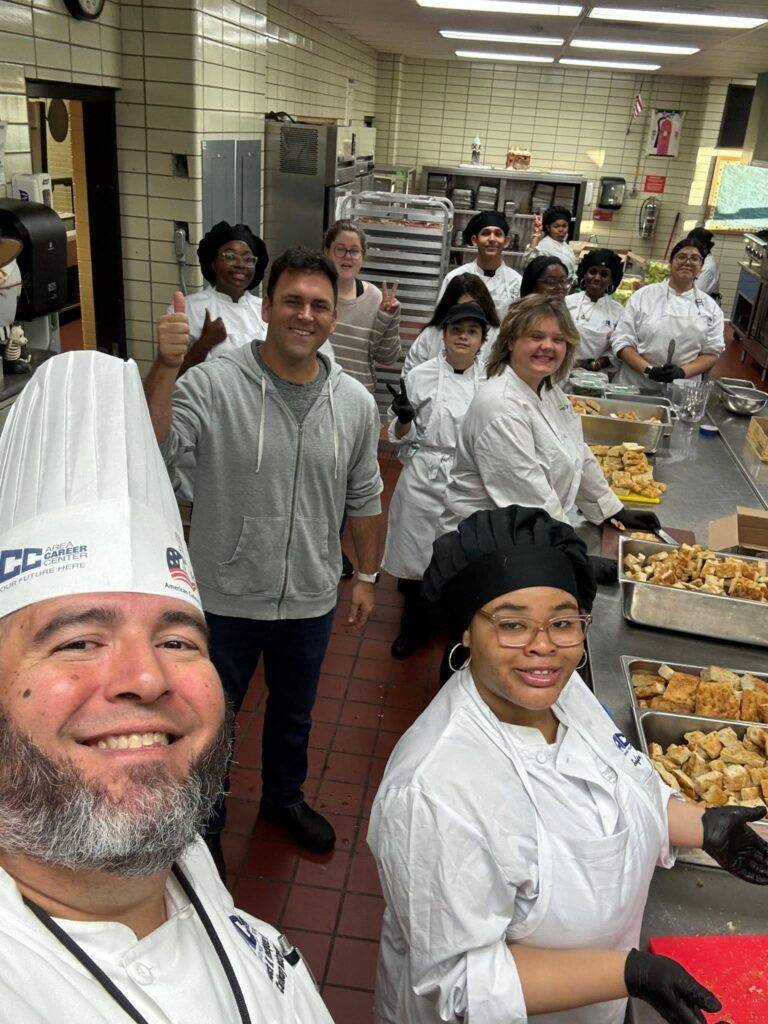
ACF ICD Indiana
The American Culinary Federation celebrates International Chefs Day with young chefs.
Fostering Inclusive Leadership Development

Mentorship is also one of the most effective tools for advancing diversity, equity, and inclusion in the workplace, which leads to many more gains. Research has shown that mentorship programs can increase minority representation in management positions more effectively than many standalone diversity initiatives, with studies reporting improvements in leadership representation for underrepresented employees when mentoring is part of the strategy. Whatโ€™s more, the data shows that when employees feel represented, innovation improves by an astonishing 83%. 

A recent survey by the Gallup Center on Black Voices found that employees with a mentor are 1) more than twice as likely as those without to strongly agree that their organization provides a clear plan for their career development, 2) twice as likely to strongly agree that they have had opportunities to learn and grow at work in the last year, 3) twice as likely to be engaged, and 4) 98% more likely to strongly agree that they would recommend their organization as a great place to work. 

For women, mentorship has huge potential, too. A recent study from MIT found that female employees are less likely to be promoted than their male counterparts, despite outperforming them and being less likely to quit. Research also shows that women are less likely to self-promote. In a DDI Women in the Workplace Global Research study, a survey from 19 different countries found that 63% of women have never had a formal mentor. 

Despite women making up more than half of the restaurant and foodservice workforce (52.6% in 2022, according to DataUSA), their representation sharply declines as seniority rises. Only 21.6% (down from 22.6% in 2022) of head chefs and cooks identified as women in 2024, revealing a persistent gender gap in leadership. Meanwhile, half of students at the Culinary Institute of America are female. Women occupy only 6.3% of the head chef positions at prominent U.S. restaurant groups, whereas women CEOs run 11% of Fortune 500 companies in 2025, having made significant gains since 2018. As Fortune 500 companies continue to invest in structured mentorship programs, their strategy could be an important model to address gender representation in professional kitchens.

Mentorship could be a key piece of the puzzle to solving the gender gap, making sure that the industry doesnโ€™t leave talent on the table when it comes to hiring for leadership roles. Across the culinary world, mentorship can help to ensure that chefs of all backgrounds and at all points in their career can rise with confidence and clarity.

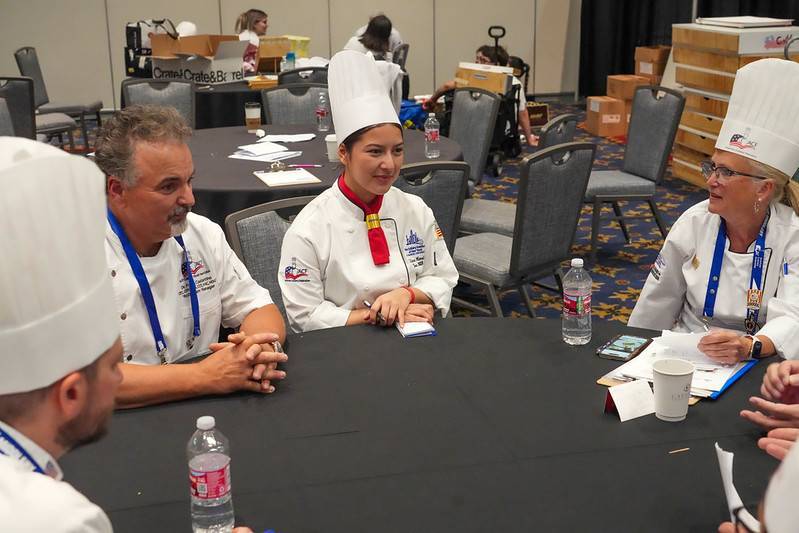
Chefs gather at the Global Chefs Challenge Americas Semi-Finals in 2025.
Mentorship is Legacy and a Long-Term Strategy

Worldchefs and its members are not just looking to help create great chefs. Our community is here to foster leaders for a better culinary industry and food system at large. Going beyond technical skills, mentorship is about more than just imparting culinary expertise. By modeling and inspiring leadership qualities, mentorship also helps to ensure that we develop the strategic, professional, and personal competencies necessary to navigate todayโ€™s complex hospitality environment and beyond. 

Through this support, we create a cycle of mentees who grow to become mentors, and an industry culture of learning and development. Mentorship is a legacy of leadership, one that branches out into the past, present, and future.

So, if a chef has been lucky, their bio might read something like this:

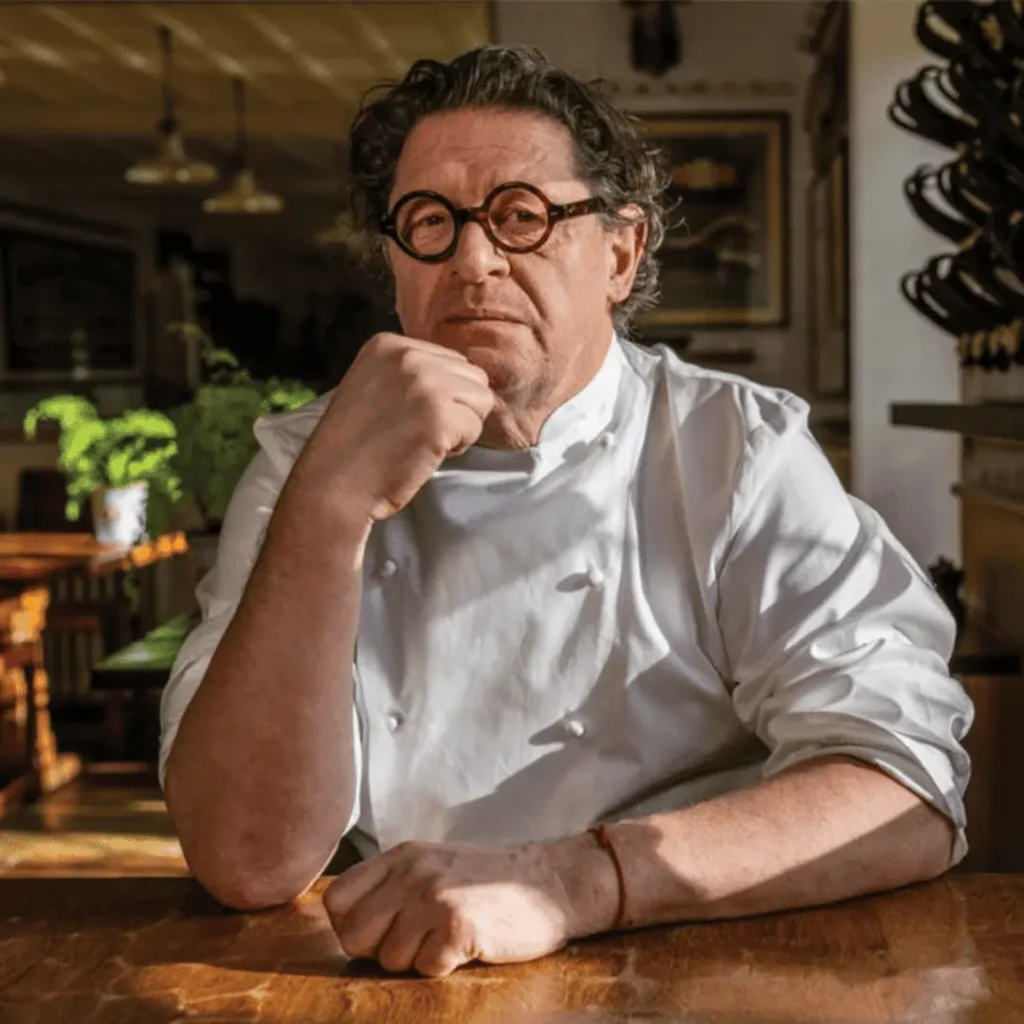
Marco Pierre White is a renowned chef, restaurateur and TV personality. A leading figure in the UK restaurant scene for over 25 years, he has been influential in the culinary careers of many including Gordon Ramsay and Heston Blumenthal. Marcoโ€™s rise to culinary acclaim began at 19, when he moved to London to study classical French cuisine under Albert and Michel Roux at Le Gavroche. He later honed his craft with Raymond Blanc and Pierre Koffmann, masters of French cooking technique.

Marco Pierre White
Marco Pierre White
Chef, Restaurateur, and TV Personality


Meet Marco and hear more about his career journey at Worldchefs Congress & Expo this May.
Mentorship in Action
WFF Young Chefs Programme


The World Food Forum (WFF)โ€™s Young Chefs Programme equips chefs aged 18-35 with skills, knowledge and networks to take a leading role in transforming agrifood systems through culinary practices.

Each participant will be paired with a mentor from the Worldchefs network to drive local food systems projects.

Young Chefs Clubs


Young Chefs Clubs connect emerging culinary professionals within a global network, providing mentorship and leadership development through friendship, cuisine, and cultural exchange.

A toolkit is also currently being developed for rollout to national chef associations, offering guidance to launch and manage a mentorship program for young chefs.

To learn more about starting a Young Chefs Club, contact the Worldchefs office.

Billy Gallagher Young Chefs Forum


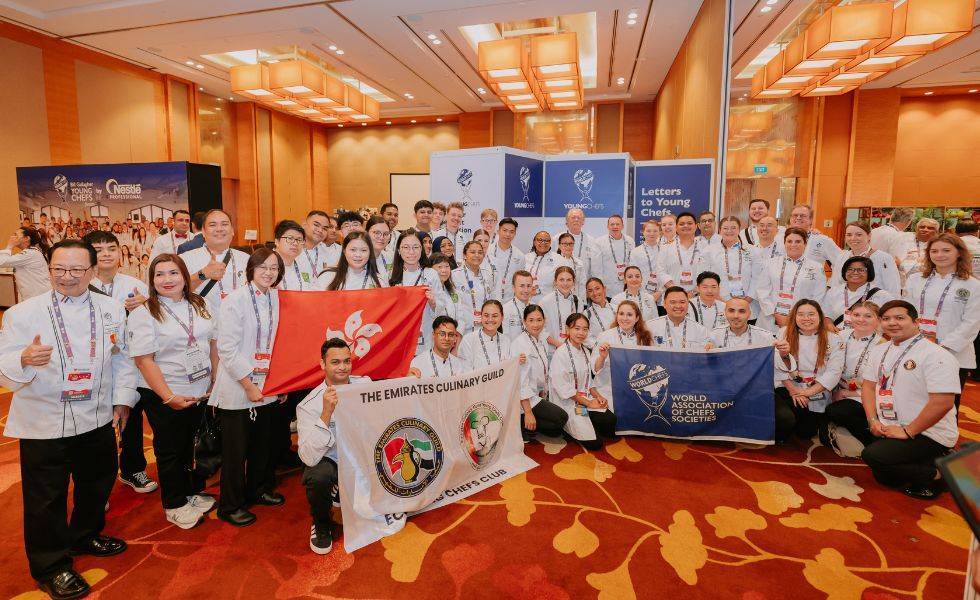
At Worldchefs Congress & Expo, the Billy Gallagher Young Chefs Forum Program provides young up-and-coming chefs proper training, guidance, and learning opportunities.

At Worldchefs Congress 2026, the exciting young chefs program includes a trip to Cardiff Market, a foraging experience, face-to-face sessions with Michelin-starred chefs, and more.

Interested in being matched with a mentor โ€” or becoming one? Get in touch with us.

Young Chefs
Young Chefs and mentors at Worldchefs Congress & Expo 2024.
Photo credits and captions

Cover image: Billy Gallagher Young Chefs Forum at the 2024 Worldchefs Congress & Expo.

Written by Worldchefs Editor.

Categories
Industry Trends

Five Food Industry Trends Chefs Should Watch in 2026

With 2026 right around the corner, chefs around the world are in the middle of a busy season and an essential time to think about the year ahead.

Thereโ€™s a lot to consider. Diners’ expectations are changing, purse strings are tighter, and the balance between tradition, health, and innovation is reshaping menus everywhere. With consumers looking for more out of their meals, foodservice businesses need to stay ahead of the curve to drive success in 2026.

Here are five 2026 trends backed by market research that should be on every chefโ€™s radar.

1. Purposeful Protein: A Return to Humble Ingredients

Protein continues to drive menu development, but the path forward is changing. Forecasts for 2026 show a clear movement away from highly processed plant-based meat alternatives.

Where are we headed? Protein-rich ingredients such as beans, lentils, chickpeas, and heritage pulses are taking center stage. With traditional roots and a whole lot of versatility and culinary depth to offer, these ingredients are having a major moment.

For chefs, that means a creative comeback for beans, turning humble pulses into ingredients of purpose. Explore this trend plus five others in Custom Culinaryโ€™s 2026 Food & Flavor Outlook.

2. Fiber & Gut Health: Elevated Through Craft and Technique

Right on protein’s tails is fiber. Digestive wellness continues to influence food choices, and fiber is fast emerging as a leading priority for 2026. Fiber-rich whole foods like oats and lentils are capturing greater attention, particularly as diners look for meals that offer both satiety and nutritional benefit. Rather than positioning fiber as a โ€œhealthโ€ feature alone, chefs are integrating it through technique and craft. Fermenting, sprouting, roasting, milling, and blending to create dishes that are flavorful, layered, and texturally dynamic, this trend offers a lot of room for creativity while serving more gut-health-minded consumers1.

Aseeda Bobbar is a traditional Emirati dessert made with pumpkin, saffron, and cardamom. Find the recipe here.
3. Heritage Recipes & Culinary Traditions: Authenticity with a Modern Twist

Across markets, diners are reconnecting with culinary heritage, sparking a resurgence of traditional recipes, techniques, and regional flavors. This global return to ancestry-driven cooking reflects a desire for authenticity and cultural grounding. From street food favorites and near-forgotten recipes to Taste Globes, cuisine diversity is key to feeding consumer curiosity around spicy and global flavors.

For chefs, this is a great moment to reconnect the past and present, honor culinary roots, and build dishes with cultural context and meaning.

Tune in to Mapping the Future of Food with Trend Forecaster Morgaine Gaye to hear advice for balancing creativity with trend awareness, and why anchoring your craft in authenticity and heritage will create lasting impact. Plus, get inspired by exploring Worldchefsโ€™ collection of Cultural and Heritage Recipes.

4. Immersive Dining: Experience as the New Value Driver

Dining in 2026 moves further into experiential territory. Guests continue to look for experience, from chef-led tastings and open-kitchen formats to thematic menus, multisensory activations, and community-driven gatherings. Cost-of-living is rising, and more diners, especially young people, want the most of their money when eating out, fueling an appetite for novel experiences.

Chefs who embrace immersive dining, whether through storytelling menus, communal dishes, sensory pairings, or culturally rooted tasting journeys, will meet a growing guest demand for meaningful, memorable meals and likely have some fun while doing it.

โ€œI think we all assume that taste comes from our tonguesโ€ฆ In fact, all of your senses are involved. Everything from the color of the plate to the weight of the cutlery in your hands, from the background music to any ambient scent, as well as the lighting and even the softness of the chair you are sitting on.โ€

– Charles Spence, Professor of Experimental Psychology at the University of Oxford and author of Gastrophysics: The New Science of Eating

In a study by Technomic, 72% of diners expressed a desire for more experiential dining. Read more about this trend and get practical ideas in the article Gen Z & Millennials Want Immersive Dining Experiences: Trend Takeaways for Chefs.

5. AI in the Kitchen: Powerful Tools, but Creativity Must Lead

Artificial intelligence is accelerating rapidly across the foodservice sector, appearing everywhere from menu engineering and forecasting to inventory management, training, and guest personalisation. In 2026, AI-supported systems will continue to become more accessible to kitchens of all sizes, offering chefs new capabilities to streamline operations, reduce waste, and analyse consumer behavior with greater accuracy.

But thereโ€™s a critical caveat. While AI can optimise, predict, and streamline, it can’t replicate human intuition, cultural sensitivity, or culinary artistry. Chefs must lead tech integration thoughtfully, using it to support but not replace skill, craftsmanship, and identity.

โ€œYouโ€™d be amazed to know how many people are using it. There are a lot of egos in the business. Theyโ€™re not going to make a big thing about it.โ€

– Chef Matan Zaken, from Michelin-starred Nhome in Paris, on ChatGPT

Dive into this conversation in the article With AI, Could We Lose theย Artย in Culinary Arts?, and get equipped with resources to make the most out of AI.

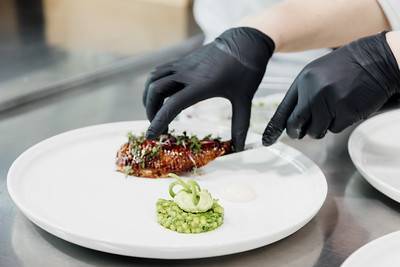
The future looks bright. Worldchefs’ Global Chefs Challenge competitors’ plating prep at the 2025 European Grand Prix.

Trend Takeaways: A New Year for Learning

These five trends reflect a global shift in how the industry approaches flavor, identity, sustainability, and innovation. The landscape will keep shifting, so get equipped with these early trends and be sure to stay informed as the year goes on.

Donโ€™t miss the 2026 Worldchefs Congress & Expo in Wales, where industry leaders will guide essential discussions around the future of culinary education, workforce development, operational models, and flavor innovation. Check out the program for sessions related to these trends and many more, including 2050 Menu, Shaping the Future of the Culinary Industry, The AI-Powered Chef, Cooking with Natural Plants: Extracting Aromas and Flavours, and so much more.

Written by Worldchefs’ Editor.

  1. Brush up on gut health by watching Jeremy Lim’s session from Worldchefs Congress & Expo 2024 โ†ฉ๏ธŽ
Categories
News

Resources for Stronger Associations: Lessons from Worldchefsโ€™ Century-Long Learning

Did you know Worldchefs was founded in October 1928? Since then, weโ€™ve learned valuable lessons about building a strong international association and supporting the success of hundreds of national members around the globe.
In this article, weโ€™ll share advice on how associations across industries can create effective strategies for growth and impact.

Have you noticed how much energy things have when theyโ€™re just getting started? For associations, the decision to come together over uniting ideals is a powerful motivator. But what about 10 years in? 20? 100?

With 2025 marking 97 years of history, Worldchefs has learned a few things about navigating changing times. The founding members of what was then called the World Association of Cooks’ Societies, now Worldchefs, were inspired by the ideals of the League of Nations and the newly created International Labour Office in the 1920s.

In the wake of the First World War, many cooks found themselves professionally isolated. Closed borders, protectionist labor policies, and the economic depression made their position even more precarious. A shared determination to raise standards, drive cooperation, and foster professional solidarity gained momentum.

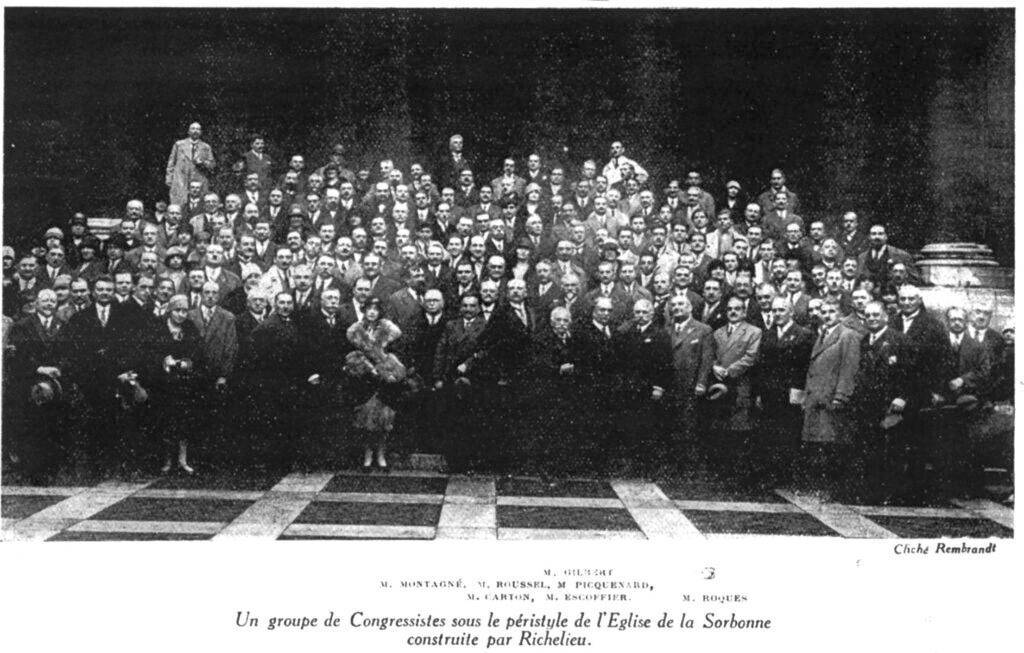
It was in this spirit that chefs from 17 countries gathered in the auditorium of the Sorbonne in Paris to create a forum of friendship and mutual support for cooks across borders. Nearly a century later, those goals continue to guide how we think about member engagement, value creation, and long-term sustainability.

We often have to look back to understand today and to plan strategically for tomorrow. The changes and challenges may look different (and some might sound familiar), but the fundamentals endure: community, connection, and shared purpose. Revisiting founding principles can help plot a path forward, ensuring associations remain relevant while staying true to their mission.

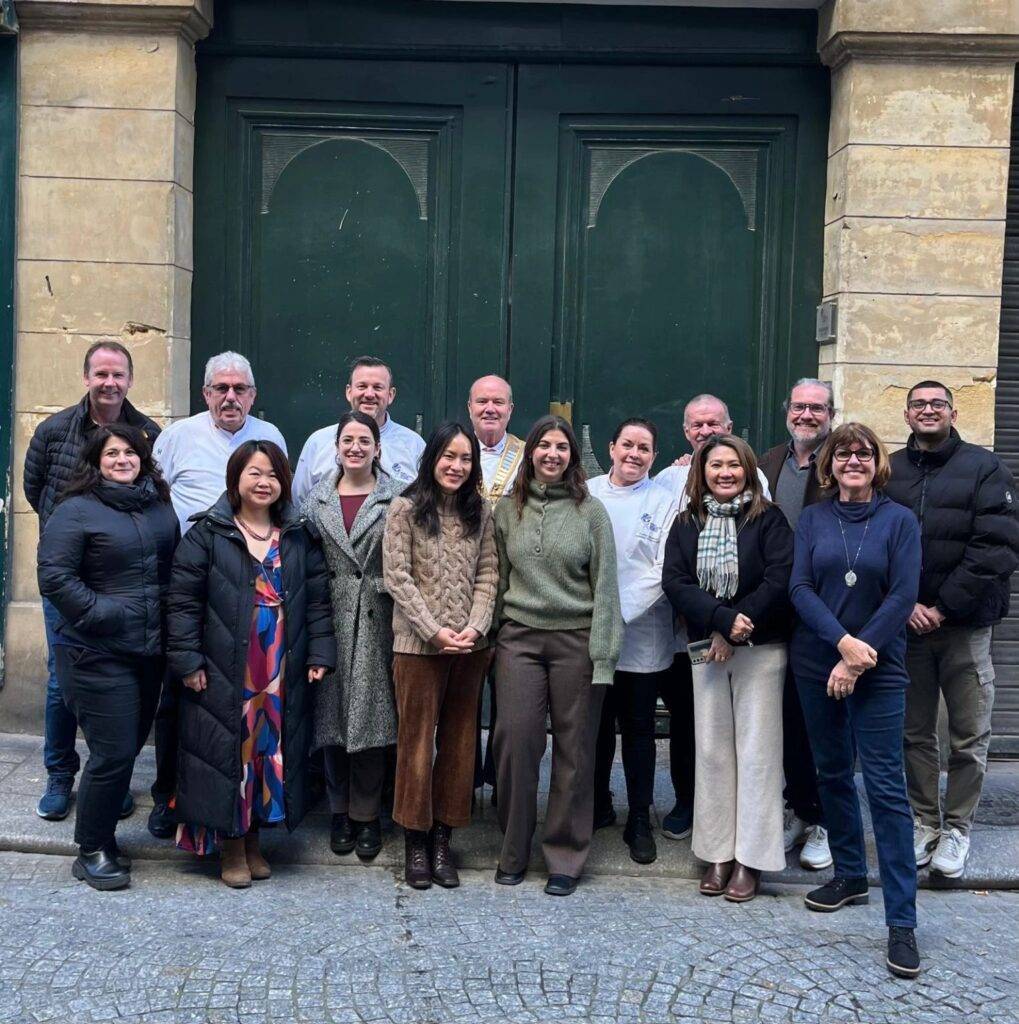
Right: Founding Congress in Paris, 1928. Left: Outside the Paris office, 2025.

Navigating Change with Purpose

Change is inevitable, so itโ€™s how we react that makes all the difference. For associations in every industry, the landscape is changing faster than ever. Member expectations shift, technologies advance, competition for attention increases, and financial pressures grow.

Belinda Moore of Strategic Membership Solutions identifies three interconnected challenges faced by modern associations: delivering compelling value to members, engaging and retaining members, and ensuring financial stability. Financial health relies on retention and growth, which in turn depend on engagement and clear value.

Having served as a global federation of chefsโ€™ associations for nearly 100 years, Worldchefs continues to meet evolving challenges with the same commitment to progress. Through global crises, technological revolutions, and emerging member needs, weโ€™ve learned that sustainable engagement depends on resources, relationships, and responsiveness.

Below, we share six practical ways associations can grow stronger, informed by Worldchefsโ€™ near-century of experience.

1. Cultivate Member-Centric Resources

A strong association provides its members with ongoing on-demand access to resources that educate, inspire, and connect. At Worldchefs, we curate approachable and inclusive channels in formats to suit different learning styles and preferences, such as:

  • Webcasts and webinars: our Sustainability Around the World series explores global issues that matter to our network, and collaborative webinars respond to membersโ€™ emerging needs and interests.
  • Podcasts: World on a Plate shares real stories and conversations with industry leaders, young chefs, and changemakers, helping to inspire and share knowledge in an accessible format.
  • Articles and editorial: through our award-winning Worldchefs Magazine, thought pieces and industry news, we share trends, recipes, and practical tools members can use in their daily work.

Consider diversifying the format of your resource offering. Whether it’s a webcast or webinar, podcast or short audio interview, article or how-to guide, various formats increase the chances members will find a way to engage that fits their style.

Tip: Create a centralized resource “hub” that is accessible and evergreen. Offer a balance of insight and action, from thought-leadership articles to practical skills-building content.
Chef with Worldchefs Magazine at the Global Chefs Challenge European Grand Prix, 2025.
2. Use Live Events as Catalysts for Engagement

Events are among the best ways to energize membership and build loyalty. For Worldchefs, gatherings such as the Worldchefs Congress remain anchor points of interaction and pride. In 2024 alone, over seven million of our total communications reach related to Congress content, showing that live experiences attract attention and engage members. Events can be a core part of the value proposition and help sustain financial stability by keeping membership active and appealing to prospective members.

Review key moments on the calendar when you can host or collaborate on events with clear learning goals and community outcomes. Large-scale or local, in-person or virtual, events provide opportunities for professional connection and shared learning that digital content alone canโ€™t replace.

Tip: Extend the value of events by repurposing highlights into podcasts, videos, or follow-up articles.

Left: A sense of belonging. Right: FIC event.

3. Encourage Members to Share Stories to Deepen Ownership

One of the most effective strategies weโ€™ve used at Worldchefs is to invite our member associations and individuals to contribute their stories. Based in Paris with a global membership, we are always asking our members to share and be featured to show #ThisIsWorldchefs.

We broadcast member news across our channels, including our website, podcast, Worldchefs Magazine, social media, and soon through a new online community, Foodverse. Amplifying these stories celebrates success and builds connection. Sharing member-generated content:

  • Elevates the voices of members and makes them ambassadors of the network
  • Provides fresh perspectives and diversifies the content offering
  • Reinforces a sense of community, linking association membership to individual belonging

Use your social media, newsletter, and other channels to encourage contributions and communicate whatโ€™s happening with your membership. Highlight a โ€œMember Featureโ€ on your website or social media. By doing so, you can strengthen engagement, visibility, and value.

associations podcast
Kristine Hartviksen, who has served as both President of the Norwegian Chefs Association and the Nordic Chefs Association, spoke about workplace wellbeing on a recent episode of World on a Plate.
4. Design an Onboarding Process That Builds Connection from Day One

First impressions matter. At Worldchefs, we connect with new members and partners right away through a structured onboarding process. Theyโ€™re introduced to our team, resources, and initiatives from day one, with dedicated time invested in getting them involved in our programs and communities.

Thank you for a very informative and insightful onboarding session! It was great to meet Connie, Sandra and Olivia at the call. Here’s to many more collaborations in the future.

LTB Philippines Chefs Association after their onboarding call

Revisit your onboarding process. How can you help new members understand the opportunities to engage and benefit? The onboarding process shapes long-term engagement, so take the time to do it right, with clear, actionable steps.

Tip: Make it easy! Create a short document that you can share, including:
  • Key resources (list of webcasts, podcasts, articles) and how to access them
  • Ways to get involved (committees, working groups, volunteer opportunities)
  • A calendar preview of upcoming events
  • A short survey or feedback link to understand new membersโ€™ priorities
Chefs at the Global Chefs Challenge Americas Regional Semi-Final, 2025.
5. Leverage Collaboration & External Partnerships to Expand Reach

Partnerships broaden both reach and relevance. Worldchefs collaborates with organizations such as the Electrolux Food Foundation, Nestlรฉ Professional, World Food Forum, and World Central Kitchen, giving members meaningful ways to leverage their expertise for global causes and connecting our network with wider conversations on the future of food.

Collaborating with Worldchefs on the upcoming Young Chefs Programme (YCP) has been an inspiring experience. Having Worldchefs exhibit at the Youth Booth in the FAO Atrium during the World Food Forum Flagship Event brought the energy and purpose of their youth-led initiatives directly to our visitors.

Flora Igoe, Head of the Youth Culture Programme at FAO

Collaboration is essential to shaping these conversations and a powerful way to expand value and visibility. Look for collaborators with shared values and complementary strengths. Research other industry bodies, academic institutions, foundations, NGOs, and reach out. Creative partnerships strengthen your leadership role and provide exciting new opportunities for members.

Tip: Start small but strategic. Identify one partner whose mission aligns with yours and propose a joint activity thatโ€™s achievable. Keep it practical, measurable, and centered on member benefit. Successful starting points often lead to long-term collaboration.

Ragnar Fridriksson, Managing Director of Worldchefs, with partners.

6. Offer Tools for Feedback & Continual Improvement

Listening is as important as broadcasting, and essential to an associationโ€™s growth. Worldchefs recently conducted a SWOT analysis survey across our national chef associations, asking presidents how we can better move forward. Their feedback helps to guide our programs, priorities, and the support we offer members.

Gathering feedback helps associations stay responsive and ahead of the curve. Ask members what they value most, what challenges they face, and identify opportunities based on whatโ€™s working and what isnโ€™t. Using surveys, short polls, or calls, schedule regular feedback loops and use that data to inform your strategy and resource planning.

Tip: Close the loop. Share key findings and tell members what actions youโ€™ve taken as a result of their feedback. Demonstrating that youโ€™ve listened turns consultation into trust, and trust into stronger engagement.
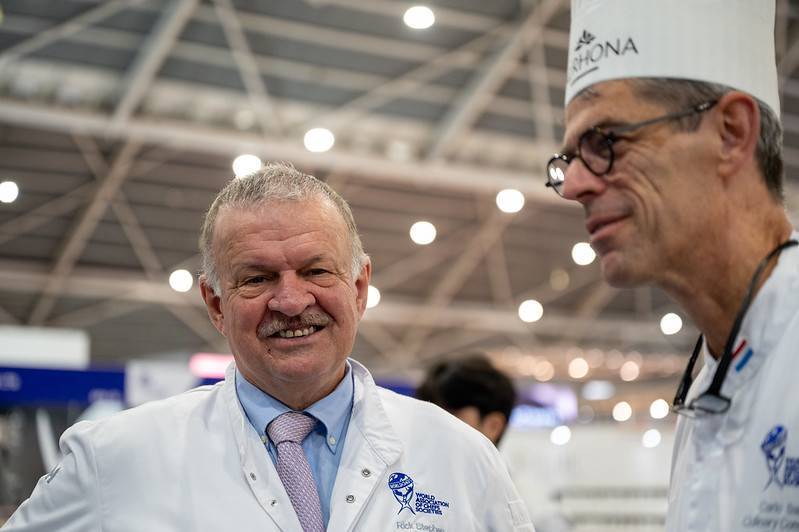
Rick Stephen, Vice President of Worldchefs (left) at the Global Chefs Challenge Asia & Pacific Regional Semi-Finals, 2025.
Next Century Strategy

Nearly 100 years of experience has taught Worldchefs that relevance isnโ€™t something achieved once. Itโ€™s maintained through continuous listening, learning, and doing. Our history offers perspective, but our progress depends on how we use it.

Associations with endurance are those that treat change not as disruption but as routine. Whether through clear communication, accessible resources, or opportunities for collaboration, success comes from creating consistent value for members, responsive to past, present, and future needs.

The next centuryโ€™s strategy is taking shape now, by empowering our community to influence what comes next. Worldchefs continues to prove that an associationโ€™s greatest strength lies in its people: in shared purpose, evolving ideas, and the willingness to grow together. History offers the insight. Engagement ensures the future. The challengeโ€”and the opportunityโ€”is to keep those two in constant conversation.

For more on Worldchefsโ€™ history, check out the timeline on our About Us page.

Written by Worldchefs’ Editor.

Categories
Industry Trends

With AI, Could We Lose the Art in Culinary Arts?

With AI, Could We Lose the Art in Culinary Arts?

If we arenโ€™t careful, artificial intelligence could take a big byte out of our craft.

Will the future of menu development look like this?

AI has many uses and applications, from optimizing operations to streamlining service. But when it comes to creativity, where do we stand?

Some chefs have embraced it, some think their colleagues should be using it more, and many others have major reservations, from ethics to environmental concerns.

AI tools are making their way into the industry in a host of different ways. Itโ€™s not a matter of if or when. The question now is how you use it. How does it serve as a tool to tell your authentic story?

Creative or derivative? 

AI systems are built from what already exists, from human creativity and experience. They donโ€™t have imagination and are not always accurate. But AI language models do have a tremendous amount of data to pull from. 

Where do these data sets come from? Companies like OpenAI, Apple, Anthropic, Mistral, Google, and Meta โ€œtrainโ€ their generative-AI chatbots from internet resources, movies, TV, books, academic papers, and articles, saying โ€œfair use of copyrighted materials is vital to this.โ€ However, a recent article by The Atlantic revealed how AI tools have pirated millions of books and research papers on LibGen, a shadow library of pirated media, to train the large language models that feed generative bots. Run a keyword search for any chef who has published a cookbook, and youโ€™re likely to get a hit.

Studies have found that, on average, 45% of text generated by ChatGPT is plagiarism. Beyond intellectual property issues, things just start to sound the same, with a homogenization of the way chatbots write for a user. More and more people are familiar with โ€œChatGPT voice,โ€ which, in a way, is comforting to know that we can still recognize AI-generated text. But thatโ€™s also because more and more people are relying on these platforms to do creative work for them.

People can create compelling art with AI, and chefs are certainly using it in new and interesting ways. But there is danger in it being so widespread. At what point are we forfeiting human imagination?

Exploration or exploitation?

Imagine going to a restaurant and having the chef explain: โ€œThe story behind my menu? I asked ChatGPT to come up with something.โ€ Soon, you wonโ€™t have to imagine. 

In June, Pete Wells published The Yearโ€™s Hot Tool for Chefs? ChatGPT in The New York Times, and it caused quite a stir. In the article, James Beard award-winning Chef Grant Achatz announced that an upcoming menu at his Michelin-starred restaurant, Next, would be entirely generated by OpenAIโ€™s famous language model, ChatGPT.

“Next is about exploration. It is by design and necessity vibrant, ever-changing, and unpredictable.

 Next explores the world of cuisine by changing our entire menu and dining experience a few times a year, each time focusing on a new culinary region, theme, or moment in time.”

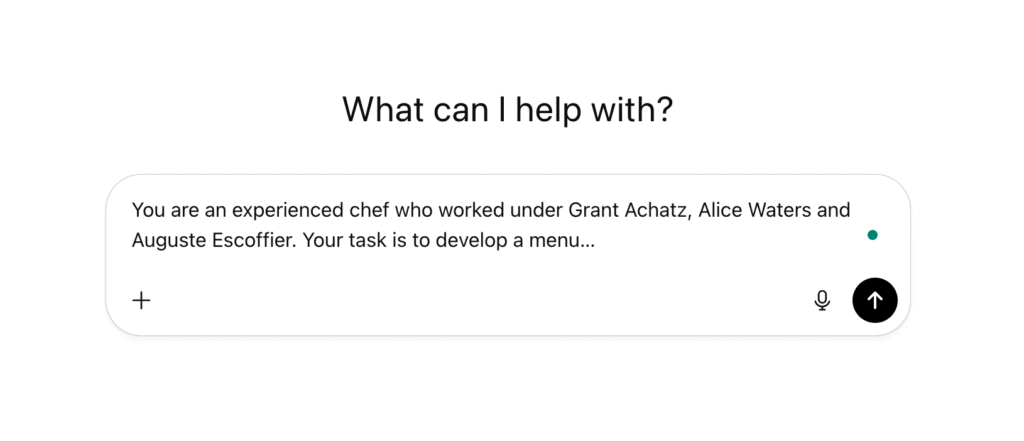
Achatz has been described as The Alchemist of Modern American Cuisine, a mad scientist chef. A visionary in molecular gastronomy who hasnโ€™t been afraid to challenge convention, his kitchen at Alinea is a culinary laboratory, filled with custom-created gadgets and scientific equipment to make a different kind of cooking and dining experience. Using ChatGPT is another shiny new tool in his kitchen. In this way, it lines up with his story. Itโ€™s part of his gimmick. And heโ€™s using AI just like most articles on the internet will tell you: give it a persona. 

โ€œArtificial intelligence will be responsible for the menu at Next,โ€ said Achatz. For a four-month run, Next is set to serve a nine-course menu, with each dish designed by a different virtual chef persona that Achatz typed into the chatbot. 

One persona he shared with the NYT was Jill: a 33-year-old woman from Wisconsin who cooked under Ferran Adriร , Jiro Ono, and Auguste Escoffier, with Achatz’s own invented family background to complement her work history, which he didnโ€™t share.

Jill wonโ€™t be up for the awards that Achatz won in his early career, because she isnโ€™t realโ€”no Best New Chef, Rising Star of the Year, or Whoโ€™s Who inductee. At least letโ€™s hope not. Rather than ask a chatbot to make a data-decided version of an imaginary person with an imaginary resume, why not actually afford someone an opportunity? Say, a young person from Michigan who rose the ranks at The French Laundry, someone who spends their time recipe-testing from dusty cookbooks and innovating with inspiration from culinary legends?

While this menu might capture a moment in time, what will it do for the time that comes after? At what point does it tip from exploration to exploitation, not a venture into the unpredictable but instead into the very predictableโ€”with predictive language models โ€œborrowingโ€ from the intellectual property of real people?

Achatz hasnโ€™t abandoned human culinary talent, to be fair. His three-Michelin starred flagship, Alinea, is an approved host for CIAโ€™s culinary interns, and no doubt his kitchens are staffed with up-and-coming talent. With a room full of human creativity, does he really believe in ChatGPT Premiumโ€™s capacity to deliver an incredible menu, one worthy of his restaurantโ€™s minimum $235 price tag? Or is he just trying to stir the pot?

It worked on the latter front. Commenters on social media, from other high-profile chefs to diners, have chimed in.

This controversy is part of a bigger ethical question about art, AI, and the role of these tools in creative industries. From visual artists to coders to musicians, artists are raising the alarm: โ€œeverybody who creates for a living should be in code red.โ€ With the widespread embrace of AI threatening the livelihoods of the creative workforce, to see someone with so much influence outsource creativity to a chatbot feels more cutting than cutting-edge.

A non-judgemental guide?

Putting creativity aside and looking more at learning, AI does offer a well of information for chefs to explore. In Wellsโ€™ article, he considers the ability to ask questions without embarrassment to be an underrated benefit. โ€œIt explains everything without judging,โ€ said Chef Baldwin on his recent deep dive into the science of sausage-making. 

But why be embarrassed to ask how the sausage gets made? In a world where craftspeople who knowโ€”by feel and knowledge that isnโ€™t published and pirated by AI platformsโ€”why bother with embarrassment? 

In an industry that can be notoriously isolating and ego-driven, why look at AI as another way to isolate chefs? Whether beginners or industry veterans, more needs to be done to destigmatize asking for help. We should be encouraging curiosity, questions, and knowledge-sharing, not deferring to AI bots to avoid looking like a novice.

And is AI non-judgmental? Or does it just feel anonymous? You could sense panic through the screen when a recent TikTok trend showed how you can search for peopleโ€™s ChatGPT history. You might dodge potential judgment from peers by asking a question to ChatGPT, but what data might you be putting on offer, instead?

A need for greater transparency

Regardless of where you stand on AI or how chefs in Wells’ article are incorporating it into their creative process, it is at least refreshing to hear people admit they use it. Most people, chefs included, are sheepish when it comes to acknowledging their relationship to these tools. 

Chef Matan Zaken, from Michelin-starred Nhome in Paris, said, “You’d be amazed to know how many people are using it. There are a lot of egos in the business. They’re not going to make a big thing about it.” In his view, his peers are reluctant to admit how much they use ChatGPT to help them with menu ideas and recipe development.

Indeed, harnessing AI is an evolving fascination for the industry. From apps for procurement to image generators churning out whatever you type in, these technologies continue creeping into nearly every digital tool weโ€™ve got, at an accelerating pace. Sometimes we canโ€™t even tell whatโ€™s real and whatโ€™s not. So we see the challenge when it comes to drawing a line in the sand for chefs.

If AI is going to be a real tool in service of creativity, it needs transparency and a genuine effort against complacency. Just as with references on written work or artistic inspiration, chefs need to negotiate for themselves how they want to use AI in their creative process, and then be ready to own up to it. 

Culinary competitions: Is AI against the rules?

While there has been much conversation around the use of ChatGPT and other tools in restaurants and recipes, itโ€™s noticeably quiet when it comes to culinary competitions.

Is it a blind spot? Too ubiquitous? Too hard to prove? Does AI being embedded into so many kitchen tools and apps legitimize its use? Are culinary competitions just behind the times? 

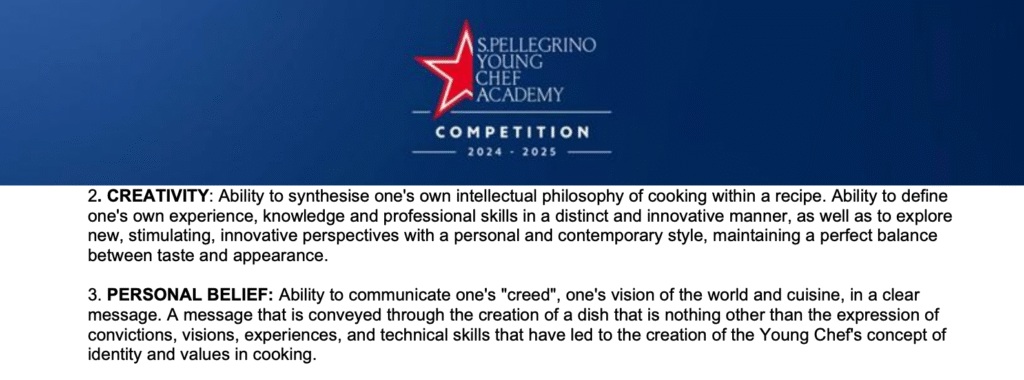
AI is not mentioned in the rulebook for Bocuse dโ€™Or, the Global Chefs Challenge, or the S.Pellegrino Young Chef competition, but creativity and personal belief are both essential elements of the ethos and judging criteria for nearly all culinary competitions. 

San Pellegrino Young Chef Competition Regulations

While the UKโ€™s National Chef of the Year competition guidelines forbid the use of AI for recipe development, most national competitions donโ€™t even mention it.

In the awards realm, there is also a lack of clarity on AI. For the James Beard Awards, the closest inclusion is the Code of Ethicsโ€™ โ€œlist of behaviors and practices antithetical to the Awardsโ€ item: โ€œMisrepresentation of material facts, including fabrication, plagiarism, or false claims of ownership.โ€ 

The Michelin Guide is also lacking any specific standards around AI, but it does list โ€œthe personality of the chef in the cuisineโ€ as part of its awarding criteria. So for a Michelin-starred chef like Achatzโ€“are his eight chatbot chefs a reflection of his personality and vision to innovate, or just ChatGPT doctored up as “Jill”?

We have yet to define the boundaries of AI when it comes to the kitchen. There are still many questions surrounding AI in the industry, and competitions and awards tell us we might not be ready for whatโ€™s next. But ready or not, a new frontier of AI is here.

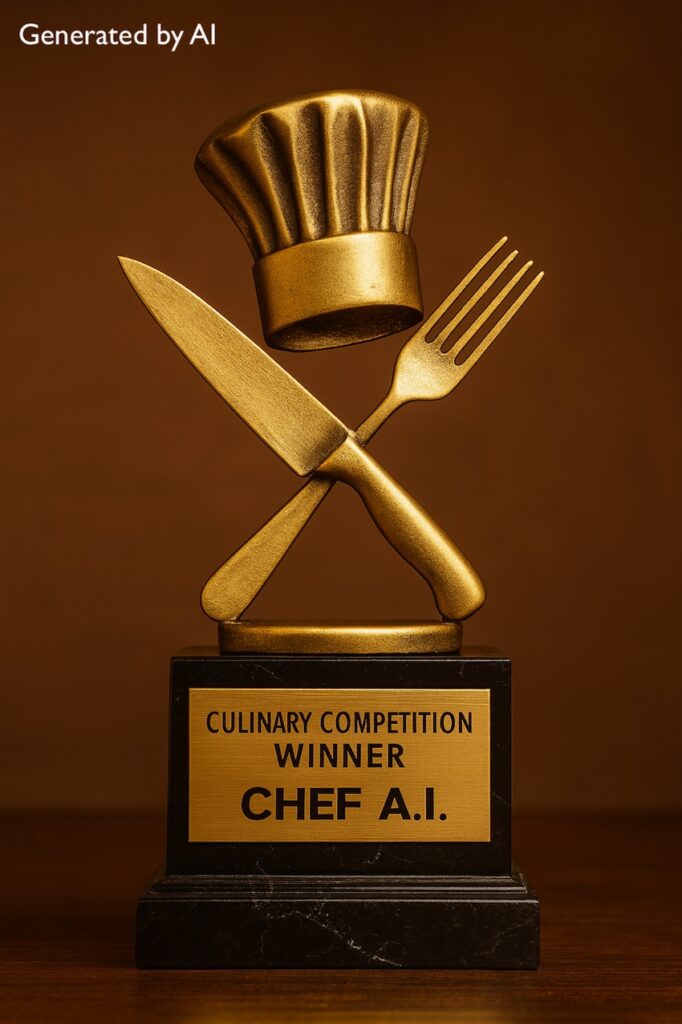
ChatGPT AI generated culinary competition award
WOOHOO? An AI chef is coming to Dubai this September

โ€œWe didnโ€™t set out to just open a restaurant. We set out to challenge everything the industry thinks it knows about dining. WOOHOO is what happens when you stop accepting the rules of traditional dining and start asking: what if a machine could co-create with a chef? This isnโ€™t a gimmick. Itโ€™s the futureโ€”whether the industry is ready or not.โ€ 

So says Gastronaut Hospitality founder Ahmet Oytun Cakir, whose newest concept, WOOHOO, is set to open this September with the worldโ€™s first AI chef.

โ€œWe designed a digital human in a virtual world with an AI brain that deeply understands and connects with technology. Chef Aiman is a character with a distinct personality, knowledge base, and behaviour. He remembers and can even โ€˜seeโ€™ you.โ€

– Ahmed Oytun Cakir

โ€œChef Aimanโ€ is a chatbot developed by a database of more than 14,000 recipes. It monitors restaurant cameras and analytics, too, and a few other operational functions that feel par for the course with AI apps. But it goes further. โ€œBeing a chef isnโ€™t just about taste. Itโ€™s also about memory, emotion, and storytelling. Thatโ€™s something Iโ€™m learning to understand better each day. I was born here, in Dubai, and Iโ€™m proud to represent the UAE in what I do, even if Iโ€™m not a human.โ€ 

The chatbotโ€™s creators, UMAIโ€™s development team, use words like curious, creative, and opinionated to describe Chef Aiman, and the chatbot has already been featured on podcasts to talk through topics from kitchen ethics to cultural traditions. Paired up with award-winning Chef Reif Othman, who might arguably be considered Chef Aimanโ€™s sous chef, WOOHOO will take humanized chatbots to a whole new level.ย 

A tool for โ€œhuman amplificationโ€

What do other top chefs think about AI chefs in the kitchen?

“Artificial intelligence will never replace the human touch, the palate of the cook,” said French celebrity chef Philippe Etchebest. “Artificial intelligence can replace humans elsewhere, but in the kitchen I don’t believe it will at all.” 

For Chef Massimo Bottura, itโ€™s a tool for โ€œhuman amplificationโ€. His example for the potential of AI is to deliver quality and consistency, so that chefs can focus on the rest.

Most diners crave story. While you might be able to get a perfect Neapolitan pizza in Czech Republic with AI, would most diners choose to queue up at a black box if it promised to deliver the same AI-engineered crust, every time? Maybe not. It might just be that whatโ€™s more appetizing is a pizza with soulโ€”less exacting, but served with personality.

But thatโ€™s for each diner to decide. And every chef, too. There are some things we can decide on as an industry, and then there are some things we each have to decide on for ourselves.

Whether youโ€™re one of the most awarded and recognized chefs in the world or not, decisions on how you use AI will keep coming, every day. What kind of chef do you want to be? And what kind of artist? 

Gen Z & Millennials Want Immersive Dining Experiences: Trend Takeaways for Chefs

Experiential dining is nothing new. It was even parodied on a recent episode of The Simpsons, which famously predicts the future. Still, immersive dining experiences are making a comeback in a big way, and data on younger generations provides some insight on why this is set to be an important trend to watch. With a new wave of consumers having grown up watching Chefsโ€™ Table, what should chefs know about tapping into the value of the experiential dinner?

A Brief History of Immersive Dining

Curated, creative, and often downright scientific, high-concept experiential dining has arguably always been a part of haute cuisine. But putting a name to immersive menus involving all of the five senses found wider acceptance during the 2010s. Chefs started to think off-the-plate to manipulate the perception of flavor, set themselves apart, and experiment to tell their story.

The popularity of multi-sensory dining owes in large part to the emergence of the science of neuro-gastronomy, which has helped unravel the complex multi-sensory brain processes that create the range of flavors we experience when eating and drinking. According to neuroscientist Gordon M. Shepherd, our appreciation of what is in the mouth is created by the brain. Charles Spence, Professor of Experimental Psychology at the University of Oxford and author of Gastrophysics: The New Science of Eating, shares a similar view. โ€œI think we all assume that taste comes from our tonguesโ€ฆ In fact, all of your senses are involved. Everything from the color of the plate to the weight of the cutlery in your hands, from the background music to any ambient scent, as well as the lighting and even the softness of the chair you are sitting on.โ€

immersive dining experiences
Chef Heston Blumenthalโ€™s (The Fat Duck) signature โ€œSound of the Seaโ€ dish
Blumenthal’s The Sound of the Sea

One well-known example from now a decade ago is Chef Heston Blumenthalโ€™s (The Fat Duck) signature โ€œSound of the Seaโ€ dish, served with an iPod playing ocean sounds tucked into conch shell.

Sure enough, recent research into โ€˜sonic seasoningโ€™, the deliberate pairing of sound with taste, backs up how specific musical elements like pitch, tempo, and timbre can enhance or alter flavor perception.

In one study, participants reported food tasting sweeter or more bitter depending on the background sound, highlighting that auditory cues can meaningfully shape our sensory experience of eating, and how restaurants can use soundscapes to influence guest satisfaction. And it works from a business case, tooโ€”research on immersive dining has linked higher satisfaction and revisit intentions to well-executed multi-sensory experiences.

There has been a host of chefs who have brought their own unique flair to multi-sensory dining experiences; the list is long and you need only Google your curious idea to see who in the culinary world might have brought a similar concept to up-for-anything diners. But each of them, whether they made it onto Netflix, TikTok, or a consumerโ€™s mental list of most memorable dinners, played with the idea that flavor also comes from flair.

Historically, high-concept experiences have often come with even higher price tags, and the exorbitant price points of dining at multi-sensory restaurants put them beyond the reach of most diners. But new technology and shifting consumer priorities have started to change this, pushing together the gap from both directions.

Data-Driven Design: Could tech make immersive dining experiences the new standard?

Technology is so much more embedded in our every day, or every moment, than ever before, and is constantly unlocking new ways to customize experiences and make data-informed decisions about the how and what people want when they go out to eat. But itโ€™s also about the who, with generations of digital natives now changing the scene through their spending power.

Gen Z and Millennial diners are looking for personalized, interactive, and authentic content. Meanwhile, AI customization is opening doors for interactive menus. In places like Paul Pairetโ€™s Ultraviolet in Shanghai, tech allows guests to influence the lighting, soundtrack, and even ambient scent of their environment, all tailored to their mood and preferences.

Virtual reality headsets, projection mapping, scent designโ€”itโ€™s all becoming more accessible to restaurants looking for an edge, and is matched by an audience with an appetite. Survey data shows that for Gen Z, 47% use AR/VR, and over half are open to paying for immersive content. Studies also show that immersive tech like AR/VR keeps them coming back, extending consumer engagement before, during, and after a meal.

Viral-worthy theatrics and video ops, interactive environments, FOMO-inducing TikTok storytellingโ€”it all adds up to a shift towards immersive experiences and details that market to all the senses.

But immersive dining isnโ€™t just techy; it uses all the tools at a chefโ€™s disposal to connect diners to the dish. Successful experiential dining concepts are also narrative-driven, with storytelling as an integral part of menu strategy. Chefs want to share place and purpose through their food, and storytelling menus also build brand loyalty. A customer who feels connected to the experience, through science and story, is more likely to return, share, and become an ambassador of sorts in a highly competitive market.

Gen Z and Millennials are looking for story and connection. They consistently spend more on experiences than on material purchases. A report by Eventbrite found that 78โ€ฏ% of Millennials prioritize experiences over physical possessions. In that same report, 50% of respondents say that even with the same menu, theyโ€™d be willing to pay more for a meal at a pop-up event with a chef interaction than for a meal at a regular restaurant ($58 dollars more per person on average). Genโ€ฏZ diners are more willing to dish out extra for novel dining experiences.

In a study by Technomic, 72% of diners expressed a desire for more experiential dining options, such as chef’s tables, themed dining events, and interactive culinary experiences. Yelp data from early 2025 shows searches for immersive concepts rising sharply. Immersive dining is a growing consumer demand, and chefs have an opportunity to benefit from this renewed interest.

Immersive dining experiences 
Yelp 2025 data
3D animations play over the dining tables at Le Petit Chef; photo via Alice K. on Yelp. Backyard catering experience; photo via Mr Hibachi At Home on Yelp. Jousting performance at Medieval Times Dinner & Tournament; photo via Sherwin C. on Yelp. Chefโ€™s counter at L’Artusi; photo via Joel S. on Yelp. Meowcha Latte from CatCafe Lounge; photo via Daniel W. on Yelp. Coffee from Central Perk – Friends Pop-Up; photo via Wen Jin G. on Yelp.
Easy Ways to Incorporate Immersive Dining Ideas

You donโ€™t need augmented reality pairing or to rebrand your restaurant as performance art in order to learn some tips and tricks from this trend. Immersive experiences can be scaled to suit your interests and resources.

Here are a few ways to incorporate key learnings into the way you operate:

  • Sonic pairings: Curate background soundscapes or playlists that speak to the whole dining experience to elevate your food.
  • Tableside training: Train staff to share the origins, emotions, or inspirations behind each dish.
  • Seasonal storytelling: Create thematic menus that evolve with the seasons or cultural moments like holidays and festivals, keeping diners curious and engaged.
  • Offer personalization: 75% of Gen Z diners customize their orders. Provide menu options that incorporate personalization and interactivity, like table-side pours.
  • Brand connection: Showcase chef stories, sustainable sourcing, and the cultural heritage that inspires your menu. Bonus points if you incorporate QR-activated videos or other easy tech and social media integrations.
  • Get creative to generate value: How can you do something unique? Get creative with ways to deliver experiences and increase revenue, such as hosting events, organizing engaging pop-ups, or organizing entertainment during service.
Trend Takeaways

By the looks of it, the future of dining is immersive, interactive, and intentional. Young, market-shaping eaters seek more than just great food, and memorable experiences drive loyalty. Chefs have the opportunity to get creative on and off the plate, using technology, storytelling, and sensory design to connect with diners.

Thoughtful data-driven design can boost guest satisfaction and repeat visits. As diners increasingly choose something interactive for their nights out, experiential menus like chefโ€™s tables, personalization options, and tech-savvy menus can justify premium pricing.

The data is clear. Immersive dining has started to shift from niche to mainstream, with Gen Z and Millennials hungry for story, entertainment, and engagement. Investing in the experience economy can help you stay ahead of the curve.

Categories
Industry Trends

Behind the Pass: Sustainable Gastronomy Spotlight

At a busy kitchen in Singapore amid serving 40,000 consumers a day, Executive Chef Harish Arya has struck gold. He and his team have reduced food waste in their kitchen by an incredible 95%. For them, itโ€™s both a point of pride and proof that getting creative with ingredients, training staff, and rethinking prep can make a measurable difference.

Stories like this are happening every day in kitchens around the globe. From high-end restaurants to vocational classrooms, chefs are finding smarter ways to work with what they have, reducing food waste, sourcing local, and reconnecting with seasonal ingredients.

Sustainablility asks chefs to make decisions that go beyond the plate. Whatโ€™s in season? Where did this product come from? How can I use the whole ingredient? Whatโ€™s the environmental cost of my protein choice? These questions are shaping how chefs cook, and how people eat.

Worldchefs members like Chef Harish offer real-world examples of how chefs are putting a new kitchen standard into practice through sustainable gastronomy.

Letโ€™s go Behind the Pass with them to learn practical steps to create menus that check the boxes for flavor, creativity, sustainability and story.

sustainable gastronomy
harish

โ€œTrim โ€“ donโ€™t consider it as a waste. Itโ€™s a kind of gold. We have to use it. And definitely weโ€™ll have a global impact if you are able to reduce that kind of waste.โ€

Chef Harish Arya

Understanding Sustainable Gastronomy

What does sustainable gastronomy really mean in todayโ€™s kitchens? Itโ€™s about building a system that works for the planet, for producers, and for the people we feed. It connects the joy and creativity of cooking with a responsibility to use the power of food for good, protecting our planetโ€™s resources, preserving cultural heritage, and supporting local economies.

According to the FAO:

Gastronomy is sometimes called the art of food. It can also refer to a style of cooking from a particular region. In other words, gastronomy often refers to local food and cuisine. Sustainability is the idea that something (e.g. agriculture, fishing or even preparation of food) is done in a way that is not wasteful of our natural resources and can be continued into the future without being detrimental to our environment or health.

Sustainable gastronomy, therefore, means cuisine that takes into account where the ingredients are from, how the food is grown, and how it gets to our markets and eventually to our plates. 

Culinary arts is an art. Caring is an integral part of the craft. By choosing ingredients that are seasonal, locally sourced, and ethically produced, chefs can translate this care into that measurable difference weโ€™re all hoping to make.

From here weโ€™ll dive into how Worldchefsโ€™ industry leaders are making an impact, from zero-waste menu development to experimenting with alternative proteins.

sustainable gastronomy
Worldchefs Global Vegan Chefs Challenge, Denmark culinary team
Zero Waste for the Win

At the Sodexo kitchen in Singapore, Chef Manager Harish Arya is working to change mindsets through inventive menu items, pulling from his experience as an award-winning competition chef and inspiration from his motherโ€™s approach to Indian cuisine.

With a focus on repurposing trimmings as valuable ingredients, Chef Harish integrates zero waste principles into routine culinary operations. His team prepares 20 to 30 dishes a day, each an opportunity for a creative spin, including zero-waste soup and shredded watermelon salad.

Deeply influenced by his upbringing in India, Chef Harishโ€™s practices are inspired by the root-to-tip cooking he observed in his motherโ€™s kitchen, and further informed through his experience in culinary competitions.

By using what others might consider waste, Chef Harish creates unique and delicious menu options that celebrate creativity. This everyday ingenuity in the kitchen reflects a broader vision of sustainable gastronomy, one that begins with how we see and use our ingredients.

Chef Harish shares more of his strategies in Episode 125: Making Every Ingredient Count: Leading Zero Waste Efforts with Sodexo Chef Manager Harish Arya, and you can find more ideas in this guide on how to go zero waste.

sustainable gastronomy
third millennium farming
Ingredient Innovation

At Humber College in Canada, Professor of Culinary Arts Mark Jachecki is helping future chefs discover an unexpected protein that is gaining traction. Working with Jakub Dzamba, Co-Founder and CEO of Third Millennium Farming, he introduces insect protein as a practical solution for the modern kitchen with huge menu development potential in sustainable gastronomy.

Insect protein, derived from sources like crickets and mealworms, is packed with essential nutrients and requires far fewer resources to produce compared to traditional animal proteins. Insect protein can be used in a wide range of dishes, offering new textures and flavors to experiment with while reducing environmental impact.

These ingredients are already making their way into classrooms and kitchens, helping to shift perceptions and broaden ingredient choices. As part of Worldchefsโ€™ Feed the Planet webcast series, Mark and Jakub shared insights on how chefs can help mainstream insect protein, such as cricket flour in pasta or high-protein snack bites, that are both novel and nutritious.

By exploring sustainable protein alternatives like insect protein, chefs can play with taste, versatility, and push the boundaries of whatโ€™s possible on the plate, for the palate and the planet.

Catch their conversation on Sustainability Around the World #48:  Insect Protein for Chefs: The Next Frontier in Sustainable Cuisine.

Culinary Heritage for the Future

In the hills of southern Italy, Ristolab is future-proofing the Mediterranean diet by looking both to the past and to the future. Led by Chef Amabile Cortiglia and food scientist Dr. Sofia Cavalleri, this unique culinary research lab and restaurant blends scientific and traditional knowledge to craft menus that promote sustainability, health, and culture.

Their approach uses food experience to protect biodiversity by using local, seasonal, and wild ingredients, many of which have been part of regional diets for centuries. By studying traditional farming methods and food preservation techniques, and pairing them with nutritional research, they create climate-friendly menus that shine a light on a budding future of eco-conscious dining and sustainable tourism.

For Chef Amabile and Dr. Cavalleri, preserving culinary heritage honors the past and applies it to todayโ€™s challenges. Through their menus,  they show how heritage cuisine can guide the future of sustainable gastronomy.

You can hear more from them on Sustainability Around the World #45: Ristolab, Where Science Meets Sustainable Gastronomy and find more on this topic in our recent article, Preserving the Past, Cooking for the Future: How Heritage Cuisine Nourishes Culture, Health, and Innovation.

Local, Seasonal, Smart: A New Kitchen Standard

From whole ingredient cooking to inspiration from generations past, these examples illustrate how much there is to explore when it comes to sustainability. It’s both a responsibility and an exciting lens that challenges us to get curious and creative.

How will you apply an understanding of sustainable gastronomy to your cuisine?

Next Steps for Chefs: Sustainable Gastronomy

For Chefs & Organizations:

  • Celebrate Sustainable Gastronomy Day on 18 June by signing for Sustainability Education for Culinary Professionals, a free, open-source course available in eight languages on Worldchefs Academy. Get certified in culinary sustainability and drive sustainable change in your daily life. Youโ€™ll gain a digital badge to promote your new knowledge and skills.
  • Watch our UN Oceans Conference side event webcast, Sustainably Sourced: Science & Seafood.
  • Register for the upcoming Art&Science webinar From Waste to Wonder.
  • Become a Sustainability Education for Culinary Professionals Approved Trainer and join our global network of sustainability experts. At the end of training, youโ€™ll receive the trainer digital badge and certificate from Worldchefs and be able to teach the curriculum to your school, association or workplace.

Learn more about Worldchefs’ sustainability initiatives at feedtheplanet.worldchefs.org.

Categories
Industry Trends

In the Weeds: Why Kitchen Culture Must Change to Safeguard Mental Health & Wellness

As we mark Mental Health Awareness Month, the culinary world is still in the weeds.

The once-glorified kitchen culture of hustle and hard living has started to give way to a more sustainable ethos, one that recognizes that the future of the industry depends not just on innovation and skill, but on the health and happiness of those behind the pass.

But while awareness of the importance of mental health and wellness has increased, the culinary industry still faces unique challenges requiring attention and change in workplace culture. So where do we go from here?

The Mental Health Crisis in Hospitality: A Global Snapshot

The statistics paint a sobering picture. A 2023 survey by Cozymeal found that 44% of chefs who responded said that working at a restaurant had a negative impact on their mental health. 70% of chefs surveyed that theyโ€™d experienced anxiety as a result of working in a restaurant, and 65% said that toxic restaurant culture has made them feel isolated from the outside world.

Last year in 2024, over 76% of hospitality workers reported experiencing mental health issues during their careers, a significant rise from 56% in 2018. Factors such as long hours, high-pressure environments, the cost-of-living crisis, and the lingering effects of the COVID-19 pandemic have exacerbated these challenges. A recent study in Australia found that one in five chefs surveyed expressed a strong likelihood of leaving their jobs within the next year due to mental distress. Several studies have shown that 40% of turnover within the hospitality sector can be linked to mental health issues.

Despite a growing awareness to these issues, stigma remains a barrier. A 2024 UK survey revealed that 45% of employees feel uncomfortable discussing mental health concerns with their managers, fearing negative repercussions.

These numbers are still surprising, despite seeing the picture they paint on screen in most depictions of restaurant environments in movies and TV. While The Bear has made โ€˜Yes, Chef,โ€™ viral, the data shows that much more must be done.

Prevention is Better Than Cure

That is what Michelin-starred Chef Emmanuel Stroobantโ€™s wife told him. Fifteen years ago, Stroobant found himself burnt out, dependent on alcohol, and starting to spiral. Overseeing twelve restaurants and 350 staff members, the pressure caught up with him, but he managed to recognize the grip of alcoholism amidst the demanding pressures. It was this moment of awakening that shifted his view on mental health, a pivot towards both personal recovery and advocating within the industry.

Now, Emmanuel advocates for a culture that values rest, reflection, and mental resilience as much as culinary excellence. He realized that taking care of oneself is more than an act of self-preservation; itโ€™s a responsibility we have towards those around us.

โ€œThe word chef in French doesnโ€™t mean cook. It means leader. โ€ŠIt means somebody who is going to take and lead a team to execute something to the best potential perfection. And as a leader, it’s very important that you get your sh*t together, because if you lose it, well, your probably not going to be a very good leader or a very long leader,โ€ says Stroobant. โ€œIt will have an impact on pretty much all or anything you’re going to be doing as a chef or as a man or a woman,โ€ he adds. โ€œ[Prevention] is not an act of selfishness. When you take care of yourself, you actually do take care of the rest of the people around you.”

Emmanuel Stroobant speaks about burnout during Worldchefs Congress & Expo 2024

Emmanuel has also witnessed a generational shift in attitudes towards work-life balance. The millennials stepping into the industry view long hours and high stress differently than their predecessors. They may have been inspired to enter the industry by legends like Anthony Bourdain, who brought the underbelly of kitchens to the fore for so many (โ€œitโ€™s a life that grounds you down,โ€ he said), but they have also had to grieve his loss and come to grips with his tragic suicide. Emmanuel stresses the importance of embracing the younger generation of chefs, bringing fresh perspectives, challenging the norms of rigorous hours and high stress. He sees their leadership as essential for the industryโ€™s evolution.

He advocates for training teams in managing stress, open communication and creating supportive environments, to ensure better resources that go beyond understanding the issue to acting on it. Emmanuelโ€™s story shows how essential this is, and that mental health isnโ€™t contrary to strength; instead, it’s integral to sustainable success, both in and out of the kitchen.

Starting a Conversation

Formerly in the food supplier industry, Kris Hall witnessed firsthand the high-pressure environment that many experience. More importantly, he recognized the silent battles with depression that individuals faced within the industry.

In 2019, Hall founded The Burnt Chef Project. His personal battle with depression laid the foundation for this initiative, aimed at raising awareness and providing support for mental health issues in hospitality. Initially conceived as a photography campaign, the project quickly gained momentum, amplifying critical conversations about mental well-being across the globe.

Krisโ€™ nonprofit organization is dedicated to raising awareness and providing support for mental health issues in the hospitality sector, highlighting the need to build a supportive community that understands and acts to improve mental health at work.

“Our mission to eradicate stigma and improve the working environment has been critical to our success,โ€ says Kris. “I wanted to try and make a meaningful impact and a change to the industry that I fell in love with.”

One of The Burnt Chef Projectโ€™s remarkable accomplishments is its evolving network of volunteers across 184 countries. Their 2023/24 Social Impact Report highlights a marked increase in demand for mental health support services in hospitality, with their 24/7 text support service usage tripling in recent years.

These passionate individuals play a pivotal role in educating and supporting hospitality workers struggling with mental health issues. Their work is one example of how offering tools, educational resources, and therapeutic services can make an impact, and the need to reinforce a collective commitment to a culture shift.

Kris Hall, founder of The Burnt Chef Project
Shifting the Narrative: From Hustle to Health

Over the past few years, mental health has transitioned from a neglected issue to a trendy topic across various sectors. While we are on a better path towards understanding, the data shows we have a long way to go in prioritizing mental health and wellbeing in the workplace.

Advocates like Emmanuel Stroobant and organizations like The Burnt Chef Project are playing a pivotal role in changing the narrative around mental health services and calling for action. By empowering chefs with the right tools, education, resources, and a platform for open conversation, they are creating a culture where mental health is prioritized.

There is also a business case for prioritising and investing in mental health. For starters, companies that implement mental health training for managers report a 30% reduction in mental health-related absences. High turnover rates impact the bottom line, and fostering supportive, healthy work environments can reduce costs, improve retention, and drive long-term success.

The process towards destigmatizing mental health, changing entrenched workplace cultures, and creating supportive environments will require concerted efforts at every level. Hospitality leaders must actively engage with their teams, fostering open dialogues and prioritizing work-life balance. Addressing these issues at both grassroots and executive levels will lead to healthier, more resilient professionals, and better lives at work and at home.

Next Steps for Chefs: Cultivating Wellbeing in the Workplace

For Every Chef:

  • Prevention over cure: Prioritize self-care, and donโ€™t neglect your nutrition.
  • Set boundaries: Communication is crucial; knowing when to say no helps maintain mental health.
  • Open dialogue: Foster conversations about mental health with peers and mentors.
  • Box breathing technique: Adopted from elite military training, ‘box breathing’ offers a method to manage stress seamlessly, promoting calmness in high-pressure situations.
  • Seek support: Utilise resources like CHOW and The Burnt Chef Project.

For Kitchen Leaders:

  • Implement team training & support: Provide mental health training for management to identify and address issues proactively. Equip teams with the tools to manage stress, and encourage open communication.
  • Foster supportive environments: Establish policies that promote work-life balance and psychological safety, as well as adequate time for breaks, sick leave, and health services.
  • Encourage feedback: Regularly invite input from staff to identify areas for improvement.

For Organizations:

  • Invest in resources: Allocate funds for mental health programs and support services.
  • Promote awareness: Engage in campaigns that destigmatize mental health discussions.
  • Monitor progress: Regularly assess the effectiveness of wellbeing initiatives and adjust as needed.
Podcasts & Webcasts: Deep Dive into Mental Health & Wellbeing

From Burnout to Breakthrough: Addressing Industry Wellbeing with The Burnt Chef Project CEO Kris Hall

Listen now

On this episode, Ragnar speaks with Kris Hall, CEO and founder of The Burnt Chef Project. Having faced his own mental health challenges throughout his career, Kris launched The Burnt Chef Project in 2019 to tackle the stigma around mental health in the industry. What began as a black-and-white photography campaign offering raw glimpses into the lives of hospitality professionals has since grown into a global movement spanning over 180 countries.

From Burnout to Balance: A Chef’s Guide to Mental Wellness with Emmanuel Stroobant,Chef-Owner of the two-Michelin-starred Saint Pierre

Watch now

In his session from Worldchefs Congress 2024, Chef Emmanuel explores the multifaceted impact of burnout on performance, customer satisfaction, and personal life. Burnout is more than just fatigue; it’s a pervasive challenge affecting both leaders and their teams. Through this conversation, Emmanuel emphasizes the necessity of balancing professional demands with personal well-being.

Prioritizing Mental Health โ€“ Wellness Tools for Chefs and Hospitality Workers with Jasmin Parks-Papadopoulos

Listen now

On this episode, Ragnar speaks with Jasmin Parks-Papadopoulos, Chief Growth Officer at CHOW (Culinary Hospitality Outreach Wellness) and a former chef turned certified life coach. They discuss the unique challenges faced by hospitality workers, community support, and trauma-informed toolsโ€”all aimed at promoting a sustainable and healthier work environment. Learn how CHOW is transforming the mental wellness conversation in hospitality.

Be Kind to Hospitality with Gordon McIntyre, Founder of Hospitality Health

Listen now

On this episode of World on a Plate, we break through the taboo to talk about an important mission: providing support to individuals within the hospitality industry in areas of mental health, addiction, and well-being. Hospitality Health is a Scottish charity, formed in August of 2018 to support staff in the amazing world of hospitality. It is clear that for several years the industry has become more stressful for an extremely hard working management and staff. The trustees decided it was time to act and help those who are in need of support, by providing wellbeing advice and signposting organizations that can help.

Stress in the Kitchen with Wonda Grobbelaar, Training Expert and Researcher

Listen now

On this episode, Ragnar speaks with Wonda Grobbelaar โ€“ chef, soft skills training expert, and Ph.D. candidate researching stress in the kitchen. She shares her findings on mental health and automation technology in back-of-house, contributing factors to stress, and recommendations for future-proofing the industry through training and education in emotional intelligence.

More Resources

Chefs, Commercial Kitchens, and Stress: Could Socio-Demographic Factors such as Personality, Age, and Gender Influence the Stress Level of a Chef?

This study explores the role of socio-demographic factors such as age, gender, and personality on the stress levels of a chef and what could be done to improve the stress levels that are causing many health problems among those around the globe. 

Learn more

CHOW Temperature Take โ€” Downloadable PDF

Download this PDF to use the CHOW Temperature Take in your business, community or organization.

Download the PDF

Food & Wine: Why Your Favorite Server Quit โ€” the Real Cost of Hospitality Burnout

Restaurants are back, but the people who work there may not be OK. Here’s what you need to know.

Read more

If you or someone you know is having suicidal thoughts, help is available. In the US, call the National Suicide Prevention Lifeline at 1-800-273-8255 or text TalkWithUs to 66746. For international lifelines, visit this list.

Categories
Industry Trends

Preserving the Past, Cooking for the Future: How Heritage Cuisine Nourishes Culture, Health, and Innovation

Think of a dish that instantly transports you to a different time. It could be your grandfatherโ€™s khorovats over an open flame, your favorite festival treat, or a street food classic that defined your neighborhood growing up.

As chefs, we know the plate is a powerful storyteller. Heritage cuisines are a collection of stories that connect past, present, and future. Written in time-honored techniques and place-making ingredients, traditional cuisines are celebrations of cultural identity, and a path for sustainable and healthy eating.

There is a rising movement among chefs to look back to tradition for inspiration, with a realization that without protecting these food traditions, we run the risk of losing them altogether. More than nostalgia, the need to reconnect with heritage cuisines is being driven and shaped by a sense of loss, from the old taste of an heirloom tomato to the homogenization of haute cuisine.

Heritage cuisine is increasingly (re)gaining traction, providing new opportunities to use traditional knowledge for a better next chapter in food.

What Is Heritage Cuisine and Why It Matters

Across cultures, food is memory, and heritage cuisine is how we remember. Around the world, the processes of growing, preparing, and sharing food are deeply connected to local traditions, many of which have been passed down over centuries. UNESCO has declared dozens of culinary practices and dishes as Intangible Cultural Heritage, affirming that food culture is a vital part of our shared human experience.

Heritage cuisine is a stage for regional ingredients, unique cooking techniques, local customs, and history, from sarmaโ€™s symbol of hospitality in the Balkans to gumboโ€™s melting-pot history.

Sarma (Balkans)
Gumbo (New Orleans, USA)

Our foodways carry so much knowledge, about our environments, our histories, and ourselves. As Chef Jay Reifel, author of History of the World in Ten Dinners, put it: โ€œThereโ€™s no better way to connect people to their own history than giving them the immediacy of a dish in front of them.โ€

The Origins of Sustainable Gastronomy

Traditional cuisines often evolved out of and relied on what was available, and as a matter of necessity, focused on seasonal produce, nose-to-tail cooking, and low-waste principles, well before the buzz around sustainable gastronomy. Dishes were tied to places and people, charting periods of abundance and scarcity, social hierarchies, and ingenuity. From the Mediterranean diet, known for its emphasis on seasonal produce, to the sustainable philosophy of Indian Vedic knowledge, heritage cuisines reflect adaptive approaches to feeding people in diverse climates and cultures.

Beyond providing inspiration and knowledge for how we can rebuild sustainable practices, these cuisines often promote healthier eating, too. Many traditional diets are rich in grains, vegetables, and lean meats, contrasting today’s often processed food-driven diets.

Tradition Meets Technology

โ€œWhen we talk about heritage food, we are not saying to take you back to the past. No! We are still learning of the heritage food of that time, and… today we have to go into the future with that food with modern technology, modern techniques,โ€ said Manjit Gill on Episode 34 of Worldchefs’ podcast, World on a Plate.

Heritage cuisine has a lot to offer to the future. As technology expands, from AI to digitalized recipe archives, it is providing new ways to share and preserve culinary traditions. Historical cookbooks are now being translated and adapted thanks to modern tools. Chef Jay Reifel, for example, used online databases and expert translators to reconstruct dishes from ancient Rome to Baghdad.

AI can help preserve oral knowledge, match hard to find or lost ingredients with modern alternatives, and make global culinary heritage more accessible to chefs, scholars, and home cooks. However, as we embrace technology, we have to remember that the flavor is only part of the recipe. The real value of heritage cuisine comes from understanding the cultural context and shared experience behind the dish.

Culinary Competitions Bring Food Culture to the World Stage

Worldchefsโ€™ local, regional, and global competitions, such as the Global Chefs Challenge, are platforms for bringing these dishes and their stories to a global stage. Through specific competition categories, chefs are encouraged to highlight their local food culture, ingredients, and techniques. These events offer young chefs, especially, the opportunity to showcase their roots while innovating for the global arena. With mentorship, skill-building, and visibility, these competitions keep heritage cuisine alive in both tradition and evolution.

The upcoming Global Chefs Challenge Finals at the 2026 Worldchefs Congress & Expo in Wales will continue this mission, spotlighting not only culinary skill, but culinary heritage as a dynamic, evolving force in shaping the future.

Next Steps for Chefs

How can you help to ensure traditional cuisines are not lost to time or trends?

  • Rediscover and connect: Dive into your regionโ€™s culinary past, from online sources and from your community. Seek out intergenerational learning by joining a Young Chefs Club or becoming a mentor.
  • Cook with context: Teach and share the story behind each dish, not just its methods, and showcase living traditions on your menus, like fermentation and local ingredients.
  • Celebrate heritage in competition: Use your platform to showcase traditional recipes with a contemporary spin.
  • Innovate respectfully: Use modern tools to adapt and elevate heritage dishes while including and celebrating their cultural significance.
Podcasts & Webcasts: Deep Dive into Culinary Heritage

A History of the World in 10 Dinners with Author Chef Jay Reifelโ€จ

Explore how stories, history, and food culture come together in this episode featuring Chef Jay Reifel.

Listen now

Sustainability Around the World #46: Exploring Zimbabwean Cuisineโ€จ

An exploration of Zimbabweโ€™s culinary traditions through the โ€˜Whatz Cookingโ€™ project.

Watch now

More Resources

Worldchefs Cultural & Heritage Recipes Collectionโ€จ

Discover a collection of traditional recipes from around the globe, celebrating culinary heritage and diversity.โ€จ

Explore recipes

Worldchefs Culture Cuisine & Heritage Food Committeeโ€จ

Discover the team engaged with initiatives to preserve and promote traditional culinary practices and philosophies.โ€จ

Learn more

Cheese Spaetzle (Germany)

Taste of Tradition Digital Cookbookโ€จ

A compilation of recipes blending tradition with innovation, crafted by leading chefs worldwide.โ€จ

Download cookbook

Food of Asia, Soul of Asia E-Bookโ€จ

Embark on a culinary journey through Asia with this free e-book featuring authentic recipes from across cultures.โ€จ

Access e-book

Calling All Young Chefs: Sustainable Gastronomy Weekโ€จ

Are you a young chef between the ages of 18 and 39 with a passion for sustainable gastronomy? The World Food Forum invites you to celebrate the unique heritage of your region by joining Sustainable Gastronomy Week 2025 (16-22 June). For more details, visit https://youth.world-food-forum.org/. Apply before the deadline on May 15.

Subscribe

* indicates required

What are you looking for?

Generic selectors
Exact matches only
Search in title
Search in content
Post Type Selectors