

Categories
Cultural & Heritage Recipes

Chocolate Chip Cookies

See below for recipe

History of Chocolate Chip Cookies

The most notable chocolate chip cookie recipe was invented by American chef Ruth Graves Wakefield in 1938. She invented the recipe during the period when she owned the Toll House Inn in Whitman, Massachusetts. In this era, the Toll House Inn was a popular restaurant that featured home cooking. A myth holds that she accidentally developed the cookie, and that she expected the chocolate chunks would melt, making chocolate cookies. That is not the case; Wakefield stated that she deliberately invented the cookie. She said, “We had been serving a thin butterscotch nut cookie with ice cream. Everybody seemed to love it, but I was trying to give them something different. So I came up with Toll House cookie. She added chopped up bits from a Nestle semi-sweet chocolate bar into a cookie. The original recipe in Toll House Tried and True Recipes is called “Toll House Chocolate Crunch Cookies”. Wakefield gave Nestle the recipe for her cookies and was paid with a lifetime supply of chocolate from the company.

Wakefield’s cookbook, Toll House Tried and True Recipes, was first published in 1936 by M. Barrows & Company, New York. The 1938 edition of the cookbook was the first to include the recipe “Toll House Chocolate Crunch Cookie” which rapidly became a favorite cookie in American homes.

During World War II, soldiers from Massachusetts who were stationed overseas shared the cookies they received in care packages from home with soldiers from other parts of the United States. Hundreds of soldiers wrote home asking their families to send them Toll House cookies, and Wakefield received letters from around the world requesting her recipe, helping spread their popularity beyond the east coast. Chocolate chip cookies were first sold in the UK in 1956 by Maryland Cookies.

Chocolate Chip Cookies – Recipe

RECIPE Adapted by Chef John Coletta

Chocolate chip cookies are commonly made with white sugar; brown sugar; flour; sea salt; eggs; a leavening agent such as baking soda; a fat typically butter or shortening; vanilla extract; and chocolate pieces. Some recipes also include milk or nuts (such as chopped walnuts) in the dough.

Sue Brides, a baker who worked with Ruth Graves Wakefield at the Toll House Inn, passed down the original recipe to her daughter, Peg, who shared it in a 2017 interview:

Yields 30 servings

Ingredients
  • 350g. Butter; Unsalted
  • 275g. Sugar; Granulated
  • 275g. Sugar; Brown
  • 3 Eggs; Extra Large
  • 7.5 g. Salt; Sea; Fine Grind
  • 10ml. Vanilla Extract
  • 10ml. Water; Hot
  • 400g. Flour; All purpose; Sifted
  • 7.5g. Baking Soda
  • 200g. Chocolate Chips; Nestlé’s Yellow Label Chocolate; Semi-Sweet
Instructions
  1. Preheat oven to 190 degrees Celsius
  2. Place the butter and sugars into an electric mixer fitted with a dough hook. Set the mixer onto the lowest speed and allow to form a creamed unified mixture.
  3. Add the eggs; sea salt; vanilla extract and hot water. Continue to mix for 1-minute.
  4. Add the flour and baking soda. Mix for another minute.
  5. The titular ingredient, chocolate chips, are typically mixed in towards the end of the process to minimize breakage.
  6. Utilizing a 60ml. scoop begin to scoop the dough and position them onto parchment paper lined cookie sheet, ensuring 10-centimeter distance from each scoop.
  7. Place the cookie sheet tray into the pre heated oven. Bake for 8 to 10-minutes, until lightly browned.
  8. Transfer the cookies onto a wire rack to cool.

For more recipes, visit www.worldchefs.org/news.
Categories
Cultural & Heritage Recipes

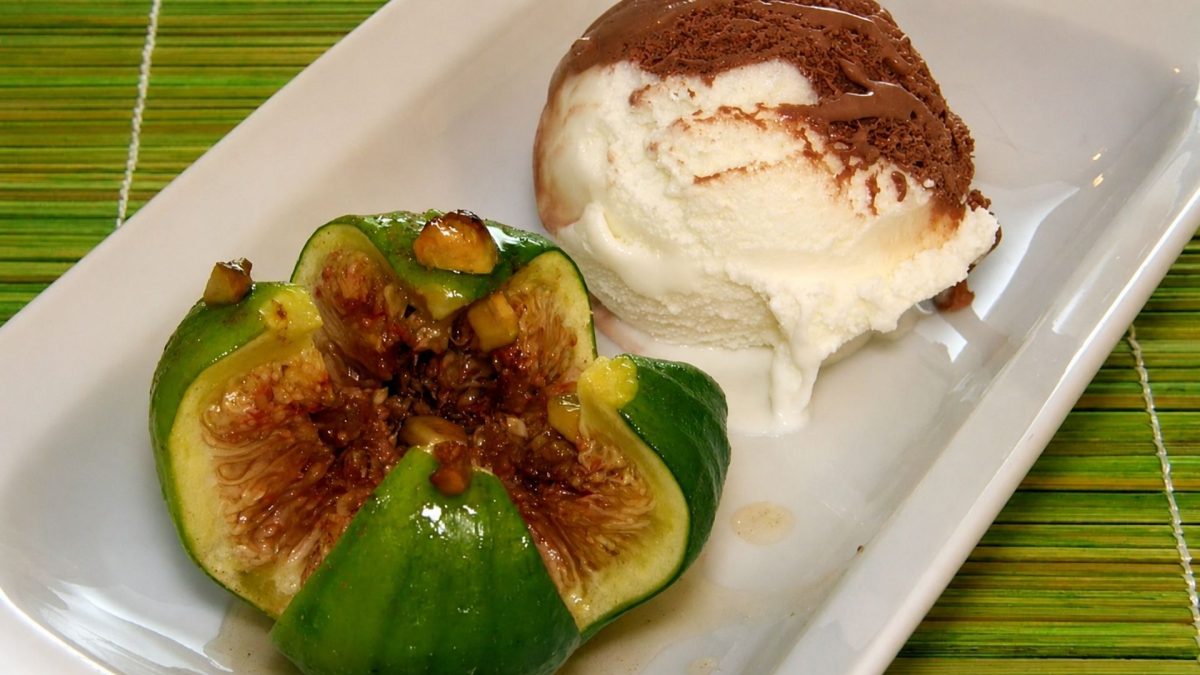
Grilled Figs with Pistachios

See below for recipe

Simple and full of flavour, this Croatian dessert pairs warm grilled figs with honey, pistachios and vanilla ice cream.

Grilled Figs with Pistachios – Recipe

RECIPE Adapted by Chef Eric Glavica

Yields 4 servings

Ingredients
  • 8 large fresh figs
  • 40 g butter
  • 40 g honey
  • 30 g pistachios
  • ½ tsp ground cinnamon
  • 4 scoops vanilla ice cream
Instructions
  1. Rinse the figs under cold running water and pat dry.
  2. Remove the stems, then cut a cross into the top of each fig without cutting all the way through.
  3. Gently open the figs and arrange them in an ovenproof dish.
  4. Place a small cube of butter inside each fig, drizzle with honey and sprinkle with ground cinnamon and chopped pistachios.
  5. Place under a preheated grill at 220°C for approximately 7 minutes.
  6. Arrange two figs on each plate, add a scoop of vanilla ice cream, drizzle with the warm cooking juices and serve immediately.

For more recipes, visit www.worldchefs.org/news.
Categories
Cultural & Heritage Recipes

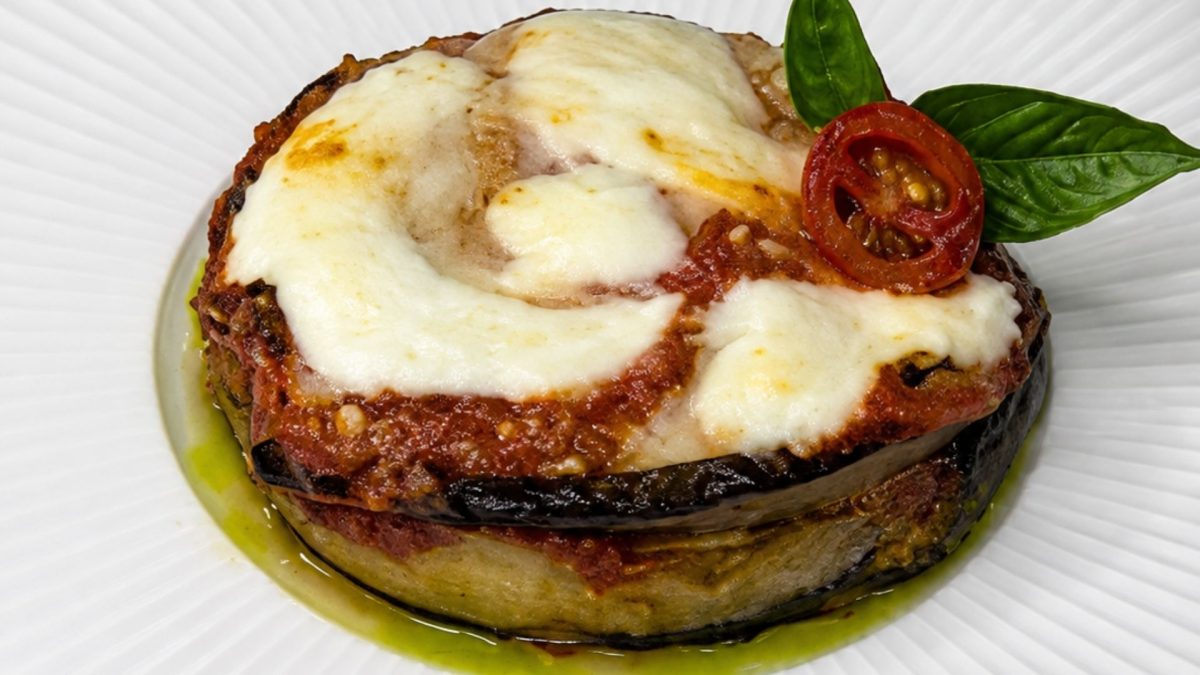
Eggplant Parmigiana: Italian Tradition and Flavor

See below for recipe

Eggplant Parmigiana (Parmigiana di Melanzane) is one of the most iconic dishes of Italian cuisine. Likely originating in southern Italy—especially Sicily, Campania, and Emilia Romagna—it has become a national culinary symbol, prepared throughout the country with regional variations that make it unique every time. Parmigiana tells a story of tradition, but also allows for modern interpretations, with fried, baked, or grilled eggplant, mozzarella or local cheeses, and tomato sauce enriched with herbs or spices.

Eggplant Parmigiana – Recipe

RECIPE Adapted by Chef gianluca tomasi

Yields 10 servings

Ingredients
  • 3 large eggplants
  • 600 g tomato passata (purée)
  • 70 g onion
  • 400 g mozzarella
  • 140 g grated Parmesan cheese
  • 10 g fresh basil leaves
  • Extra virgin olive oil, salt
Instructions
  1. Wash the eggplants and peel them in stripes.
  2. Slice them lengthwise into 1 cm thick slices.
  3. Place them on a baking tray lined with parchment paper, lightly salt them, sprinkle with some of the Parmesan cheese, and drizzle with olive oil.
  4. Bake for 20 minutes at 160°C (320°F).
  5. In a saucepan with a little olive oil, gently sauté the chopped onion.
  6. Add the tomato purée and cook on low heat for 20 minutes. Add salt to taste and a few basil leaves.
  7. Using 10 cm round molds, layer the dish as follows: a slice of eggplant, a spoonful of tomato sauce, a few thin slices of mozzarella, Parmesan cheese, and basil. Repeat the layering to form three equal layers.
  8. Remove the molds and bake at 160°C (320°F) for 15 minutes.

For more recipes, visit www.worldchefs.org/news.
Categories
Cultural & Heritage Recipes

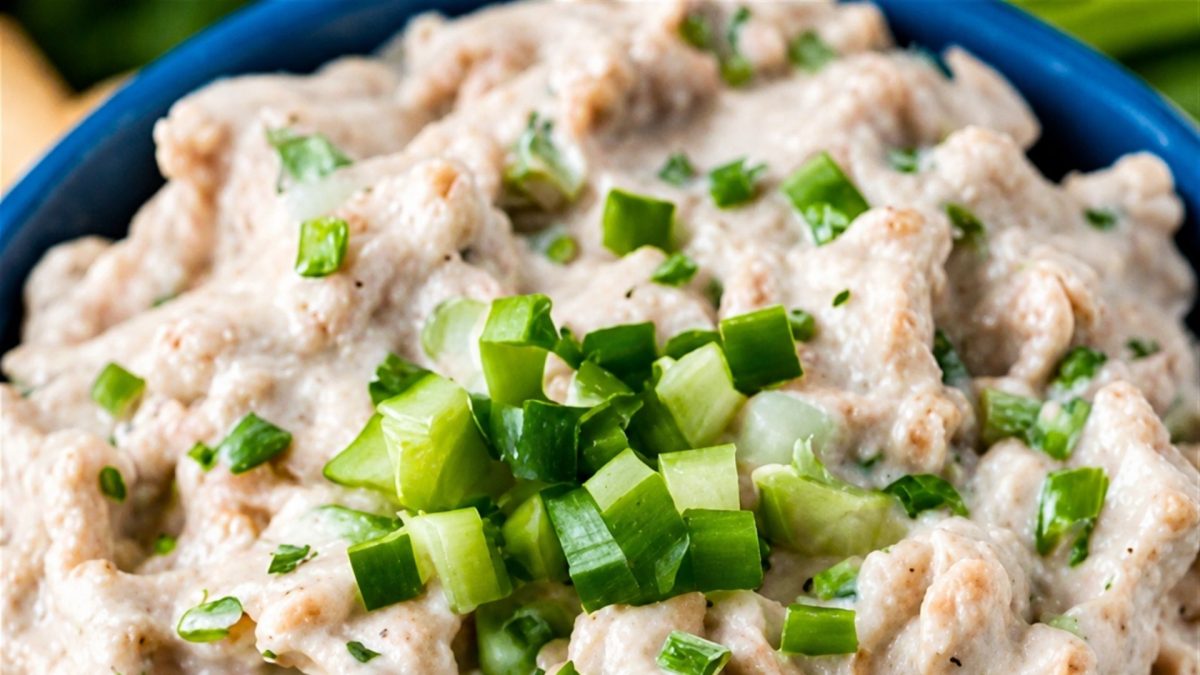
Florida Smoked Fish Dip

See below for recipe

History of Florida Smoked Fish Dip

Smoked fish dip has a long history in Florida and is deeply rooted in the state’s culinary traditions. In the past, South Florida was dotted with smoked fish huts that specialized in smoking fish and selling fish dip. These huts were a popular destination for seafood lovers seeking the best-smoked fish dip in town. While many of these huts have disappeared over the years, the tradition of smoked fish dip lives on.

Today, you can find smoked fish dip made with a variety of fish in Florida. Mullet, kingfish, amberjack, and mahi-mahi are commonly used for smoking. The oilier fish, like mullet and mahi-mahi, are ideal for smoking as they retain their moisture and flavor. However, if you can’t find these specific fish, you can always substitute them with other types of smoked fish available at your local seafood shop.

Florida Smoked Fish Dip – Recipe

RECIPE Adapted by Chef John Coletta

Yields 6 servings

Ingredients
  • 350g. Hot Smoked White Fish; Fillet; Boneless; Skinless
  • 15g. Onion; Yellow or White; Fresh; Peeled; Finely Minced
  • 200g. Cream Cheese; Softened
  • 45ml. Cream; Heavy
  • 30ml. Lemon; Fresh; Juice; Strained
  • 2g. Salt; Garlic; Fine
  • 10g. Celery; Fresh; Washed; Finely Minced
Instructions
  1. Flake white fish, making sure there are no bones, into a food processor.
  2. Add everything else and pulse until smooth.
  3. Refrigerate for 2 hours.
  4. Arrange on appropriate serving vessel. Sprinkle with celery and serve with good crackers and or a sliced baguette.

For more recipes, visit www.worldchefs.org/news.
Categories
Cultural & Heritage Recipes

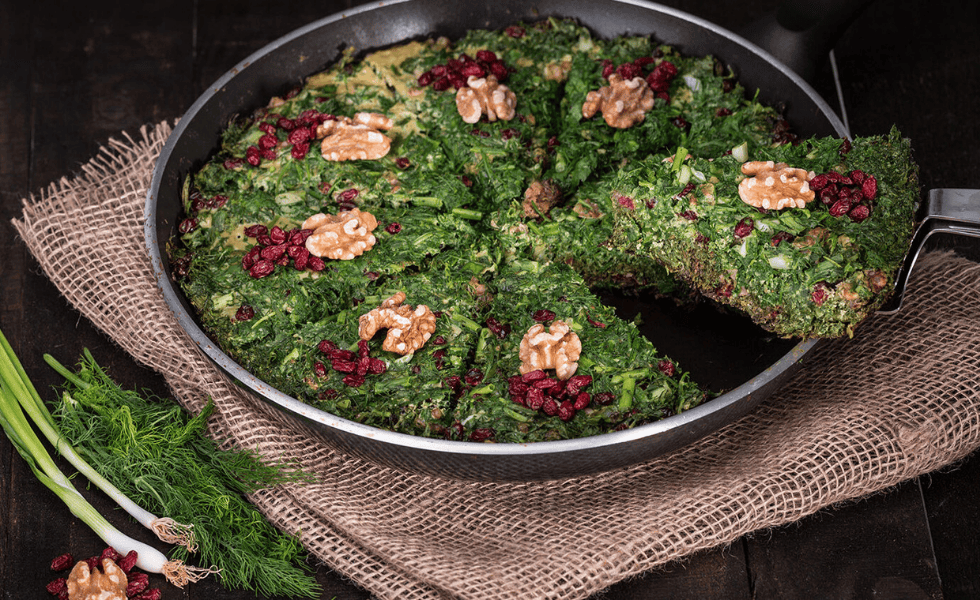
Kükü – Traditional Herb Omelette

See below for recipe

Kükü is a traditional Azerbaijani herb omelette that reflects the deep connection between local cuisine and seasonal agriculture. The dish is prepared with a large amount of fresh herbs such as dill, coriander, spinach, sorrel and green onions, combined with eggs and lightly cooked to preserve natural flavours.

Sustainable & Zero Waste
  • The dish utilizes whole herbs including stems and leaves, reducing kitchen waste.
  • It is based on seasonal, locally sourced greens, minimizing food transportation and environmental impact.
  • Eggs provide a natural, low-processed protein source with minimal packaging and processing.
  • The recipe allows chefs to use leftover herbs or imperfect vegetables, giving them a second life in the kitchen.

This dish demonstrates how traditional Azerbaijani cooking practices naturally align with modern sustainable gastronomy principles.

Traditional Herb Omelette – Recipe

RECIPE Adapted by ORXAN MUXTAROV

Yields 4 servings

Ingredients
  • Eggs 6 pcs
  • Spinach leaves 100 g
  • Fresh dill 80 g
  • Fresh coriander 80 g
  • Green onions 100 g
  • Sorrel (optional) 50 g
  • Garlic greens 20 g
  • Sea salt 6 g
  • Freshly ground black pepper 2 g
  • Clarified butter 40 g
Instructions
  1. Thoroughly wash all herbs under cold running water and drain well.
  2. Finely chop the spinach, dill, coriander, green onions and garlic greens, including the tender stems to maximize flavour and reduce waste.
  3. In a mixing bowl lightly whisk the eggs with salt, black pepper until evenly combined.
  4. Add the chopped herbs to the egg mixture and mix gently to obtain a uniform herb-rich batter.
  5. Heat clarified butter or oil in a non-stick frying pan over medium heat.
  6. Pour the mixture into the pan and cook slowly until the base is set and lightly golden.
  7. Transfer the pan to a preheated oven at 180°C and cook for 8–10 minutes, or carefully turn the kükü to cook the second side.
  8. Allow to rest for several minutes before slicing.

Serving Suggestion

Serve warm or at room temperature, cut into wedges and accompanied by natural yogurt.

For more recipes, visit www.worldchefs.org/news.
Categories
Cultural & Heritage Recipes

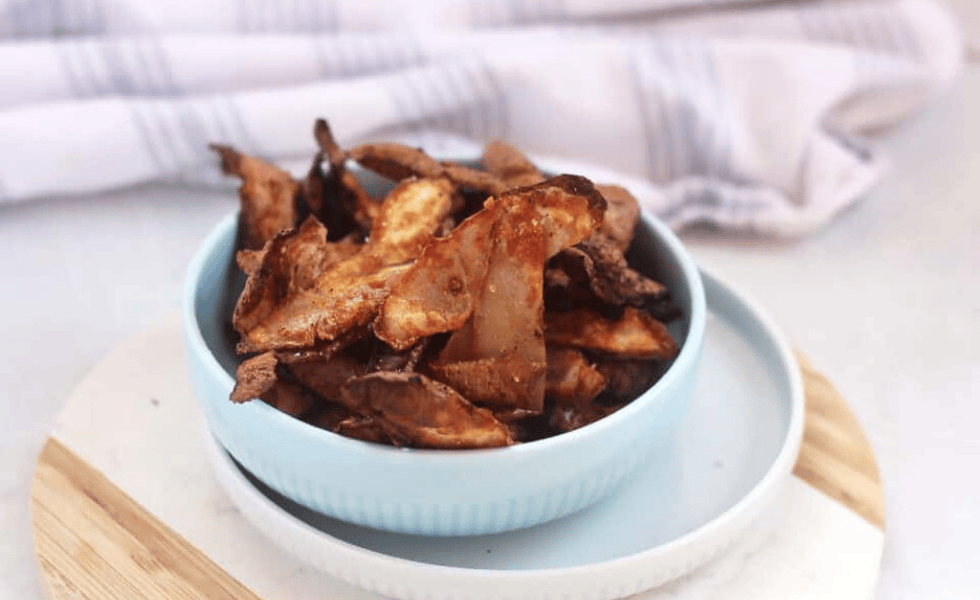
Crisp Vegetable Peeling Chips

See below for recipe

Crisp Vegetable Peeling Chips – Recipe

RECIPE Adapted by JOHN COLETTA

Yields 6-8 servings

Ingredients
  • 50g. Sweet Potatoes; Fresh; Peelings 
  • 50g. Carrots; Fresh; Peelings  
  • 50g. Beets; Fresh; Peelings
  • 50g. Potatoes; Fresh; Peelings
  • 10ml. Spray Oil; Olive; Extra Virgin
  • Sea Salt – Brings out the natural flavors. Keep it simple, or experiment with flavored salts.
  • 5g. Garlic powder
  • 5g. Paprika; Smoked
  • 5g. Chili Powder
Instructions
  1. Dry your vegetables thoroughly, pat them down with a clean kitchen towel or paper towel.
  2. Place the vegetable peelings into a mixing bowl, Spray lightly with olive oil and sprinkle with sea salt. Add garlic powder, smoked paprika, and chili powder. Toss gently so every slice gets just a whisper of flavor.
  3. Lay the peelings in a single layer in your air fryer basket. Avoid overlapping too much—crowding is the fastest way to end up with soggy chips.
  4. Set your air fryer to 175°C and cook for about 8–12 minutes, depending on the vegetable. Keep an eye on them during the last few minutes
  5. Halfway through, gently shake the basket to move the chips around. This helps them crisp more evenly and prevents sticking.
  6. Once golden and crispy, carefully transfer the chips to a cooling rack. They’ll crisp up even more as they cool (yes, that’s when the magic happens). Serve warm or at room temperature for snacking bliss. 

For more recipes, visit www.worldchefs.org/news.
Categories
Cultural & Heritage Recipes

Himalayan Banana Kebabs

See below for recipe

A Recipe with Zero Waste for World Earth Day

An ode to the nutritious and hearty fresh ingredients of the great Himalayan cuisine, finished with a touch of international influence. 

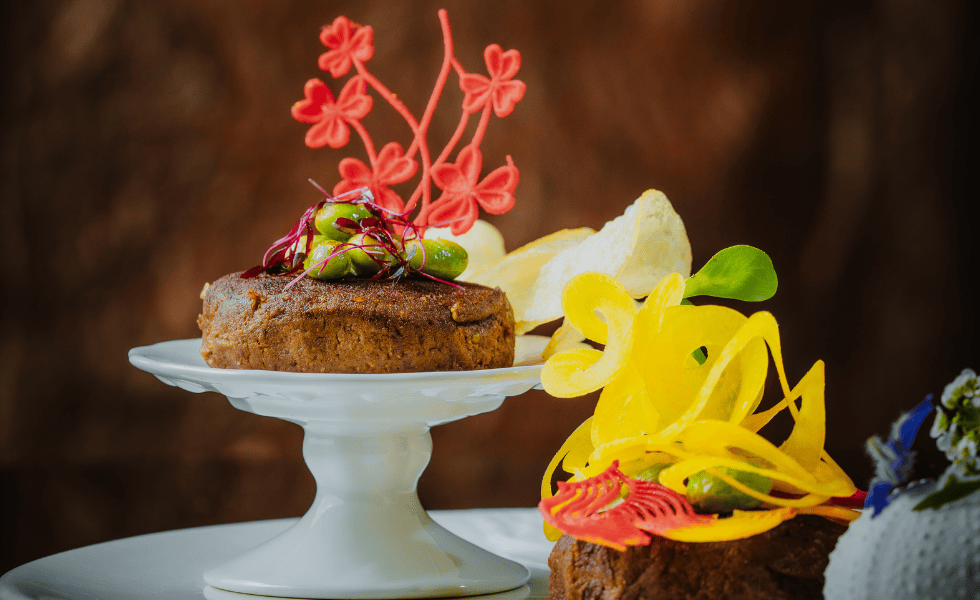
A zero-waste celebration of raw banana where the fruit is roasted whole in its skin to intensify flavour. The pulp becomes a delicately spiced kebab, while the skin transforms into a crisp floral tuille infused with bell pepper essence. Finished with bright curls of pickled yellow baby beetroot for acidity and colour contrast. 

Our Worldchefs campaign calls out in support of our clean air, clean water, clean energy, protected natural resources and a stable climate – all of which are vital to our health and economic welfare, so here there is no water is used , there is no air pollution or carbon giving back and usage of clean energy. 

Himalayan Banana Kebabs – Recipe

Adapted by Nimish Bhatia

Yields 2 servings

COMPONENT 1 : WHOLE OVEN–ROASTED RAW BANANA
Ingredients
  •  4 Raw Bananas (With Skin, Washed & Dried) 
  • 100 Grams Green peas (Fresh With skin)
  • 15 Ml First press Mustard Oil (Optionally Sunflower Oil)
  • 2 Grams Turmeric powder
  • 5 Grams Coriander Powder
  • 3 Grams Cumin Powder
  • 5 Grams Ginger-Garlic Paste
  • Salt To Taste
  • 5 Ml Lemon Juice 
Instructions
  1. Preheat oven to 190°C.
  2. Score bananas lightly (do not peel).
  3. Mix all spices with mustard oil to form a paste.
  4. Rub generously over the entire banana (skin included).
  5. Wrap loosely and roast 25–30 minutes until tender. Cool slightly.
  6. Slit and carefully remove pulp from skin. Reserve skins separately.
COMPONENT 2: ROASTED BANANA PULP KEBAB
Additional Ingredients
  • 20 Grams Roasted Gram Flour
  • 5 Grams Chopped mountain ginger
  • 5 Grams Fresh Coriander with roots
  • 3 Grams Dry Mango Powder
  • 2 Grams Smoked Paprika
  • 25 Grams Finely Chopped green Onion (Optional)
  • Salt a pinch
  • 15 Grams Dairy Ghee 
Instructions
  1. Mash roasted banana pulp until smooth but slightly textured.
  2. Mix in roasted gram flour powder and spices. Shape into small disc shaped kebabs.
  3. Chill 15 minutes to firm.
  4. Sear in ghee on medium heat until golden crust forms on both sides. Also peel the green peas. Seer the peas and season it with salt. Finish in oven for 5 minutes for firmness if needed. 
  5. Texture: Crisp outside, soft and smoky inside.
COMPONENT 3: BANANA SKIN & BELL PEPPER FLORAL TUILLE
Ingredients
  • Reserved Roasted Banana & Green pea Skins
  • 50 Grams Red Bell Pepper (Roasted & Pureed Smooth With Seeds)
  • 6 Grams Rice Flour
  • 8 Grams Cornflour
  • 15 Ml Olive Oil
  • Salt To Taste
  • Pinch Sugar 
Instructions
  1. Blend banana and pea skin with bell pepper puree and use the baby beet skin (which is used in garnish) until very smooth.
  2. Mix in rice flour, cornflour, oil, salt, and sugar to form thin batter.
  3. Spread thinly in floral stencil pattern on silicone mat.
  4. Bake at 160°C for 6-8 minutes until crisp and lacy.
  5. Cool completely — it will harden into delicate edible “floral crips.” Texture: Light, crisp, lace-like with gentle sweetness and smokiness. 
COMPONENT 4: PICKLED YELLOW BABY BEET CURLS
Ingredients
  • 80 Grams Yellow Baby Beets With Skin (Thinly Shaved Into Continuous Ribbons)
  • 10 Ml Lemon Juice
  • 30 Ml Water
  • 2 Grams Sugar
  • A pinch of Salt
  • 1 Gram Mustard Seeds 
Instructions
  1. On dry heat, crackle the mustard seeds and add to it warm water, sugar and lemon juice until dissolved. Pour over beet curls. The skin of beet will be used in the floral tuille. 
  2. Result: Bright acidity to cut richness of kebab.
  3. Plating: Serve in layered elevated plates, garnished with green peas on top , floral tuille and a side of pickled beet. 

Allergens: Mustard Oil

For more recipes, visit www.worldchefs.org/news.
Categories
Cultural & Heritage Recipes

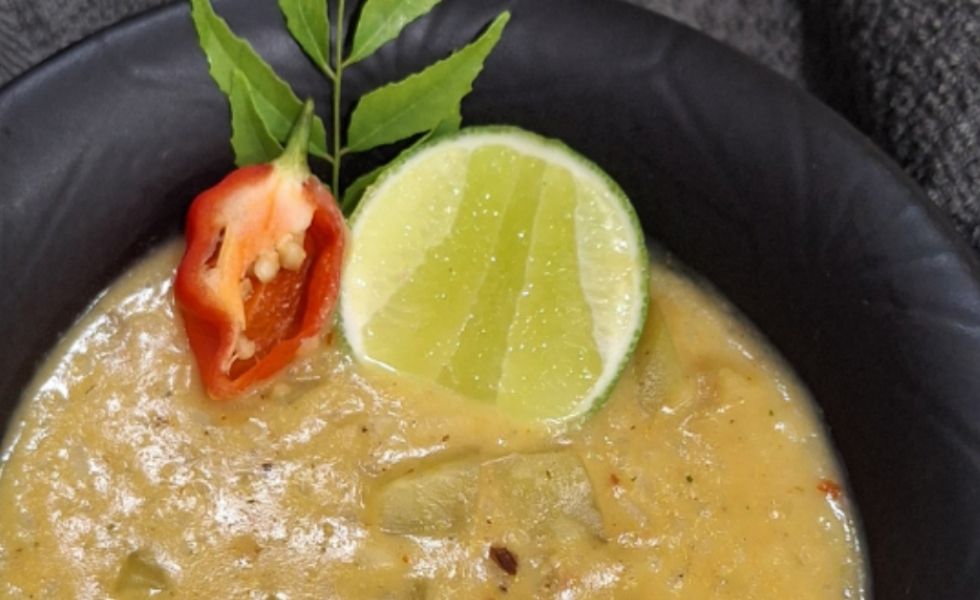
Banbukeyo Baipen – Breadfruit Savoury Porridge

See below for recipe

Breadfruit, Tuna & Coconut – An Earth Day Island Recipe

Breadfruit, tuna, and coconut are ingredients that are naturally abundant in the Maldives and have been part of island cooking for generations. This simple dish brings a warm and comforting feeling, especially during the rainy season when families stay home and the sea is too rough for sailing.

In the past, recipes like this were a way for families to gather around the table and share food made from what the island provides. Breadfruit gives a hearty base, tuna adds rich flavor and protein, and fresh coconut brings a creamy taste that ties everything together.

It’s a dish that reminds us of our roots and the importance of living closely with nature—something that Earth Day celebrates. Whether prepared for a large family gathering or a small meal at home, this recipe is filling, cozy, and meant to be shared.

Breadfruit Savoury Porridge – Recipe

Adapted by Mariyam SHAZY

Yields 4 servings

~25 minutes

Ingredients
  • 1 small onion
  • 1/4 Scotch bonnet pepper
  • 2 Bilimbi (or sour mango)
  • 1/2 tsp turmeric
  • 1/4 tsp cumin (pan-toasted)
  • 4 black peppercorns (pan-toasted)
  • 2-4 dried red chilies (pan-toasted)
  • 1 clove garlic
  • 1 tsp ginger
  • 1 tbsp grated coconut
  • 2 curry leaves
For baipen (cooking)
  • 3/4 cup uncooked rice
  • 1/2 breadfruit, cut into cubes
  • 4 cups water
  • 6-8 curry leaves
  • 4 pandan leaves (rambaa)
  • 1/2 cup sliced smoked tune (valhomas)
  • 2 tbsp Rihaakuru (to taste)
  • lime wedges to serve
Instructions
  1. In a pot combine rice, breadfruit, water, curry leaves, and pandan leaves.
  2. Bring to a boil.
  3. Stir in the ground paste and cook over medium heat. Cook for about 20 minutes.
  4. Add the sliced smoked tuna and simmer for 3–4 minutes, stirring occasionally, until rice is soft and breadfruit is tender.
  5. Stir in rihaakuru and adjust flavor.
  6. Serve. Remove pandan leaves and serve hot with lime wedges.

For more recipes, visit www.worldchefs.org/news.
Categories
Cultural & Heritage Recipes

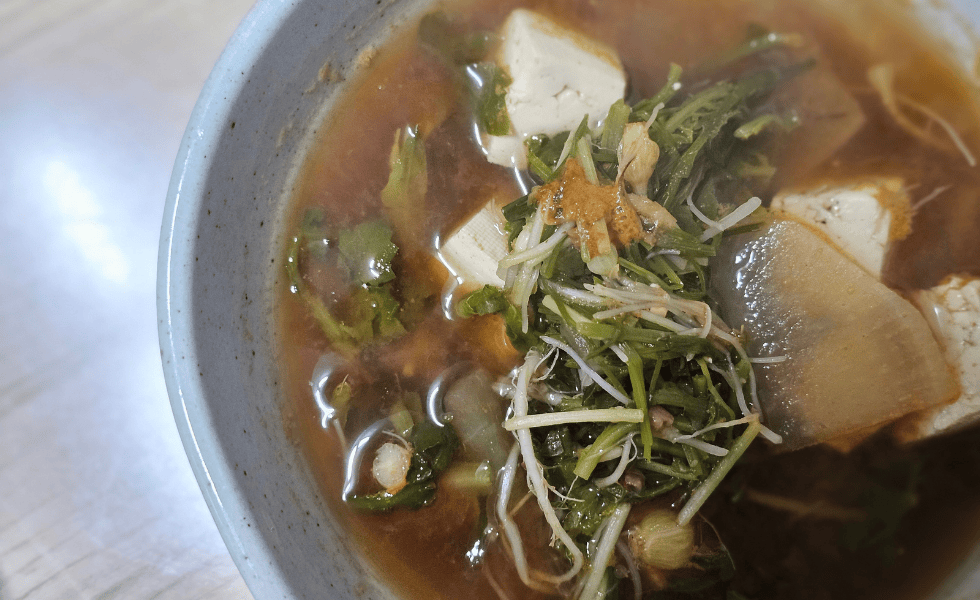
Siraegi Doenjang Soup – Korean Zero Waste Radish Leaf Soup

See below for recipe

Traditional Korean soup made with sun-dried radish greens (siraegi) simmered in soybean paste broth. This dish reflects Korea’s long tradition of root-to-leaf cooking and seasonal food preservation, where the entire vegetable is utilized to minimize food waste.

Why This Dish Supports Planet Protection

• Root-to-Leaf Cooking: Siraegi uses radish leaves that are often discarded, demonstrating whole-ingredient utilization and reducing food waste.

• Low-Energy Preservation: The greens are preserved by natural sun-drying, requiring no refrigeration or industrial processing.

• Seasonal Sustainability: Radish greens are dried after harvest and used throughout the year, reducing reliance on imported or offnseason produce.

• Plant-Forward Cuisine: The dish is primarily vegetable-based, which is associated with lower environmental impact compared to meat-heavy dishes.

Korean Zero Waste Radish Leaf Soup – Recipe

Adapted by JAKE KIM

Yields 4 servings

Ingredients
  • Dried radish greens (Siraegi), 120 g
  • Water, 1.5 L
  • Korean soybean paste (Doenjang), 80 g
  • Anchovy kelp stock, 1 L
  • Garlic, minced, 15 g
  • Korean chili flakes (optional), 3 g
  • Sesame oil, 10 g
  • Tofu (medium firm), 150 g
  • Spring onion, 20 g
  • Soy sauce, 10 g
Instructions

1. Rehydrate the greens: Soak dried siraegi in warm water for about 30 minutes until softened.

Rinse thoroughly, squeeze out excess water, and cut into 4–5 cm pieces.

2. Prenseason the greens: Mix the rehydrated siraegi with minced garlic, sesame oil, and a small amount of doenjang so the seasoning penetrates the greens.

3. Prepare the broth: Bring anchovy kelp stock to a simmer and dissolve the remaining doenjang into the broth.

4. Simmer the soup: Add the seasoned siraegi and cook gently for about 20 minutes.

5. Finish: Add diced tofu and cook for 5 minutes. Adjust seasoning with soy sauce and finish with chopped spring onion.

For more recipes, visit www.worldchefs.org/news.
Categories
Cultural & Heritage Recipes

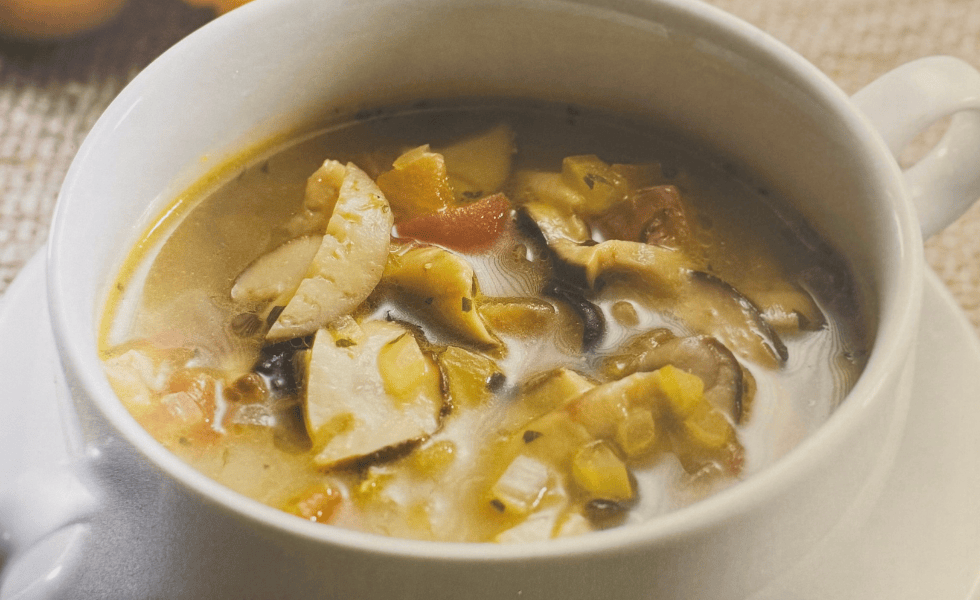
Mushroom Soup

See below for recipe

This is a typical recipe from mountain villages in Italy, it is prepared with care using every ingredient with the utmost respect for nature.

Mushroom Soup – Recipe

RECIPE Adapted by Gianluca Tomasi

Yields 4 servings

Ingredients
  • 400 g fresh porcini mushrooms (or 40 g dried porcini, rehydrated)
  • 1 medium onion
  • 1 carrot
  • 1 stalk celery
  • 2 tbsp extra-virgin olive oil
  • 1 liter vegetable broth (ideally made from vegetable scraps)
  • 1 medium potato (for natural creaminess instead of cream)
  • 1 sprig thyme or parsley
  • Salt and black pepper to taste
  • Stale whole-grain bread for serving
Instructions
Preparing the saffron infusion
  1. Clean the mushrooms
    Gently remove dirt from the porcini with a damp cloth or brush. Avoid washing them under running water so they keep their flavor.
  2. Prepare the vegetable base
    Finely chop the onion, carrot, and celery. These form the aromatic base of the soup.
  3. Light sauté
    Heat the olive oil in a large pot. Add the chopped vegetables and cook for about 5–6 minutes over medium heat until softened.
  4. Add mushrooms and potato
    Cut the porcini into pieces and dice the potato. Add them to the pot and cook for 5 minutes.
  5. Simmer the soup
    Pour in the hot vegetable broth and add the thyme. Let the soup simmer for about 20 minutes.
  6. Blend partially
    Use an immersion blender to blend about half of the soup. This creates a creamy texture while keeping some mushroom pieces.
  7. Serve
    Adjust salt and pepper. Serve hot with toasted cubes of stale bread and a drizzle of olive oil.
Sustainable cooking tips ♻️
  • Make vegetable broth from scraps (carrot peels, onion skins, celery ends).
  • If using dried porcini, strain and use the soaking liquid in the soup for extra flavor.
  • Use stale bread for croutons to reduce food waste.
  • Leftovers freeze well, so you can store extra portions.

For more recipes, visit www.worldchefs.org/news.

Subscribe

* indicates required

What are you looking for?

Generic selectors
Exact matches only
Search in title
Search in content
Post Type Selectors