Categories
Country Member News News Uncategorized World

Chapters: Meet the Michelin Green Star Restaurant Behind the Cover of Issue 32

Chapters: Meet the Michelin Green Star Restaurant Behind the Cover of Issue 32

An Interview with Chapters’ Charmaine McHugo

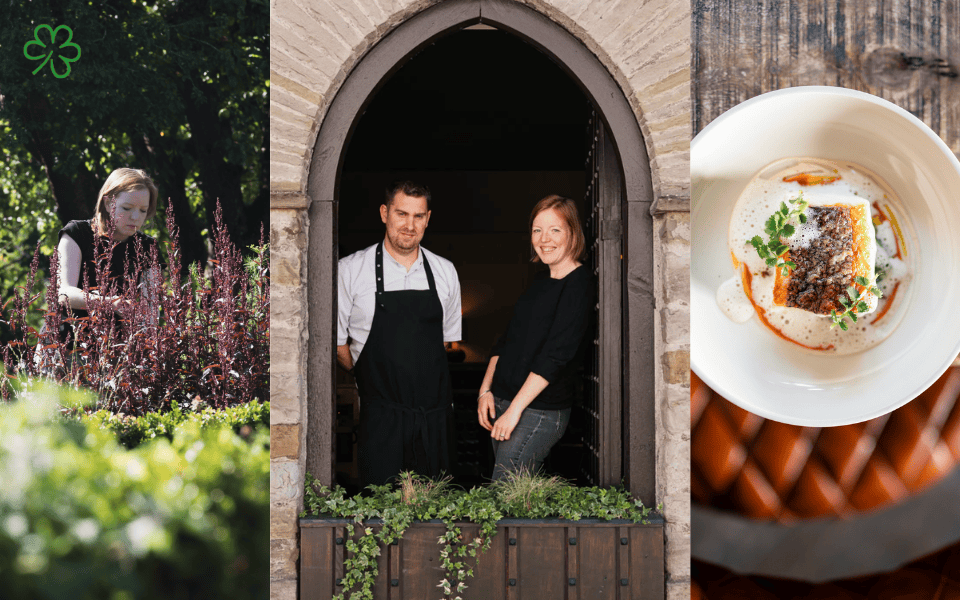
In the heart of the Welsh town Hay-on-Wye, you’ll find Chapters, the Michelin Green Star restaurant from Charmaine and Mark McHugo.

Highlighting the best the area has to offer with menus that showcase seasonal, locally-sourced, and often home grown produce, their food was a natural fit for a theme of “Pasture, Passion, Plate”.

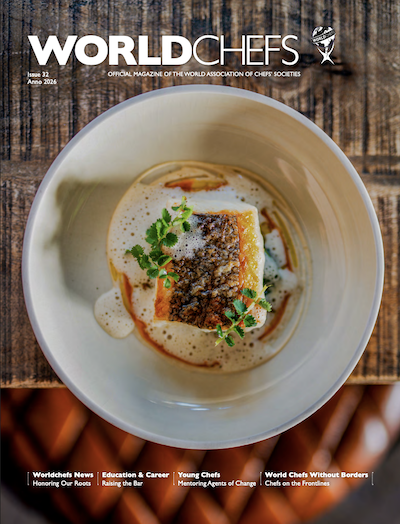
We spoke with Charmaine about their work at Chapters. Read on to discover the story behind the cover of Worldchefs Magazine Issue 32.

How would you describe your food philosophy at Chapters, and how has it evolved over time?

Our philosophy has always been about using ingredients that are in season, so they are at their peak in flavor and wherever possible to support local producers. Over time our relationships with other businesses has grown and we work together closely to create the end result. 

Chapters in Wales Green Michelin star Worldchefs Magazine Issue 32 cover
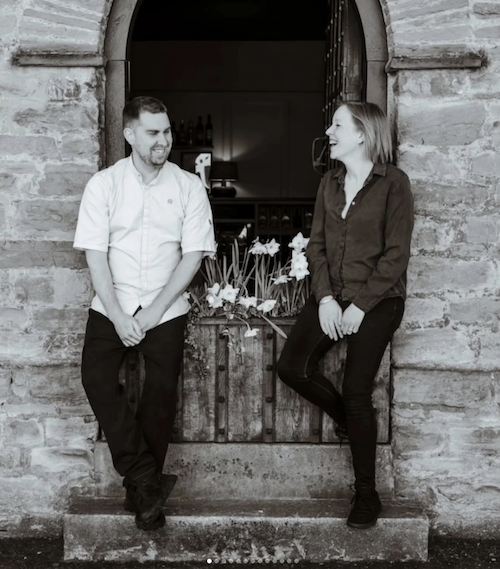
Charmaine and Mark at their restaurant, Chapters in Hay-on-Wye, Wales.

Creating a sustainable restaurant is not easy but it is very rewarding. Our view is that we shouldn’t negatively impact anything, whether this is people, planet, or our community. 

Charmaine McHugo
As a Michelin Green Star restaurant — one of only four restaurants in Wales to be awarded this accolade — how do you interpret the responsibility that comes with that recognition, and what does “sustainability” mean to you beyond the criteria itself?

We take the responsibility really seriously. There are guests who visit us because we have the accolade, and we fully respect the trust and belief that they have in us and the work that we do. 

Creating a sustainable restaurant is not easy but it is very rewarding. Our view is that we shouldn’t negatively impact anything, whether this is people, planet, or our community. 

Chapters in Wales Green Michelin star Worldchefs Magazine Issue 32 cover
Your restaurant is deeply rooted in place. We love to see your supplier shout outs, too. Can you share some stories of how you work with local producers to inform your seasonally-led menu development?

We have our core list of suppliers that we use year round. Many of our hyper-local drinks suppliers are based right in Hay-on-Wye. We have gotten to know them and their families really well over the years. For example, the person that supplies us with beer is also the person that looks after our cats when we go on holiday.

Having a restaurant in Hay means getting involved in the community, getting to know the people that also live and work there. 

What is one dish that expresses your approach to cooking? Can you share the story behind it from ingredient to plate?

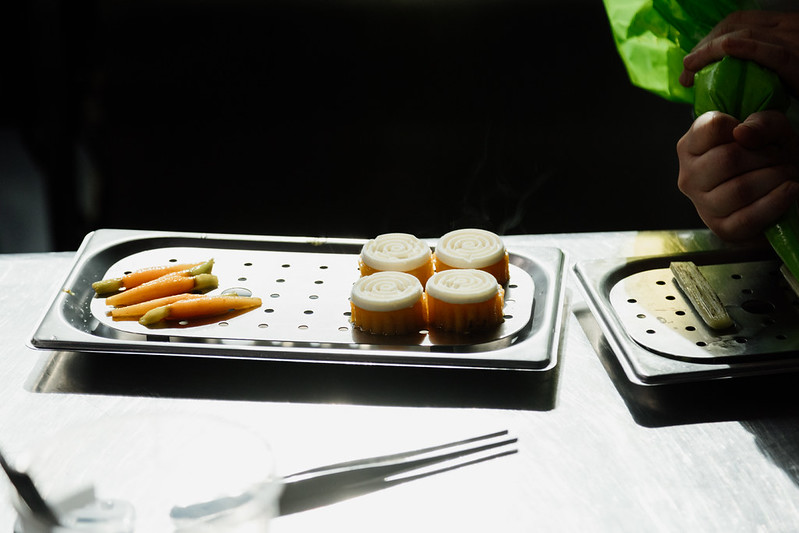
A garden herb crème fraîche.

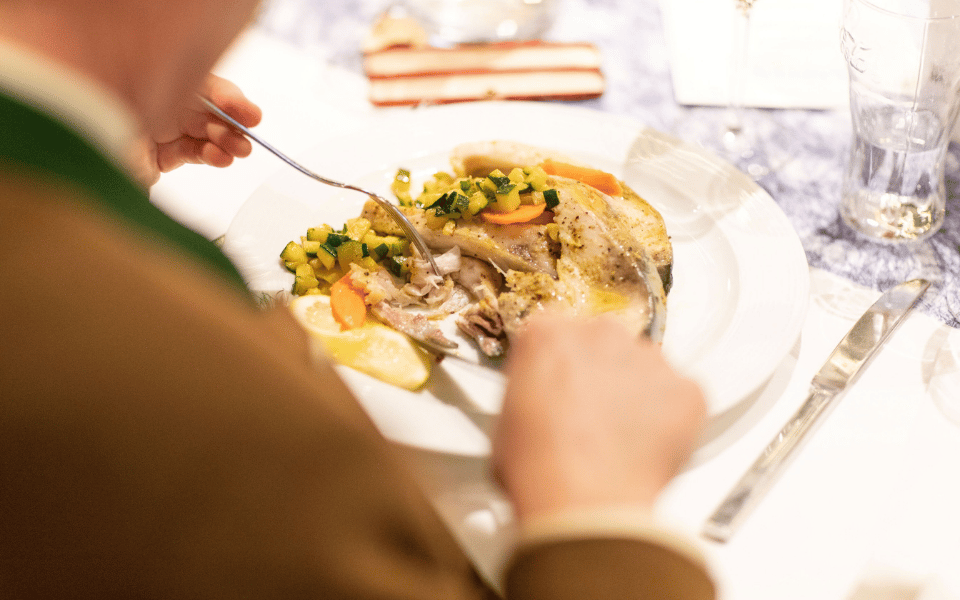
This is simple dish, full of flavor. We make a herb purée with numerous soft herbs and plants from the garden — chive, verbena, burnet, kale, and purple sprouting leaf. This is then whipped with crème fraîche from five miles down the road and set in metal rings. The herb crème fraîche is then topped with the same soft herbs dressed in a chive vinaigrette, pickled onions, linseed crackers, and cured egg yolk. 

You have an incredible regenerative restaurant garden just 8 miles from the kitchen. Can you share some of the planning behind planting local and biodiverse ingredients? 

Yes, there is a nice mix of planting things that Mark has previously worked with — items that are safe and we know we will have a use for, such as beetroot and kale, and then adding in some new curve balls for him to play around with. 

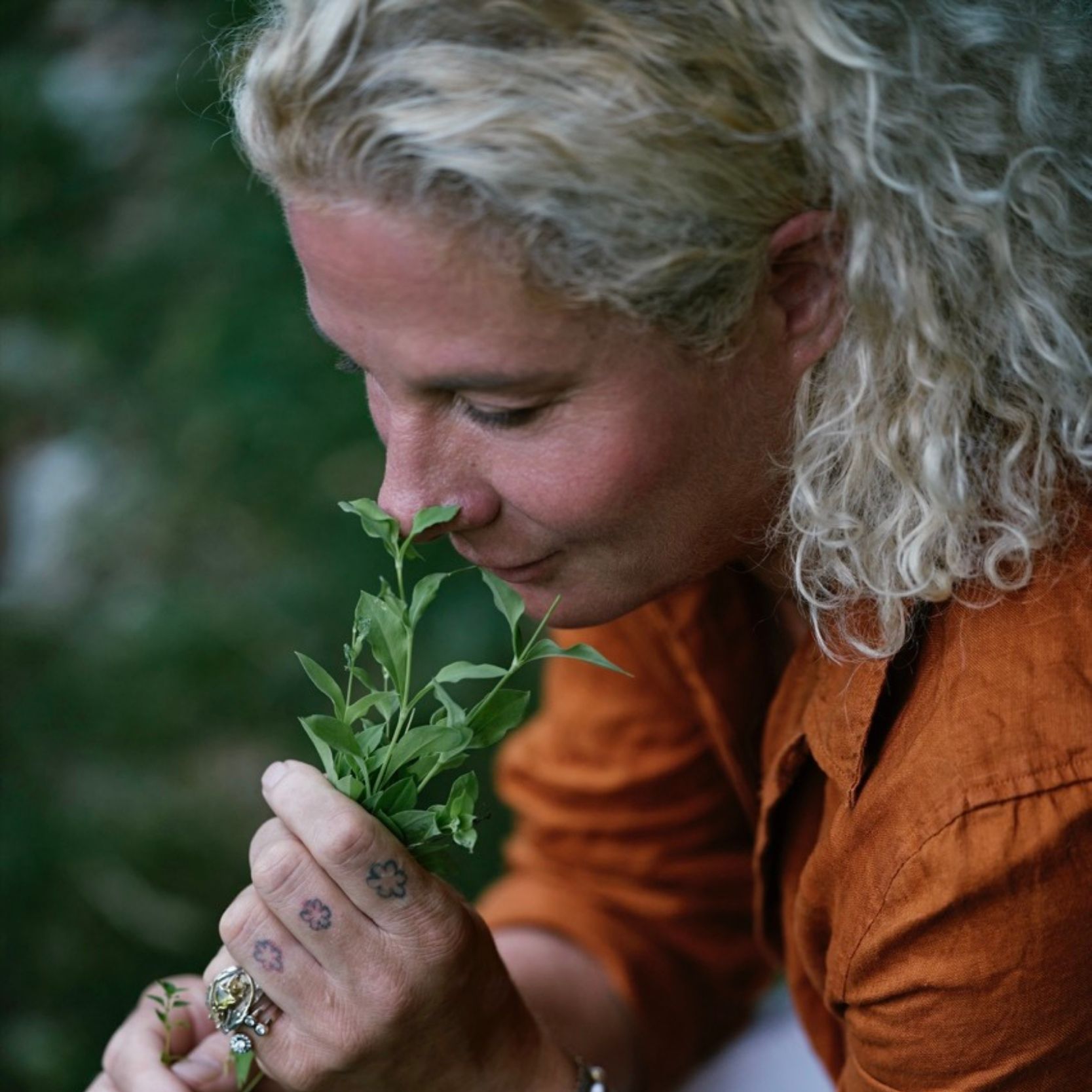
We grow a variety of produce and always encourage ingredients that have dual purpose, so flowers that will increase the pollinators (bugs, bees, and flies) to the garden but also look pretty and are edible, such as Calendula and Borage — in particular white borage which is just fantastic on salads and also self seeds, so we don’t have to grow it year on year, as it does it for us. 

Chapters in Wales Green Michelin star Worldchefs Magazine Issue 32 cover
How does this process impact your day-to-day choices in the kitchen?

It adds variety and flavor, but also it means that the kitchen team are always learning and have new products to play around with. 

Do you have any favorite ingredients to grow and/or source at the moment? We’d love to hear about one that you’ve worked with for a while, and perhaps another that you’ve discovered more recently. 

We focus our growing on vegetables that give you a high yield for the space, so beans, peas, and kale rather than cauliflower and large cabbages. Although, I will say my personal favorite is purple sprouting broccoli, as it is the first veggie in the spring that we harvest and is such a refreshing change to the winter vegetables.  

Something new for us was chicory — a root very similar looking to a parsnip, but when roasted and ground taste like coffee. We have used this in our tiramisu dessert, much to the delight of our guests. 

You use organic heritage seeds from Welsh suppliers, and have mentioned growing perennials. Why is this important to you, and what would you say chefs should know about the flavor potential of perennials?

Using perennials is less for the chefs and more for the soil. No dig gardening is all about soil health — the less we can disturb the soil the better, and as you leave perennials in the ground to do their thing year on year, this is ideal.  We love our herb patch, the roses, the fruit bushes, and our perennial kale.  We also class Jerusalem artichokes as a perennial, but they do require a bit of digging. 

What is one piece of advice you would give chefs looking to learn more about sustainable gastronomy?

Keep reading and talking to other chefs and people in the industry that are doing the same things. You have to keep learning as techniques and theories change and develop.  It’s easy to get stuck in a rut or think you know how to do it, but there is always something new going on and we can only improve…. Good luck!

Chapters in Wales Green Michelin star Worldchefs Magazine Issue 32 cover
About Charmaine and Chapters in Hay-on-Wye

Charmaine is the co-owner of Chapters in Hay-on-Wye, which she runs with her husband Mark.

Follow Chapters on Instagram at @chapters_hayonwye, and read more about their food philosophy, menus, and restaurant garden at www.chaptershayonwye.co.uk.

Chapters Green Michelin Star in Waales Issue 32 Worldchefs Magazine
Read more in Issue 32 of Worldchefs Magazine
Credits

Thank you to Charmaine for the interview and for being a part of Issue 32. Written by Clare Crowe Pettersson.
Cover photo by Ashleigh Cadet.

Categories
Industry Trends

Power on a Plate: Chefs Are Serving Stories to Feed Sustainable Food Systems

Stories have power. Chefs, as storytellers, create delicious ways for people to reconnect with food culture, putting agricultural origins, cultural traditions, and shared values on a plate.

Everyday, culinary professionals and Worldchefs members are doing incredible work around the globe to help build more conscious kitchens. For Earth Day on April 22nd, we are spotlighting the power of storytelling through food, and how chefs are contributing to positive change. The 2026 Earth Day theme is Our Power, Our Planet, calling people everywhere to stand shoulder to shoulder in defense of the only home we share. Our collective wellbeing depends on planetary wellbeing, too.

Our planet is one thing we universally share alongside food and love. In celebration of Earth Day and this reminder of what connects us, we take a world tour of heritage recipes that show the intersection of sustainable gastronomy, storytelling, and love for the craft of cooking.

Recipes with Soul

Recipes with soul help us to understand each other and the world around us. Chefs, through their craft, can inspire others to try new things and learn more about what they may have previously ignored. Below, you can find chefs sharing sustainable recipes and the stories behind them.

SAFEGUARDING HERITAGE

Worldchefs’ Culture, Cuisine and Heritage Food Committee works to protect heritage produce, support growers, and safeguard the natural environment.

Click the dropdown below to meet some of our committee members through their recipes.

Azerbaijan 
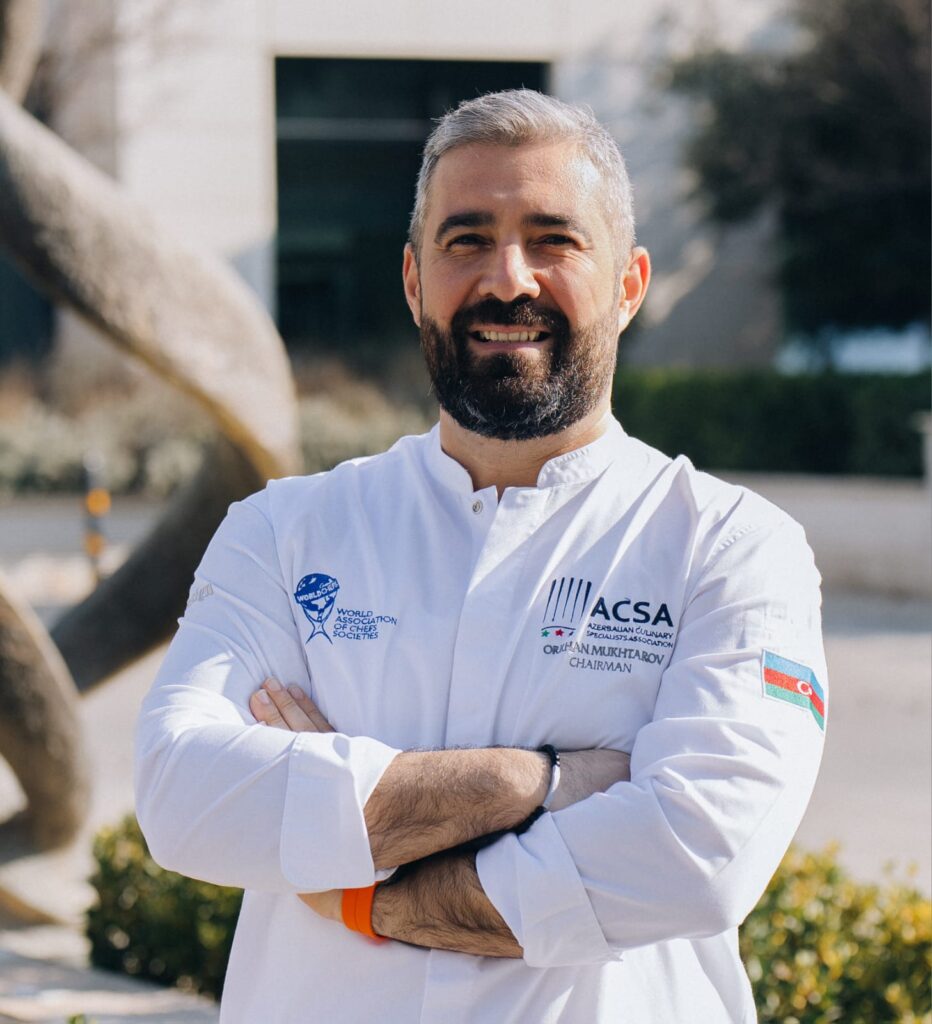
Chef Orxan Muxtarov

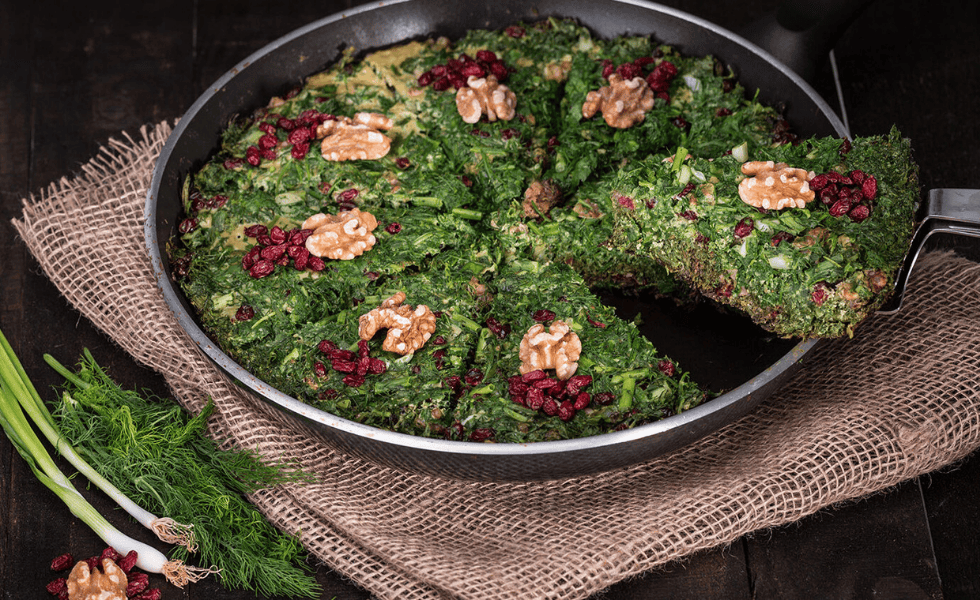
Kükü is a traditional Azerbaijani herb omelette that reflects the deep connection between local cuisine and seasonal agriculture. 

Chef Orxan’s dish is prepared with a large amount of fresh herbs such as dill, coriander, spinach, sorrel and green onions, combined with eggs and lightly cooked to preserve natural flavors.

Croatia
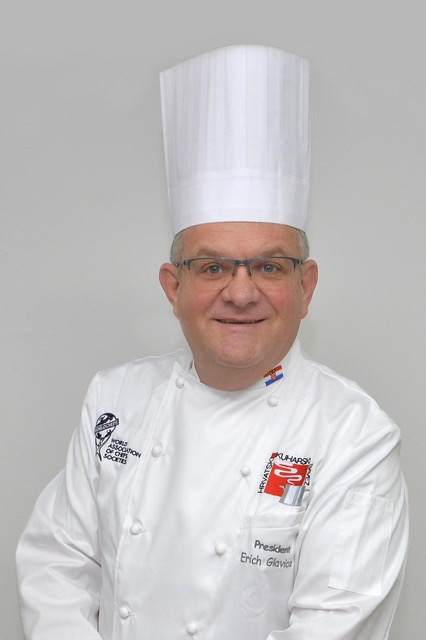
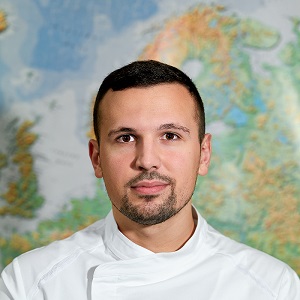
Chef Erich Glavica

Chef Erich’s stew highlights beans, lentils, and barley, climate powerhouses that deliver big nutrition with a small footprint. Packed with fiber, plant protein, and slow-release energy, these humble ingredients create a rich, hearty and low-impact meal.

Plant-forward and easily made meat free, for the meat-eaters it can include Kranjska klobasa, a traditional sausage made using natural processing methods.

India
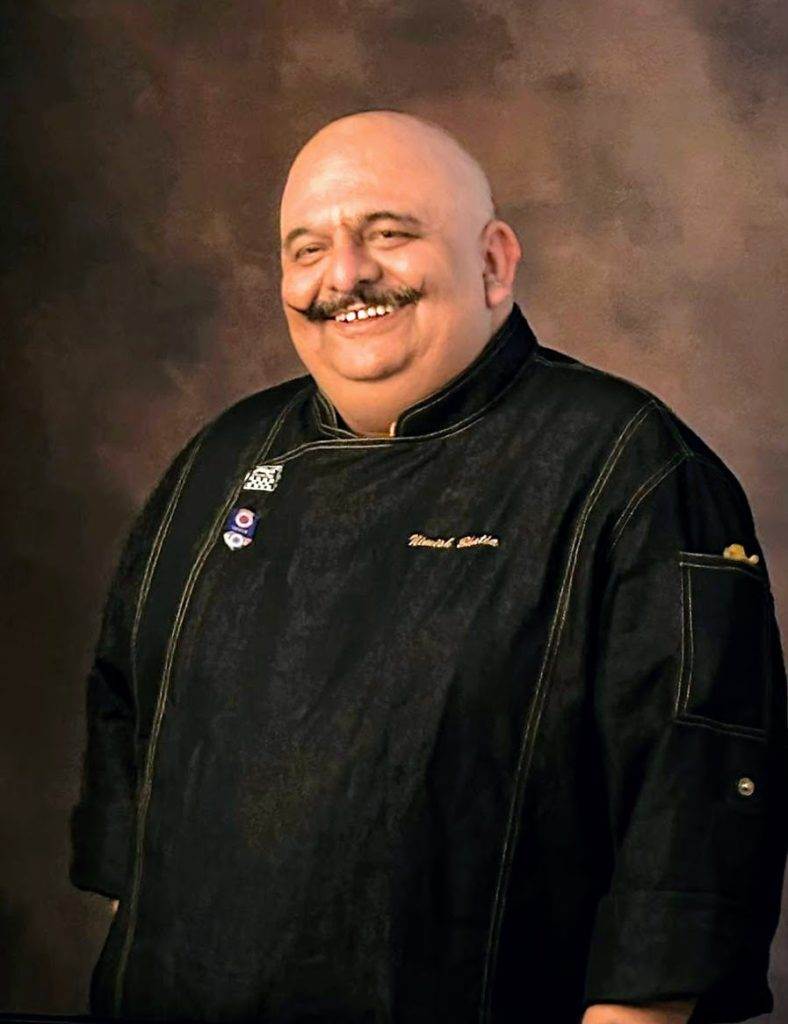
Chef Nimish Bhatia

This is Chef Nimish’s ode to the nutritious and hearty fresh ingredients of the great Himalayan cuisine, finished with a touch of international influence. 

This recipe is a zero-waste celebration of raw banana where the fruit is roasted whole in its skin to intensify flavor. The pulp becomes a delicately spiced kebab, while the skin transforms into a crisp floral tuile infused with bell pepper essence. Finished with bright curls of pickled yellow baby beetroot for acidity and color contrast.

Italy 
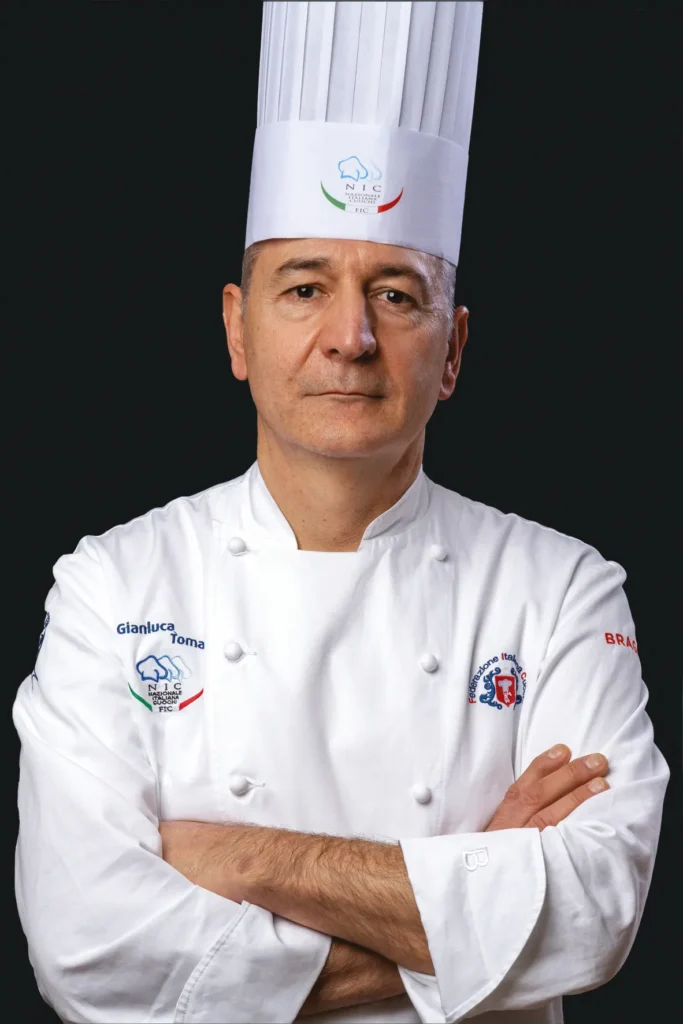
Chef Gianluca Tomasi

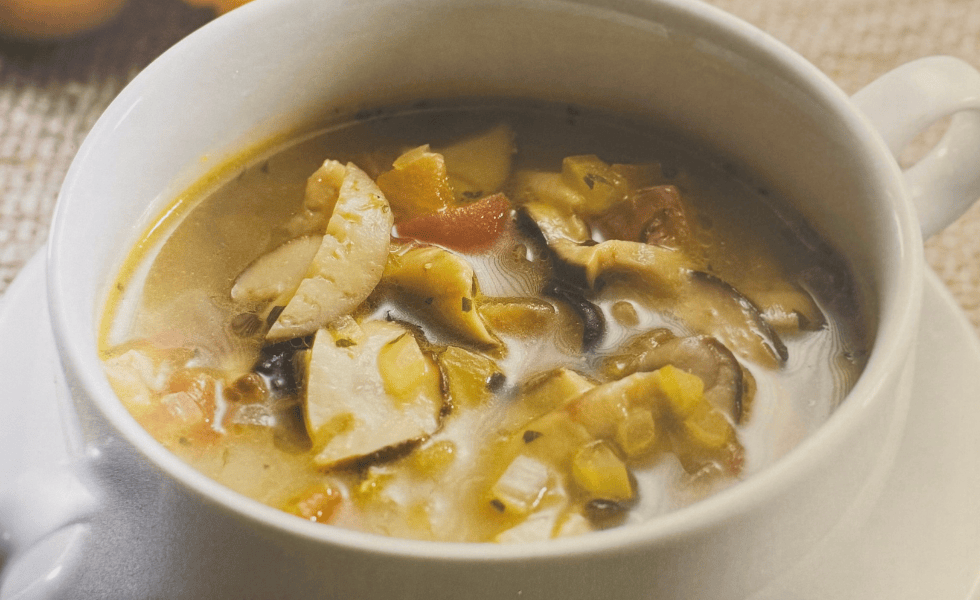
Chef Gianluca adapted a typical recipe from mountain villages in Italy. It is prepared with care using every ingredient with the utmost respect for nature. 

Mushrooms are a symbol of symbiosis and connection, and this recipe reminds us of the simple techniques toward sustainable cooking, like vegetable broth from scraps and stale bread for croutons.

Maldives
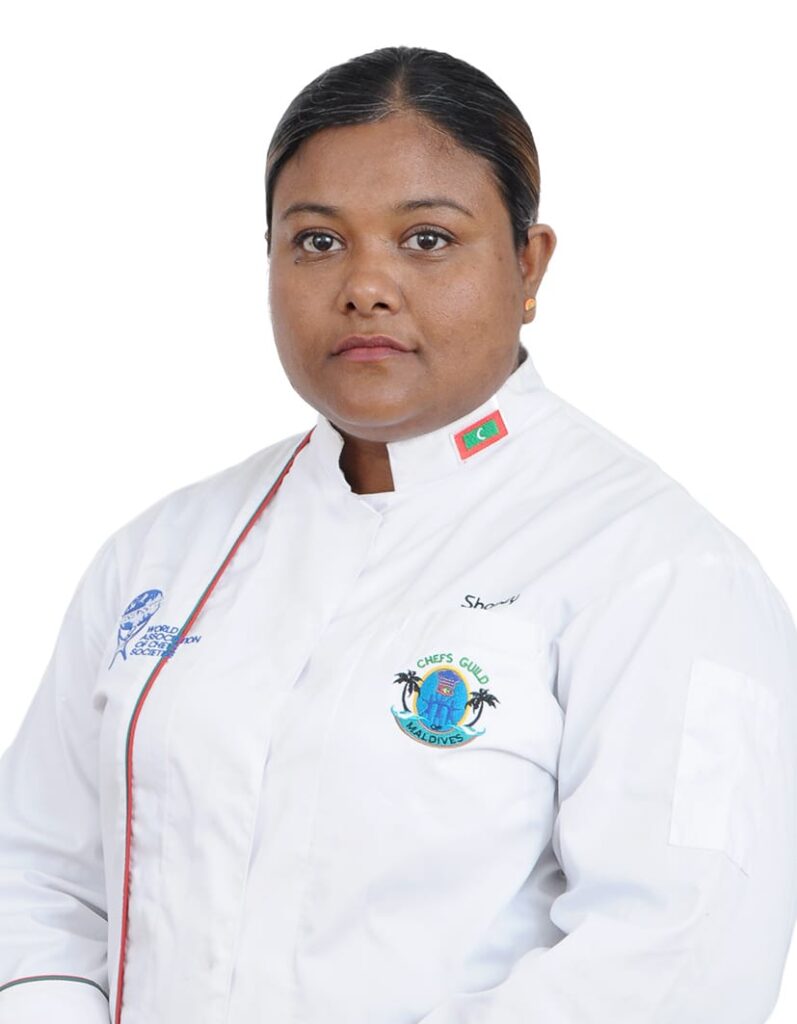
Chef Mariyam Shazy

Breadfruit, tuna, and coconut are ingredients that are naturally abundant in the Maldives and have been part of island cooking for generations. This dish from Chef Mariyam brings a warm and comforting feeling, especially during the rainy season when families stay home and the sea is too rough for sailing. 

In the past, recipes like this were a way for families to gather around the table and share food made from what the island provides. Breadfruit gives a hearty base, tuna adds rich flavor and protein, and fresh coconut brings a creamy taste that ties everything together.

Serbia 
Chef Stefan Smugovic

The origins of sarma can be traced back to the Ottoman Empire, where the technique of wrapping various fillings in leaves—such as vine leaves or cabbage—was widely practiced. Over time, different regions adapted the dish to their local ingredients and preferences, leading to the version commonly enjoyed in Serbia today, made with sour cabbage.

Sarma is more than just food; it is a symbol of hospitality, family gatherings, and celebrations.

South Korea 
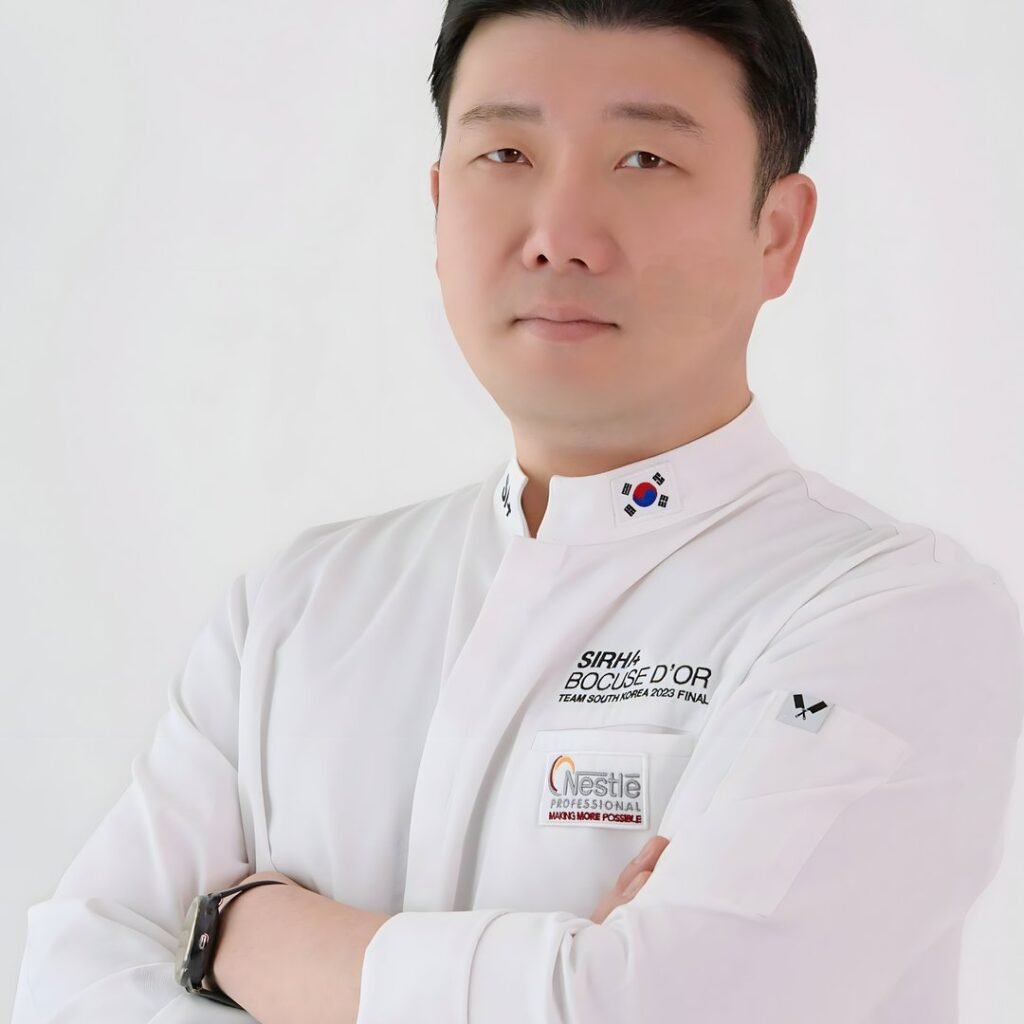
Chef Jake Kim

This traditional Korean soup is made with sun-dried radish greens (siraegi) simmered in soybean paste broth. 

It reflects Korea’s long tradition of root-to-leaf cooking and seasonal food preservation, where the entire vegetable is utilized to minimize food waste.

USA 
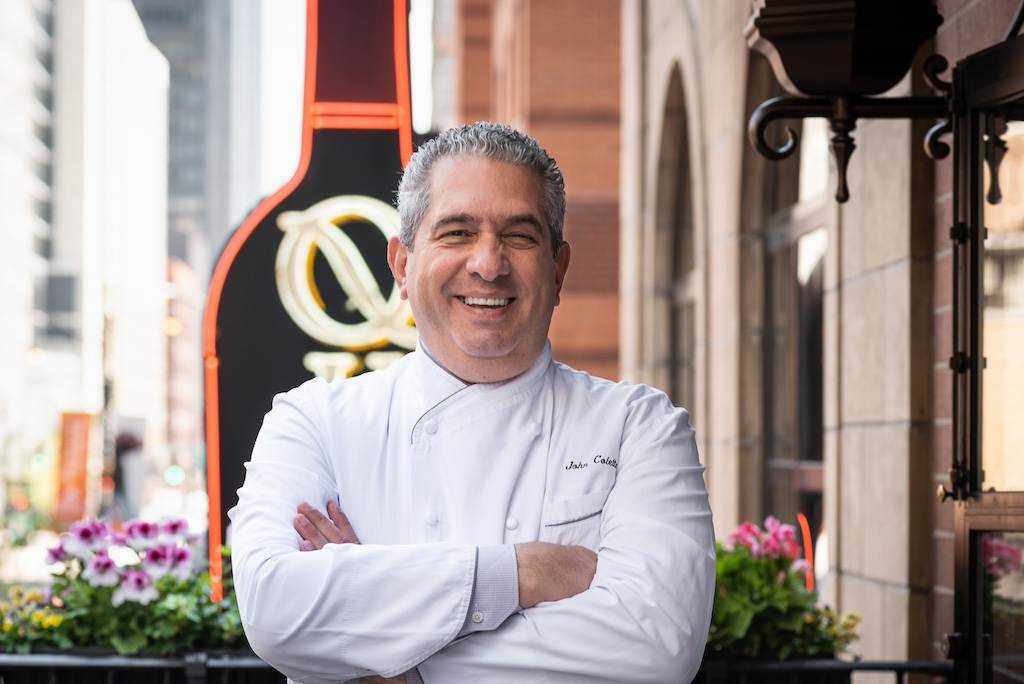
Chef John Coletta

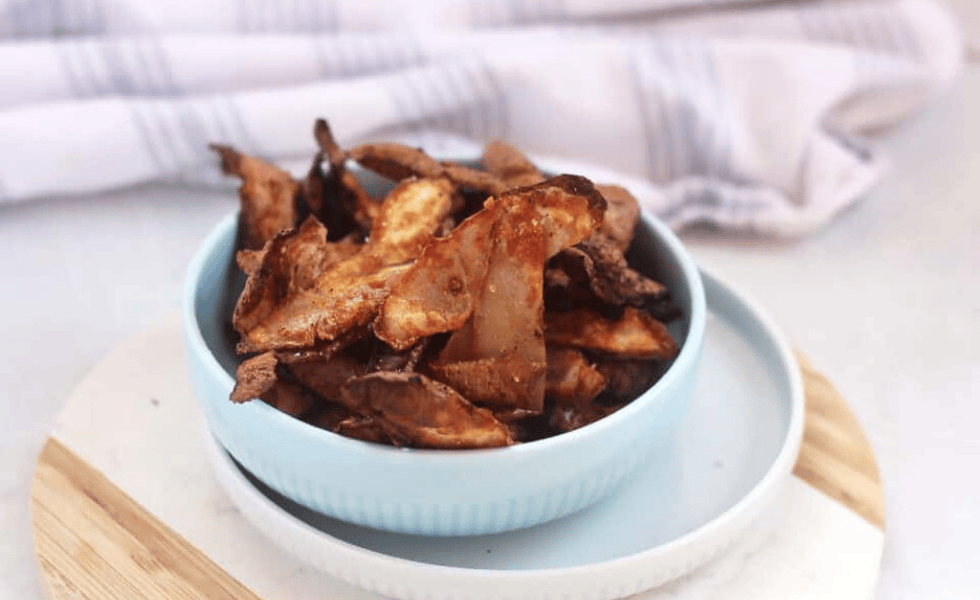
This recipe turns what is often discarded into something delicious. Fresh peelings from seasonal root vegetables become a zero-waste snack that makes the most of local produce, reducing the footprint while boosting natural flavor and nutrition. 

These thin strips are rich in fiber and color, then lightly seasoned and air-fried, for a crisp, and sustainable, crunch.

MY SUSTAINABLE RECIPE

Have you seen our My Sustainable Recipe series? Explore these award-winning recipes from the 2024 LIFE Climate Smart Chefs Award Best Sustainable Recipe category.

Italy
Chef Matteo Farsoni

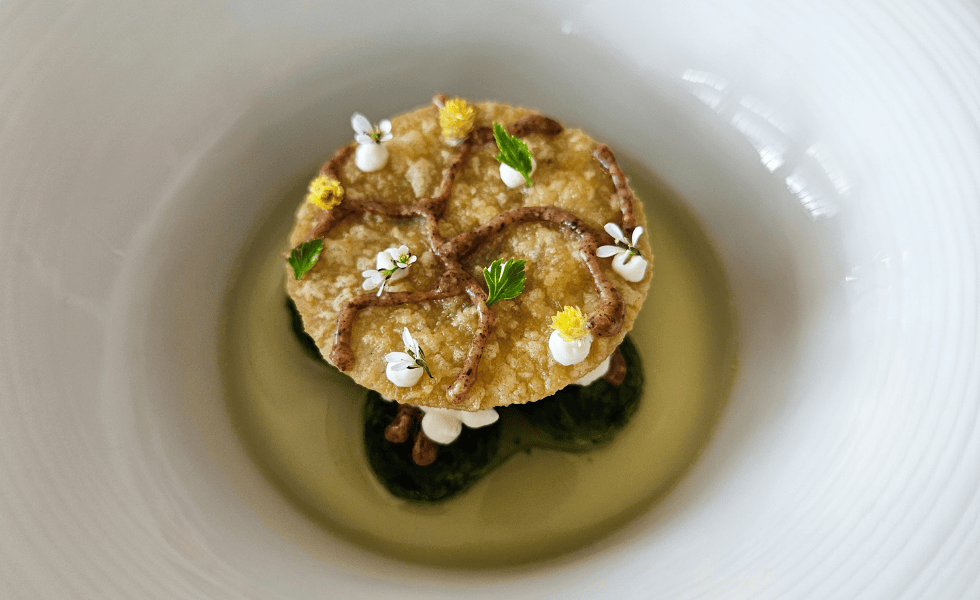
Chef Matteo Farsoni is an Italian gluten-free vegan pastry chef. Before becoming a pastry chef, Matteo studied foreign languages. You can see how he uses food to communicate. Like language, he uses his recipes to help connect people and ideas, like in this zero-waste dish.

Universality is important to him–he wants everyone to be able to experience the joy of food. That’s why he focuses on gluten-free, sugar-free and vegan desserts. The creative challenge to find new alternatives and techniques to make desserts more inclusive keeps him curious and inspired to find new solutions.

“My aim was to create a sustainable recipe by re-using food that would have been wasted otherwise,” he says. “It is a vegetarian recipe that has a low carbon and water footprint, so it has a low environmental impact, but at the same time it is healthy for our consumption.” This recipe, A Blossoming Future, won the 2024 LIFE Climate Smart Chefs Award Best Sustainable Recipe.

I usually take inspiration from nature, animals, landscapes. Everything that surrounds us can be a potential source of inspiration. And I also take inspiration from other pastry chefs, of course, because in our world we influence each other.

From Chef Matteo’s interview with The Best
Italy
Chef Nazario Contardi

Chef Nazario Contardi is an Alma-trained chef from Ancona. Through this recipe, he celebrates fellow food artisans safeguarding indigenous ingredients, sharing the work of the farmers at Agricoltura Rasoterra, millers at Rocca Madre, pastoralists at Le Capre di Capradosso, and stewards of ancient olive varieties and harvesting methods. 

For Chef Nazario, sustainability relies on community, and this recipe demonstrates that beautifully and deliciously. Nazario earned 3rd place at the 2024 LIFE Climate Smart Chefs Award Best Sustainable Recipe category.

For me, sustainability is tradition—the sacred and timeless act of cooking to bring well-being to others. Within this act lies the true key: the feeling of being well. When we respect raw ingredients, we honor those who cultivate them, those who transform them through the alchemy of cooking, and those who are nourished by them. This is where sustainability reveals its deepest meaning: an act of love that connects past, present and future.

Cyprus
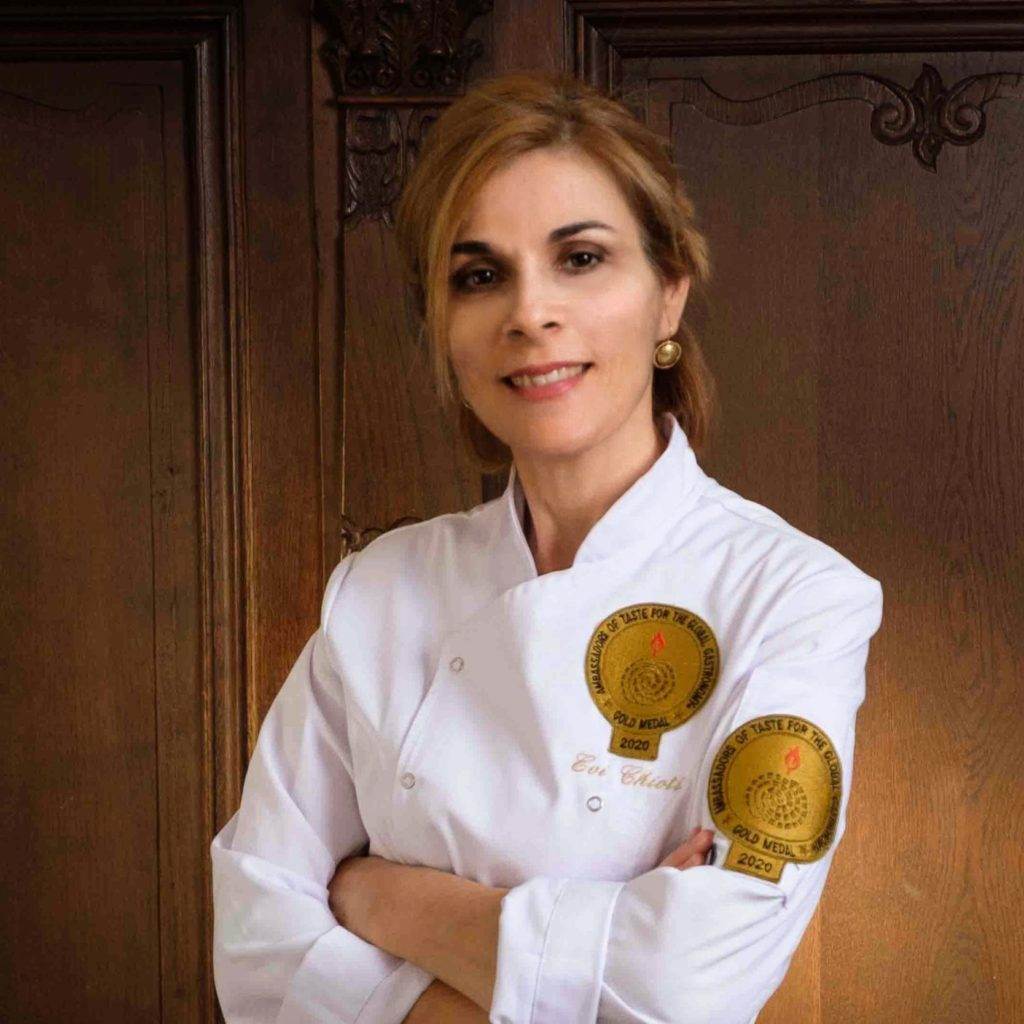
Chef Evi Chioti

Chef Evi Chioti is a chef, educator, and sustainable gastronomy advocate. For this ingenious and unexpected dessert, she uses ingredients indigenous to Cyprus. This recipe earned her 2nd place in the LIFE Climate Smart Chefs Award Best Sustainable Recipe.

Hear more about her work on Worldchefs podcast, Episode 129 of World on a Plate: Advancing Sustainable Gastronomy & Mediterranean Cuisine.

I used a vegetable that we have in Cyprus. It’s a simple vegetable, not expensive and very nutritious. It was cooked a bit differently than the traditional way, presented differently. I used the juices from cooking for the sauces. I used cherries and other ingredients that were seasonal at the time to create the sauce and decorations for the plate.

continue the tour with MEMBERS WORLDWIDE

With Worldchefs’ members in over 100 countries, there are so many cuisines and fantastic sustainable recipes that deserve the spotlight. To continue the tour, check out more from chefs around the globe.

  • Wales: Wales Food&Drink Rooted in Wales resource
  • South Africa: Capsicum Culinary Studio Heritage Day recipes
  • El Salvador: Asociación de Chefs de El Salvador (ACESA) Sabores de la Memoria: Cocina indígena y Afrodescendiente launch event with the United Nations (FAO)
  • Worldchefs Members in Asia: Food of Asia, Soul of Asia free recipe book
More Than the Sum of Its Parts

These recipes show us the power of the plate. They show us that a dish is much more than the sum of its parts. They bring to the table more of what we have in common, showing that sustainable principles are found universally, and deeply representative of heritage cuisines around the world. 

Sourcing local and seasonal ingredients, plant-forward cuisine, and using the whole ingredient to reduce food waste–these techniques and so many more are commonalities we share.

Food is a universal language that chefs are fluent in. But unlike language, it doesn’t need to be spoken to be understood. Like Chef Nazario Contardi shared, “Community is sustainability.”

Community is also power. By coming together through food, we have the opportunity to influence eachother, to teach eachother, and to inspire eachother to take action. Through recipes like these, we can better understand the connection between planetary health and wellbeing and our own, and take real steps toward a more conscious kitchen.

Resources

Looking for more on the sustainable gastronomy movement? Find more ways to get involved:

FoodChoices4LIFE

We invite chefs across our global network to take part in FoodChoices4LIFE, a new EU co-funded initiative led by Worldchefs that promotes climate-smart food choices across Europe.

Learn more and get involved here.
Sustainability for Culinary Professionals

Join the +17,500 chefs around the world who have gained skills to empower their role as changemakers. Sustainability Education for Culinary Professionals is a free course built to teach chefs to think and act sustainably.

Start the free, open-source training here.
Feed the Planet at the 2026 Congress

At Worldchefs Congress this May in Wales, join the session Feed the Planet: Driving Global Impact to learn more about our programs and how you can get involved.

View the program here.

Plus, you can always find new inspiration in a growing collection of heritage recipes here

Credits

Thank you to our Committee Members and Worldchefs community members who submitted their recipes for this article.

Featured image: From the Global Chefs Challenge Europe Semi-Finals 2025.

Written by Clare Crowe Pettersson.
Categories
Partnership

One Year Since its Launch: The Lasting Impact of the Nestlé Professional Green Spatula Award

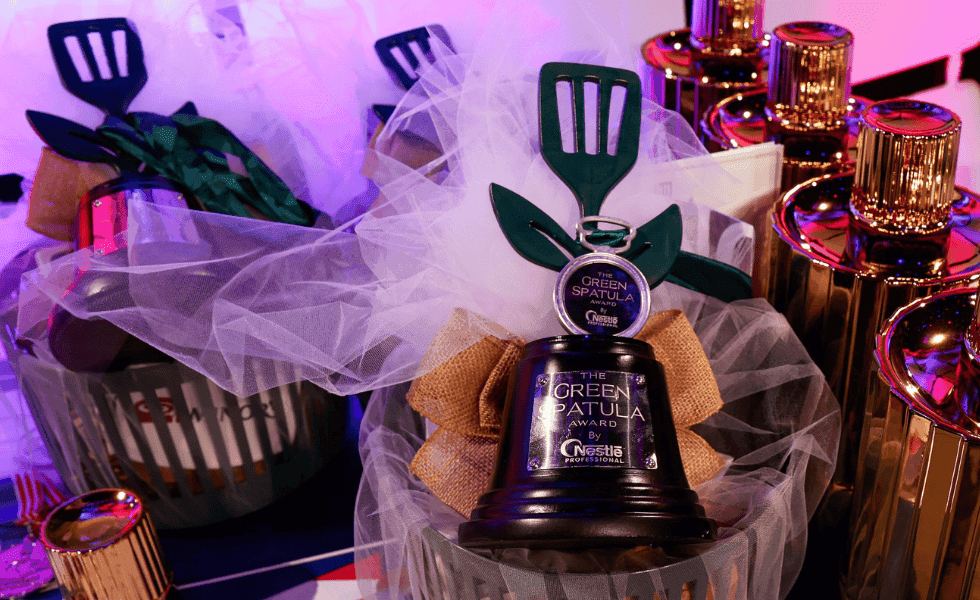
One year ago, at the Global Chefs Challenge Finals during the Worldchefs Congress & Expo 2024 in Singapore, Nestlé Professional and Worldchefs introduced a new recognition for chefs leading the way in sustainability: the Nestlé Professional Green Spatula Award.

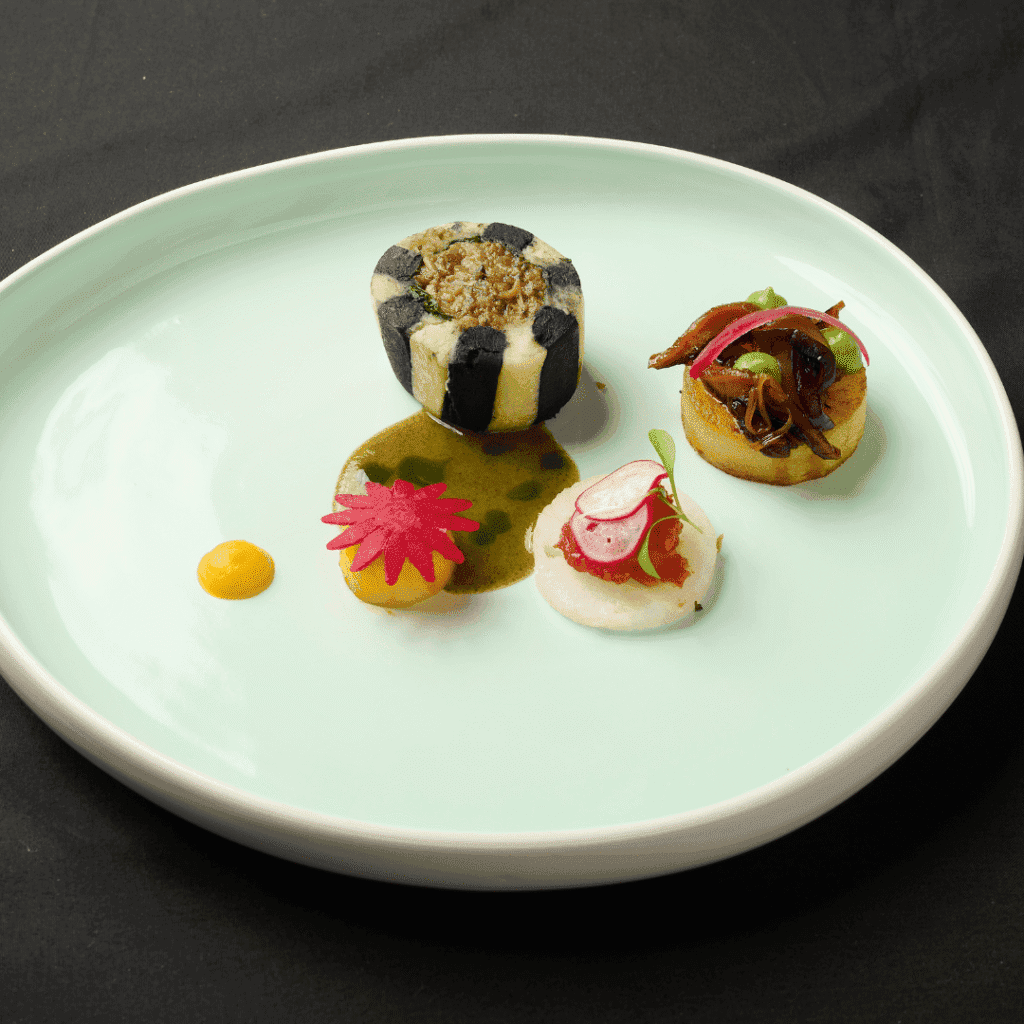
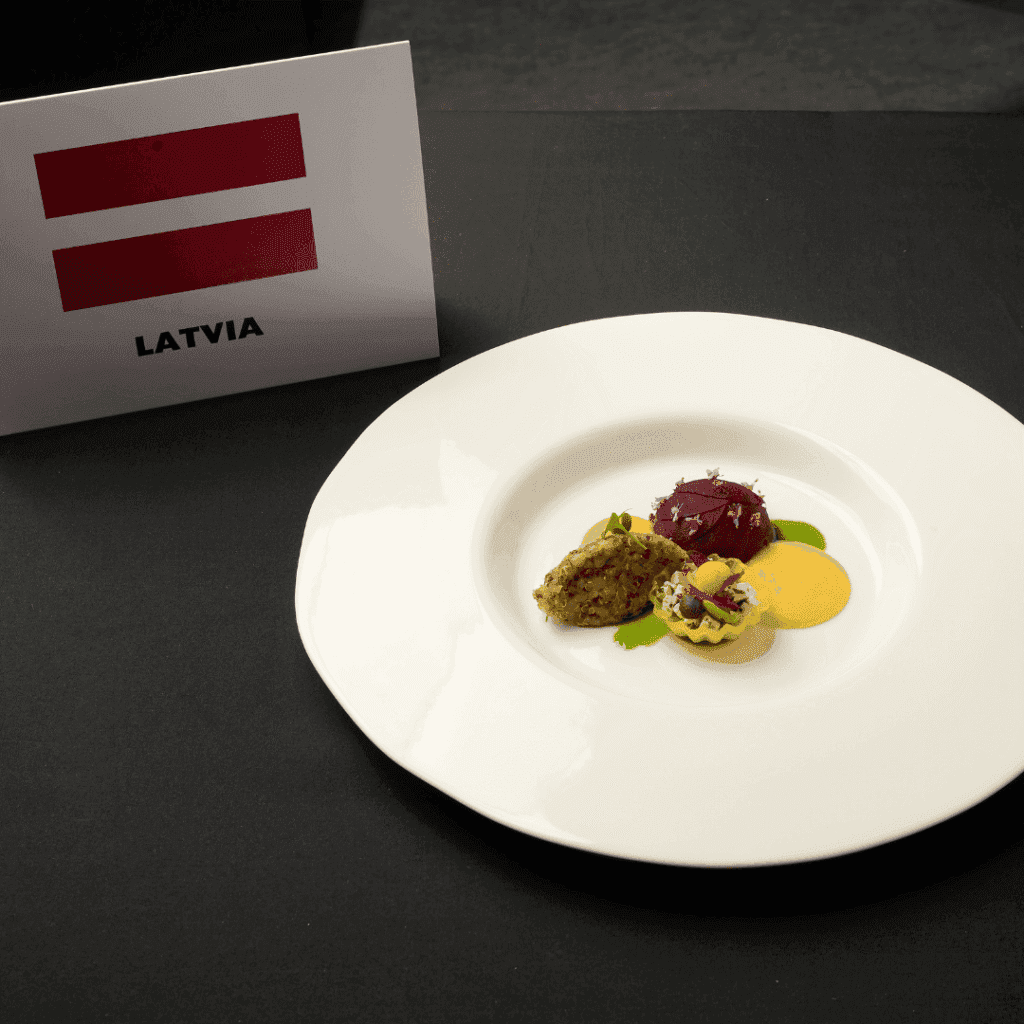
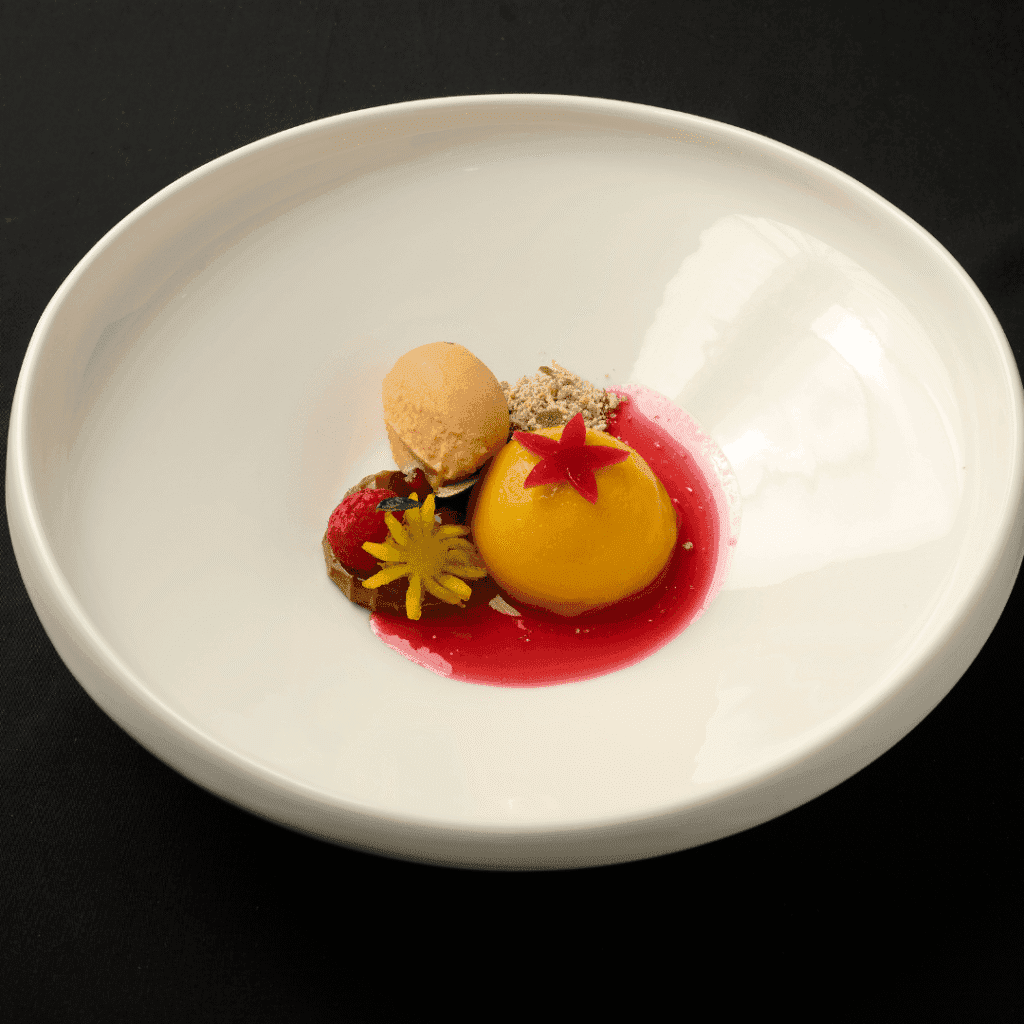
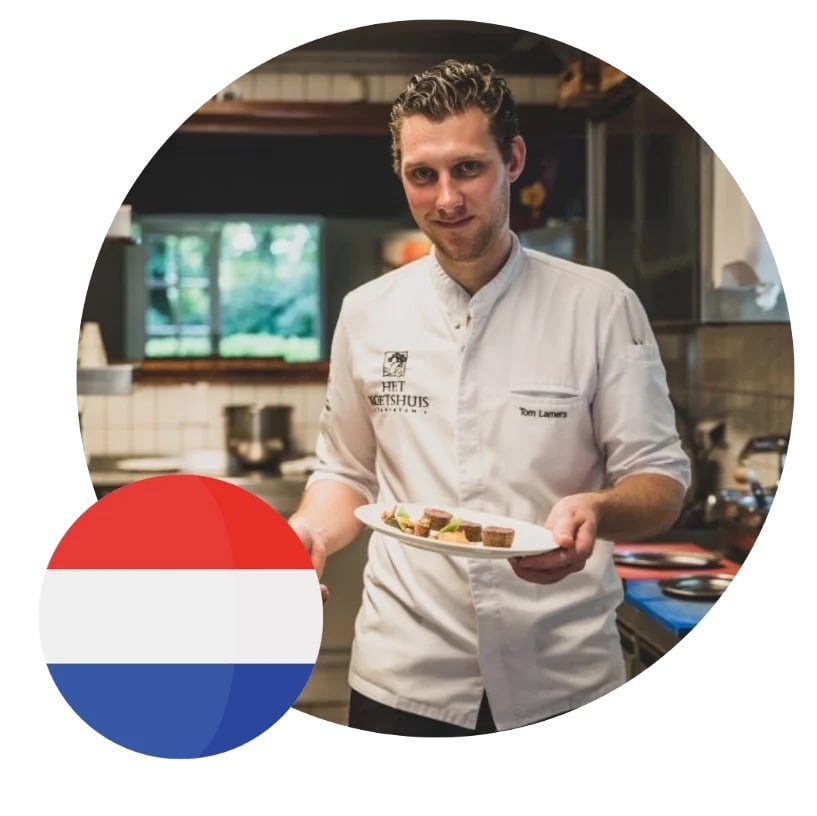
This distinguished honor celebrates the fusion of culinary excellence with a deep commitment to sustainability, recognizing chefs who excel in creating world-class dishes and adopting environmentally responsible practices in their kitchens. At the Global Chefs Challenge Finals 2024, the award was inaugurated in three of the four competition categories—the Global Chefs, Global Young Chefs and Global Vegan Chefs challenges—with Tom Lamers (Netherlands), Andreas Enger Fjellheim (Norway), and Dinars Zvidrinš (Latvia) named the winners.

Now a year later, we checked in with the three inaugural winners to see how their sustainability journeys have evolved and ask how the Green Spatula spirit lives on in their kitchens across the globe.

Minimizing Impact, Maximizing Innovation

Since its launch, the Nestlé Professional Green Spatula Award has served as a call to action for chefs to rethink how they source foods, cook, and manage their kitchens. As Cornel Krummenacher, Global Head of Food at Nestlé Professional Strategic Business Unit, said, “Our newly created award is an additional recognition for chefs and culinary professionals, which will not only honor and celebrate their greatest culinary experience creations, but also illustrate their additional efforts to apply sustainable practices in their work.”

The first recipients serve as proof of the lasting impact the award has had in driving a more sustainable future:

Andreas Enger Fjellheim – Head Chef at Arakataka (Norway)

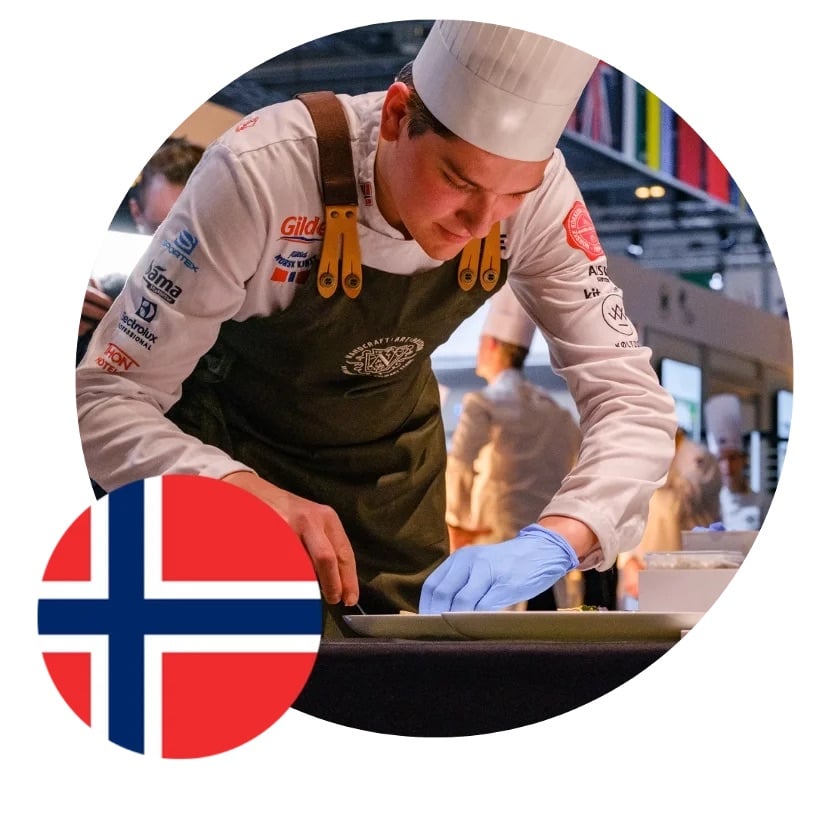
For Andreas Enger Fjellheim, winner of both the Global Young Chefs Challenge and the Nestlé Professional Green Spatula Award in this category, sustainability has become infused in his daily work.

“Since winning, sustainability has become even more deeply integrated into every part of my work,” says Andreas. “We’ve strengthened our collaboration with local farmers and producers to ensure our ingredients travel as little as possible. We focus on seasonal produce, reduce food waste by using whole ingredients, and work continuously to optimize energy and water consumption in the kitchen. I also use what I learned from the award experience to inspire my team—encouraging everyone to question routines and constantly look for small but meaningful improvements.”

The award has also had a meaningful impact on his team’s mindset.

“The award brought visibility and validation that our efforts are being noticed, which reinforces our belief that sustainability is not a trend, but rather the direction our industry must move in,” says Andreas. “For the team, it has been a strong motivator and a shared value that we take pride in. It’s encouraged a more open mindset toward experimentation as we try new methods, ingredients, and techniques that might have seemed “risky” before. Overall, it’s created a stronger sense of purpose and unity in the kitchen.”

Moving forward, Andreas has several initiatives in mind to take his sustainable practices even further. He shared the following:

  • Building partnerships with small local producers who focus on regenerative agriculture and animal welfare to ensure our ingredients are not only local but responsibly produced.
  • Exploring technology and sensors that can monitor and reduce energy use, temperature control, and water consumption in real time.
  • Developing our zero waste concept further by finding innovative ways to use offcuts, innards, shells, and other overlooked ingredients, as well as running internal workshops to inspire creative utilization.
  • Strengthening communication with our guests. Helping them understand the sustainability stories behind each dish, our sourcing philosophy, and how menu choices can lower environmental impact (for example, with more plant-based options).
  • Collaborating more with researchers and sustainability projects, including experimental fermentation or plant-based projects that open up new flavor possibilities with low resource use.

Dinars Zvidrinš – Chef at Entresol (Latvia)

For Dinars Zvidrinš, competitor in the Global Vegan Chefs Challenge Finals 2024, sustainability is a continuous process of improvement and innovation.

“Since receiving the award, I have continued to focus on reducing food waste, planning menus around seasonal products, and prioritizing local suppliers,” says Dinars. “We also implement reusable solutions in the kitchen and optimize energy use whenever possible.”

The recognition, he says, has been both motivating and affirming.

“The award has been a great honor and inspiration. It strengthened our confidence that we are on the right path. Within the team, it has encouraged even more curiosity and initiative to find new ways of making our work environmentally friendly.”

Dinars is looking forward to continue innovating to explore further ways to bring sustainability in his kitchen.

“Looking ahead, it is important to explore further ways to reduce waste, improve composting methods, and ensure that it can be passed on to farmers for use in agriculture to grow new products,” he shares.

Tom Lamers – Chef and Co-Owner of Restaurant T Raedthuys (Netherlands)

For Tom Lamers, competitor in the Global Chefs Challenge category, the Green Spatula Award strengthened his commitment to sustainable practices.

“Since winning the Green Spatula Award, I’ve become even more focused on sustainability in the kitchen,” says Tom. “We’re using more local and seasonal products and continue working on reducing food waste.”

Beyond his own approach, Tom highlights the importance of shared responsibility.

“The award has motivated the team to really commit to these goals together,” he explains.

Looking to the future, Tom and his team are exploring ways to monitor waste and build stronger relationships with producers.

Shaping a More Sustainable Future

The Green Spatula Award was created to recognize chefs who lead by example, both in competition and their daily work. One year in, its influence continues to expand. The award was brought to the Global Chefs Challenge 2025 Regional Semi-Finals in Asia, the Americas and Africa & the Middle East, among other competitions. The award is inspiring culinary professionals worldwide to reimagine what responsible cooking looks like.

“It’s an honor to be part of an initiative that not only celebrates excellence but also drives a more responsible and forward-thinking future in foodservice,” says Ana Aragón, Global Head of Sustainability and Nutrition at Nestlé Professional.

At the Global Chefs Challenge Finals 2026 in Wales, competitors are showcase their best sustainable efforts. The Green Spatula Award will once again be awarded to chefs who embody responsible innovation.

“The Green Spatula Award represents the values that define today’s culinary world of creativity, leadership, and respect for our planet,” says Andy Cuthbert, Worldchefs President. “Through this collaboration with Nestlé Professional, we are excited to encourage chefs to be agents of change.”

Hear more from the inaugural winners of the Nestlé Professional Green Spatula Award:

Witness the Green Spatula Award return at the Global Chefs Challenge Finals 2026 in Wales! Secure your spot today.

Categories
Education FeedThePlanet Worldchefs Academy

Worldchefs Launches Spanish Edition of Sustainability Education for Culinary Professionals

See the Spanish version below / Ver la versión en español más abajo

  • Sustainability Education for Culinary Professionals, created by Worldchefs’ Feed the Planet initiative, is now available in Spanish on Worldchefs Academy. This course offers a free 8-course curriculum for learners to deepen their knowledge of sustainable culinary methods and key topics in food systems.
  • With Spanish marking the third language available for this course, the program becomes even more accessible. It is now able to reach countless Spanish-speaking chefs, educators, and culinary students worldwide.
  • Learn more about Sustainability Education for Culinary Professionals and our other Feed the Planet programs at https://feedtheplanet.worldchefs.org/sustainability-education/.

Paris, 9 December 2025 – Worldchefs Academy is proud to announce the launch of Sustainability Education for Culinary Professionals course in Spanish, marking a major step forward in making high-quality sustainability education more inclusive and accesible to chefs around the world.

This milestone significantly expands the reach of the program. It offers a valuable new resource to the global community of Spanish-speaking culinary professionals.

Empowering Chefs to Build a More Sustainable Future

To meet the growing appetite for sustainability education across Spanish-speaking regions, Worldchefs collaborated with three expert educators and long-time champions of the program:

  • Rodrigo Duarte Casar: Professor in the School of Food Engineering and the School of Gastronomy, Pontificia Universidad Católica del Ecuador, Portoviejo, Ecuador
  • Marlene Rojas Le-Fort: Professor in the School of Gastronomy, Pontificia Universidad Católica del Ecuador, Portoviejo, Ecuador
  • Carolina Pérez: Professor at the Gastronomy School, Universidad de Las Américas, Quito, Ecuador

Together, they brought their unique perspectives as culinary instructors, sustainability advocates, and leaders deeply engaged with gastronomy education in Ecuador and beyond. All three have been working with sustainability education for years, giving them firsthand insight into how learners apply these concepts in real kitchens and communities.

Rodrigo, Marlene, and Carolina collaborated to translate, refine, and contextualize the curriculum, ensuring it resonates across the diverse “Spanishes” spoken throughout Latin America and Spain.

Rodrigo Duarte Casar, a chef-educator with more than 30 years of experience, is a member of Worldchefs Feed the Planet Committee. He contributed to this collaboration with his deep expertise in chemistry, gastronomy, and food science, along with his experience as a researcher and professor at Pontificia Universidad Católica del Ecuador. Working alongside Rodrigo in the same role, Marlene Rojas Le-Fort is a gastronomy engineer and serves as Vice President of the Ecuadorian Academic Network for Gastronomic Tourism. She brought her extensive expertise in connecting food, sustainability, and academic innovation. Carolina Pérez, an industrial psychologist and gastronomic communicator, added her experience as a university educator at Universidad de las Americas and author on heritage and sustainable gastronomy.

A special thank you goes out to these three trainers as well as Luis Jiménez B from Colombia, who contributed to the review of the Spanish curriculum.

“The power of education—we believe in it. This is our grain of sand in building a better future.”
— Rodrigo Duarte Casar & Marlene Rojas Le-Fort

Building on an Already Impactful Initiative

Since the launch of Sustainability Education for Culinary Professionals in 2018, it has been widely adopted, now reaching nearly 16,000 total graduates worldwide. It is available in three languages online through Worldchefs Academy (Spanish, English and Arabic), as well as through in-person classes led by our 160+ Worldchefs-certified trainers. Whether taking it online or in-person, this curriculum shares fundamental lessons on culinary sustainability with culinary students and professionals across the globe.

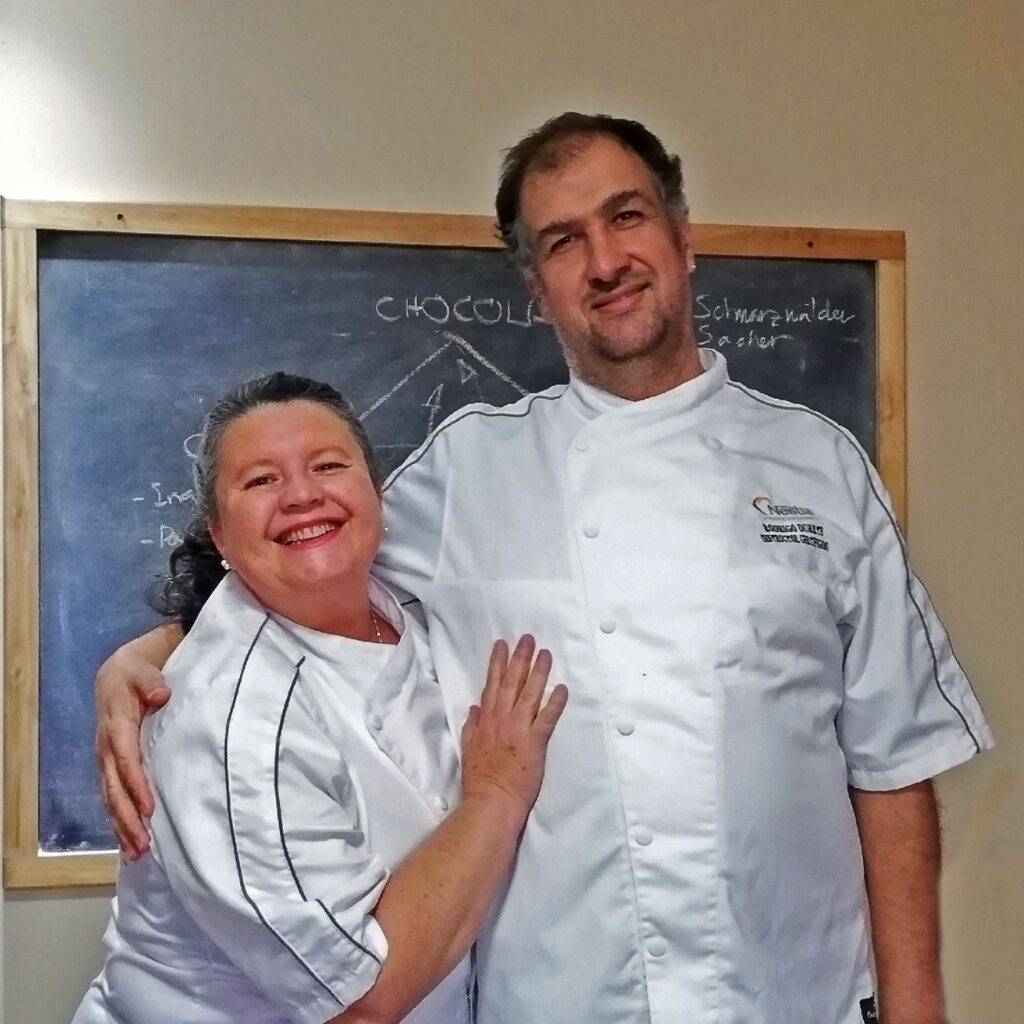
Rodrigo Duarte Casar
and Marlene Rojas Le-Fort

The Spanish edition of Sustainability Education for Culinary Professionals includes eight lessons. Each lesson offers practical tools that chefs can apply immediately in their daily work:

  • Lesson 1 – Big Picture
  • Lesson 2 – Seafood
  • Lesson 3 – Energy
  • Lesson 4 – Water
  • Lesson 5 – Waste Management
  • Lesson 6 – Nutrition
  • Lesson 7 – Agriculture
  • Lesson 8 – Animal Husbandry

This curriculum provides a comprehensive foundation for understanding global sustainability challenges. It allows chefs to directly implement solutions that foster impact in kitchens and communities.

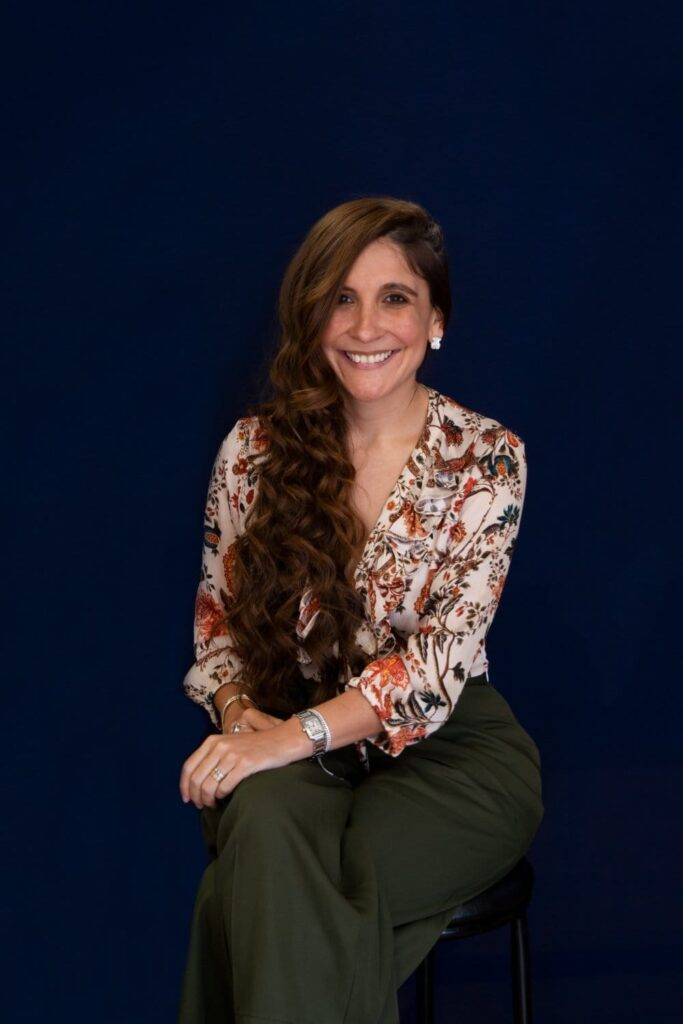
Carolina Pérez
Navigating the Diversity of the Spanish Language

One of the biggest challenges during the translation process was the linguistic diversity of Spanish. Rodrigo and Marlene, Chilean educators living in Ecuador, worked through differences between English, machine-translated Spanish, and regional variations across the Spanish-speaking world.

Yet, as Carolina Pérez shared, this diversity also created a sense of unity:

“Food unites everyone. Even if a word belongs to another variety of Spanish, you understand it. Sustainability is a universal topic.”
— Carolina Pérez

Their goal was to ensure the course would feel relevant, accurate, and practical for any Spanish-speaking learner, no matter where they are from.

A Project Fueled by Purpose

Each translator expressed deep fulfillment in contributing to this milestone.

Carolina, who has taught sustainability at the Universidad de las Américas in Ecuador for nearly five years, emphasized how closely the program aligns with the message she shares with her students:

“Being a chef means having the power and responsibility to help save the planet… When I saw that the program transmits that idea, it was really enjoyable for us…We were glad to see that we share the same objective.”
— Carolina Pérez

Marlene and Rodrigo also highlighted how crucial real-world application is in their work. They focus on empowering students to take sustainable solutions directly into their communities, where positive change can happen quickly. Translating this course, they noted, will help extend this change even further across the Spanish-speaking world.

Why Spanish-Speaking Chefs Should Take the Course

Sustainability Education for Culinary Professionals provides essential knowledge for professional chefs as well as students, food enthusiasts, and community leaders seeking to make meaningful change.

For young chefs, as they are entering a world shaped by environmental crisis, while they are not responsible for the problem, they will play a central role in helping to solve it. Equipping them with the right tools is critical.

Once students realize the influence they have as chefs within the food system, they become deeply motivated to act. The curriculum supports that shift by giving trainers global examples which they can then adapt to their own local realities, making sustainability both actionable and relevant to all.

Watch the webinar “Sustainability Around the World #53: Access for All – Spanish Edition of Sustainability Education” to hear more from the three translators at the heart of this initiative:

“Education remains our most powerful tool for driving change in the food system. By making this program available in Spanish, we will give more chefs the resources they need to build a more sustainable future. On behalf of the entire Worldchefs Board of Directors, we’d like to thank everyone who contributed to this initiative,” said Worldchefs President, Andy Cuthbert.

Get started today by enrolling in Sustainability Education for Culinary Professionals, in Spanish, Arabic or English at https://worldchefsacademy.com/.

– END –

About Worldchefs 

The World Association of Chefs’ Societies, known as Worldchefs, is a federation made up of 110 national chef associations. A leading voice in the hospitality industry, Worldchefs carries years of history since its founding in 1928 at the Sorbonne by the venerable Auguste Escoffier.

Representing a mobilized international membership of culinary professionals, Worldchefs is committed to advancing the profession and leveraging the influence of the chef jacket for the betterment of the industry and humanity at large.

Worldchefs is dedicated to raising culinary standards and social awareness through these core focus areas:

Humanitarianism & Sustainability – Worldchefs Feed the Planet and World Chefs Without Borders programs relieve food poverty, deliver crisis support, and promote sustainability across the globe.

Education – Worldchefs offers support for education and professional development through the landmark Worldchefs Academy online training program, a diverse network of Worldchefs Education Partners and curriculum, and the world’s first Global Culinary Certification recognizing on-the-job skills in hospitality;

Networking – Worldchefs connects culinary professionals around the world through their online community platform and provides a gateway for industry networking opportunities through endorsed events and the biennial Worldchefs Congress & Expo;

Competition – Worldchefs sets global standards for competition rules, provides Competition Seminars and assurance of Worldchefs Certified Judges, and operates the prestigious Global Chefs Challenge.


Worldchefs lanza la edición en español de «Educación en sostenibilidad para profesionales culinarios»

  • La formación en sostenibilidad para profesionales culinarios, creada por la iniciativa Feed the Planet de Worldchefs, ya está disponible en español en Worldchefs Academy. Este curso ofrece un plan de estudios gratuito de ocho cursos para que los alumnos profundicen sus conocimientos sobre métodos culinarios sostenibles y temas clave en los sistemas alimentarios.
  • Con el español como tercera lengua disponible para este curso, el programa se vuelve aún más accesible y puede llegar a innumerables chefs, educadores y estudiantes de cocina de habla hispana en todo el mundo.
  • Obtenga más información sobre la Educación en sostenibilidad para profesionales culinarios y nuestros otros programas Feed the Planet en https://feedtheplanet.worldchefs.org/sustainability-education/.

París, 9 de diciembre de 2025 Worldchefs Academy se enorgullece de anunciar el lanzamiento del curso Educación en sostenibilidad para profesionales culinarios en español, lo que supone un gran paso adelante para que la educación en sostenibilidad de alta calidad sea más inclusiva y accesible para los chefs de todo el mundo.

Este hito amplía significativamente el alcance del programa, ofreciendo un nuevo y valioso recurso a la comunidad global de profesionales culinarios de habla hispana.

Empoderar a los chefs para construir un futuro más sostenible

Para satisfacer el creciente interés por la educación en sostenibilidad en las regiones de habla hispana, Worldchefs colaboró con tres expertos educadores y defensores del programa desde hace mucho tiempo:

  • Rodrigo Duarte Casar: Profesor de la Escuela de Ingeniería Alimentaria y la Escuela de Gastronomía, Pontificia Universidad Católica del Ecuador, Portoviejo, Ecuador.
  • Marlene Rojas Le-Fort: Profesora de la Escuela de Gastronomía, Pontificia Universidad Católica del Ecuador, Portoviejo, Ecuador.
  • Carolina Pérez: Profesora de la Escuela de Gastronomía, Universidad de Las Américas, Quito, Ecuador.

Juntos, aportaron sus perspectivas únicas como instructores culinarios, defensores de la sostenibilidad y líderes profundamente comprometidos con la educación gastronómica en Ecuador y más allá. Los tres llevan años trabajando en la educación sobre sostenibilidad, lo que les ha proporcionado una visión de primera mano sobre cómo los alumnos aplican estos conceptos en cocinas y comunidades reales.

Rodrigo, Marlene y Carolina colaboraron para traducir, perfeccionar y contextualizar el plan de estudios, asegurándose de que resonara en los diversos «españoles» que se hablan en toda América Latina y España.

Rodrigo Duarte Casar, chef y educador con más de 30 años de experiencia, es miembro del Comité Feed the Planet de Worldchefs. Contribuyó a esta colaboración con sus profundos conocimientos en química, gastronomía y ciencia alimentaria, junto con su experiencia como investigador y profesor en la Pontificia Universidad Católica del Ecuador. Junto a Rodrigo, en el mismo cargo, Marlene Rojas Le-Fort es ingeniera en gastronomía y vicepresidenta de la Red Académica Ecuatoriana de Turismo Gastronómico. Aportó su amplia experiencia en la conexión entre la alimentación, la sostenibilidad y la innovación académica. Carolina Pérez, psicóloga industrial y comunicadora gastronómica, aportó su experiencia como profesora universitaria en la Universidad de las Américas y autora de obras sobre patrimonio y gastronomía sostenible.

Queremos expresar nuestro especial agradecimiento a estos tres formadores, así como a Luis Jiménez B, de Colombia, que contribuyó a la revisión del plan de estudios en español.

«Creemos en el poder de la educación. Esta es nuestra pequeña contribución para construir un futuro mejor».

— Rodrigo Duarte Casar y Marlene Rojas Le-Fort

Aprovechando una iniciativa que ya ha tenido un gran impacto

Desde su lanzamiento en 2018, el programa «Educación en sostenibilidad para profesionales de la cocina» ha tenido una gran acogida y ya cuenta con casi 16 000 graduados en todo el mundo. Está disponible en tres idiomas a través de la Worldchefs Academy (español, inglés y árabe), así como en clases presenciales impartidas por más de 160 formadores certificados por Worldchefs. Ya sea en línea o presencial, este plan de estudios comparte lecciones fundamentales sobre sostenibilidad culinaria con estudiantes y profesionales de la cocina de todo el mundo.

Rodrigo Duarte Casar
y Marlene Rojas Le-Fort

La edición en español de Educación en sostenibilidad para profesionales culinarios incluye ocho lecciones que ofrecen herramientas prácticas que los chefs pueden aplicar de inmediato en su trabajo diario:

  • Lección 1 – Panorama general
  • Lección 2 – Productos del mar en la industria de servicios alimentarios
  • Lección 3 – Energía en la industria alimentaria
  • Lección 4 – Agua
  • Lección 5 – Gestión de residuos
  • Lección 6 – Nutrición sostenible
  • Lección 7 – Agricultura
  • Lección 8 – Producción de proteína

Estas lecciones proporcionan una base completa para comprender los retos globales de la sostenibilidad y aplicar soluciones que fomenten el impacto en las cocinas y las comunidades.

Navegando por la diversidad del idioma español

Uno de los mayores retos durante el proceso de traducción fue la diversidad lingüística del español. Rodrigo y Marlene, dos educadores chilenos que viven en Ecuador, trabajaron con las diferencias entre el inglés, el español traducido automáticamente y las variaciones regionales del mundo hispanohablante.

Carolina Pérez

Sin embargo, como compartió Carolina Pérez, esta diversidad también creó un sentido de unidad:

«La comida une a todo el mundo. Aunque una palabra pertenezca a otra variedad del español, la entiendes. La sostenibilidad es un tema universal».

— Carolina Pérez

Su objetivo era garantizar que el curso resultara relevante, preciso y práctico para cualquier estudiante hispanohablante, independientemente de su procedencia.

Un proyecto impulsado por un propósito

Todos los traductores expresaron una profunda satisfacción por haber contribuido a este hito.

Carolina, que ha impartido clases de sostenibilidad en la Universidad de las Américas de Ecuador durante casi cinco años, destacó lo mucho que el programa se ajusta al mensaje que transmite a sus alumnos:

«Ser chef significa tener el poder y la responsabilidad de ayudar a salvar el planeta… Cuando vi que el programa transmite esa idea, nos alegramos mucho… Nos alegró ver que compartimos el mismo objetivo».

— Carolina Pérez

Marlene y Rodrigo también destacaron lo crucial que es la aplicación en el mundo real en su trabajo. Se centran en capacitar a los estudiantes para que lleven soluciones sostenibles directamente a sus comunidades, donde se pueden producir cambios positivos rápidamente. Traducir este curso, señalaron, ayudará a extender este cambio aún más en todo el mundo hispanohablante.

Por qué los chefs hispanohablantes deberían realizar el curso

La formación en sostenibilidad para profesionales culinarios proporciona conocimientos esenciales para chefs profesionales, así como para estudiantes, entusiastas de la gastronomía y líderes comunitarios que buscan lograr un cambio significativo.

Los jóvenes chefs, al entrar en un mundo marcado por la crisis medioambiental, aunque no son responsables del problema, desempeñarán un papel fundamental para ayudar a resolverlo. Es fundamental dotarles de las herramientas adecuadas.

Una vez que los estudiantes se dan cuenta de la influencia que tienen como chefs dentro del sistema alimentario, se sienten profundamente motivados para actuar. El plan de estudios apoya ese cambio proporcionando a los formadores ejemplos globales que pueden adaptar a sus propias realidades locales, haciendo que la sostenibilidad sea viable y relevante para todos.

Vea el seminario web «Sostenibilidad en todo el mundo n.º 53: Acceso para todos: edición española de Educación para la sostenibilidad» para conocer más detalles de la mano de los tres traductores que están al frente de esta iniciativa:

«La educación sigue siendo nuestra herramienta más poderosa para impulsar el cambio en el sistema alimentario. Al ofrecer este programa en español, proporcionaremos a más chefs los conocimientos y recursos que necesitan para construir un futuro más sostenible. En nombre de toda la junta directiva de Worldchefs, queremos dar las gracias a todos los que han contribuido a esta iniciativa», afirmó Andy Cuthbert, presidente de Worldchefs.

Empiece hoy mismo inscribiéndose en el programa de Educación en sostenibilidad para profesionales culinarios, en español, árabe o inglés, en https://worldchefsacademy.com/.

– FIN –

Categories
Member News

Worldchefs Launches EU Co-Funded FoodChoices4Life Project, Opening New Opportunities for Chefs Across Europe to Engage in Climate Action

Worldchefs Launches EU Co-Funded FoodChoices4Life Project, Opening New Opportunities for Chefs Across Europe to Engage in Climate Action

The World Association of Chefs’ Societies (Worldchefs) launches the FoodChoices4Life project, advancing climate action by empowering chefs, associations, and citizens across the 27 EU Member States to fight climate change through sustainable food choices.

  • FoodChoices4LIFE, a European Commission co-funded project, unites the European Food Information Council (EUFIC), Worldchefs, and University of Tuscia (UNITUS) through a shared objective to speed up climate change solutions by helping people to take action through their food choices, building knowledge, skills, and awareness to make a real impact.
  • The initiative builds on the LIFE Climate Smart Chefs Network, now under the coordination of Worldchefs, the new LIFE Climate Smart Chefs secretariat.
  • EU-based chefs are invited to join upcoming trainings, Infoweeks, and other opportunities by signing up for project updates.

Paris, 28 November 2025 – The World Association of Chefs’ Societies (Worldchefs) has announced the official launch of FoodChoices4Life, a three-year European Commission co-funded project by the European Food Information Council (EUFIC), Worldchefs, and UNITUS that empowers chefs, associations, and citizens across the 27 EU Member States in exploring and sharing climate-smart food practices.

FoodChoices4Life builds on the success of the LIFE Climate Smart Chefs project, expanding its reach, scientific foundation, and chef engagement network. Following the conclusion of the previous project in December 2024, Worldchefs now serves as the LIFE Climate Smart Chefs secretariat, bringing the network forward and supporting a new phase of climate action.

Developed in collaboration with EUFIC and UNITUS, FoodChoices4Life brings culinary professionals together with scientific and communication partners to speed up climate change solutions by helping people take action through their food choices, building knowledge, skills, and awareness to make a real impact.

Chefs at the Center of Climate-Smart Food Education

As a core partner in FoodChoices4Life, Worldchefs will work with chefs across the 27 EU Member States, activating the largest international network of professional chef associations to support food education at the community level. Worldchefs aims to involve 500–1000 chefs and facilitate at least 100 in-person educational activations.

Throughout the project, chefs in the EU will have access to a range of opportunities to grow their skills, lead on climate-smart food with EU-wide recognition, and secure funding for national events and campaigns. “Infoweeks” scheduled for October 2026 and March 2028 will support local activations, inviting chefs to host activities that highlight climate-smart cooking and engage their communities.

Chefs will also be able to participate in online Capacity Building training sessions and a new FoodChoices4Life e-learning course developed through Worldchefs Academy, expanding on the curriculum created during the previous LIFE Climate Smart Chefs project.

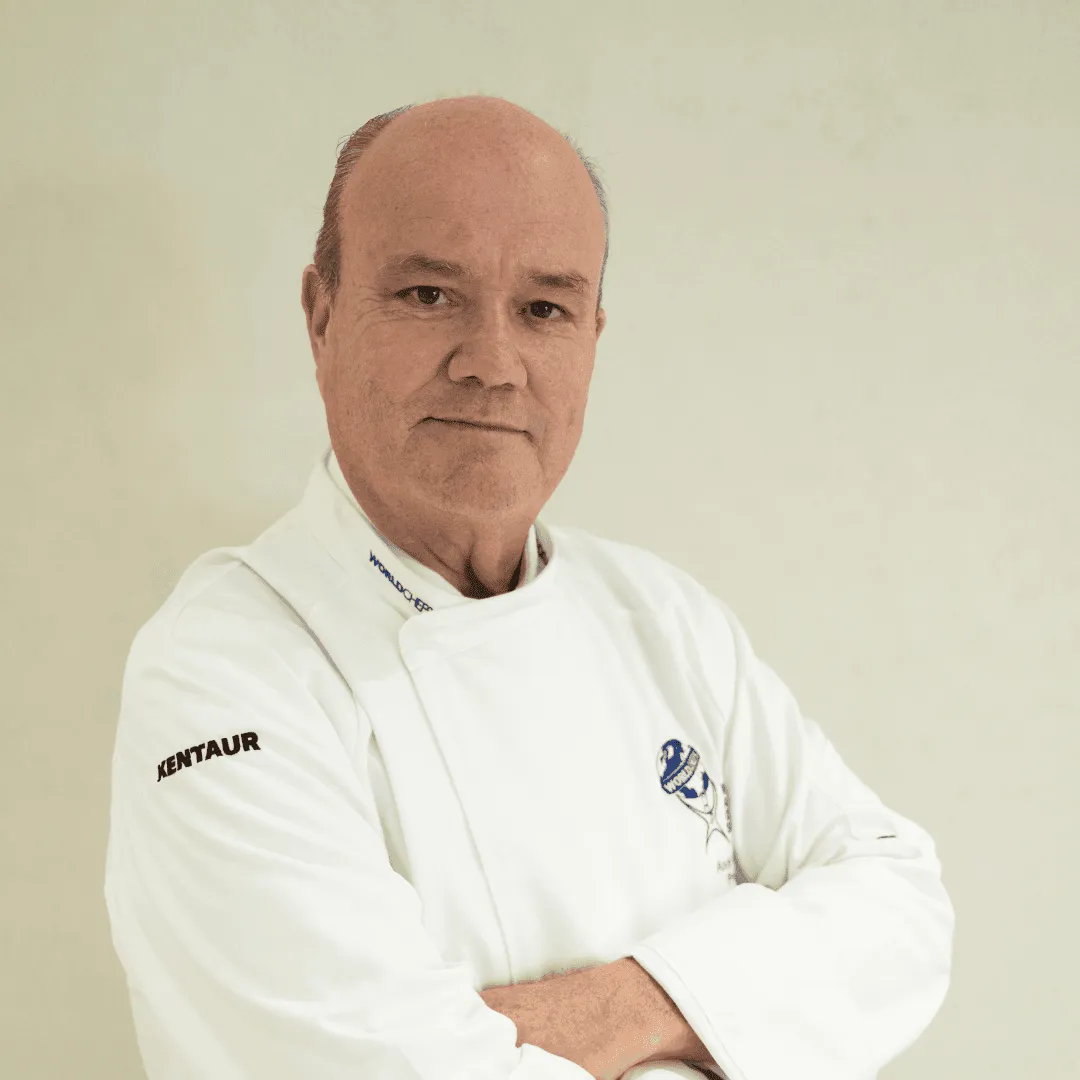
Andy Cuthbert, Worldchefs President

A refreshed EU27 recipe collection will highlight culinary heritage and climate-smart approaches, offering chefs a way to contribute directly to a shared resource. Chefs interested in taking on a larger public role can receive support if they wish to apply to become EU Climate Pact Ambassadors, helping bring culinary perspectives into wider conversations on the future of food.

These efforts draw on Worldchefs’ long-standing commitment to advancing culinary education, sustainability, and social responsibility through its Feed the Planet programs and global chef network.

“Being part of this EU co-funded project is very exciting for Worldchefs,” said Worldchefs President Andy Cuthbert. “It strengthens our shared commitment to a more sustainable food future and reinforces our mission to empower culinary professionals to lead positive change.”

Working Together Toward a More Informed Food Future

The FoodChoices4Life project also brings together a wider community of citizens, journalists, local administrators, and scientific partners across Europe. By engaging this broader network, the initiative aims to strengthen public understanding of climate-smart food choices and encourage informed discussions around the role of food in environmental sustainability.

Educational materials, communication tools, and a shared Vision 2050 document developed with input from chefs and partners will support continued learning and public awareness.

“UNITUS has worked on many research projects addressing climate-smart actions and food consumption, but joining this FoodChoices4LIFE project is especially exciting because it allows us to turn research results into real practices that can shape the future of our food systems,” said Emanuele Blasi, professor in agrifood economics and policy at UNITUS. “It reinforces our commitment to bringing research outcomes into the real world, and we are pleased to collaborate with chefs and other actors of the food sector to make this happen.”

Emanuele Blasi, professor in agrifood economics and policy at UNITUS
EU Chefs: Get Involved

Worldchefs invites all chefs based in the 27 EU Member States to take part in FoodChoices4Life. By signing up for project updates, chefs can stay informed about upcoming surveys, recipe initiatives, training, Infoweeks, and leadership opportunities, and connect with dedicated peers across Europe who are a part of the project.

Interested chefs can also find more information by watching a recent introductory webinar.

Dr. Marta Antonelli, project coordinator FoodChoices4LIFE at EUFIC

The project will also be featured at the Worldchefs Congress & Expo 2026 in Newport, Wales, where Dr. Marta Antonelli will lead a dedicated session entitled “Driving More Sustainable Food Choices in the EU: the project FoodChoices4Life.”

“FoodChoices4LIFE showcases the powerful role chefs can play in driving healthier and more sustainable food choices. Food can be delicious while delivering better nutrition and reducing pressure on the environment — and chefs are key to bringing this new approach to life.”

Dr. Marta Antonelli

Sign up now to receive updates and information on how to participate.

– END –

About The European Food Information Council (EUFIC)

The European Food Information Council (EUFIC) is a consumer-oriented non-profit organisation, founded to make the science behind food and health more accessible and easier to understand among the public. Our mission is to produce science-based content to inspire and empower healthier and more sustainable diets and lifestyles among Europeans.

Visit eufic.org.

About UNITUS

University of Tuscia, founded in Viterbo in 1979, rapidly developed into a well-established cultural reference. With over 10,000 students and 200 faculty members, it is recognized for research in forestry, climate change, and innovation in food systems, including food loss and waste reduction. The Department for Innovation in Biological, Agri-food and Forest Systems is now engaged in the FoodChoices4Life project.

About Worldchefs

The World Association of Chefs’ Societies, known as Worldchefs, is a federation made up of 110 national chef associations. A leading voice in the hospitality industry, Worldchefs carries years of history since its founding in 1928 at the Sorbonne by the venerable Auguste Escoffier.

Representing a mobilized international membership of culinary professionals, Worldchefs is committed to advancing the profession and leveraging the influence of the chef jacket for the betterment of the industry and humanity at large.

Worldchefs is dedicated to raising culinary standards and social awareness through these core focus areas:

  • Education – Worldchefs offers support for education and professional development through the landmark Worldchefs Academy online training program, a diverse network of Worldchefs Education Partners and curriculum, and the world’s first Global Culinary Certification recognizing on-the-job skills in hospitality;
  • Networking – Worldchefs connects culinary professionals around the world through their online community platform and provides a gateway for industry networking opportunities through endorsed events and the biennial Worldchefs Congress & Expo;
  • Competition – Worldchefs sets global standards for competition rules, provides Competition Seminars and assurance of Worldchefs Certified Judges, and operates the prestigious Global Chefs Challenge;
  • Humanitarianism & Sustainability – Worldchefs Feed the Planet and World Chefs Without Borders programs relieve food poverty, deliver crisis support, and promote sustainability across the globe.

Visit www.worldchefs.org to learn more.

Media contact: 

Olivia Ruszczyk communications@worldchefs.org

Categories
GCC - Young Chefs Partnership

Worldchefs Showcases Youth Development and Sustainability Initiatives at the World Food Forum Flagship Event 2025

Rome, Italy, October 2025 – At the World Food Forum (WFF) Flagship Event 2025, held last week at the Food and Agriculture Organization of the United Nations (FAO) headquarters in Rome, Worldchefs showcased its commitment to youth empowerment and sustainable food systems.

Highlighting Worldchefs’ Global Impact

Connie Lau, Worldchefs Director of Operations and Projects, and Ajla Dunga, Project Event Coordinator, joined global leaders and partners to explore how chefs can inspire the next generation and drive a more sustainable future for food.

“We’re honoured to be invited to showcase how Worldchefs is contributing to youth development and sustainability,” said Connie Lau. “Chefs play a key role in shaping how the world thinks about food. Thank you to the FAO and World Food Forum teams for bringing such inspiring minds together.”

From left to right: Ajla Dunga and Connie Lau
Connie Lau speaking with Kazuki Kitaoka and Flora Igoe
Collaborating for a Sustainable Food System

Throughout the event, Worldchefs engaged in meaningful discussions with key partners, including Kazuki Kitaoka, Director, Office of Youth and Women and Flora Igoe, Head of the Youth Culture Programme, at FAO, as well as Paul Newnham and Clare Crowe Pettersson from the Chefs’ Manifesto.

Sessions were held throughout the course of the event, exploring topics such as plant-based diets and indigenous food traditions. There were also interesting discussions on the role of e-learning in making culinary education more accessible worldwide. These fruitful conversations sparked insights that will power the future of Worldchefs’ own Feed the Planet and Worldchefs Academy programs.

“Collaborating with Worldchefs on the upcoming Young Chefs Programme (YCP) has been an inspiring experience. Having Worldchefs exhibit at the Youth Booth in the FAO Atrium during the World Food Forum Flagship Event brought the energy and purpose of their youth-led initiatives directly to our visitors,” said Flora Igoe, Head of the Youth Culture Programme at FAO. “The exhibition effectively demonstrated how culinary skills can drive system-wide change in our agrifood systems. I encourage all young chefs to apply to the YCP and take part in this exciting journey to become leaders in transforming agrifood systems through culinary practices.”

“The World Food Forum Flagship event in Rome was buzzing with energy and purpose,” said Ajla Dunga, Worldchefs Project Event Coordinator. “We had the chance to talk with people from all over the world, meeting students, professionals and experts from different organizations who share the same drive to take responsibility for our future. You could truly feel the shared commitment to change.”

A Shared Mission for a Better Food Future

Worldchefs’ participation at the WFF Flagship Event reflects its ongoing partnership with FAO and its shared mission to create a better food future. The event provided an important opportunity to showcase Worldchefs’ initiatives and connect with organizations and individuals leading like-minded efforts in sustainability, education, and community empowerment.

“It’s through these collaborations that we can amplify our collective impact,” said Lau. “By leveraging our global network of chefs, we can help drive positive change at every level, in kitchens, classrooms, and communities worldwide.”

Worldchefs extends its gratitude to the FAO and World Food Forum teams for bringing together a passionate community dedicated to rethinking our global food systems and shaping a more sustainable tomorrow. Looking ahead, Worldchefs is excited to continue its collaboration with WFF through the recently launched World Food Forum Young Chefs Programme (YCP). This initiative empowers chefs aged 18 to 35 to lead the transformation of agrifood systems through structured trainings, mentorships, peer-to-peer exchange, and ongoing guidance supported by Worldchefs. To learn more about the programme and apply, click here.

Categories
Industry Trends

Seasons Change, So Should Your Menu: How to Not Waste the Opportunity for Seasonality

Here at Worldchefs’ Paris headquarters, we’ve just celebrated the autumn equinox. In the northern hemisphere, it’s the start of fall. South of the equator, it marks the welcoming of spring. But no matter where you are, the change in seasons means new opportunities in the kitchen.

This is the time of year when we celebrate the shifts in seasons and get those exciting dishes that can only exist for a few weeks a year. It’s when we get the “last-ofs”, the “I’ve been waiting fors” and the “I look forward to all years”.

It’s also an especially important time to improve the adaptability of your kitchen, reduce waste and food loss, and build stronger relationships with local food producers. By celebrating what’s in season, we can end up with less in the bin, help farmers move what’s in abundance, and grow demand for speciality produce.

Here are a few things to think about to seize the opportunity, waste less, and celebrate seasonality in your kitchen, whether you’re moving into fall or spring.

local seasonal farmers market
Northern Hemisphere
FOOD PRESERVATION

Build your skills with food preservation and hone new techniques to extend the life of seasonal ingredients into the colder months. Flavors and textures can be transformed by pickling, canning, fermenting and drying. Beyond just giving you more to play with in the winter season, the craft of food preservation is another way to highlight the versatility of locally available ingredients.

ASK YOUR PRODUCER

Ask your producer: what do you have in abundance? Think wider than your kitchen to help ensure that local farmers don’t have food loss. Making the most of their surplus means less waste and usually lower cost, too. Plus, it’ll help you build stronger relationships with your suppliers. Over time, this can help you to gain an edge with early notice of seasonal availability and know that you’re part of the local food community.

CREATE A SEASONAL SPECIALITY

Create a seasonal special that keeps customers coming back each year. When your menu shifts with the seasons, you can offer consistency and comfort with some added anticipation. Think fungi, short-season fruits like quince and sea buckthorn, fresh nuts like chestnuts or green walnuts, and specialty greens like puntarelle. Need inspiration? Go to your local farmers’ market!

Southern Hemisphere
FORECAST FLAVORS

Familiarize yourself with the harvest schedule in your area. Start thinking about how your menu can feature seasonal ingredients throughout the upcoming months. Growing your awareness of what’s in season helps you to plan menus that are more cost-effective and allows you to work with your suppliers to secure quality ingredients, season after season. It also gives you more time to get creative with recipe ideas and ways to use every part of what you buy.
By appreciating seasonality and planning ahead, your menu can reconnect you, your staff, and your customers with where ingredients come from and how valuable they are.

THINK DIFFERENTLY ABOUT OFFCUTS

Think differently about offcuts. Everything that comes into your kitchen has value. From pestos to stocks to colored powders, think about how you can creatively utilize the whole ingredient.

Don’t forget your beverage program. Not only can coordinated efforts between back of house and the bar help to set your restaurant apart, but they can also extend the possibilities for ingredients. For springtime’s bounty of berries and stone fruits, often easy bruised, work with your beverage manager to create cocktail pairings. Try seasonal specials in collaboration with the kitchen, like infused simple syrups, shrubs, bramble purees, etc.

LEAN INTO SHORT SEASON SPOTLIGHTS

Lean into short-season spotlights. Ask your supplier ahead of time about specialty produce like asparagus, artichokes, and stone fruits. Or even early varieties of favorites you can get all year, like spring-only mangoes. You’ll secure unique flavors while also supporting local farmers to move precious volume quickly.

In-Season Inspiration

Tag us in your next dish or recipe @worldchefs #ThisIsWorldchefs


Cover photo: Martin Rodriguez sells his vegetables at the Corona Farmers Market in Queens, New York, one of the most dynamic and diverse farmers markets in the city. USDA Photo by Preston Keres

Categories
GCC - Young Chefs Partnership

Worldchefs and the World Food Forum Collaborate on the Young Chefs Programme: Empowering Youth to Lead Sustainable Agrifood Systems Transformation

Worldchefs and the World Food Forum Collaborate on the Young Chefs Programme: Empowering Youth to Lead Sustainable Agrifood Systems Transformation

Paris, 22 September 2025 – The World Association of Chefs’ Societies (Worldchefs), the largest international body of professional chefs’ associations, is partnering with the World Food Forum (WFF) Youth Initiative—a youth-led platform hosted by the Food and Agricultural Organization of the United Nations (FAO)—on the WFF Young Chefs Programme (YCP). This joint effort aims to engage and empower young culinary professionals to drive positive change in transforming agrifood systems.

Launching in October 2025, the programme invites chefs aged 18 to 35 to develop skills, knowledge and networks needed to lead the transformation of agrifood systems through better culinary practices. From improving nutrition to promoting food security and biodiversity, the YCP aims to inspire young chefs to influence peers and consumers, driving positive change in global agrifood systems.

This collaboration strengthens the long-standing partnership between Worldchefs and WFF, reflecting Worldchefs’ century-long legacy and commitment to excellence, leadership and sustainability in the culinary arts.

Skill-Building for Impact

Through structured trainings, mentorships, peer-to-peer exchange, and ongoing guidance supported by Worldchefs, the selected cohort will grow their capacity to implement local initiatives that drive sustainable change.

Drawing on its international membership of chef associations, culinary education institutions, and industry leaders, Worldchefs will identify and engage chefs with expertise in sustainable agrifood systems, deliver virtual masterclasses on key agrifood system topics and provide mentorship to support young chefs in their projects.

world food forum young chefs programme worldchefs

“At Worldchefs, through Young Chefs Clubs, educational programs are built into everything we do. We have long believed in the importance of nurturing and developing the next generation of culinary professionals worldwide,” says Jasper Jek, Chair of Worldchefs’ Global Development of Young Chefs Committee. “We look forward to continuing our collaboration with the WFF on the Young Chefs Programme, and to seeing the impact of both the program and the young leaders themselves.”

For People and the Planet

Worldchefs’ partnership in the WFF Youth Initiative draws on its global network, industry expertise, and Feed the Planet initiatives, which include projects that empower communities to adopt better cooking and eating habits, support education and training, and inspire sustainable food consumption through resources, webcasts, recipes, and strategic communications.

“As a Canadian chef and chair of the Worldchefs Feed the Planet and Sustainability Committee, I feel truly privileged to see the incredible impact of Feed the Planet projects around the world,” says Shonah Chalmers. “It’s inspiring to witness how chefs are driving change within their communities. I’m especially excited to see the growing support and investment in our young chefs, ensuring they have the tools and guidance to shape a more sustainable future. We are thrilled to be a part of the YCP journey, offering mentorship and celebrating the achievements of this talented new generation.”

Working Hand-in-Hand

The collaboration between Worldchefs and WFF Youth Initiative demonstrates how diverse agrifood systems stakeholders can work Hand in Hand for Better Foods and a Better Future.

Past collaborations between Worldchefs and WFF include initiatives such as Sustainable Gastronomy Week, which mobilized young chefs to champion biodiversity, celebrate local food cultures, and promote sustainable sourcing. These campaigns highlighted the vital role of chefs as agents of change, reinforcing Worldchefs’ leadership in driving sustainability and innovation in the culinary profession.
world food forum young chefs programme worldchefs

The launch of the YCP marks the next step in a shared mission for a better food future. It equips the next generation of chefs with the tools, networks, and platform to shape sustainable agrifood systems. Together, Worldchefs and WFF Youth Initiative continue to inspire young leaders to harness the power of gastronomy as a force for positive transformation.

– END –

About WFF

The World Food Forum (WFF) is an open and inclusive global platform established by the Food and Agriculture Organization of the United Nations (FAO) in 2021 to drive the transformation of agrifood systems through the power of youth, science and innovation, and investment. It brings together stakeholders of all ages and sectors to turn ideas into action, scale solutions, and foster meaningful partnerships that accelerate progress toward the Sustainable Development Goals (SDGs). At the core of the WFF is the Global Youth Action Initiative, which harnesses the passion and ingenuity of young people to advance inclusive food governance, drive youth-led innovation and promote sustainable solutions. Through a diverse set of thematic programmes-covering policy engagement, innovation, cultural expression and grassroots action-the initiative empowers youth with the skills, resources and platforms they need to lead transformative change at local, national and global levels.

About Worldchefs

The World Association of Chefs’ Societies, known as Worldchefs, is a federation made up of 110 national chef associations. A leading voice in the hospitality industry, Worldchefs carries years of history since its founding in 1928 at the Sorbonne by the venerable Auguste Escoffier.

Representing a mobilized international membership of culinary professionals, Worldchefs is committed to advancing the profession and leveraging the influence of the chef jacket for the betterment of the industry and humanity at large.

Worldchefs is dedicated to raising culinary standards and social awareness through these core focus areas:

  • Education – Worldchefs offers support for education and professional development through the landmark Worldchefs Academy online training program, a diverse network of Worldchefs Education Partners and curriculum, and the world’s first Global Culinary Certification recognizing on-the-job skills in hospitality;
  • Networking – Worldchefs connects culinary professionals around the world through their online community platform and provides a gateway for industry networking opportunities through endorsed events and the biennial Worldchefs Congress & Expo;
  • Competition – Worldchefs sets global standards for competition rules, provides Competition Seminars and assurance of Worldchefs Certified Judges, and operates the prestigious Global Chefs Challenge;
  • Humanitarianism & Sustainability – Worldchefs Feed the Planet and World Chefs Without Borders programs relieve food poverty, deliver crisis support, and promote sustainability across the globe.

Visit www.worldchefs.org to learn more.

Media contact: 

Olivia Ruszczyk communications@worldchefs.org

Categories
FeedThePlanet

Worldchefs’ Sustainability Around the World Reaches 50 Episodes of Global Knowledge-Sharing

This month, Worldchefs’ webcast series Sustainability Around the World reached an exciting milestone of 50 episodes! Launched in May 2020 as part of Worldchefs’ Feed the Planet initiatives, Sustainability Around the World has become a platform for culinary professionals worldwide to connect with sustainability experts and advocates, explore solutions, and inspire action in kitchens across the globe.

The very first episode, hosted by Worldchefs’ former Feed the Planet Chair Chris Koetke, set the tone for what has become a rich archive of sustainability conversations (watch the first episode here). Now under the leadership of current Feed the Planet Chair, Shonah Chalmers, Sustainability Around the World has continued to grow, offering monthly deep dives into topics shaping the future of food. This year alone, over 300,000 people have tuned in, whether joining live or a replay.

A Platform for Expertise and Ideas

Since its beginnings, Sustainability Around the World has brought leading voices to share insights on building sustainable food systems. Chefs, educators, entrepreneurs, and researchers have chimed in to share their expertise, empowering culinary professionals to take action.

Each episode offers unique perspectives on critical topics from sustainable event planning and tourism, to food waste, to refrigeration.

Many sessions also highlight cutting-edge products, helping chefs discover solutions like cage-free eggs, emerging fungi varieties, and algae-based innovations.

To make sessions more dynamic, several episodes feature live demonstrations. “From Ikejime to Caviar: The Global Evolution of Seafood“, the first episode of 2025, included a live demo of Ikejime. This taught viewers the traditional Japanese method of harvesting fish that enhances flavor, quality, and freshness.

Seafood Matters. Barton Seaver
Barton Seaver

This session was led by Barton Seaver, Founder & Chief Education Officer at Coastal Culinary Academy and one of the world’s leading sustainable seafood experts. After a celebrated career as an award-winning chef, Barton became an Explorer with the National Geographic Society and has led initiatives with Harvard School of Public Health and the US. Culinary Ambassador Corp. Having joined the webcast three times, Barton represents the caliber of expertise that is offered from all the experts who join Sustainability Around the World.

For those who want to dive further into specific topics, many of our webcast guests have generously provided presentations for continued learning, such as exploring the Mediterranean diet and how Crete is utilizing regenerative agriculture.

Shining Light on Different Corners of the World

One of the series’ strengths lies in its ability to highlight and spread global perspectives. Sustainability Around the World has showcased case studies from various corners of the globe. It shares local challenges, cultural traditions, and innovative solutions that can be adapted in other parts of the world.

Episodes have taken viewers to Crete, showing a powerful model for sustainable food destinations that connects farmers, tourism leaders and local communities; to a culinary research lab and restaurant in Southern Italy; and to Zimbabwe, where initiatives like the ‘Whatz Cooking’ project help local chefs protect the food system and address its challenges.

These regional insights provide practical inspiration for Worldchefs’ global community.

Exploring Bold Ideas and Pushing Boundaries

Part of Sustainability Around the World’s impact also comes from sparking important conversations about where the industry is headed. Episodes have explored innovative, and sometimes even controversial ideas, such as using insect protein as an alternative source of nutrition. These boundary-pushing topics often generate lively debate but reflect the importance of curiosity, courage, and open dialogue in driving sustainable progress.

Paving the Way for New Collaborations

In June 2025, Worldchefs was proud to host a digital side event at the UN Ocean Conference, bringing Sustainability Around the World to a wider audience and reaffirming our role as a leading voice for the industry. Our Sustainability Around the World episode, Sustainably Sourced: Science & Seafood, connected chefs worldwide with a sustainable seafood expert and a senior marine biologist to explore how culinary professionals can safeguard ocean ecosystems.

Sustainable seafood UN Oceans Conference Worldchefs
Diver; photo from UN Ocean Conference

The discussion focused on practical strategies for sourcing seafood responsibly, covering aquaculture, supplier transparency, traceability, and the role of chefs in building fairer, healthier food systems. This marked the second time Worldchefs has been accredited to contribute to the UN Ocean Conference, reflecting our profound commitment to sustainability and opening doors for further collaborations with UN bodies.

A Recognized Impact

Feed the Planet, the umbrella initiative behind Sustainability Around the World, has earned international recognition for its contributions to sustainability. Recent awards include the “Best Non Profit Initiative” from the LIFE Climate Smart Chefs Awards and the “Sustainability Education Excellence” Award from Acquisition International in 2025, underscoring the program’s influence in reshaping the future of food.

With 50 episodes completed and more to come, Sustainability Around the World continues to inspire and empower Worldchefs’ global community. By sharing knowledge, skills, and inspiring stories, the series helps chefs lead the way in building a sustainable food future.

Ragnar Fridriksson, Worldchefs Managing Director, representing Worldchefs at the LIFE Climate Smart Chefs Awards

To find out when our next episode will be taking place, follow Worldchefs on Instagram, Facebook and LinkedIn. Previous episode replays are available on Worldchefs website or YouTube channel.

About Worldchefs’ Feed the Planet

Feed the Planet was founded by Worldchefs in 2012 as a way to empower and mobilize our global chefs’ network passionate about building a better future. We’re committed to using our voices to help ensure a more equitable and sustainable food system for all.

In 2016, Worldchefs joined forces with Electrolux Food Foundation and AIESEC, the world’s largest youth-led organization. Since that time, Feed the Planet has grown into a dynamic collaborative effort for inspiring social change. Visit the Electrolux Food Foundation website here, explore Replate at replate.com. To learn more about Feed the Planet, visit our website: https://feedtheplanet.worldchefs.org/

Categories
FeedThePlanet

Worldchefs Food Heroes Program Inspiring Healthy Futures in Ireland

Worldchefs Food Heroes Program Inspiring Healthy Futures in Ireland

Around the world, Worldchefs’ Food Heroes program is inspiring positive change, teaching young people about the importance of healthy food for our bodies and environment. One of Worldchefs’ Feed the Planet sustainability initiatives, Food Heroes is an interactive workshop that has reached more than 247,000 worldwide. Paolo Armani, an employee of Compass UK in Ireland, shares how this program is changing lives and launching careers. To date, over 19,000 children and parents have participated in Ireland alone.

For Paolo and Compass Group, Worldchefs Food Heroes platform has become a hands-on, adaptable structure that enables children and young adults to step into the kitchen, understand healthy choices, and gain excitement for food.

Paolo’s journey originally began in disadvantaged schools, called ‘Desh schools’ in Ireland, where Compass Group’s original idea of a Healthy Starts program brought cooking a healthy breakfast into these institutions. Over time, they added nutritional education, along with Worldchefs Food Heroes curriculum, with its structured resources and take-home worksheets that provided the ideal framework for their needs.

Amidst the work, a chance conversation with Children’s Health Ireland sparked a new chapter for Paolo, expanding these workshops to support children and families within the hospital system.

Tailoring Culinary Education to a Hospital Setting

Today, Paolo and Compass Group supports Children’s Health Ireland with two projects. The first is a W8TGO program for kids referred due to obesity and unhealthy eating. This 6-week program teaches how to read labels and shop, building up to the session where Paolo’s team joins to invite kids and families to their Aviva Stadium site. Taking the Food Heroes principles, Paolo and his team utilize this time to shape the next generation of culinary leaders.

“We then have the kids cooking and we engage with the parents, trying to make it a fun event and very laid-back approach as we are there to support, advise and help them.”

The second is a program for diabetic clinics, where they provide education on carbohydrate counting, following a similar interactive format as the Food Heroes workshop. Paolo notes that in general, the participation of the parents helps the children be more involved.

Leaving a Lasting Impact

One memorable moment for Paolo was learning that two children who participated in his sessions later pursued catering college:

“I was informed that 2 of the kids that were on the Children’s Health Ireland program later finished school and went on to catering college. Must admit I did get a tear in my ear when I heard that, as it made me feel as though I had actually made a difference in someone’s life which I don’t think you can really articulate into words the feelings or emotions that has on you.”

Food Heroes shows children and young adults that small dietary changes can have significant results on their health and wellbeing. It teaches them that anybody can be involved, and most importantly, according to Paolo, that cooking is fun.

“Cooking should be fun and if people really enjoy it, the fine tuning of healthy eating, sustainability etc, is a lot easier to get across.”

Become a Food Hero

Paolo’s work with Children’s Health Ireland exemplifies how this Worldchefs initiative can support people of all backgrounds and environments. By fostering culinary education and promoting healthy habits, anyone can become a Food Hero and champion a more sustainable future.

Worldchefs invites you to join our network and host a Food Heroes workshop in your local communities. Let’s all shape a healthy, sustainable future!

To learn more and get involved, visit: https://feedtheplanet.worldchefs.org/food-heroes-challenge/

“If we all change one life, we can change the future.”

About Worldchefs’ Feed the Planet

Feed the Planet was founded by Worldchefs in 2012 as a way to empower and mobilize our global chefs’ network passionate about building a better future. We’re committed to using our voices to help ensure a more equitable and sustainable food system for all.

In 2016, Worldchefs joined forces with Electrolux Food Foundation and AIESEC, the world’s largest youth-led organization. Since that time, Feed the Planet has grown into a dynamic collaborative effort for inspiring social change. Visit the Electrolux Food Foundation website here, explore Replate at replate.com. To learn more about Feed the Planet, visit our website: https://feedtheplanet.worldchefs.org/

Subscribe

* indicates required

What are you looking for?

Generic selectors
Exact matches only
Search in title
Search in content
Post Type Selectors