The Food and Agriculture Organization of the United Nations (FAO) and the World Association of Chefs’ Societies (Worldchefs) have signed an Implementation Agreement to expand the World Food Forum (WFF) Young Chefs Programme (YCP).
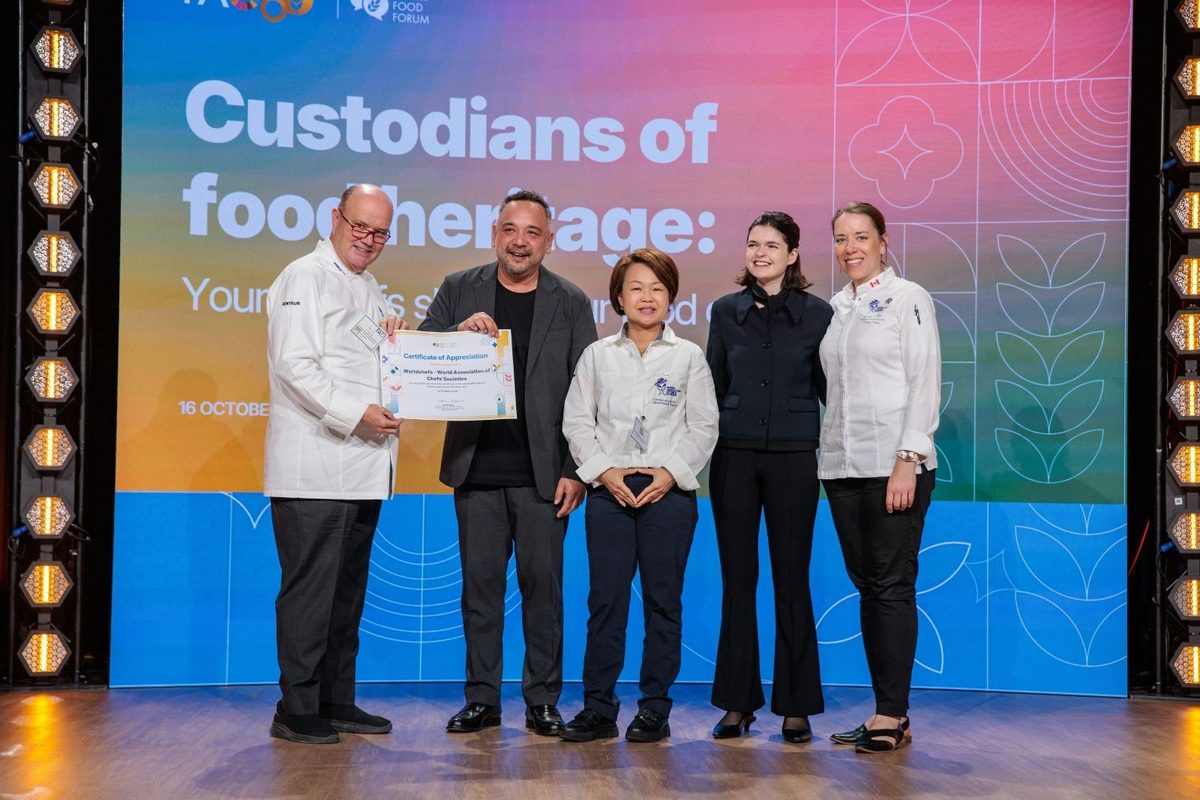
The agreement was signed by Kazuki Kitaoka, Director of the FAO Office of Youth and Women and Chef Andy Cuthbert, President of Worldchefs, at the close of the session Custodians of food heritage: Young chefs shaping our food culture, held at FAO headquarters during the WFF flagship event.
The YCP was launched in 2025 by the WFF Youth Initiative in collaboration with Worldchefs. It recognizes chefs as agents of change in agrifood systems. Through their sourcing decisions, menu design and food education, chefs influence what people eat in restaurants, schools, hospitals and homes. The programme equips young chefs aged 18–35, especially young women, with the skills, knowledge and networks to use that influence to promote more sustainable, nutritious and culturally rooted food.
The session opened with remarks from David Laborde, Director of the FAO’s Agrifood Economics and Policy Division. Chefs from the 2026 YCP cohort then presented the community-based projects they have led over the past year. Their projects ranged from reviving traditional ingredients and underutilized crops to reducing food loss and waste and teaching healthier eating habits.
“From school and hospital canteens to street food stalls, restaurant kitchens and family tables, chefs decide what ends up on millions of plates every day. By investing in young chefs and connecting them with the experience of Worldchefs’ global network, we are building the youth infrastructure that agrifood systems need to keep renewing themselves across generations”, said Kazuki Kitaoka.
The agreement marks the next phase of the YCP. Beginning in 2027, the programme will be delivered through National Young Chefs Programmes. Young chefs taking part will learn from experienced chefs through mentoring and masterclasses, follow a curriculum developed by FAO and receive a certificate on completion. They will also connect with chefs’ associations in their countries and with peers worldwide through the YCP Network, which is open to culinary professionals all around the world.
“As leaders in the culinary profession, we owe it to the next generation of chefs to share our knowledge, guide them and create opportunities for them to succeed. Through our partnership with FAO, we can turn that responsibility into action, working with our national associations to empower young chefs to grow and make a difference in their communities”, said Andy Cuthbert.
Through the YCP, participants strengthen their understanding of food heritage and culture, develop professional and leadership skills, expand their networks and apply their learning through locally led initiatives in their communities.
The World Association of Chefs’ Societies, known as Worldchefs, is a federation made up of 110 national chef associations. A leading voice in the hospitality industry, Worldchefs carries years of history since its founding in 1928 at the Sorbonne by the venerable Auguste Escoffier.
Representing a mobilized international membership of culinary professionals, Worldchefs is committed to advancing the profession and leveraging the influence of the chef jacket for the betterment of the industry and humanity at large.
Worldchefs is dedicated to raising culinary standards and social awareness through these core focus areas:
Education – Worldchefs offers support for education and professional development through the landmark Worldchefs Academy online training program, a diverse network of Worldchefs Education Partners and curriculum, and the world’s first Global Culinary Certification recognizing on-the-job skills in hospitality;
Networking – Worldchefs connects culinary professionals around the world through their online community platform and provides a gateway for industry networking opportunities through endorsed events and the biennial Worldchefs Congress & Expo;
Competition – Worldchefs sets global standards for competition rules, provides Competition Seminars and assurance of Worldchefs Certified Judges, and operates the Worldchefs Global Championships;
Humanitarianism & Sustainability – Worldchefs Feed the Planet and World Chefs Without Borders programs relieve food poverty, deliver crisis support, and promote sustainability across the globe.
The World Food Forum (WFF)’s Young Chefs Programme (YCP) equips chefs (aged 18-35) with skills, knowledge and networks to take a leading role in transforming agrifood systems through culinary practices. From advancing better nutrition to promoting food security and biodiversity, its ultimate goal is to create leaders that can inspire and guide other chefs to advocate for more sustainable and healthier consumption habits. Each participant is paired with a mentor from the World Association of Chefs’ Societies network.
Championing indigenous ingredients with Young Chefs Programme’s Eniola Okeola
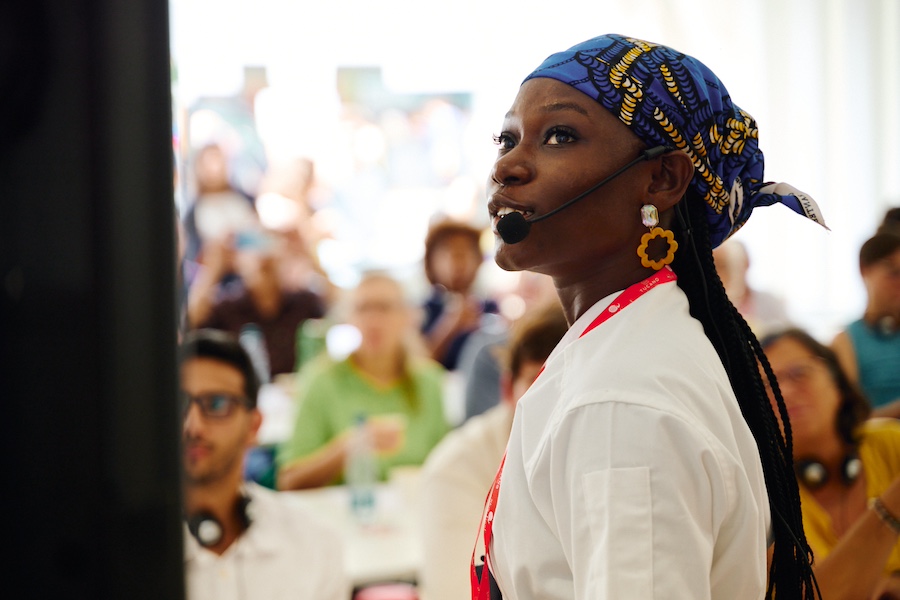
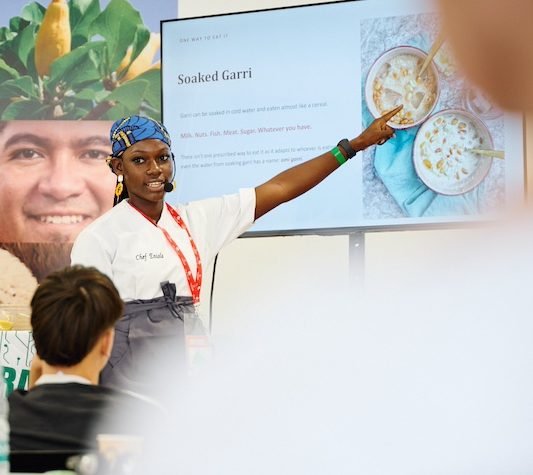
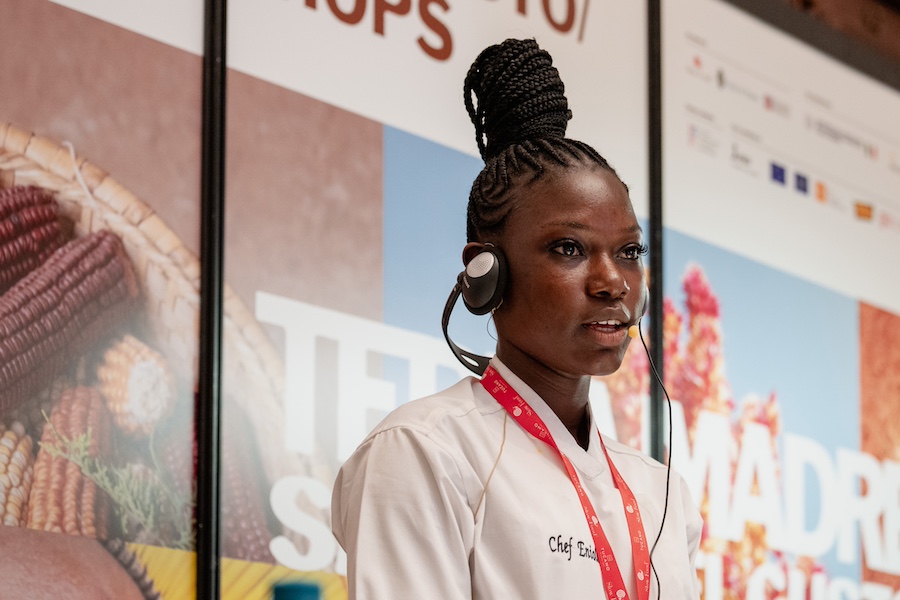
To celebrate World Food Day and the International Year of the Woman Farmer, we caught up with Young Chef Programme’s Eniola Okeola (Chef Neeola) en route to Rome for the World Food Forum’s flagship event.
A Nigerian chef, writer, and food advocate working at the intersection of culinary heritage, biodiversity and sustainable food systems, Chef Neeola explores how culinary practice can strengthen local food systems and preserve indigenous food knowledge.
As part of the our 2026 Young Chefs Programme cohort, Eniola is developing Reclaiming Indigenous Fats and Oils for Sustainable Nigerian Food Systems, a project exploring the culinary use of indigenous fats, particularly shea butter, and creating new connections between women producers, chefs, and consumers.
In this interview, we hear how she is bringing indigenous fats back into contemporary kitchens and advocating for new pathways to support the people behind the ingredients.
Nigeria is the world’s largest producer of shea in the world, yet it’s often missing from urban kitchens. When did you first become aware of this gap, and what inspired you to put indigenous fats like shea butter and Atili oil at the center of your cooking?
My interest in indigenous fats and oils started with curiosity. Growing up in an urban environment, I was familiar with the fats and oils we used at home, but shea butter was not one of them. My mum had mentioned eating shea butter and I had met other people who cooked with it, but I had never really thought about its place in our food culture. I only began to understand the extent of the gap between its production and its use in urban kitchens when I started researching for this project.
Around the same time, I visited Òfìkì through a Slow Food Farms project. I had been told that shea trees grew there and that shea butter was produced in the community, but I learnt that production had moved to neighbouring Tédé. I saw the trees in Òfìkì and eventually visited Tédé, which further deepened my interest in the ingredient and its significance to these communities.
The more I researched, the more I wanted to understand how an ingredient so deeply rooted in some communities could be largely absent from the everyday cooking of many urban Nigerians. I was also drawn to the history of Òfìkì and Tédé and the importance of shea butter and Atili oil in their food cultures.
This curiosity led to my project, “Reclaiming Indigenous Fats and Oils for Sustainable Nigerian Food Systems”. My work currently focuses on shea butter, while Atili oil remains part of the wider scope of my interest. I want to explore how we can bring these indigenous fats back into contemporary kitchens, reconnect consumers with their culinary heritage, and create greater appreciation for the people and knowledge behind their production.
You’ve worked with shea-producing communities, chefs, and urban consumers. What has been the most rewarding moment so far, and what have rural women producers taught you that has shaped your approach?
Every part of this journey has been rewarding, but one of the things I find most satisfying is being able to connect urban consumers and chefs with the women who produce shea butter. Many of these women supply companies and industries that use shea butter for cosmetics, so creating another pathway through culinary use, even on a smaller scale, has been encouraging. I am beginning to see chefs and individual consumers patronise them, their customer base grow, and the knowledge they have shared with me reach new audiences.
During one of my conversations with Alhaja Ajarat, a shea butter producer in Tedé, she spoke about how delicious shea butter was in their food and how it was one of their major cooking fats. She also expressed how much she would love to see younger generations use it more in cooking and that stayed with me because it reminded me that beyond introducing an ingredient to people who are unfamiliar with it, it is about helping to sustain a food culture that the producers themselves value. Although the demand for culinary shea butter is still small compared with its use in cosmetics, seeing people begin to explore it as food and purchase directly from the producers is a meaningful step.
The women have also taught me the importance of listening to the people who have worked with an ingredient long before I became interested in it. As a chef, it is easy to approach an ingredient through its culinary possibilities, thinking about what I can create with it or how I can introduce it to new audiences. However, speaking with producers has helped me appreciate the knowledge, experience and history that already exist around it. I have learnt that my role is also to help make existing knowledge more visible, connect it with new audiences and ensure that the women behind the ingredient are part of the opportunities that follow.
As a chef, it is easy to approach an ingredient through its culinary possibilities, thinking about what I can create with it or how I can introduce it to new audiences. However, speaking with producers has helped me appreciate the knowledge, experience and history that already exist around it. I have learnt that my role is also to help make existing knowledge more visible, connect it with new audiences and ensure that the women behind the ingredient are part of the opportunities that follow.
Chef Neeola
The Young Chefs Programme paired you with your mentor, Suhair Kilani, expertmasterclasses, and an international platform. How has that support helped you grow, and what has it unlocked for your project?
Being paired with Dr. Suhair Kilani has been one of the most valuable parts of the Young Chefs Programme for me. She has been incredibly supportive, checking in on my progress, encouraging me, helping me think through my research and offering practical advice on how to move the project forward. Having someone who takes a genuine interest in what you are building and continues to cheer you on makes a difference, especially when you are still figuring things out and learning as you go. I feel very fortunate to have her as my mentor.
Another significant outcome has been the opportunity to take this work into wider conversations. The international exposure has been significant. It has opened up opportunities to speak on international platforms both physically and virtually, like the African Food Systems Forum in Kigali and the World Food Forum Flagship event. It has also helped me connect with people working across food systems and think more seriously about what the project could become. I have been able to take my work beyond Nigeria and introduce people from different backgrounds to indigenous Nigerian fats, particularly shea butter, and its culinary uses beyond cosmetics. These experiences have helped me see how a project rooted in a local food culture can contribute to wider conversations about biodiversity, food heritage and sustainable food systems.
The programme has also helped me move from having an idea I was curious about to implementing activities and securing grant support for the project. Beyond the visibility, I have grown in confidence and become more deliberate about how I communicate my work and the change I hope it can contribute to. For me, that has been one of the biggest things the programme has unlocked.
At the World Food Forum flagship event in Rome this October, what do you want policymakers, scientists, and investors room to take away from a young chef’s perspective, and what would you ask that they prioritize when they go back to their offices and boardrooms?
When policymakers, scientists and investors return to their offices and boardrooms, I would like them to consider these three questions:
How can we strengthen existing efforts to preserve and promote local ingredients and food traditions that risk being undervalued or lost?
How can we ensure that the producers and communities sustaining them benefit from the value their work creates, while also making room for chefs and young food professionals to contribute to the policies and decisions shaping these food systems?
And what practical investments can help bring these ingredients into more of our everyday kitchens?
From my perspective as a young chef, we already have people doing important work to champion indigenous ingredients and preserve food traditions. The opportunity now is to build on that work and create more pathways for it to have a wider impact. We need to recognise that chefs contribute to food systems beyond cooking. Through our work with ingredients, producers, businesses and consumers, we can influence what people value, what they eat and what creates demand across the food chain.
I would therefore encourage greater investment in women-led food value chains and initiatives that connect producers with chefs, researchers and businesses. I would also like to see policies and funding mechanisms that allow young chefs and other food professionals to contribute to research, innovation and decision making, rather than limiting our participation to advocacy events and cooking demonstrations.
The future of food will be shaped by decisions made in policy rooms, laboratories, farms, markets and kitchens. Chefs should be part of those conversations, alongside the producers and communities whose knowledge sustains our food systems.
You’re putting the 2026 World Food Forum theme into action in your project, reclaiming indigenous fats and oils for sustainable Nigerian food systems through field documentation, sensory tasting sessions, and culinary activation. As someone who is helping to design the future now, what does ‘Innovate today. Nourish tomorrow.’ mean to you?
To me, “Innovate today. Nourishing tomorrow” means finding ways to make the knowledge, ingredients and food traditions we have today relevant to the generations that come after us. Innovation should not always mean looking for something entirely new. It should also mean looking at what we already have, understanding its value, and finding new ways to use it to meet the needs of the present and the future.
I am exploring how indigenous fats can be brought into contemporary kitchens and become part of how people cook and eat today. However, I believe this must go beyond creating new recipes or encouraging people to use these ingredients. We also need to understand their nutritional properties and communicate them accurately, so that people can make informed choices about what they eat.
Lastly, innovation should also consider the people who have sustained its use; the knowledge they carry, the food cultures it belongs to and the possibilities it holds for the future. If we can build on that knowledge, make it relevant to new generations and ensure that these ingredients continue to nourish us, then we are preserving our food heritage and giving it a future.
You coordinate the Slow Food Cooks Alliance in Nigeria, among a long list of other advocacy projects. What advice would you give to chefs, particularly women, who want to be a part of shaping how their communities eat? Can you share your favorite resources for people interested in taking action towards championing indigenous ingredients, documenting traditional recipes, and encouraging responsible sourcing?
My advice would be to start with what you have, stay curious about the food cultures around you, and do not underestimate the influence you can have as a chef. The ingredients we choose, the people we source from and the stories we tell through our food all influence how people eat and what they learn to value.
For women in particular, I would say that our knowledge and experience deserve a place in conversations that shape our food systems. We can contribute beyond the kitchen, whether through research, community initiatives, entrepreneurship or policy discussions. We do not have to know everything before we begin, but we must be willing to learn, collaborate and create opportunities for other women along the way.
For anyone looking to get started, I recommend a few resources:
Slow Food’s Ark of Taste is a useful reference for understanding how traditional food products, their histories and the people who sustain them can be documented and promoted.
Beyond these resources, speak to farmers, processors, market traders and home cooks; acknowledge the people who share that knowledge. Build relationships with producers and understand where your ingredients come from. Most importantly, look for ways to turn what you learn into action, whether by introducing indigenous ingredients to your menus, creating demand for local produce or helping pass traditional food knowledge on to younger generations.
With thanks to Chef Neeola for sharing her insights and recommendations, we wish our global community a happy World Food Day!
The future of food will be shaped by decisions made in policy rooms, laboratories, farms, markets and kitchens. Chefs should be part of those conversations, alongside the producers and communities whose knowledge sustains our food systems.
Eniola Okeola, (Chef Neeola), is a Nigerian chef, writer and food advocate working at the intersection of culinary heritage, biodiversity and sustainable food systems.
Professionally trained in culinary arts and patisserie, she worked her way from intern to commis chef, specializing in pastry while gaining experience across both hot and cold kitchen operations. She also managed her restaurant’s garden for a period, ensuring the availability of edible flowers and microgreens for its menus. She has since expanded her work beyond the kitchen to explore how culinary practice can strengthen local food systems and preserve indigenous food knowledge.
A 2026 participant in the World Food Forum Young Chefs Programme, Eniola is developing Reclaiming Indigenous Fats and Oils for Sustainable Nigerian Food Systems, a project exploring the culinary use of indigenous fats, particularly shea butter, and creating new connections between women producers, chefs and consumers. She also coordinates the Slow Food Cooks Alliance Nigeria, championing indigenous ingredients, food traditions and the people who sustain them.
When chefs think about reducing food waste, the conversation often focuses on inventory management, portion control, or utilizing ingredients more effectively. While these strategies are essential, another important factor is frequently overlooked: cooking consistency.
Every day, professional kitchens lose product to uneven cooking, overcooked batches, undercooked items, and re-fires. Beyond the direct cost of wasted ingredients, these issues consume additional labor, energy, and time. For chefs striving to operate more sustainably, consistency can play a significant role in reducing unnecessary waste.
Consistency starts with control
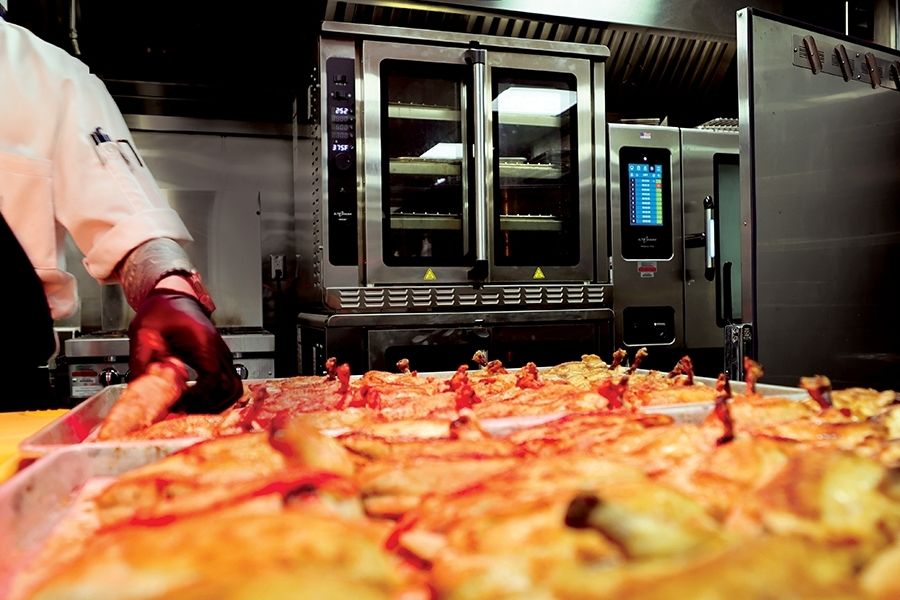
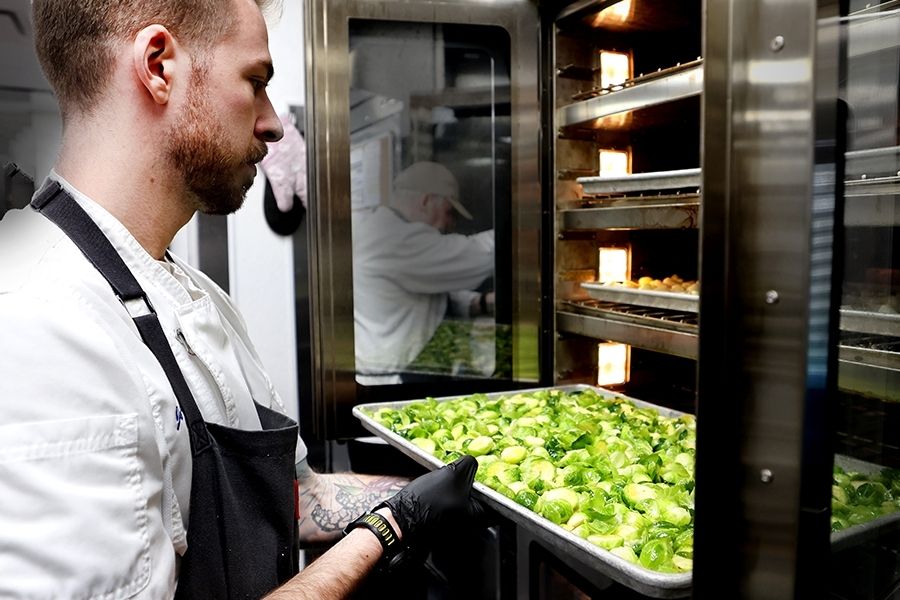
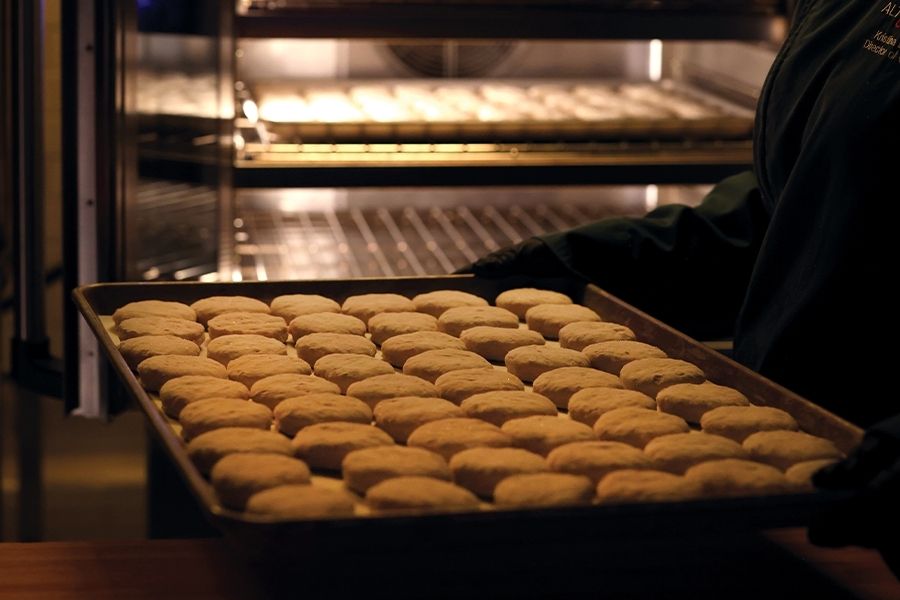
When every tray of roasted vegetables, every batch of pastries, or every pan of proteins cooks evenly, kitchens can achieve more predictable results and maximize ingredient yield. Less product is discarded due to quality issues, and teams can spend less time correcting problems and more time focusing on culinary execution.
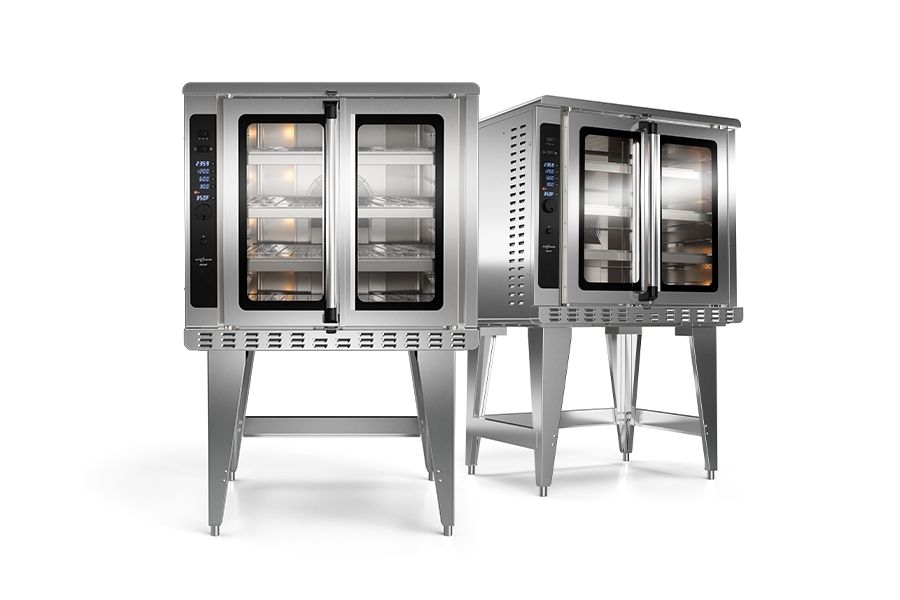
This is where innovation in kitchen technology can make a meaningful impact. Origin™ Multi-Cook Convection Ovens were specifically designed to deliver even cooking across every pan through Structured Air Technology®, which uses high-velocity vertical airflow to distribute heat more evenly throughout the cooking process. Rather than relying on chefs to constantly rotate pans or manage hot spots, the technology is designed to execute uniform cooking from top to bottom, even when the oven is fully loaded. When every tray, batch, and pan cooks consistently, chefs can reduce re-fires, improve ingredient yield, and minimize the amount of food discarded due to overcooking or uneven results. Consistent cooking also helps kitchens maintain quality standards while making better use of the ingredients, labor, and resources that go into every meal.
Sustainability is not always driven by major operational changes. Often, it is achieved through small improvements repeated thousands of times throughout the year. When fewer meals need to be remade, less food is discarded, and resources are used more efficiently, those incremental gains begin to add up.
As foodservice operations continue to balance rising costs with environmental responsibility, chefs are increasingly seeking practical solutions that support both sustainability and culinary excellence. By helping deliver consistent results across every batch, Origin supports a simple but powerful goal: ensuring more of the food prepared in the kitchen reaches the guest exactly as intended.
Founded in 1955, Alto-Shaam develops commercial foodservice equipment designed around the needs of professional kitchen operators. The family-led company pioneered the original Cook & Hold oven and today offers a broad portfolio of cooking, holding, chilling and display solutions. Alto-Shaam has been a Worldchefs Global Partner since 2023, supporting the global chef community through innovation, equipment solutions and educational content. For more information, visit https://www.alto-shaam.com/en/about-us.
About Worldchefs
Worldchefs, the World Association of Chefs’ Societies, is a global network of national chef associations dedicated to maintaining and improving culinary standards worldwide. Founded in 1928, Worldchefs supports chefs through education, certification, competitions, sustainability initiatives, networking opportunities, and industry partnerships that advance the culinary profession.
Become a Partner
Partner with Worldchefs to get connected with our international membership of professional associations, hospitality schools, and companies around the globe.
Worldchefs is back on Instagram, with a fresh feed and plenty to share!
Expect a closer look at what’s happening across our global community: chefs in action, competitions, education, sustainability, events, opportunities, and the people behind it all.
Follow us
Stay in the loop, discover what’s coming next, and catch the moments that don’t always make it into the news.
Share with us
Your stories belong here too. Tag @worldchefs_official and use #ThisIsWorldchefs to show us what’s happening in your kitchens, schools, associations, competitions, and communities.
A chef’s guide to using tea as a tool for modern gastronomy.
What if the right tea pairing is not about matching flavours at all?
In professional gastronomy, pairing is ultimately about balance. And tea gives chefs an unusually versatile way to create it, not simply as a beverage, but as an ingredient, aromatic, palate cleanser and finishing touch. At the Dilmah School of Tea, we encourage chefs to ask a different question: not “Which tea goes with this dish?” but “What does this dish need?”
Pair by Function
Think of tea as another tool in the chef’s repertoire.
A robust breakfast tea can lend structure and depth to slow-cooked meats. A delicate green tea can introduce freshness to seafood while respecting its natural sweetness. Earl Grey can bring citrus lift to pastry, while a smoky tea can add layers of complexity to savoury preparations.
The objective is not for tea to dominate. It is to make the hero ingredient more expressive.
Think Beyond the Plate
Tea’s role can extend across the entire dining journey.
A bright infusion can awaken the palate before a meal. A structured tea can temper the richness of a main course. A delicate herbal infusion can provide a clean, considered finish after dessert.
For tasting menus, tea offers another compelling advantage: complexity without alcohol. Its aromas, tannins and natural flavour spectrum can guide guests through subtle transitions while answering the growing demand for sophisticated no- and low-alcohol experiences.
Provenance Matters
For chefs, origin is more than a story. It influences performance.
With Dilmah’s commitment to Single Origin Pure Ceylon Tea, teas are grown, crafted and packed at origin, preserving the distinctive character of Sri Lanka’s diverse tea-growing regions. High-grown teas express differently from low-grown teas, giving chefs greater precision when building a pairing.
The result? Less reliance on pairing charts. More confidence to create.
Because once a chef understands tea’s contribution, freshness, body, aroma, tannin or balance, the possibilities become almost limitless. Tea pairing is not about following rules. It is about understanding flavour well enough to create your own.
About Dilmah Tea
Sri Lankan family tea company Dilmah, was established by Merrill J. Fernando to bring quality, Single Origin Ceylon Tea, garden fresh and unblended, to tea drinkers around the world. His Dilmah Tea brand was the first genuinely ethical tea brand, bringing a smile to the faces of the underprivileged in Sri Lanka, whilst giving consumers quality, authenticity and natural goodness in their cup of tea. For more information, visit https://www.dilmahtea.com/.
Become a Worldchefs Partner
Partner with Worldchefs to get connected with our international membership of professional associations, hospitality schools, and companies around the globe.
For Deaf Awareness Month, we asked Signs of Good Food about deaf culture in the kitchen. They are showing how much deaf chefs bring to the line, and how the industry must reframe what a great kitchen looks like through communication, culture, and community.
Heard. Yes, Chef. Fire table five.
Kitchens are loud. Hoods roar, tickets print, someone’s always yelling “behind.” Sometimes your cook doesn’t hear it. Sometimes your cook can’t.
But deaf cooks and chefs have been running kitchens without that call all along. They sign across the pass, catch a glance in the mirror stationed in front of them, and warn you with an elbow tap instead of a shout. Around the world, deaf chefs are opening restaurants where sign language is part of the hospitality, and a distinct culinary community is taking shape.
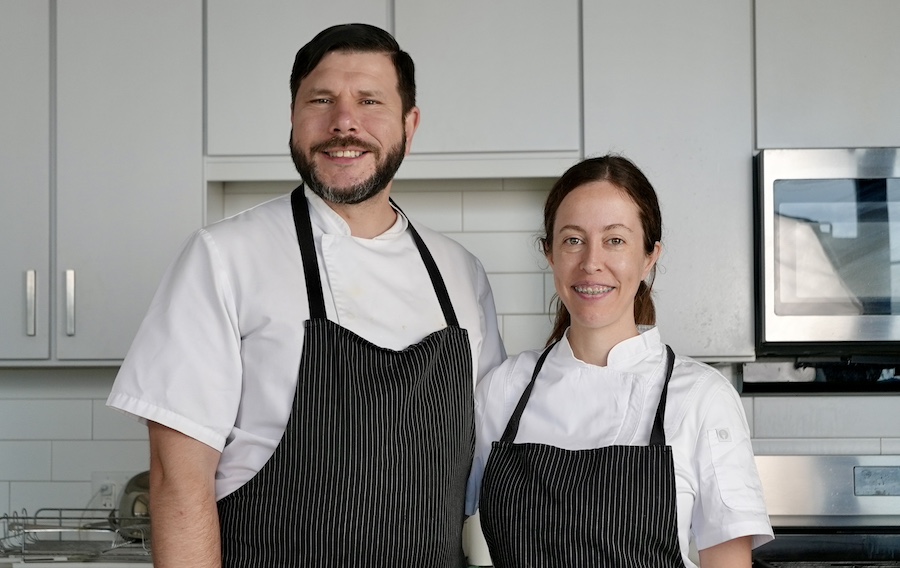
For Deaf Awareness Month, we talked with Bri Herold and David Uzzell of Signs of Good Food about what deaf culture brings to the kitchen, from the line to the dining room.
Tell us about Signs of Good Food. How did it get started?
Bri: Signs of Good Food really grew out of the way we already talked about food with each other. David has spent more than 15 years working in restaurants, and Bri is an engineer with a background in biology and chemistry, so we tend to look at the same dish from very different perspectives. David looks at food through the lens of someone who has spent his career in professional kitchens—how it tastes, how it’s made, and what it takes to execute it well. Bri wants to know why it works, how we can experiment with it at home, and why the restaurant industry does things the way it does.
We have been having those conversations for over a decade, and we started sharing them on social media two years ago after a trip to the Minnesota State Fair, when Bri said, “Let’s make a video about this weird deep-fried ranch.” Bri made the video, kept going, and she just grew Signs of Good Food from there.
The name represents what we were already doing: looking for the signs that make food good while sharing it through the sign language we use to communicate. Today, we use recipes, experiments, restaurant experiences, and sign language to explore one question that still drives everything we do: what makes food good?
You two work as a team. How is what you do enriched by both your perspectives?
Bri: Our perspectives are pretty different, which is exactly what makes us work so well as a team. David brings more than 15 years of experience in professional kitchens and front-of-house management, while Bri approaches food as an engineer, scientist, and curious home cook. David often knows from experience that something works, while Bri wants to know why—and how to make that knowledge easy to understand and share. We usually end up learning something new from each other every day.
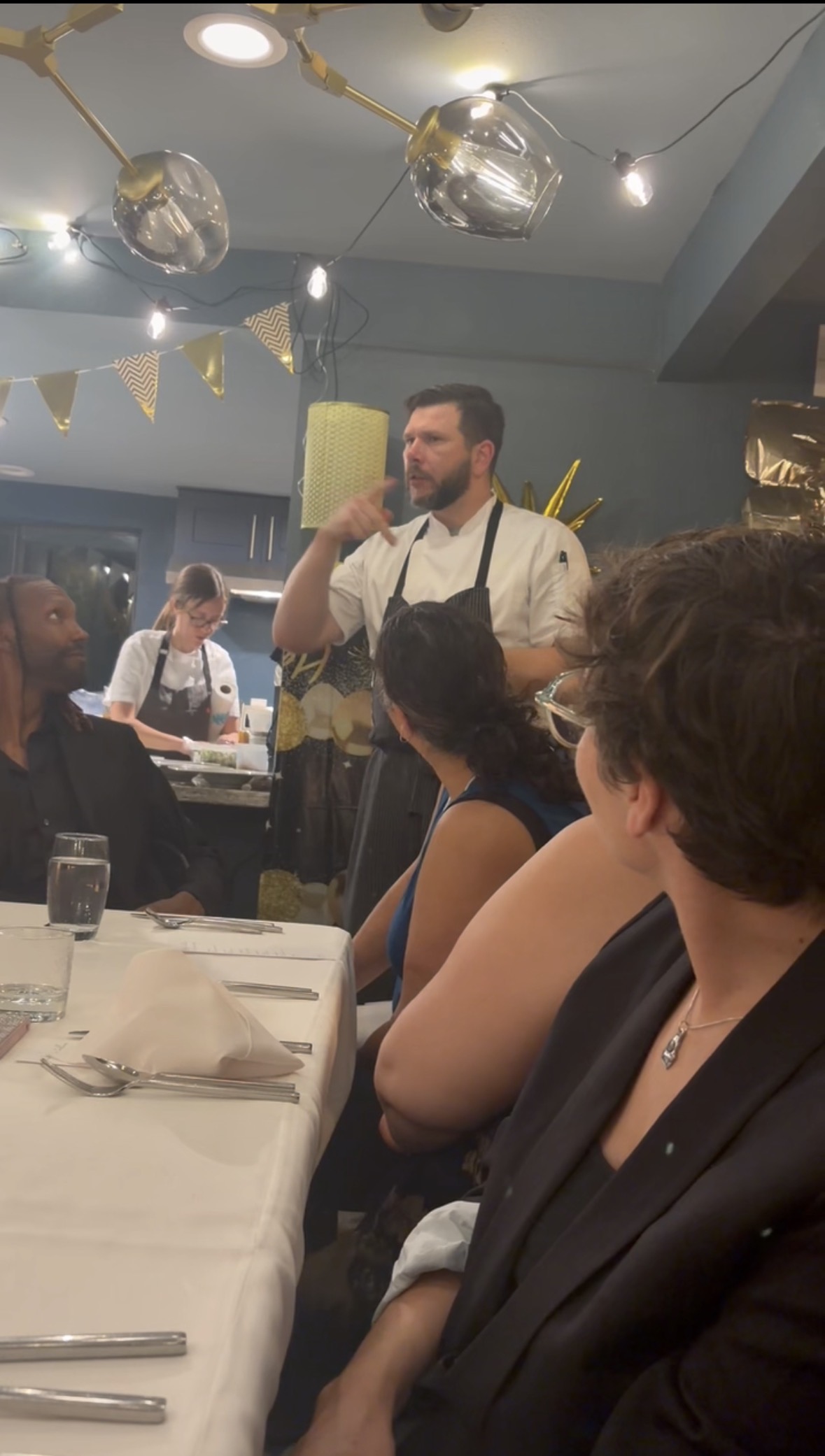
That dynamic carries over into everything we do, from our food edutainment content to the occasional private dining experience. Most recently, we hosted multi-course dinners in Houston, Texas, and Latrobe, Pennsylvania, centered around good food and sign language. We develop the menus and prep together, then take on different roles during service: Bri typically runs expo, while David leads the kitchen and hospitality. Whenever we can, we bring other deaf and/or signing people onto our team, which adds even more perspectives to the experience.
Success shouldn’t depend on how much adversity someone is willing to tolerate. Everyone deserves a seat at the table, including the people putting food on it.
Chef David Uzzell
David, you’ve had a remarkable career in the kitchen, from cooking at the White House to working with José Andrés. How has working in F&B changed over the course of your career, and what are the biggest gaps you still see today?
David: In the 15 years I’ve been in the industry, the biggest change I’ve seen is that we’re becoming more thoughtful about the people behind the stove. We’re talking more about mental health and work-life balance, recognizing what immigrants, women, and people with disabilities bring to the table, and being more open about issues like pay fairness between the front and back of house.
But while the conversation has changed, there’s still a gap between talking about inclusion and actually running an inclusive restaurant. Deaf cooks can struggle to get hired because restaurants worry that communication differences will slow down a fast-paced kitchen where everyone else can hear. Those assumptions can prevent someone from getting a chance before a restaurant has even seen what they can do. And getting hired is only the first hurdle. Deaf cooks also need the same access to information, mentorship, and opportunities to develop that their hearing peers receive.
That’s one of the biggest gaps I still see: signing deaf people rarely hold leadership positions in the industry. I can count on one hand the number of signing deaf people I know who lead a hearing-staffed kitchen or manage a hearing-run restaurant. Too often, deaf people have to create those opportunities for themselves, work a hundred times harder to outshine everyone else, or find a boss willing to take a bet on them.
Since moving into front of house and management, I’ve been rethinking some of the treatment I accepted as a line cook and even as a chef. Success shouldn’t depend on how much adversity someone is willing to tolerate. Everyone deserves a seat at the table, including the people putting food on it.
September is Deaf Awareness Month. What are the most important ways that the industry can better support deaf chefs?
David: The biggest thing the industry needs to reframe is how we think about working with deaf people. There can be an assumption that hiring a deaf person means extra work—communicating differently, changing a system, or learning something new. But kitchens already require people to adapt to one another. We learn how our coworkers communicate, develop shorthand during service, and change systems when they aren’t working. Working with a deaf person is simply another version of learning how to work with the people on your team.
And often, those changes make the kitchen better for everyone. Sign language cuts through a loud kitchen. Visual timers work when five timers are beeping at once. Written lineup notes ensure everyone gets the same information. Mirrors improve visibility, and a tap with your elbow when passing behind someone adds another layer of caution.
This reframing becomes especially important when it comes to development. Restaurants may not realize how easily a deaf cook can be left out of incidental learning—the information hearing cooks pick up by overhearing conversations, instructions, and feedback. Deaf cooks may not even know what they’re missing. Over time, that adds up and can affect their opportunities to learn, grow, and advance.
I’ve experienced that myself. I had already worked as a chef de partie at a Michelin-starred restaurant when I entered another Michelin-starred restaurant as a prep cook because I wanted the opportunity to work in that particular kitchen. I asked to have a conversation about how we could work together and how I could grow there, including something as basic as access to the information shared during daily line-up. But for my entire time there, I stood through those line-ups without knowing what was being said. When I asked to have a conversation about it, the answer was simply no.
Supporting deaf chefs starts with recognizing that we’re already doing this kind of work in our kitchens—learning how people communicate, adapting systems, and figuring out what different people need to succeed. Deaf cooks also need to advocate for themselves and do their work well, but that isn’t always easy when there’s a power imbalance or when they’re missing access to information and opportunities. That’s why awareness matters: it puts everyone in a better place to start that conversation.
Can you share some of your most memorable experiences on the other side of the pass? What can restaurants do to better accommodate deaf diners?
Bri: When we go to restaurants, we usually send a note in advance letting them know that we’re deaf and that we use sign language. We’ll suggest a few alternatives to speaking to us, like notecards or printed information about the menu, and we enjoy seeing how different restaurants approach it. There’s room to have fun and be creative with accessibility—it can become part of the hospitality experience rather than something separate from it.
A couple of memorable meals come to mind. At a three-Michelin-star restaurant in New York, the team gave us notecards with extremely thoughtful 3D diagrams describing some of the most intricate courses—how to eat each dish, what the different ingredients were, and even which utensils to use. At a starred restaurant in Chicago, our captain delivered the entire meal in American Sign Language, which absolutely blew us away. Those experiences made us feel like the restaurants had really thought about how we could experience the meal as fully as everyone else.
But what’s interesting is that we returned to both restaurants a few years later, and the magic had evaporated. The New York restaurant gave us generic printed notecards instead of the thoughtful explanations we had received before. At the restaurant in Chicago, a server spoke to us to confirm our allergies and still got them wrong. That goes beyond hospitality—it becomes a safety issue. We had to pull out a phone to transcribe the conversation and then hand it to our captain throughout the meal just so we could understand enough to avoid getting sick. And we haven’t always been able to avoid it. Bri has had to excuse herself from the table and be sick during a nice dinner because a restaurant doubled down and insisted on communicating with us in a way we had explained we couldn’t access.
We’ve had plenty of great restaurant experiences over the years, but even the best restaurants in the world have room to improve when it comes to consistency with deaf diners who use sign language, especially with something as serious as allergies. Great hospitality shouldn’t depend on who happens to be working that night. Read the reservation notes, discuss accessibility needs during pre-shift or make a plan ahead of time, and, if you’re unsure what will work, reach out to the guest beforehand and ask. Often, it really is that simple.
What resources do you recommend for chefs, deaf and hearing alike, to help build a more inclusive workplace?
David: We recommend starting with resources created by deaf people and organizations. Bill Vicars’ YouTube channel is a great free starting point for learning ASL. Lingvano is another sign language learning resource that we frequently see recommended by new signers.
We’re also developing resources at Signs of Good Food specifically for the food and hospitality industry. They include signs and strategies that deaf people can use in both back- and front-of-house roles, and that hearing people can use when working with deaf colleagues, serving deaf guests, or even communicating with each other. I’m currently putting many of these approaches into practice as Assistant General Manager of Diane’s Place in Minneapolis, Minnesota.
What advice would you give to young chefs today?
David: Take care of your body, invest in good shoes, keep your knives sharp, keep your station clean, make mistakes and learn from them, and don’t get into hard drugs. Be curious and be ready to work hard.
Beyond that, especially early in your career, move around. Apply to the interesting restaurants you’ve heard about. Take lots of notes, ask lots of questions, write down the answers, and keep a copy somewhere because eventually you will lose a notebook. Understand that whether you’re one day or fifteen years into cooking, you’re always going to learn something new. That’s part of the job, and it’s part of what makes it fun.
For young deaf chefs, I’d add two things. First, by virtue of being deaf, you’re already memorable, so make it count. Be kind to your colleagues and build relationships because you never know what doors those connections might open later.
Second, find the right team. A good team will include you, show curiosity about you as a person, and make an effort to figure out what works. It might not be perfect, but they’ll try. Speak up sooner rather than later about what’s working and what needs to change, especially before habits set in. Don’t accept being shut out of meetings or pre-shifts. Figure out how to make those situations accessible; for example, there are good transcription tools that can help you keep pace.
And if a restaurant treats you like an inconvenience instead of part of the team, that’s a red flag. Pack up your knives and find another kitchen. I spent too long thinking I had to grind it out in toxic workplaces to move up, but you can learn from my mistakes. Kitchens are always looking for good people, and the great ones won’t care that you’re deaf—they’ll care whether you can bring the noise.
Working with a deaf person is simply another version of learning how to work with the people on your team.
Chef David Uzzell
For culinary professionals interested in getting involved or being a part of the Deaf Food Atlas, where can they learn more?
Bri: Our Deaf Food Atlas currently features 148 open deaf-owned or deaf-staffed food businesses around the world, with 184 locations documented in total (36 have since closed). Deaf food businesses interested in being included can visit signsofgoodfood.com or send us a message on any of our social media platforms. We read every message and always love hearing from new businesses. It’s a unique and growing community, and we’re still witnessing a lot of firsts. Washington, D.C., for example, didn’t get its first deaf-owned restaurant until 2020. We’re excited to see a distinct culinary community starting to take shape around the world, where sign language is central to the hospitality experience.
Lastly, what is your favorite food-related sign? In ASL or other languages.
Bri: Recently our favorite food signs have been POTATO in Japanese Sign Language and PICKLE in the Minnesotan dialect of ASL. We love seeing how food signs differ—or sometimes stay surprisingly similar—across sign languages and cultures. Many food signs are iconic, meaning the sign visually reflects the food, how it’s eaten, or how it’s prepared. Sometimes, just by seeing a sign, you can learn something about another culture’s relationship with food.
We share signs like these on our social media because, to us as deaf people, they’re another part of understanding the signs of good food. And if you visit a restaurant on our Deaf Food Atlas in another country, you might even find yourself using one of those signs—or learning a new one from the people you meet there.
Sign language across the pass, a tap on the back for behind, visual aids to improve safety and efficiency—developing systems through the leadership of deaf cooks and chefs is just developing better systems.
Yet, deaf colleagues are often left out of opportunities to advance in the industry, especially at leadership levels. That needs to change. Mastering kitchen communication requires learning, adapting, and advocating for better systems.
When we bridge the gap between talking about inclusion and running an inclusive restaurant, we can achieve better team culture, better service, and a better industry.
David Uzzell is a deaf chef with a history degree and more than 15 years of experience in the restaurant industry, primarily in fine dining. Bri Herold is a deaf engineer with a background in biology and chemistry who is curious about food science and nutrition and how to use that knowledge to take dinner to the next level.
Together, they test, translate, and simplify professional techniques for curious cooks at every level, sharing food knowledge through recipes, experiments, and sign language. They encourage people to play with their food, explore what makes it good, and feel confident making something delicious with what they have at home.
Credits
Sincere thanks to Bri and David for this interview.
Winnow Foresight is designed to help hotel teams with smaller food and beverage footprints forecast demand more precisely and reduce overproduction while enhancing the guest experience
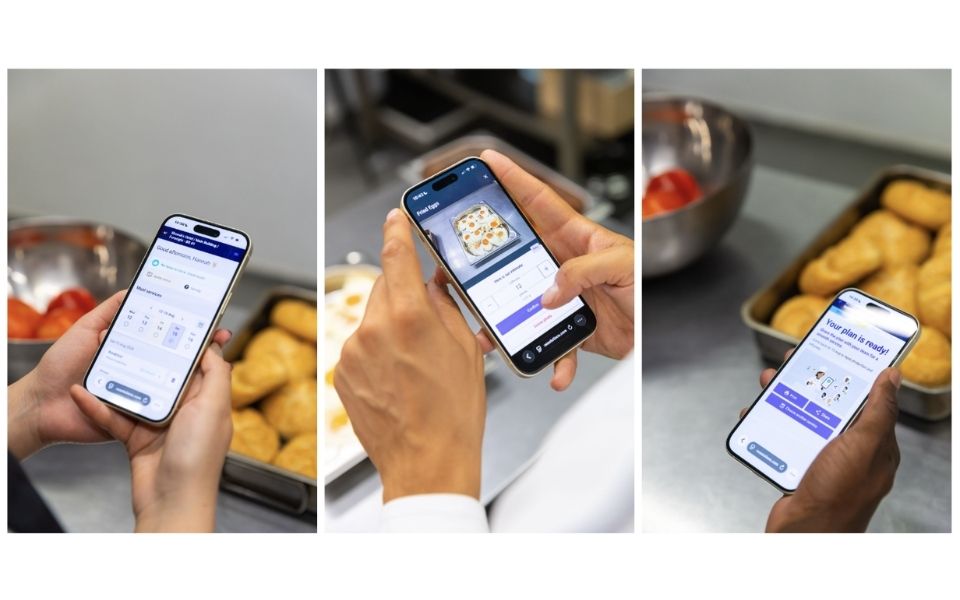
London, UK – 29 September 2026 – Winnow, the global Artificial Intelligence (AI)-powered food waste measurement company, today announced the launch of Winnow Foresight, a new mobile-first, AI-powered production forecasting solution built to help hotel kitchen teams predict guest demand and prevent food waste before it occurs.
Developed in collaboration with Hilton chefs, the new web app supports Hilton’s Travel with Purpose strategy by giving hotel teams practical tools to reduce overproduction, manage costs and improve the guest experience. Winnow Foresight was designed specifically for focused-service hotels and other properties with lighter food and beverage operations, a segment that has historically had less access to advanced food waste technology than larger, full-service properties. With more than 5,000 focused-service hotels around the world across brands such as Hampton by Hilton, Tru by Hilton, Hilton Garden Inn and others, Hilton offers a meaningful example of the segment the technology is designed to support.
Accessed via mobile device, Foresight is a web app that uses AI-powered forecasting to predict demand at the item level and help kitchen teams optimize production plans, giving them the insight to prevent overproduction before it happens rather than only measure waste afterwards. Early results from Hilton properties piloting Winnow Foresight point to meaningful reductions in overproduction alongside gains in food quality and guest satisfaction:
Hampton by Hilton Budapest cut the weight of leftovers by 69% within six months, including a 64% reduction in leftover croissants alone, while lifting breakfast satisfaction by 4% and reducing cost per cover by 10%.
Hilton London Croydon reduced the weight of leftovers by 52% within five months, including a 57% reduction in leftover sausage and a 48% reduction in leftover scrambled eggs, freeing up chefs’ time to focus on food quality rather than managing surplus.
Hilton Frankfurt Airport achieved a 66% total reduction in overproduction weight and a 5% saving on food costs.
“For years, Winnow has helped kitchens measure the food they waste. Foresight goes a step further and helps them see it coming. Working with Hilton’s chefs, we’ve built a tool that predicts demand at the item level, so teams can prepare the right amount of food from the start. That’s the difference between managing waste and preventing it,” said Marc Zornes, CEO of Winnow.
“Chefs at our focused-service hotels often operate with leaner teams and need simple, practical tools that work for smaller operations, so every decision about what to prepare each day matters,” said Chef Sebastian Nohse, Senior Director, Culinary and Food & Beverage Development, EMEA, Hilton. “Winnow Foresight takes the guesswork out of production planning. Our chefs are cooking with more precision, wasting less, and spending more time on the food itself rather than managing leftovers.”
Winnow and Hilton have partnered since 2017 to advance food waste reduction efforts across the hospitality industry. Winnow Vision, the company’s flagship food waste measurement system, is now installed across more than 220 Hilton hotels worldwide, together preventing more than 5,900 tons of food waste, avoiding more than 7.8 million wasted meals and 13,000 tonnes of CO2 equivalent emissions. Winnow Foresight extends that partnership into production planning and is currently live in approximately 13 Hilton hotels across Europe, the Middle East and Africa, with Hilton evaluating results ahead of a potential wider rollout.
About Winnow
Winnow builds AI tools that help chefs run leaner, smarter kitchens by cutting food waste in half. Trusted by leading hospitality brands including Hilton, Marriott, Accor, and IKEA, Winnow’s technology is used in 3,500+ kitchens in almost 100 countries. By giving teams daily insight into what’s being wasted and why, Winnow helps reduce overproduction, improve planning, and lower costs. A certified B Corporation, Winnow’s mission is to help the hospitality industry save $1 billion in food waste annually – because food is too valuable to waste. Founded in 2013, Winnow now has offices in London, Chicago, Cluj-Napoca, Dubai and Singapore. For more information, visit winnowsolutions.com.
Brussels, 28 September 2026 — For years, food-sustainability campaigns have followed the same playbook: tell people the facts, what to eat, then hope they listen. New research from the FoodChoices4LIFE EU-funded project suggests that playbook mostly fails, and one of its biggest failures is the label “plant-based” itself, which puts people off and feeds into a wider backlash against meat substitutes across Europe. That evidence is now shaping Cook4Climate, the project’s public-facing campaign, taking place this October and bringing together chefs and citizens from across Europe to show that tasty and sustainable eating can go hand in hand.
Why so many sustainability messages fail
Researchers from FoodChoices4LIFE reviewed 73 consumer-facing and 83 chef-facing interventions documented in the international scientific literature, then surveyed and ran focus groups with citizens in eight EU countries (Belgium, France, Germany, Italy, Poland, Romania, Spain and Sweden), and with chefs, to see what actually moves people.
What they realised is that much sustainability messaging still relies on a simple instruction, “eat less meat”, “go plant-based”, delivered through a poster, a leaflet or a social media post. It’s also the least effective approach available. Only 58% of the consumer-facing actions reviewed were shown to trigger any positive change in food behaviour, and simple messages and recommendations performed worst of any category (53% success), well behind education (86%, though that finding rests on just seven tested actions). Among chefs, the same pattern held: 70% of actions succeeded overall, but simple messaging lagged at 69%, against 91% for recipe changes and 76% for nudges like menu reordering.
The plant-based backlash
Delivery format wasn’t the only thing that mattered: what a message actually said was also important, especially around plant-based eating. Plant-based framed options such as adding plant-rich dishes to the menu without any indication that they are plant-based (28.3%) or highlighting the taste of plant-rich dishes (37.3%) landed with far less enthusiasm than dishes framed as seasonal or local: 59% for more seasonal options and 59.8% for more local options.
The same pattern held when it came to actual choices. Consumers said they were far more likely to cut down on meat by adding more vegetables (37.7%) or legumes (32.2%) to their plate than by reaching for a commercial plant-based meat alternative (26.5%). The resistance wasn’t to plant-based eating itself: consumers were happy to eat more vegetables and legumes, both of which are plant-based too. The resistance was to processed meat analogues, which they said would win them over through improved taste and texture, not by being marketed as ‘greener’. That reluctance held even when it came to replacing meat outright: given the choice, 36.4% would rather swap beef or lamb for chicken, pork or fish than for a plant-based alternative.
“We’ve spent years telling people to eat plant-based, and a lot of that messaging simply hasn’t landed. People hear it as a lecture, not an invitation. Cook4Climate is built on what the research says actually works: small, tasty, feasible swaps, more veg, more legumes, more seasonal ingredients, tap water over bottled, for citizens, with chefs playing their part through practical, recipe-level changes,” says Betty Chang, Research Area Lead at EUFIC.
What Cook4Climate does differently
Instead of another simple instruction to eat less meat or go plant-based, Cook4Climate puts that evidence into action: a set of hands-on resources and activities that let citizens across the EU experience firsthand why sustainable eating matters, and take practical steps to make it happen this October.
A free digital cookbook where citizens can cook from 27 traditional recipes, one contributed by a chef from each EU Member State, each built around seasonal ingredients, plant-forward cooking, food preservation, or ingredients that are usually discarded, proving that classic, much-loved dishes can also be climate-smart. The recipes are organised by season, with substitutions listed so they can be cooked year-round.
A Europe-widesocial media cooking challenge where citizens, chefs and influencers are invited to put a sustainable spin on their cooking and inspire others to do the same. Participants can either cook a dish from the FoodChoices4LIFE cookbook or reinvent a traditional dish of their own, then snap a photo or video and share it using #Cook4Climate.
A series of sustainable cooking events where citizens can meet chefs and learn firsthand. More than 25 chefs are hosting over 50 events across Europe this month. Citizens can find one near them using the campaign’s interactive events map.
A web-based AI-driven app where citizens can track their food consumption and waste. It gives personalised feedback on the environmental impact of their choices, making the effect of everyday habits more tangible and helping counter climate-related misinformation.
A food waste quiz where citizens can identify the best ways for them to cut food waste, and get practical, personalised tips in return that help save money, protect the environment, and lower the risk of food poisoning.
A social media toolkit with a set of ready-to-use visuals for anyone who champions healthy and sustainable eating and wants to help spread the word about the campaign across their own channels.
Cook4Climate is also rallying chefs and food influencers from across Europe. Throughout October, a network of ambassadors will bring sustainable cooking to new audiences, from restaurant menus to social media feeds.
“Chefs shape millions of meals every day, and every menu is an opportunity to introduce people to new ingredients, flavours and dishes. That’s why chefs have such an important role in Cook4Climate. We can show that climate-smart food can be delicious, exciting and practical, while using our influence beyond the plate to inspire more sustainable food choices. By sharing what works with our teams, guests and fellow chefs, we can help bring even more people along,” says Shonah Chalmers, Sustainability Chair at Worldchefs.
How to get involved
If you cook at home: join the cooking challenge and share your dish using #Cook4Climate, join a chef-led cooking event near you on the campaign’s interactive map, and download the free recipe cookbook, app and quiz to start making small, feasible food choices that are good for you and the planet.
If you’re a chef, run a restaurant: visit the “For Chefs” section of cook4climate.eu to watch webinars on how chefs can drive sustainable food system change, access resources to spread the word, and join the cooking challenge.
If you’re a journalist: contact us to arrange interviews with the FoodChoices4LIFE research team, campaign spokespeople or participating chefs, and to find out more about the research behind the campaign. You can also support your reporting on healthy and sustainable diets through this press toolkit.
THE END
About Cook4Climate
Cook4Climate is the public-facing annual campaign of the FoodChoices4LIFE project, showing that tasty, healthy and sustainable eating can go hand in hand. Throughout October 2026 and 2027, it runs a cooking challenge involving influencers and chefs, and connects EU citizens with 25+ chefs hosting 50+ cooking events. The website serves as the heart of the campaign, where citizens, partners and chefs can find the resources they need to take part and learn how to make lasting changes in the kitchen. More at www.cook4climate.eu.
About FoodChoices4LIFE
FoodChoices4LIFE is a three-year project (1 October 2025 – 30 September 2028) co-funded by the EU LIFE programme (call LIFE-2024-SAP-CLIMA-GOV). It aims to help people across Europe eat healthier, live more sustainably and waste less, combining Europe-wide public campaigns with training for chefs, journalists and local administrators, and an AI-powered app to guide climate-smart meal choices. Over its lifetime, the project targets more than 100 in-person events, over 500,000 people reached through social campaigns, 500+ chefs engaged, and a 25–30% reduction in household dietary CO₂ emissions. It builds on two earlier EU LIFE projects, Su-Eatable Life and Climate Smart Chefs. The consortium is coordinated by EUFIC, with the University of Tuscia, Worldchefs and pOsti as partners.
Media contact
Lorena Vargas Media Manager at the European Food Information Council (EUFIC) +32 485 31 95 67 lorena.vargas@eufic.org
AbouttheFoodChoices4LIFE Partners
Worldchefs: Worldchefs is a non-political professional organisation, dedicated to maintaining and improving the culinary standards of global cuisines. We accomplish these goals through education, training, and professional development of our membership. As an authority and opinion leader on food, Worldchefs represents a global voice on all issues related to the culinary profession.
EUFIC (Coordinator): The European Food Information Council (EUFIC) is a consumer-oriented non-profit organisation, founded to make the science behind food and health more accessible and easier to understand among the public. Our mission is to produce science-based content to empower and facilitate healthier and more sustainable diets and lifestyles among European citizens.
University of Tuscia: University of Tuscia, founded in Viterbo in 1979, rapidly developed into a well-established cultural reference. With over 10,000 students and 200 faculty members, it is recognized for research in forestry, climate change, and innovation in food systems, including food loss and waste reduction. The Department for Innovation in Biological, Agri-food and Forest Systems is now engaged in the FoodChoices4Life project.
Strengthening global culinary communities through education, innovation, and kitchen hygiene leadership.
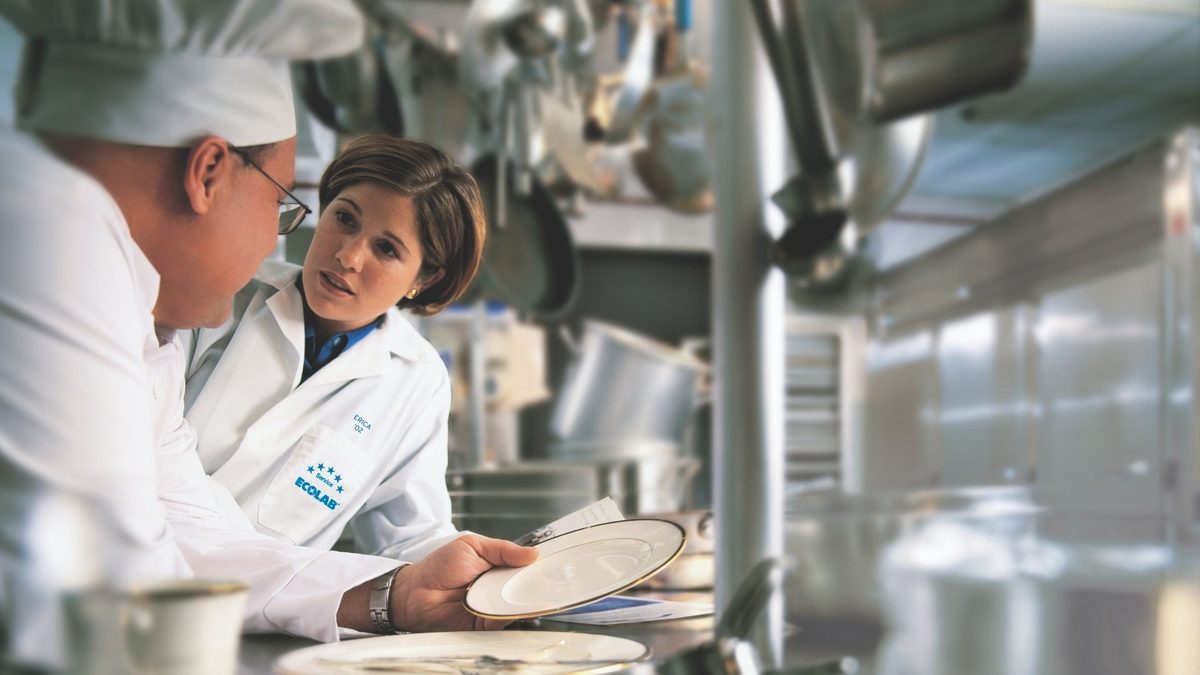
Ecolab, the global leader in water, hygiene and infection prevention solutions and services recently joined Worldchefs (The World Association for Chefs’ Societies) as a Collaborative Partner. Through this partnership, Ecolab and Worldchefs will work together to empower culinary professionals worldwide with the knowledge, tools, and best practices needed to create cleaner, safer, more sustainable, and efficient foodservice operations.
The partnership brings together Worldchefs’ global network of chefs and culinary educators with Ecolab’s expertise in food safety, hygiene, water stewardship, and operational performance. Together, the organizations will support chefs and foodservice professionals in addressing some of the industry’s most pressing challenges, from food safety and resource efficiency to sustainability and workforce development.
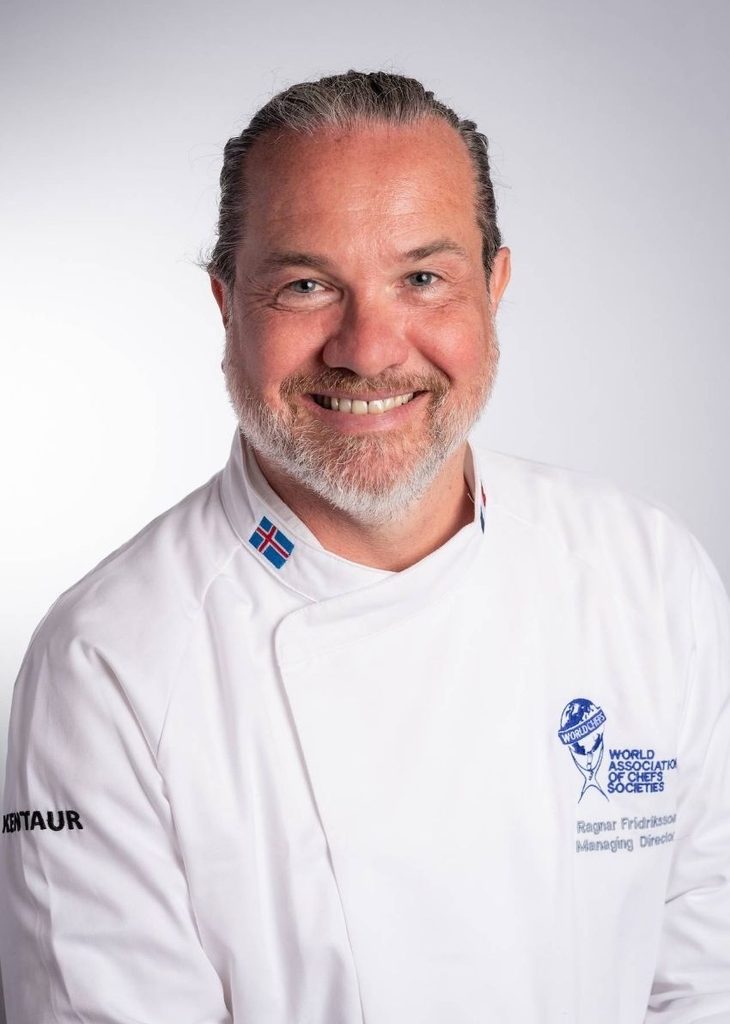
Ragnar Fridriksson
“At Worldchefs, we are committed to supporting culinary professionals with the education and resources they need to succeed in a rapidly evolving industry,” said Ragnar Fridriksson,Managing Director of Worldchefs.
“Ecolab shares our commitment to raising standards across professional kitchens, helping chefs protect guests, improve operations, and build more sustainable foodservice environments.”
As a trusted partner to restaurants, hotels, institutional kitchens, and foodservice operators around the world, Ecolab helps customers achieve high standards of cleanliness, food safety, and sustainability while improving business performance. Operating in more than 170 countries, the company combines science-based solutions, digital technologies, and expert service to help customers protect people and resources vital to life.
Through the partnership, Ecolab will contribute industry expertise and thought leadership to support Worldchefs’ educational initiatives, events, and community engagement activities. The collaboration will focus on advancing awareness around:
Food safety best practices
Hand hygiene and infection prevention
Sustainable kitchen operations
Water and energy conservation
Operational efficiency and cost optimization
Building a strong food safety culture across foodservice organizations
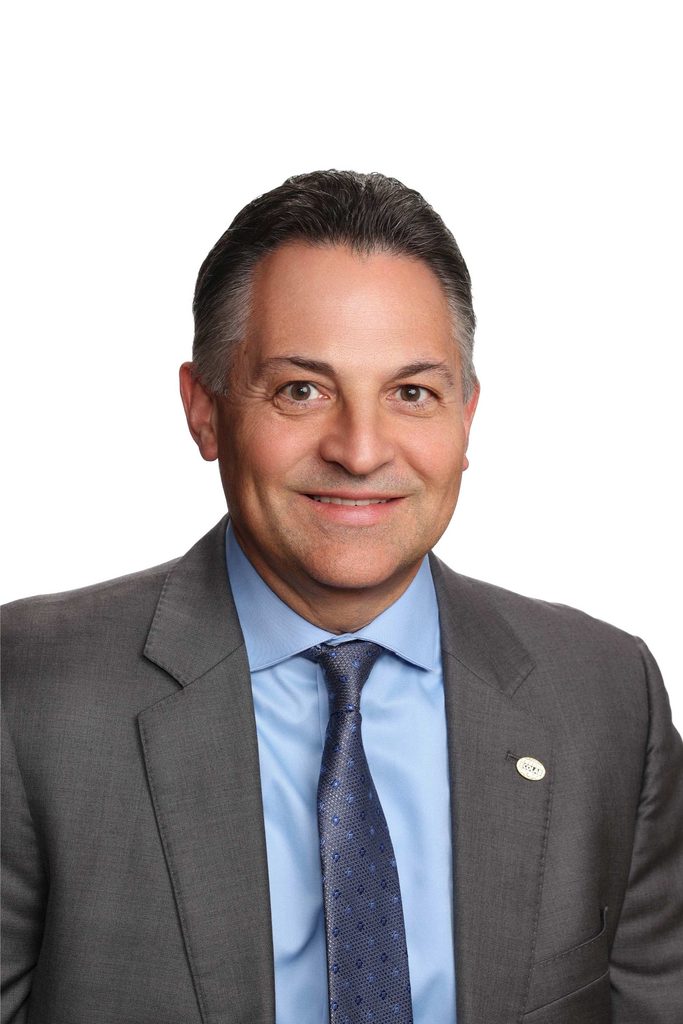
Greg Cocchiarella
“Chefs are at the heart of delivering exceptional guest experiences—ensuring clean, safe, and sustainable kitchen operations while improving efficiency and protecting the health and wellbeing of every guest”, said Greg Cocchiarella, VP of Industry Relations, Global Institutional at Ecolab.
“By partnering with Worldchefs, we can help provide culinary professionals with practical solutions and expertise that meet each operations unique business needs, while helping to create a more sustainable future for the industry.”
The partnership reflects both organizations’ shared vision of elevating standards throughout the global foodservice community. By combining Worldchefs’ reach and influence with Ecolab’s scientific expertise and innovation, the collaboration aims to inspire positive change across kitchens, culinary schools, hospitality businesses, and foodservice operations worldwide.
As the hospitality and foodservice sectors continue to evolve, Ecolab and Worldchefs look forward to supporting chefs with the knowledge and solutions needed to create clean, safe, and healthy environments where people can thrive.
About Ecolab
Ecolab (NYSE: ECL) is a global sustainability leader offering water, hygiene, and infection prevention solutions and services that help businesses protect people and the resources vital to life. With annual sales of approximately $16 billion and operations in more than 170 countries, Ecolab helps customers improve operational performance while advancing sustainability goals through science-based solutions, digital insights, and expert service.
Worldchefs, the World Association of Chefs’ Societies, is a global network of national chef associations dedicated to maintaining and improving culinary standards worldwide. Founded in 1928, Worldchefs supports chefs through education, certification, competitions, sustainability initiatives, networking opportunities, and industry partnerships that advance the culinary profession.
Become a Partner
Partner with Worldchefs to get connected with our international membership of professional associations, hospitality schools, and companies around the globe.
Not simply ingredients that fill a pantry, but ingredients with a story, a provenance and a purpose. Olive oil is selected for its origin. Chocolate for the character of its cacao. Vinegar for the depth created through time. Wine for the expression of its terroir.
So why should tea be any different?
For too long, tea has been relegated to the beverage station, something prepared after the meal rather than something that can shape it.
But tea has never been merely a beverage. It is an ingredient with remarkable culinary potential.
Think of Tea as a Flavour, Not a Beverage
Ask a chef what tea tastes like and the answer is rarely simple.
A tea can be floral and delicate. Bright and citrusy. Toasted and profound. Naturally sweet. Earthy. Herbaceous. It can carry gentle tannins, lingering umami or an aromatic finish.
These are not just tasting notes. They are culinary tools.
A fragrant Ceylon tea can bring aromatic lift to a dessert. A robust black tea can add depth to a reduction or marinade. A delicate green tea can introduce freshness without overwhelming a delicate ingredient. A smoky, roasted character can build complexity into a savoury dish.
The question, then, is not “How do I cook with tea?”. It is: “What can tea do for this dish?” That shift in thinking is where the opportunity begins.
Origin Changes Everything
For a chef, provenance is never a footnote. It influences the ingredient, the technique and ultimately the experience on the plate. At Dilmah, we believe tea deserves the same consideration.
Think of wine. A sommelier would never describe a wine simply as “red”. The vineyard, region, producer and vintage all contribute to its character. Tea is no different. Dilmah’s commitment to Single Origin Pure Ceylon Tea means the tea is grown, handpicked, crafted and packed in Sri Lanka, where it originates. From the mist-covered highlands to the warmer low-grown regions, differences in altitude, climate, rainfall and soil create distinctive expressions of Ceylon Tea.
For chefs, this is more than provenance. It is a flavour map.
Understanding where a tea comes from allows it to be approached with the same precision as any other serious culinary ingredient, considered for its character, matched to other ingredients and selected for the role it needs to play.
What Happens When Chefs Start Thinking Differently?
This is where tea becomes interesting. Because once tea leaves the beverage menu, its possibilities multiply. It can become:
A broth.
A beurre blanc.
A marinade.
An infused butter.
A glaze.
A dessert.
A pastry.
A bread.
A cocktail.
A zero-proof creation.
And perhaps most importantly, tea can add complexity without competing for attention. The finest culinary ingredients know when to lead and when to support. Tea can do both.
From the School of Tea to the Professional Kitchen
When the Dilmah Founder, Merrill J. Fernando founded Dilmah, his ambition extended beyond producing tea. He wanted the world to understand it, its origin, craftsmanship, character and possibilities.
That philosophy continues through the Dilmah School of Tea, where chefs, pastry professionals, sommeliers, mixologists and hospitality professionals from more than 100 countries have explored tea through a gastronomic lens.
The purpose is not simply to teach another collection of recipes. It is to change the way professionals think about tea. Because once you understand tea’s flavour architecture, you begin to see it differently. You stop asking where tea belongs on the menu. And start asking where it belongs on the plate.
The Hospitality Opportunity
Today’s guests are looking for more than something delicious. They remember discovery.
A tea pairing that transforms a familiar course. A dessert finished tableside with an aromatic infusion. A breakfast where tea appears across several courses. A zero-proof creation with the complexity traditionally associated with a cocktail.
These are not gimmicks. They are opportunities to create distinctive culinary experiences around an ingredient guests already know, but may never have experienced this way.
For chefs and hospitality professionals, that distinction matters. Because when menus become increasingly competitive, innovation does not always require an exotic new ingredient. Sometimes, it means looking again at the ingredient already in the kitchen.
For more than three decades, Dilmah has worked alongside chefs, hotels, culinary institutions and hospitality professionals to explore what tea can become.
Our belief is simple: Tea belongs wherever flavour is created.
Not simply beside the cup. Not simply at the end of the meal. But in the hands of the chef, where provenance becomes possibility, flavour becomes experience, and an ingredient as familiar as tea can become something entirely unexpected.
The next time you reach for tea, don’t ask what to brew.Ask what to create.
About Dilmah Tea
Sri Lankan family tea company Dilmah, was established by Merrill J. Fernando to bring quality, Single Origin Ceylon Tea, garden fresh and unblended, to tea drinkers around the world. His Dilmah Tea brand was the first genuinely ethical tea brand, bringing a smile to the faces of the underprivileged in Sri Lanka, whilst giving consumers quality, authenticity and natural goodness in their cup of tea. For more information, visit https://www.dilmahtea.com/.
Become a Worldchefs Partner
Partner with Worldchefs to get connected with our international membership of professional associations, hospitality schools, and companies around the globe.
We use cookies on our website to give you the most relevant experience by remembering your preferences and repeat visits. By clicking “Accept All”, you consent to the use of ALL the cookies. However, you may visit "Cookie Settings" to provide a controlled consent.
This website uses cookies to improve your experience while you navigate through the website. Out of these, the cookies that are categorized as necessary are stored on your browser as they are essential for the working of basic functionalities of the website. We also use third-party cookies that help us analyze and understand how you use this website. These cookies will be stored in your browser only with your consent. You also have the option to opt-out of these cookies. But opting out of some of these cookies may affect your browsing experience.
Necessary cookies are absolutely essential for the website to function properly. These cookies ensure basic functionalities and security features of the website, anonymously.
Cookie
Duration
Description
cookielawinfo-checkbox-analytics
11 months
This cookie is set by GDPR Cookie Consent plugin. The cookie is used to store the user consent for the cookies in the category "Analytics".
cookielawinfo-checkbox-functional
11 months
The cookie is set by GDPR cookie consent to record the user consent for the cookies in the category "Functional".
cookielawinfo-checkbox-necessary
11 months
This cookie is set by GDPR Cookie Consent plugin. The cookies is used to store the user consent for the cookies in the category "Necessary".
cookielawinfo-checkbox-others
11 months
This cookie is set by GDPR Cookie Consent plugin. The cookie is used to store the user consent for the cookies in the category "Other.
cookielawinfo-checkbox-performance
11 months
This cookie is set by GDPR Cookie Consent plugin. The cookie is used to store the user consent for the cookies in the category "Performance".
viewed_cookie_policy
11 months
The cookie is set by the GDPR Cookie Consent plugin and is used to store whether or not user has consented to the use of cookies. It does not store any personal data.
Functional cookies help to perform certain functionalities like sharing the content of the website on social media platforms, collect feedbacks, and other third-party features.
Performance cookies are used to understand and analyze the key performance indexes of the website which helps in delivering a better user experience for the visitors.
Analytical cookies are used to understand how visitors interact with the website. These cookies help provide information on metrics the number of visitors, bounce rate, traffic source, etc.
Advertisement cookies are used to provide visitors with relevant ads and marketing campaigns. These cookies track visitors across websites and collect information to provide customized ads.