Categories
FeedThePlanet Partnership

Electrolux Group’s ‘For the Better’ Magazine Highlights Feed the Planet’s Impact

Electrolux Group shared its impressive sustainability results for 2024, publishing their new For the Better magazine:

Celebrating a year of achievements, the magazine highlights the accomplishments of Electrolux Food Foundation and its collaboration with Worldchefs through Feed the Planet. From educating kids on sustainable food habits to empowering communities through culinary training, the edition underlines how 2024 was a year of strong social impact.

Read some of the year’s highlights from Cosimo Scarano, Head of Electrolux Food Foundation:

๐Ÿ’ก Food Heroes workshopsโ€”including Cook School partnership’s lessonsโ€”inspired over 81,000 children on sustainable eating, a 71% increase vs. last year. Thanks to the dedication of Electrolux Group employees and Worldchefs members, volunteers stepped up to deliver engaging workshops across 180 sessions, dedicating 2,700+ hours to educating kids worldwide.

๐ŸŒ Electrolux’s biggest volunteering initiative to date: More than 400 employee volunteers in 30 countries joined forces for World Food Day, educating kids worldwide on sustainable eating.

๐Ÿ‘จโ€๐Ÿณ Like a Chef, an initiative co-developed by Electrolux Food Foundation and Worldchefs, expanded to Buenos Aires, Argentina, equipping 300+ people globally with professional culinary skills focused on sustainabilityโ€”a 31% growth vs. 2023.

๐Ÿ“š Sustainability Education Curriculum trained almost 3,000 professional chefsโ€”a 63% increase vs. last yearโ€”with a new Arabic version expanding access via the Worldchefs Academy app and a Spanish version to be finalized soon.

These achievements for 2024 are yet another testament to the power of collaboration. Worldchefs would like to thank our Feed the Planet partners Electrolux Food Foundation and AIESEC for their profound commitment and dedication to empowering people around the world with culinary education and sustainability initiatives.

To learn more about sustainable eating, visit www.replate.com.

Categories
Cultural & Heritage Recipes

Buckwheat

Buckwheat is Part of the Cultural Code of Russia

Buckwheat groats are a product that has been familiar to every Russian citizen since early childhood. Its unique taste and aroma evoke associations with home warmth and traditional dishes.

Russia is the largest producer of buckwheat in the world. Only 18 countries in the world grow buckwheat on their territory, 7 of them are former republics of the Soviet Union.

Russia is the leader in its production and annually produces half of the world’s volume – about 1.5 million tons per year.

Buckwheat is used to make side dishes, soup dressings, lenten cutlets, various fillings, salads, pancakes, pastries, desserts, kvass, beer and even tea – it is a “superfood” for Russia. This product has a rich composition of trace elements, vitamins and antioxidants.

Buckwheat has a perfectly balanced natural complex, including:

  • fat-soluble vitamins A and E,
  • water-soluble vitamins B1, B2, B6, B9 and PP,
  • macronutrients: potassium, sodium, calcium, magnesium, sulfur, phosphorus, iron and chlorine,
  • trace elements: manganese, copper, zinc, cobalt, molybdenum, chromium, nickel, iodine and fluorine.

It is difficult to overestimate the beneficial properties of buckwheat – porridge from it contains a record amount of vegetable protein – 12.6 g per 100 g of cereals. On average, 100 g of this cereal contains 14 g of water, 68 g of carbohydrates, 3 g of fat, 13 g of protein, 2 g of minerals.

Buckwheat is definitely a food filled with life!

Buckwheat dishes are recommended to raise hemoglobin, strengthen blood vessels, reduce cholesterol levels, and help with coronary heart disease. The potassium and phosphorus contained in the cereal support the endocrine system, strengthen bone and muscle tissue, and promote the removal of free radicals. It is included in the diet for liver diseases, helps to fight swelling, and increases the effectiveness of drug therapy for atherosclerosis and hypertension. Due to the high content of organic acids, buckwheat dishes promote the absorption of food, improve digestion. Nutritionists recommend including cereals in the daily diet of people who are higher in weight, have diabetes mellitus and other conditions caused by metabolic disorders and the immune system.

Buckwheat is a brown cereal. There are several types of buckwheat, but the edible one is called “seed”.

The first people who discovered buckwheat in their fields mistook it for a nut. Their attention was attracted by ripe grains, resembling miniature beech fruits: each grain had three facets, a shell and a kernel inside.

In Latin, buckwheat is called fagopurum, which translates as “beech-like nut”. In Western Europe, it is often called “beech wheat”, and in India, “black rice”. In South Asia, buckwheat still grows wild.

There are many versions of the appearance of this plant in Russia, but already at the beginning of our first millennium, buckwheat was grown in Southern Siberia, which is confirmed by archaeological finds.

Despite its beneficial properties, only the Slavs were able to truly appreciate the taste and nutritional value of buckwheat. Buckwheat dishes are rightfully considered an integral part of the Russian national cuisine. In Russia, buckwheat is a symbol of stability, reflecting the mood of society. When a financial crisis or other shocks are brewing in the country, people first of all seek to create a strategic reserve of this cereal at home, buying it for future use.

In addition, buckwheat is included in the list of products that are stored in the state reserve. It is designed to provide for the population in case of emergencies, to provide humanitarian assistance during hostilities and to regulate prices in times of economic crisis. This cereal was indispensable in difficult times and throughout history saved many families in Russia from starvation.

Buckwheat loves sunlight and a warm climate, but in general it is unpretentious. It is not afraid of weeds and is rarely attacked by pests, which allows growers to harvest a rich harvest without the use of chemicals and pesticides. Buckwheat is not just a food product, it is a cereal with a real Russian character!

It is easy to prepare: just pour water over it and boil it without stirring.

The proportions that must be observed when cooking is also simple: one part of cereal to two parts of water. From the X century to the present day, buckwheat has always been in abundance in Russia. Another plus is its price: it is half the price of wheat. It can be stored in conditions that are not suitable for other cereals and flakes. The satiety and excellent taste of buckwheat porridge are generally recognized in Russia, they have become an integral part of Russian folklore, literature and even cinema. There are mentions of buckwheat porridge in the work of many great Russian poets and writers.

In what form to eat buckwheat is up to you. There are a lot of culinary solutions. In any version, it will be delicious and healthy, and we will definitely share with you the recipes for these dishes.

ARTICLE by chef ALLA MISHINA

For more recipes, visit www.worldchefs.org/news

Categories
Cultural & Heritage Recipes

Texas Cowboy Chile

See below for recipe

The History of Texas Cowboy Chile

Whatโ€™s the real story behind this iconic dish of Texas? The debate over what truly belongs in a bowl of Texas chile may never be settled, but its rich history is filled with fascinating stories. Chileโ€™s evolution is as complex and layered as the dish itself: a blend of cultural fusion, entrepreneurial ingenuity, necessity, and a passion for great flavor. Should there be beans in chili? Some Texans swear by the fact that authentic chile โ€” the kind that first popped up in 19th-century San Antonio and proliferated in chile parlors across the state โ€” does not and should never have beans.

The ingredients in a bowl of chili are as much a cultural artifact as they are a culinary tradition. Chili powder typically comes from dried, ground ancho chilies, a staple in Mexican cuisine. Tomatoes, from Central and South America, make up the sauce base. Beef was introduced to the Americas by the Spanish in the 1500s, along with onion, garlic, and cumin โ€” originally from Asia and carried through Africa before reaching the Americas.

Deep Roots

Chili has roots in Mexican culture, and Tex-Mex culture in particular, but some food historians believe that chili traces its earliest origins from farther-flung locales. Robb Walsh, author of The Tex-Mex Cookbook, argues that the original spice mixes used in the meat and tomato stews have their roots in Moroccan cooking traditions?
โ€œIn the 1700s, the government of New Spain recruited Canary Islanders to move to San Antonio,โ€ Walsh writes. โ€œCanary Island women made a tagine-like stew with meat, cumin, garlic, chili peppers, and wild onions that they cooked outdoors in copper kettles in their settlement, La Villita. Their peculiar, chili and cumin-heavy spice blend resembled the Berber seasoning style of Morocco.โ€

San Antonio Chili Queens

In San Antonio in the late 1800s and early 1900s, enterprising Latinas supported their families by setting up food stands around San Antonioโ€™s Military Plaza beginning in the 1860s, selling a variety of local dishes. These women became known as San Antonioโ€™s โ€œChili Queens,โ€ feeding hungry customers. Often the dish was served spooned on top of tamales or enchiladas (and later, into bags of Fritos to create Frito Pie). The chiliโ€™s use as a sauce in Texas dishes meant that it retained a stripped-down profile: just meat, tomatoes, and spices. It was a working-class dish โ€” a quick hearty meal that laborers could rely on during the day. Chef Robert Cantu of San Antonioโ€™s Omni La Mansion del Rio hotel points to chile con carne as the likely origin of Texas chili. โ€œWe feature our chili on the menu as โ€˜San Antonio Chili Queens Chili,โ€™โ€ said Cantu. โ€œOur rendition aims to modernize the traditional method, bringing a dish with a 150-year history up to todayโ€™s culinary standardsโ€.

Recognition and Spread

The resourceful Chili Queens may have popularized adding beans, either as a made-to-order request due to cooking time or by combining beans left over in one pot with chile con carne in another.
Willie Gebhardt, a German immigrant to New Braunfels, developed a love for Mexican flavors and opened his cafรฉ in 1892, serving a variety of Mexican dishes. When he realized fresh chilies were seasonal, Gebhardt set out to find a way to make his beloved chili available year-round. He created a method for drying ancho chilies and pulverizing them into what he coined โ€œTampico Dust.โ€ Gebhardt distributed pamphlets with recipes to promote his new product, helping more people recreate Mexican flavors at home.

Chili and other Mexican dishes gained broader recognition at the 1893 Worldโ€™s Fair in Chicago, the โ€œWorldโ€™s Columbian Exposition.โ€ The fair, which introduced the world to Wrigleyโ€™s chewing gum, Cracker Jack popcorn, and Pabst Blue Ribbon beer, also featured a chili stand from San Antonio. That small taste of Mexican food sparked the interest of journalists and travel writers eager to explore the stateโ€™s distinctive flavors.

Another popular discussion on chili surrounds what should accompany the dish. Corn tortillas were probably the go-to option in San Antonio, though Cantu believes cornbread was likely and may reflect the many cultural influences in the region. Cornbread, a โ€œquick breadโ€ made without yeast, bakes easily in a cast-iron skillet or Dutch oven over an open fire, and would have aligned with the Chili Queensโ€™ cooking techniques. โ€œPan de Campoโ€ (camp bread or cowboy bread), a quick bread resembling a flattened biscuit, is another possibility, as it was made in a similar fashion.

Facilitated by packaged โ€œchili powderโ€ in 1900, chili spread around the country and was adopted into other traditions. Today, itโ€™s served on hot dogs in Chicago and on pasta in Cincinnati. Its ubiquity was made possible in part by San Antonioโ€™s chili stands at the Worldโ€™s Columbian Exposition in Chicago in 1893.

Saltine crackers were a likely match, as they were popularized in the early 1800s. They had a long shelf life and were easy to produce. The Chili Appreciation Society Internationalโ€™s Unofficial History of Texas Chili, documenting Lyman T. Davis serving his version of chili with crackers in Corsicana in the 1920s. C. E. Doolinโ€™s Fritos corn chips would come onto the scene in 1932, and Ignacio โ€œNachoโ€ Anayaโ€™s fried tortilla chips began to catch on in 1943 (when he served them covered in cheese and jalapenos).

โ€œThere is a fascinating and multilayered history that can be found in a seemingly simple bowl of Texas chili. It takes ingredients from all over the world to put a bowl of chili together. We all find our own variations, with ingredients, garnishes and serving styles reflecting family traditions. In so many ways, chili reflects the many cultural influences that have shaped Texas.

Although there are countless ways to enjoy a bowl of chili, one thing is clear: Texas chili reflects the diverse cultures, inventive spirit, and practical needs of the people who created it. From the chili stands of San Antonioโ€™s Chili Queens to Gebhardtโ€™s pioneering chili powder, this dish has transformed into a symbol of Texas itself, officially designated as the state dish in 1977. Bold, flavorful, and unapologetically unique, chili remains a cherished comfort food that bridges the past and presentโ€”providing a taste of history in every bowl.

Texas Cowboy Chile – Recipe

Adapted by chef john coletta

An authentic Texas Chili with a homemade chili paste, chunks of beef shoulder, a mix of dry spices, chocolate, and Texas beer for the ultimate “Bowl o’ Red”.

Yields 6-8 servings

Ingredients

35g. Ancho Chilies; Dried
15g. Guajillo Chilies; Dried
210 ml. Beef Stock

15g. Chili Powder
15g. Paprika
15g. Cumin; Ground
10g. Garlic Powder
5g. Oregano; Dried; Fine Grind
45g. Masa Flour
3g.Cinnamon; Fine Grind
15g. Cocoa Powder
15g. Sea Salt, Fine Grind
7g. Tellicherry Black Pepper

30 ml. Olive Oil
1360g. Beef Shoulder, cut into 2cm. cubes
150g. White Onion; Small Dice
40g. Jalapeรฑos; Fresh; Minced

350 ml. Shiner Black Lager or Shiner Bock
420 ml. Beef Stock
30 ml. Apple Cider Vinegar

100g. Sour Cream
80g. Cheddar Cheese; Shredded
120g. Jalapenos; Sliced
480g. Cornbread

Method

Cut the stems off the dried chilies and remove all of the seeds. Place them in a blender with 1 cup of warm beef stock. Cover the blender and let them soak in the beef stock for 30 minutes. After 30 minutes, puree the chilies and beef stock together to create a homemade chili paste. Set aside.

In a bowl, mix together the chili powder, paprika, ground cumin, garlic powder, dried oregano, masa flour, ground cinnamon, cocoa powder, salt, and pepper. Set aside.

Heat olive oil in a medium cast-iron Dutch oven. Brown the beef cubes on all sides. If there is not enough room in the Dutch oven, brown the beef cubes in batches. Do not remove the liquid from the Dutch oven – this has all the flavor and will be used for the Texas Chili. Remove the browned beef cubes and set aside. Using the remaining liquid in the saucepan, sautรฉ the onions till translucent. Then add the diced jalapeรฑos and continue to simmer slowly.
Deglaze the Dutch oven by adding the Shiner beer, remaining beef stock, and apple cider vinegar. Then scrape the bottom of the pan with a spatula to get all the bits of flavor incorporated.

Add the beef chuck back into the Dutch oven along with the homemade chili paste, dry ingredient mix, and brown sugar. Mix all of the ingredients together and bring to a boil.

Once it comes to a boil, lower the heat, to a low simmer, cover the Dutch oven, and simmer for 2 – 2.5 hours or until the beef is tender. Make sure you stir the Texas Chili occasionally.

Once the beef chuck is tender, serve the Texas Chili in an appropriate serving vessel. Top with a dollop of sour cream, shredded cheddar cheese, sliced jalapeรฑos, and a side of cornbread.

For more recipes, visit www.worldchefs.org/news

Categories
Cultural & Heritage Recipes

What Is Sarma? Authentic Balkan Recipe by Chef Stefan Smugovic

See below for recipe

What is Sarma?

Sarma is one of the most beloved traditional dishes in the Balkans, deeply embedded in the culinary and cultural heritage of Serbia and many other countries in the region: Croatia, Bosnia and Herzegovina, North Macedonia, Bulgaria, Romania, and Turkey all have their own variations of the dish. This hearty dish, consisting of minced meat and rice wrapped in fermented cabbage leaves, has been a staple on dining tables for centuries, especially during winter and festive occasions.

The origins of sarma can be traced back to the Ottoman Empire, where the technique of wrapping various fillings in leavesโ€”such as vine leaves or cabbageโ€”was widely practiced. Over time, different regions adapted the dish to their local ingredients and preferences, leading to the version commonly enjoyed in Serbia today, made with sour cabbage.

Sarma is more than just food; it is a symbol of hospitality, family gatherings, and celebrations. It is a must-have dish at weddings, religious holidays like Christmas and Easter, and other special occasions. The slow-cooked rolls, bursting with flavor, bring people together and carry on a tradition that has been passed down through generations.

Recognizing its cultural importance, some cities in Serbia even host dedicated Sarma Festivals, where chefs and home cooks compete in making the best version of this beloved dish. These events celebrate not only the taste of sarma but also the craftsmanship and tradition behind it.

Sarma – Recipe

Adapted by Chef Stefan Smugovic, a culinary professional specializing in traditional Balkan cuisine and member of the Worldchefs global network.

Making sarma is a labor of love, but the result is worth every effort. Hereโ€™s a classic recipe:

Ingredients
  • 1 large head of fermented cabbage (sour cabbage)
  • 500g minced pork (or a mix of pork and beef)
  • 100g rice
  • 1 onion, finely chopped
  • 1 clove garlic, minced
  • 1 tsp paprika
  • Salt and black pepper to taste
  • 1 bay leaf
  • 500ml tomato sauce or crushed tomatoes
  • 500ml water or broth
  • 100g smoked bacon or ribs (for additional flavor)
Instructions
  1. Carefully separate the cabbage leaves and cut out the thick stems to make rolling easier.
  2. In a bowl, mix the minced meat, rice, onion, garlic, paprika, salt, and pepper.
  3. Place a spoonful of filling on each cabbage leaf and roll tightly, folding in the sides to keep the filling inside.
  4. Arrange the sarma rolls in a large pot, layering them with smoked bacon or ribs for extra flavor.
  5. Pour tomato sauce and water (or broth) over the rolls, add a bay leaf, and cover with extra cabbage leaves.
  6. Simmer on low heat for about 2-3 hours, until the flavors meld and the cabbage becomes tender.
  7. Serve hot, ideally with fresh bread and a dollop of sour cream.

Whether enjoyed at home, in a restaurant, or at a festival, sarma remains a dish that unites people through taste and tradition. Itโ€™s not just a meal; itโ€™s a story of heritage, family, and the rich culinary landscape of the Balkans.

Frequently Asked Questions:

What is Sarma?

Sarma is a traditional Balkan dish made of fermented cabbage leaves stuffed with a mixture of minced meat, rice, onions, and spices. The rolls are slowly simmered until tender and are often served during family gatherings, holidays, and celebrations. Sarma is considered one of the most iconic comfort foods in Southeastern Europe.

Where does Sarma come from?

Sarma originated during the Ottoman Empire, where the technique of wrapping fillings in leaves became popular across the region. Over time, different countries developed their own versions using local ingredients. Today, sarma is a beloved traditional dish throughout the Balkans, including Serbia, Croatia, Bosnia and Herzegovina, North Macedonia, Bulgaria, and Romania.

Is Sarma Serbian or Croatian?

Sarma is both a Serbian and Croatian traditional dish, and it is widely enjoyed across the Balkans. While recipes vary slightly from country to country, most versions consist of meat and rice wrapped in fermented cabbage leaves.

What meat is used in Sarma?

Traditional sarma is usually made with minced pork, beef, or a combination of both.

For more recipes, visit www.worldchefs.org/news

Categories
Member News

BAND ITV with Worldchefs President Andy Cuthbert

Read the original article at https://www.rtl.lu/radio/newsbreak/

The EHTL, the Ecole Hรดtellerie et de Tourisme Luxembourg, recently celebrated its 75th anniversary. Among the well-wishers was the Worldchefs Association President, Andy Cuthbert. The Worldchefs President, a native Australian who has been living and working in Dubai for 20 years, was elected to this position in October 2024. Christian Schmit interviewed him on the sidelines of the academic session.

From washing dishes at his cousin’s restaurant in Melbourne to becoming the General Manager at one of the most renowned hotel resorts in the United Arab Emirates, and now President of Worldchefs. Where do the challenges for the future of gastronomy lie? How do we feed the world’s population? The keyword is “My plate my planet”.

“So for us as chefs it is important that we are able to know and be aware of where our products, food, actually come from. How can we best process these and when should that product be processed. A good friend of mine in the United Arab Emirates, originally from Syria, told me that maybe we should think again about working with food from our own country, instead of always importing everything. Using ingredients, valuing them and trying to bring in those that come from one’s own country and culture, and then refining such recipes in our kitchen.”

It is also important to make the difference between what is truly sustainable: is it just green washing? is it just for the sake of having a lot of followers on social media? Worldchefs also sees the responsibility of ensuring that less food is thrown away.

“When you see how much food is thrown away every day around the world, it’s huge. And when you see that farmers destroy their crops for whatever reason… That shouldn’t be, we have to work on that. And we as the Worldchefs Association have to pass that message on to our members, but also through education in schools. Our Worldchefs Group ‘Feed the Planet’ must communicate this message to the younger generations so that they become more aware of this problem.”

Yes, Andy Cuthbert is particularly fond of the next generation. They are excited about the “Power of the White Jacket.”

“The young must be convinced and supported to work and stay in their job, with passion. Not just for 10 years but for their entire lives, just as we have dedicated our lives to the gastronomy industry. But in the development of young chefs, we must listen to what they want, and understand their dreams. We must tell them the dreams of hospitality and gastronomy that we have experienced, just as we have experienced our own.”

The Worldchefs Association was founded in 1928 by August Escoffier at the Sorbonne in Paris. The association is already planning for its centenary, with 100 member countries and more to come. Worldchefs wants to continue to be the recognized voice for chefs around the globe, but also the advocacy partner for the food industry, and even work with larger organizations such as the United Nations and the WHO, the World Health Organization. 

And then we come to talk about EXPOGAST and the Culinary World Cup 2026 with Andy Cuthbert as Worldchefs President.

“Oh yes, this is going to be a big moment again. The quality of the EXPOGAST with the teams that are coming, the whole organization, the support of the students from the hotel school in service. EXPOGAST, for me, is a competition that no one should miss, now as  president of Worldchefs even more so, and I will be there.”

Wales to Host Worldchefs Congress & Expo 2026, Bringing the Global Culinary Community Together

Wales to Host Worldchefs Congress & Expo 2026, Bringing the Global Culinary Community Together to Newport, Wales.

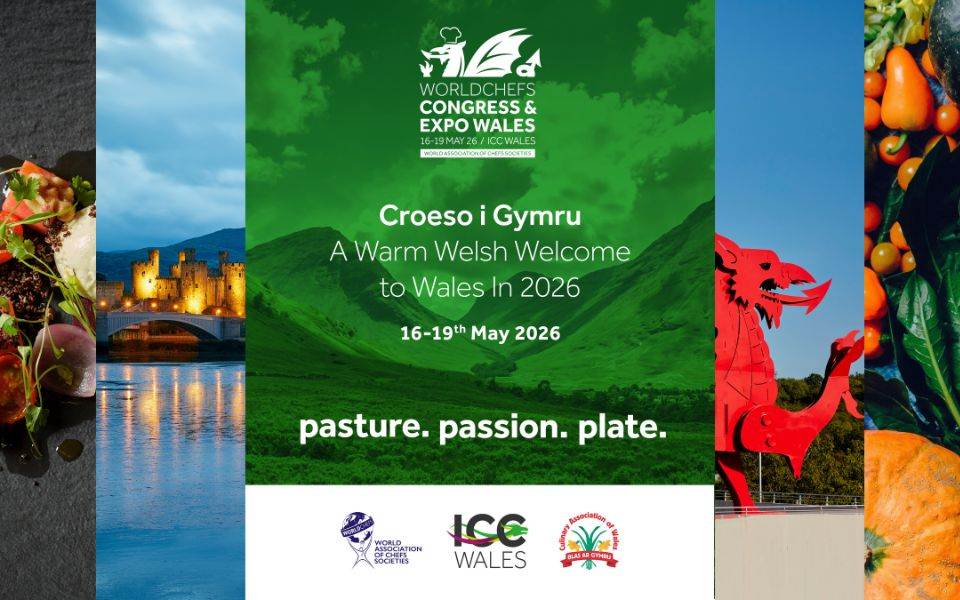
Newport, Wales, 27 March 2025 โ€“ Wales has been selected to host the prestigious Worldchefs Congress & Expo 2026, a global event expected to bring 1,000 chefs from across the globe to Newport from 16-19 May 2026. The event will be a global meeting point for industry leaders, offering world-class educational sessions, culinary competitions, and networking opportunities.

The successful bid, led by the Culinary Association of Wales (CAW) in partnership with International Convention Centre Wales (ICC Wales), the Celtic Manor Resort, and the Welsh Government, marks a major milestone for the nationโ€™s culinary and hospitality industry. The event, held biennially, will serve as a platform to showcase Walesโ€™ world-class produce, rich culinary heritage, and vibrant food and drink industry to an international audience.

โ€œThis is a significant landmark event for Wales. Itโ€™s the culinary equivalent of hosting the football World Cup finals,โ€ said Arwyn Watkins, OBE, President of the Culinary Association of Wales. โ€œThe hard work starts now to ensure that we maximize this opportunity. Our goal is to create a lasting legacy by engaging culinary students and professionals across the UK, raising awareness about the rewarding career opportunities in hospitality.โ€

The theme for the 2026 Congress, โ€œPasture, Passion, Plate,โ€ reflects the journey of food from its origins to the final dish, celebrating sustainability, craftsmanship, and the love of cooking.

  • Pasture represents the land, the source of our ingredients, and the commitment to sustainable agriculture. Walesโ€™ lush landscapes and thriving farming traditions provide some of the worldโ€™s finest produceโ€”from grass-fed lamb to artisan cheeses and fresh seafood.
  • Passion is the driving force behind every great chef, farmer, and food producer, fueling innovation while honoring tradition.
  • Plate is the final destination, where ingredients and creativity come together to tell a story of culture, history, and sustainability.

ICC Walesโ€™ late Chief Executive Ian Edwards had expressed his excitement for the event, stating, โ€œHosting this prestigious congress is a brilliant opportunity to showcase Walesโ€™ wealth of produce and growing food industry to the world. With our track record of hosting major international events, we are confident in delivering an unforgettable experience.โ€

Former Minister for Rural Affairs Lesley Griffiths added, โ€œThis will be a tremendous opportunity to showcase Welsh produce to the world. Congratulations to everyone involved in securing this achievement.โ€

โ€œWe look forward to bring this global gathering to such a vibrant culinary destination. Wales’ rich food heritage, commitment to sustainability, and passion for hospitality make it the perfect stage for this edition of our industryโ€™s most influential event,” says Worldchefs Managing Director Ragnar Fridriksson. “The Worldchefs team looks forward to working closely with our Welsh partners to create an unforgettable experience for chefs and culinary professionals worldwide.โ€

In addition, internationally renowned Welsh mezzo-soprano Katherine Jenkins OBE has been announced as an Ambassador for the Culinary Association of Wales, adding further prestige and visibility to the event.

โ€œItโ€™s a huge coup and an honor for the Culinary Association of Wales to have Katherine as our ambassador,โ€ said Arwyn Watkins, OBE. โ€œHer global influence will help elevate the profile of this major international culinary event and showcase Wales on the world stage.โ€

The Worldchefs Congress & Expo 2026 will take place from 16โ€“19 May 2026 at ICC Wales, with delegates accommodated at the Celtic Manor Resort and surrounding hotels.

For more information and to register, visit worldchefscongress.org.

About Worldchefs

The World Association of Chefsโ€™ Societies, known as Worldchefs, is a federation made up of 110 national chef associations. A leading voice in the hospitality industry, Worldchefs carries years of history since its founding in 1928 at the Sorbonne by the venerable Auguste Escoffier.

Representing a mobilized international membership of culinary professionals, Worldchefs is committed to advancing the profession and leveraging the influence of the chef jacket for the betterment of the industry and humanity at large.

Worldchefs is dedicated to raising culinary standards and social awareness through these core focus areas:

  • Education โ€“ Worldchefs offers support for education and professional development through the landmark Worldchefs Academy online training program, a diverse network of Worldchefs Education Partners and curriculum, and the worldโ€™s first Global Culinary Certification recognizing on-the-job skillsin hospitality;
  • Networking โ€“ Worldchefs connects culinary professionals around the world through their online community platform and provides a gateway for industry networking opportunities through endorsed events and the biennial Worldchefs Congress & Expo;
  • Competition โ€“ Worldchefs sets global standards for competition rules, provides Competition Seminars and assurance of Worldchefs Certified Judges, and operates the prestigious Global Chefs Challenge;
  • Humanitarianism & Sustainability โ€“ Worldchefs Feed the Planet and World Chefs Without Borders programs relieve food poverty, deliver crisis support, and promote sustainability across the globe.

About Worldchefs Congress & Expo

The global leading platform that brings together chef delegates and professionals from across the five continents, Worldchefs Congress & Expo delivers a unique program to help industry players network and expand their professional bonds. 

This includes presentations and workshops from leading experts in the industry, impactful educational programs including the Worldchefs Educatorsโ€™ Forum, specialized events designed to uplift the next generation of chefs such as the Bill Gallagher Young Chefs Forum, the Global Chefs Challenge Finals culinary competition, an international trade exhibition, and diverse activities to enhance both your personal and professional network. 

For more information on Worldchefs Congress, kindly refer here: www.worldchefscongress.org

โ€“ END โ€“

Media Contact:
Olivia Ruszczyk
communications@worldchefs.org


What to expect? Here is a recap of Singapore 2024โ€ฆ

Categories
Member News

Chefs Association of Pakistan Holds Grand โ€˜Membership Award Ceremonyโ€™, Over 1,000 New Members Sworn In

Chefs Association of Pakistan (CAP), the only national association of chefs in Pakistan affiliated with Worldchefs, organized a grand membership award ceremony at Al-Hamara Mall Road, Lahore, Pakistan. The event was attended by a large number of junior chefs, professional chefs, and home chefs, all of whom received their membership certificates.

The event was graced by several prominent figures, including International Hospital Expert John Lohr, Cheezious CEO Imran Ijaz, ODR Foods CEO Shahzad Makki, Former CM Complaint Cell Director Shahid Qadir, renowned businessman Azhar Pasha, former Mayor of Lahore Colonel Mubasher, and Prime Minister Youth Program Representative Rizwan Anwar, among others.

Above 1000 junior chefs, professional chefs and home chefs received their membership certificates on the occasion.

CAP, on the occasion, also announced its team that is going to take part in โ€˜The Ultimate Chefs Challengeโ€™ in Bangkok, Thailand from May 27 โ€“ May 31, 2025.

To honour and acknowledge the hard work of female chefs, a group of female home chefs was also awarded with honourary memberships of CAP.

Speaking on the occasion, Ahmad Shafiq, President of the Chefs Association of Pakistan, emphasized that the Chefs Association of Pakistan is the only national organization representing Pakistani chefs on an international level. He also highlighted that members of the Chefs Association of Pakistan automatically become part of Worldchefs, which offers them opportunities to grow internationally in their field.

New members of the Chefs Association of Pakistan shared their excitement, stating that it is the only platform in Pakistan where they can effectively showcase their skills and abilities.

Categories
Member News

From Myanmar to France: Chef Myo Sandar Htun Visits Worldchefs Headquarters

This month, Worldchefs administrative team had the pleasure of welcoming Chef Myo Sandar Htun, who traveled all the way from Myanmar, to the office headquarters in Paris.

Myo Sandar Htun made the quick visit to Paris before heading to Bouzigues, France, where she will be working in a restaurant for the next several months. As a dedicated and innovative Sous Chef with over five years of experience in kitchen management and food preparation, she is eager to see where this exciting professional venture takes her.

A Profound Passion for Culinary Arts

Chef Myo began her culinary journey in Myanmar shortly after finishing high school. In 2009, she enrolled in culinary school and started working at KanDawGyi Palace Hotel as a Commis Chef. Over time, her skills expanded, and she progressed from Commis Chef to Chef de Partie. From 2014 to 2017, she trained at the Centre for Vocational Training in Myanmar in partnership with Switzerland Hospitality and Gastronomy. In 2022, she completed the Training of Trainers (TOT) course at Vocational Skills Development Project (VSDP), furthering her expertise.

In addition to her extensive training, Chef Myo competed in several culinary competitions. A proud member of the Myanmar Chefs Association, she has had the privilege of training under the association’s leader, Chef Oliver.

A Special Visit to Worldchefs’ Headquarters

Stopping in Paris before continuing to the south of France, Chef Myo visited the Worldchefs office to meet the administrative team and discuss ways to grow the involvement of Myanmar chefs in Worldchefs’ programs. As the Young Chefs Ambassador for Myanmar, she engaged in an open discussion with the team about how young chefs from Myanmar can get involved.

Chef Myo provided insights to the team about the chef experience in Myanmar and discussed how Worldchefs programs can empower aspiring chefs in the country.

Leaving the Worldchefs office in Paris, Chef Myo was on her way to Bouzigues, France, to join the restaurant La Palourdiรจre. As she embarks on her next professional adventure, Chef Myo hopes to inspire young chefs back home, proving that with dedication and perseverance, opportunities in the global culinary scene are within reach.

โ€œFor me, being a chef is more than just cookingโ€”it is an art, a form of storytelling, a way to preserve tradition, and an opportunity to innovate. It means honoring ingredients, respecting the craft, and constantly pushing the boundaries of what is possible on a plate.โ€

As she begins her culinary journey in France, her deep passion for this field fuels Chef Myo’s daily work.

A New Chapter in Bouzigues, France

Nestled on the edge of the Thau Lagoon, La Palourdiรจre offers breathtaking views of the oyster farms that have made Bouzigues famous, with Sรจte and Mont Saint-Clair as a stunning backdrop. It is a place where time seems to stand still, offering an unforgettable experience for both the eyes and the taste buds.

La Palourdiรจre takes pride in working with local suppliers to provide guests with fresh, high-quality ingredients. Their commitment to supporting local producers allows the restaurant to showcase the authentic flavors of the region.

Words of Advice

To all aspiring chefs, she offers this advice: “Keep pushing forward and never stop honing your craft!” Chef Myo acknowledges that success in the industry requires skill, passion, enthusiasm and a continuous desire to learn. The journey to becoming a chef is challenging, but every experienceโ€”whether in the classroom, the kitchen, or a new countryโ€”shapes a stronger and more creative professional.

As she takes on this new adventure in France, Chef Myo serves as an inspiration for young chefs in Myanmar and around the world.

Categories
Member News

Women Shaping the Future of Culinary Education

The culinary industry is steeped in traditionโ€”one where change is slow and barriers for women remain high. But to build a more inclusive and innovative future, action must be taken now.

Thatโ€™s exactly what Cheryl Cordier is doing.

As the founder of International Culinary Studio, Cheryl is accelerating action in culinary education, breaking through outdated systems, and proving that quality training doesnโ€™t have to be confined to a physical kitchen. By embracing digital innovation, sheโ€™s opening doors for aspiring chefs worldwideโ€”especially those who would otherwise be excluded from traditional pathways.

“Culinary education shouldnโ€™t be limited by four walls,” Cheryl says.

Her work is reshaping not only how chefs are trained but who gets the opportunity to step into leadership roles in the industry.

Breaking the Chefโ€™s Code: Challenging Tradition

In an industry built on rigid hierarchies, the idea of teaching professional cooking online was unthinkable.

“The pushback was intense,” Cheryl recalls.

Many argued that apprenticeships were the only way, but Cheryl saw the flaws in that system.

“Some argued that you can’t learn to cook online, that apprenticeships are the only way. But here’s the thingโ€”traditional apprenticeships often just pass down bad habits.”

Determined to accelerate change, Cheryl set out to prove that professional culinary training could be both accessible and high-quality. Today, International Culinary Studio holds more accreditations than any other online culinary school globallyโ€”a direct challenge to outdated industry norms.

“We didnโ€™t just want to be different; we wanted to be better.”

From Solo Hustle to Leadership: The Power of Mentorship

Women founders often face unique challengesโ€”balancing business growth with personal responsibilities, breaking through male-dominated spaces, and securing the right support.

For years, Cheryl led the business solo, feeling stuck on what she calls โ€œthe founderโ€™s hamster wheelโ€โ€”working harder but not necessarily moving forward.

“I knew we had something special, but I also knew I needed help to take it to the next level,” she shares.

Thatโ€™s when she joined Founder Catalyst, a programme designed to support entrepreneurs.

“The mentorship experience was transformative,” Cheryl says. “I came in thinking I needed funding, but what I really needed was perspective.”

She learned that the right partner isnโ€™t just about moneyโ€”itโ€™s about shared vision and complementary skills.

“Running a scaled business requires different skills than starting one. Itโ€™s okay to admit you need helpโ€”in fact, itโ€™s crucial for growth.”

Pioneering the Future of Culinary Education

Beyond breaking industry norms, International Culinary Studio is evolving to meet the future of the industry. The business is exploring ways to expand content and integrate emerging technologies like augmented reality to enhance the learning experience.

“The fundamentals of cooking may remain unchanged, but the industry is evolving rapidly. From automated machinery to augmented reality, technology is transforming how modern kitchens operate.”

For Cheryl, staying ahead of these changes isnโ€™t optionalโ€”itโ€™s essential.

Her work is proving that excellence in culinary arts doesnโ€™t require decades of unpaid apprenticeshipsโ€”it requires quality training and a willingness to adapt.

Balancing It All: The Reality of Women in Leadership

Running a global education platform while maintaining a family life isnโ€™t easy.

“I’m essentially โ€˜onโ€™ for 13 hours a day,” Cheryl shares. “Between running the business and school pickups, some days feel impossible.”

Her solution? Non-negotiable self-care.

“Every Thursday is yoga dayโ€”nothing interrupts that. And yes, I live on a beautiful golf course that I never have time to play,” she adds with a knowing smile.

For many women in leadership, the challenge isnโ€™t just growing a businessโ€”itโ€™s doing it while juggling everything else.

Shaping the Next Generation of Chefs

As she continues to push the boundaries of culinary education, Cheryl is driven by the impact she sees.

“Meeting students in South Africa wearing uniforms from my collegeโ€”students who werenโ€™t even born when I started this journeyโ€”thatโ€™s what reminds me why I do this.”

International Culinary Studio isnโ€™t just changing how people learn to cook. Itโ€™s accelerating action by opening doors for aspiring chefs who might never have had the opportunity.

As Cheryl looks ahead, sheโ€™s focused on scaling the business, finding the right partners, and continuing to challenge the norms of culinary education.

This International Womenโ€™s Day, Cherylโ€™s story is a reminder that women arenโ€™t just shaping industriesโ€”theyโ€™re accelerating action to transform them.

Kraft Heinz Cooks up new Global partnership to inspire culinary excellence around the world and strengthen โ€˜Away from Homeโ€™ business

FOR IMMEDIATE RELEASE

New partnership to inspire culinary excellence around the world  

Paris, 17 March 2025 โ€“ The World Association of Chefs Societies (Worldchefs), the largest global association of professional culinary associations, and Kraft Heinz, have today announced a new partnership that will empower chefs, promote future talent and foster innovation through Kraft Heinzโ€™s roster of world-leading brands.

As a premium partner to the Worldchefs organisation, Kraft Heinz will invest in upskilling culinary professionals, deliver training through Worldchefsโ€™ educational programmes and learn from some of the most respected chefs, educators, and influencers in the industry.

Alongside Kraft Heinzโ€™ Global Chefโ€™s Network, who operate in 102 countries around the world, Worldchefs will dedicate their time, passion and expertise to elevate the โ€˜Away from Homeโ€™ experience โ€“ leaning on Kraft Heinzโ€™ range of products and solutions designed to meet the unique needs of chefs, operators, and foodservice professionals.

From restaurants and hotels to catering services and institutional foodservice, Kraft Heinzโ€™ Away from Home business provides high-quality ingredients, recipes, and tools that help culinary professionals deliver exceptional eating experiences.

โ€œAt Kraft Heinz, we are thrilled to be joining as a Premium Partner of Worldchefs who share our passion for superior-quality productsโ€, said Christel Adam, Culinary & Consumer Experience Director at Kraft Heinz. โ€œThis partnership aligns perfectly with our mission to create exceptional food experiences to Make Life Delicious and will foster greater collaboration with our customers, inspire creativity in the kitchen, and propel our Away from Home business forward โ€“ you might say, itโ€™s the perfect recipe!โ€

Todayโ€™s announcement follows the unveiling of Kraft Heinzโ€™s food lab in Mexico earlier this year – one of 13 Kraft Heinz Food Labs and Culinary Facilities located around the world, built to inspire culinary creativity and innovation, like Heinz Professional Mayonnaise which was given a โ€˜Grade Aโ€™ rating by the Craft Guild of Chefs.

โ€œWe are thrilled to welcome Kraft Heinz, a powerhouse in the food and beverage industry, as a Premium Partner and Worldchefs Trusted Brand,โ€ adds Andy Cuthbert, President of Worldchefs. โ€œWe are looking forward to working together to deliver tools, industry insights, and an ever-growing network to our global community of associations, chefs, and hospitality businesses. From marketing to trends to products, we are proud to continue in our efforts to provide key resources through collaborations like this.โ€

โ€˜Away From Homeโ€™ is one of three primary growth pillars for Kraft Heinz globally and its partnership with Worldchefs forms part of the Companyโ€™s strategy to drive growth through global brand activations, channel expansion, and innovation. 

–ENDS–

Notes to Editors

The Kraft Heinz Chefโ€™s Network is a communityof passionate culinary professionals who are dedicated to elevating the taste experience of dishes for consumers, fostering creativity, and supporting the next generation of culinary talent.

About The Kraft Heinz Company

We are driving transformation at The Kraft Heinz Company (Nasdaq: KHC), inspired by our Purpose, Letโ€™s Make Life Delicious. Consumers are at the center of everything we do. With 2023 net sales of approximately $27 billion, we are committed to growing our iconic and emerging food and beverage brands on a global scale. We leverage our scale and agility to unleash the full power of Kraft Heinz across a portfolio of eight consumer-driven product platforms. As global citizens, weโ€™re dedicated to making a sustainable, ethical impact while helping feed the world in healthy, responsible ways. Learn more by visiting www.kraftheinzcompany.com or following us on LinkedIn. For more information about Kraft Heinz Away from Home, visit www.kraftheinzawayfromhome.com.

About Worldchefs

The World Association of Chefsโ€™ Societies, known as Worldchefs, is a federation made up of 110 national chef associations. A leading voice in the hospitality industry, Worldchefs carries years of history since its founding in 1928 at the Sorbonne by the venerable Auguste Escoffier.

Representing a mobilized international membership of culinary professionals, Worldchefs is committed to advancing the profession and leveraging the influence of the chef jacket for the betterment of the industry and humanity at large.

Worldchefs is dedicated to raising culinary standards and social awareness through these core focus areas:

  • Education โ€“ Worldchefs offers support for education and professional development through the landmark Worldchefs Academy online training program, a diverse network of Worldchefs Education Partners and curriculum, and the worldโ€™s first Global Culinary Certification recognizing on-the-job skills in hospitality;
  • Networking โ€“ Worldchefs connects culinary professionals around the world through their online community platform and provides a gateway for industry networking opportunities through endorsed events and the biennial Worldchefs Congress & Expo;
  • Competition โ€“ Worldchefs sets global standards for competition rules, provides Competition Seminars and assurance of Worldchefs Certified Judges, and operates the prestigious Global Chefs Challenge;
  • Humanitarianism & Sustainability โ€“ Worldchefs Feed the Planet and World Chefs Without Borders programs relieve food poverty, deliver crisis support, and promote sustainability across the globe.

Visit www.worldchefs.org to learn more.

Images:  

Media contact: 

Olivia Ruszczyk communications@worldchefs.org

Subscribe

* indicates required

What are you looking for?

Generic selectors
Exact matches only
Search in title
Search in content
Post Type Selectors

OUR NETWORK

Discover our network of Chef Associations

Explore our membership options

Connect with chefs around the world

Browse our network of schools

YOUNG CHEFS

Explore our young chef clubs across the globe

Learn, mentor and develop young chefs

Empowering the next generation of culinary leaders

Access events and mentorship from Michelin star chefs

OUR EVENTS

Learn how to judge competitions

Webinars, livestreams and webcasts

Join us at tradeshows across the globe

COMPETITIONS

- Qualifiers coming soon

- Judges coming soon

Tool for competition organizers and judges

FOR JUDGES

Start your certification pathway

Start your certification pathway

See upcoming seminars and hosting information

CERTIFICATION & RECOGNITION

For Chef

Showcase your talent globally

For Employers

Recognize your team’s skills

For Schools

Learn about Recognition of Quality Culinary Education

LEARNING & EDUCATION

Start your culinary journey with free online courses

Discover our catalogue of quality training programs

Learn to apply the fundamentals of sustainability in the kitchen

Find a Worldchefs certified chef

PARTNER WITH US

Explore partnership opportunities

MAKE AN IMPACT

Driving sustainable change

Delivering global humanitarian relief and aid

Inspiring the next generation through food

Driving sustainable change across communities

Developing future leaders of the culinary profession

Integrate your branding and products to one of the biggest competition of the world.