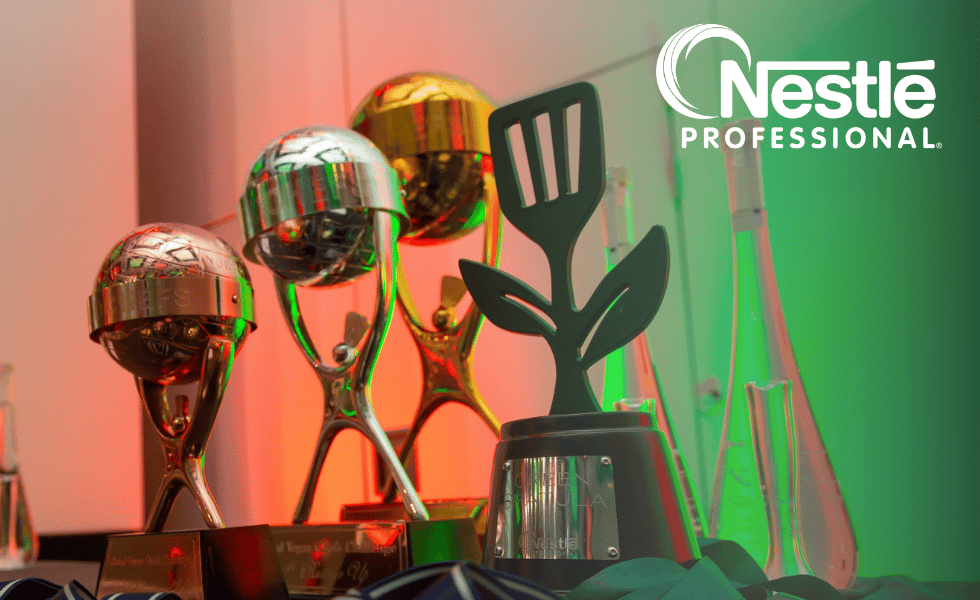
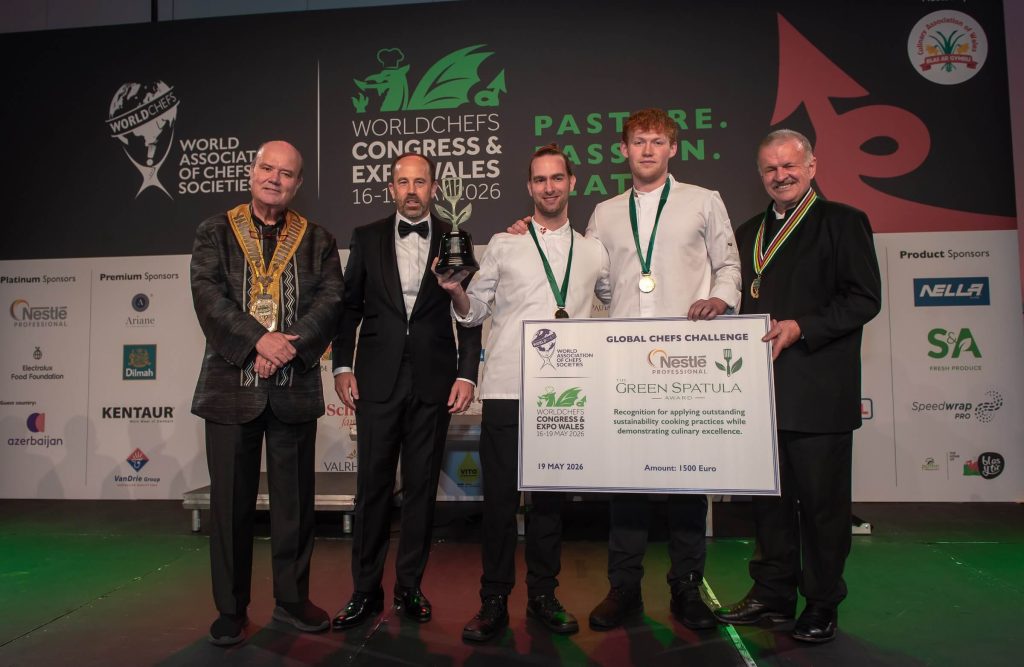
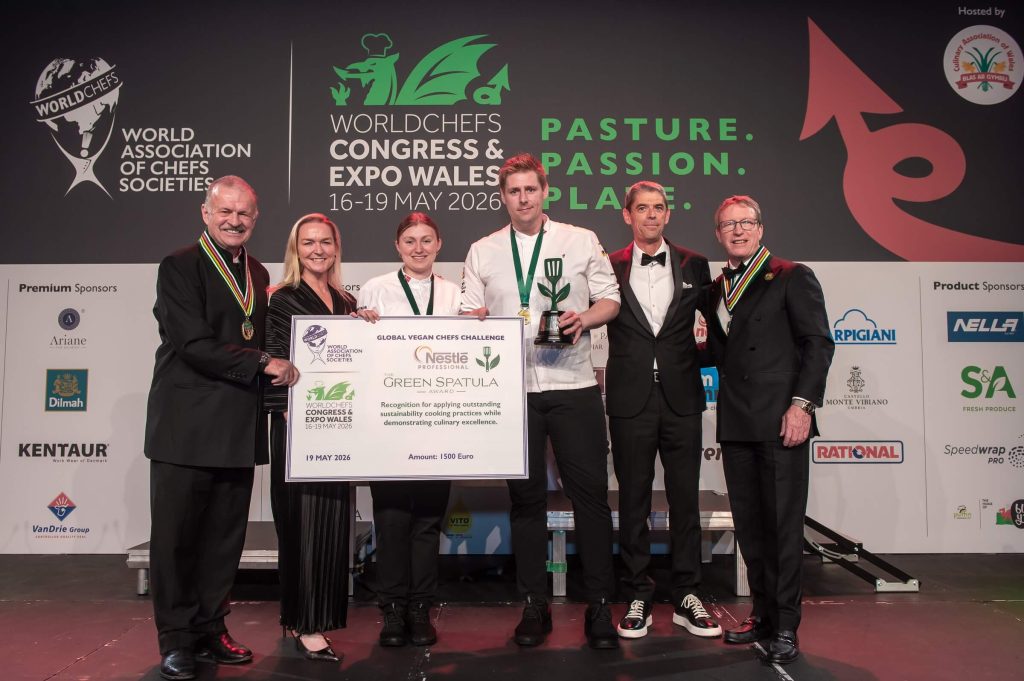
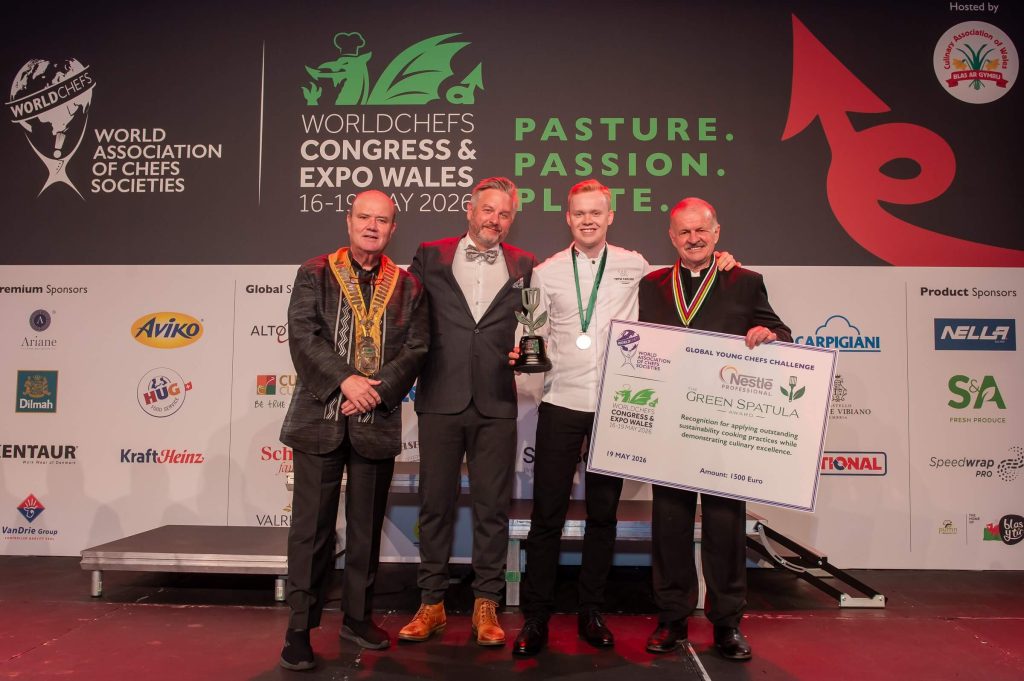
May 20, 2026 – Nestlé Professional has awarded the 2nd annual Green Spatula Awards during the Global Chefs Challenge Finals at the Worldchefs Congress in Wales.
“Sustainability is core to our purpose at Nestlé Professional. This award uniquely bridges culinary excellence with responsible kitchen leadership, inspiring the entire industry to make more sustainable choices” explains Reinhold Jakobi, SVP and Head of Nestlé Professional’s Strategic Business Unit.
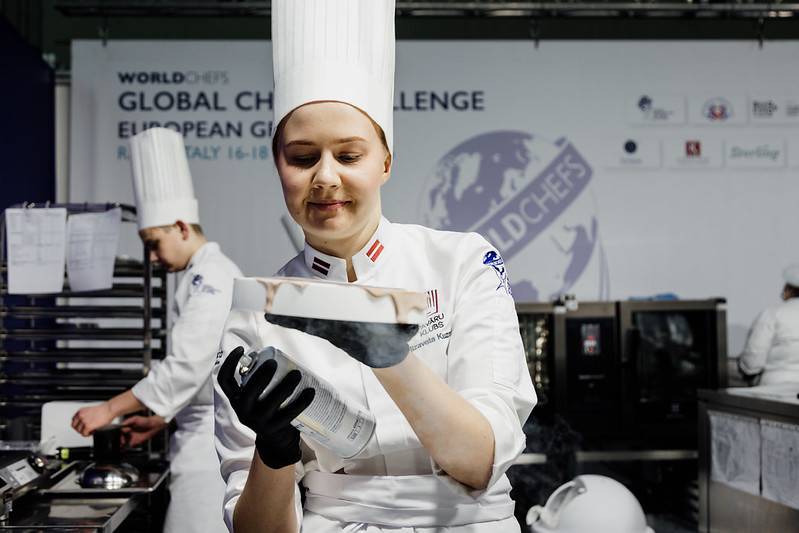
The Global Chefs Challenge is where the world’s top chefs meet to compete in four competition categories. Selected through top performance at the Worldchefs Regional Semi-Finals in 2025, qualifying teams go head-to-head at the Global Chef Challenge Finals.
Andy Cuthbert, President, Worldchefs explains, “We’re proud to encourage the top chefs from around the world to be true agents of change. The Nestlé Professional Green Spatula Award represents creativity, leadership, and respect for our planet.”
The 2026 Green Spatula Award Winners:
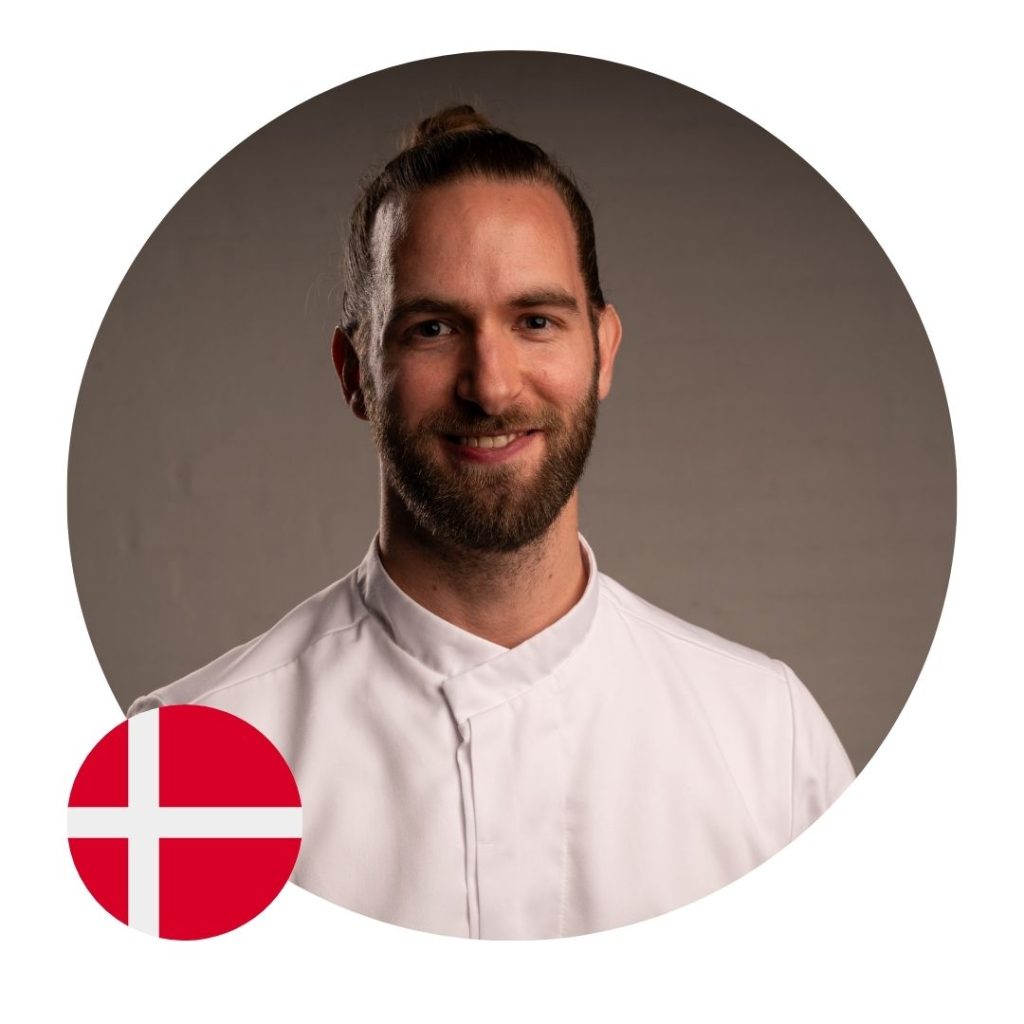
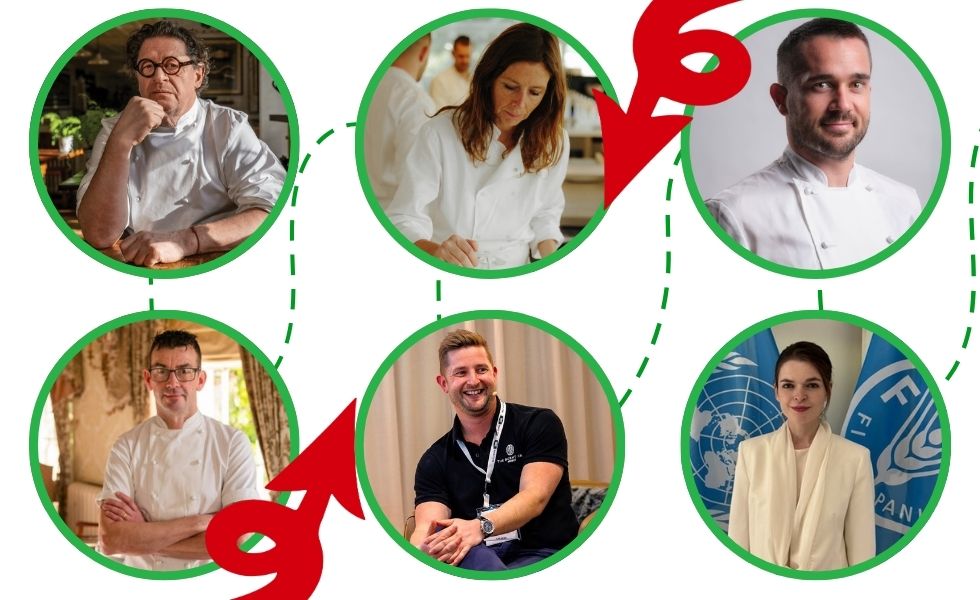
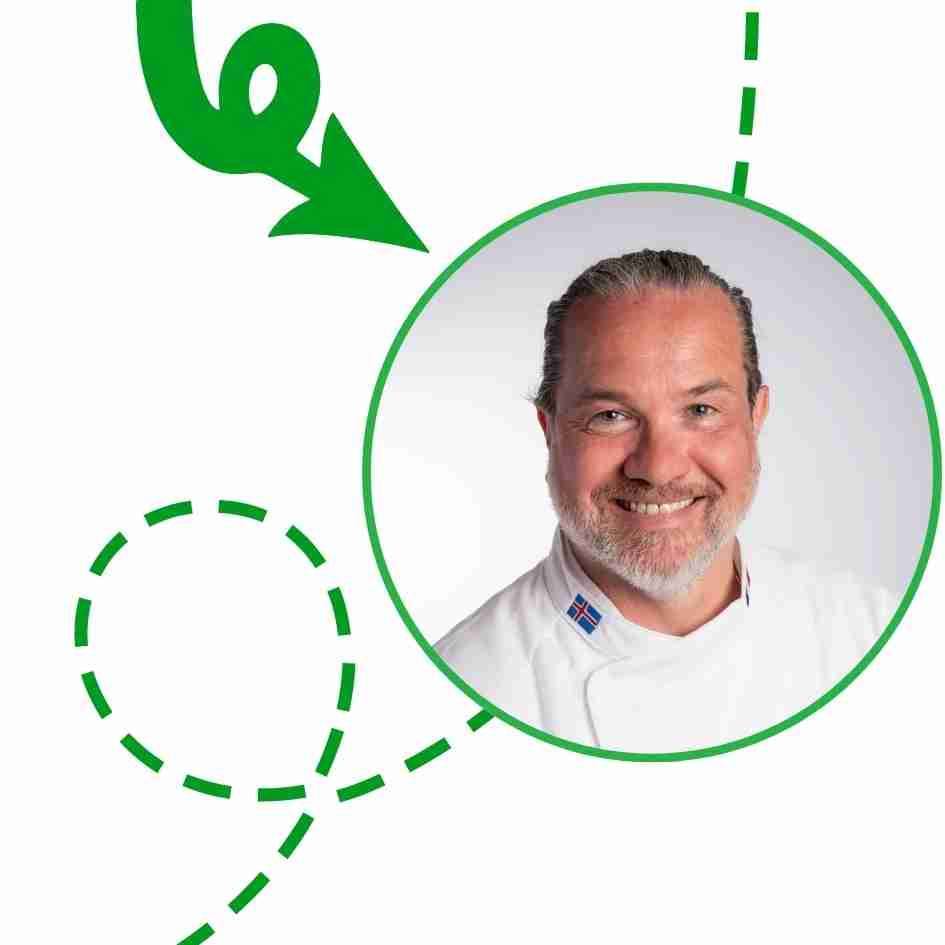
Tommy Jespersen, Denmark (Global Chefs Challenge) – Tommy brings extensive experience from the country’s fine-dining scene, alongside an impressive international competition background with the National Culinary Team of Denmark.
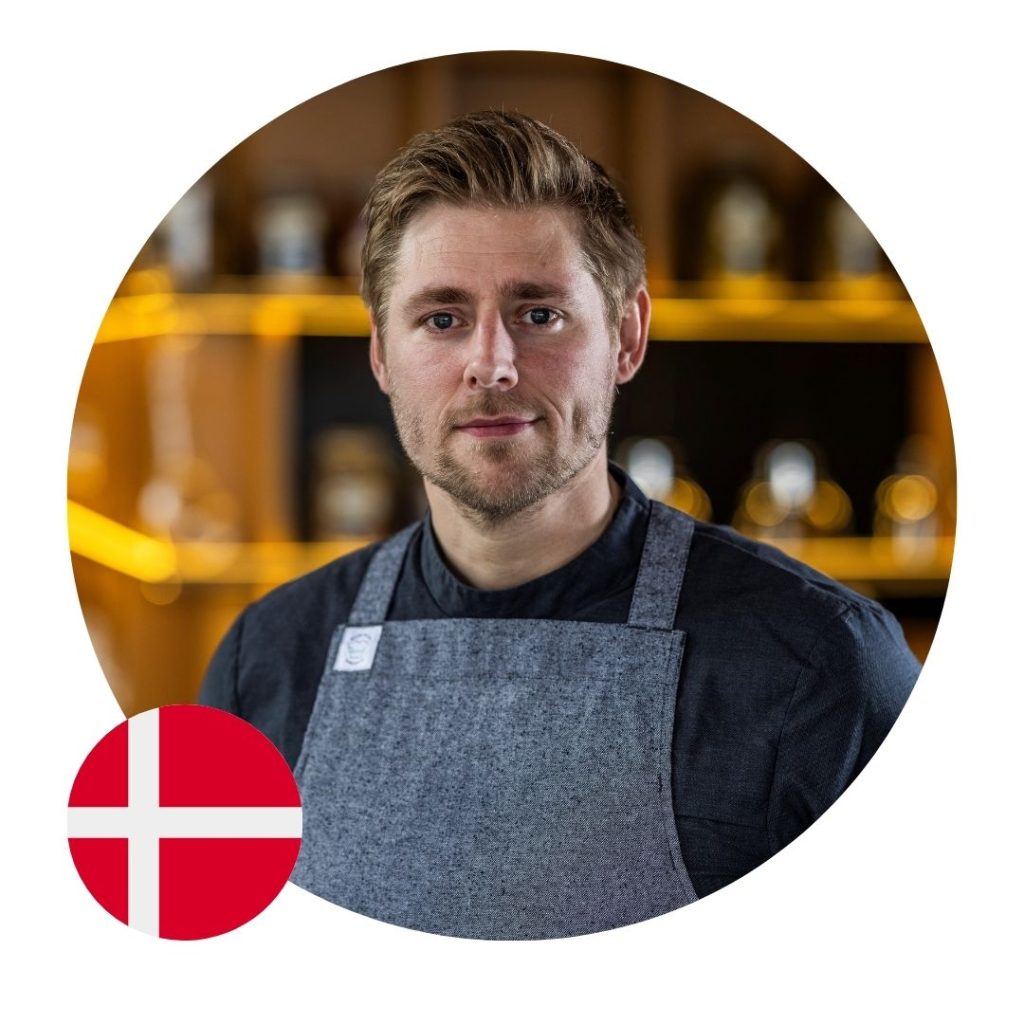
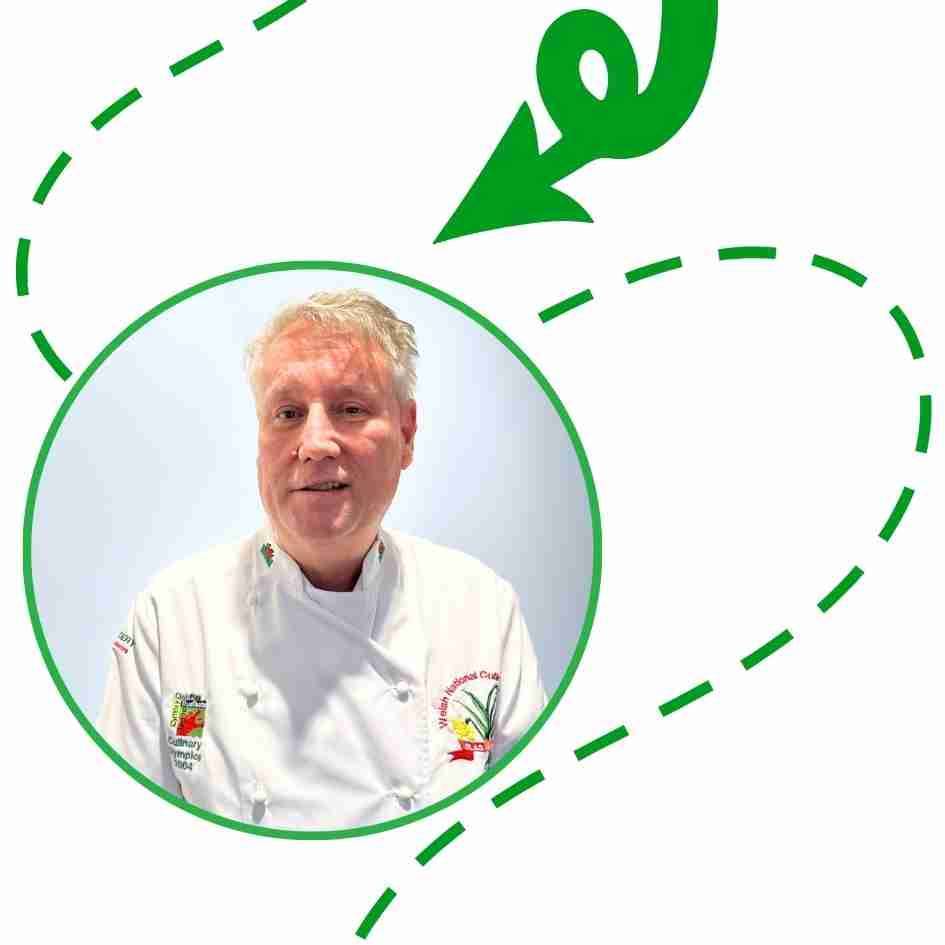
Bjarke Jeppesen, Denmark (Global Vegan Chefs Challenge) – Bjarke has built a strong career within Nordic cuisine. For the past three years he has been a head chef at the Treetop restaurant situated in Vejle. With his focus on sustainable local produced foods, the restaurant received the green star from the Michelin Guide.
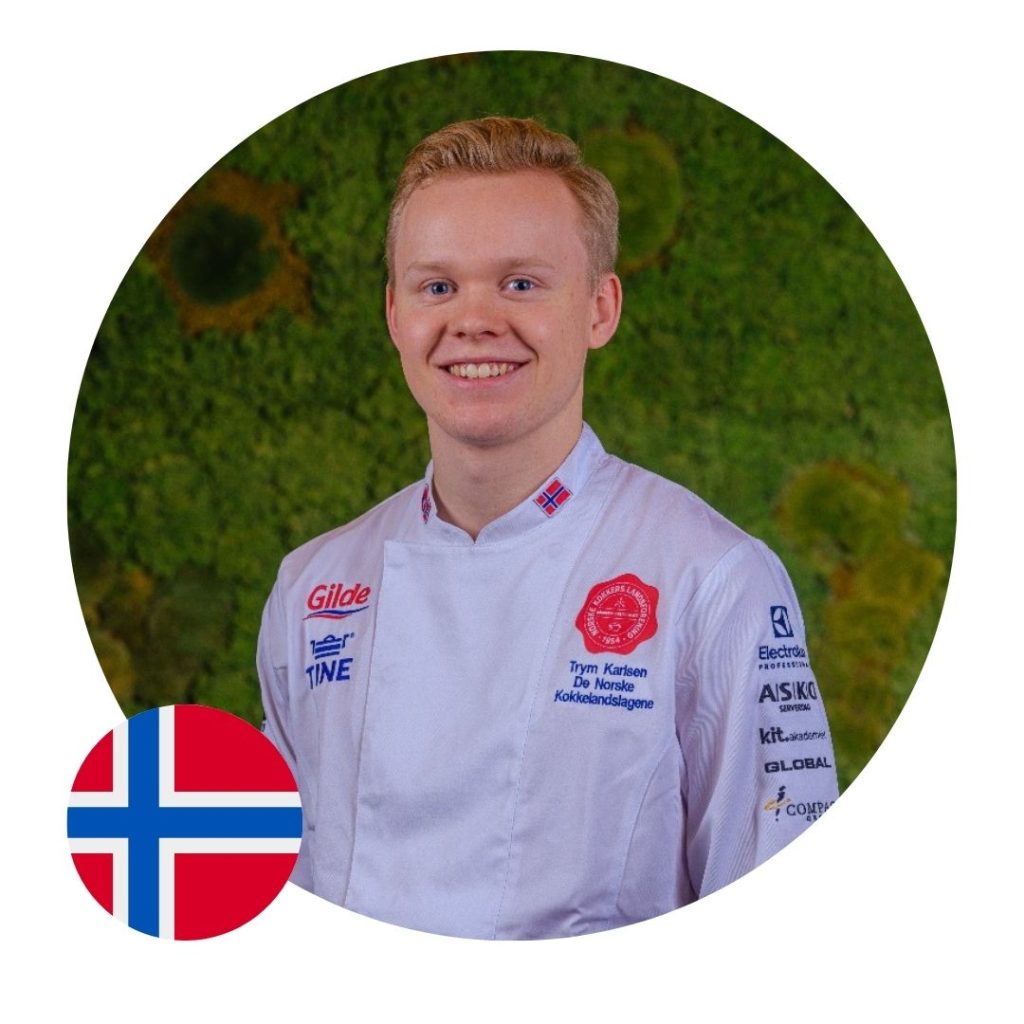
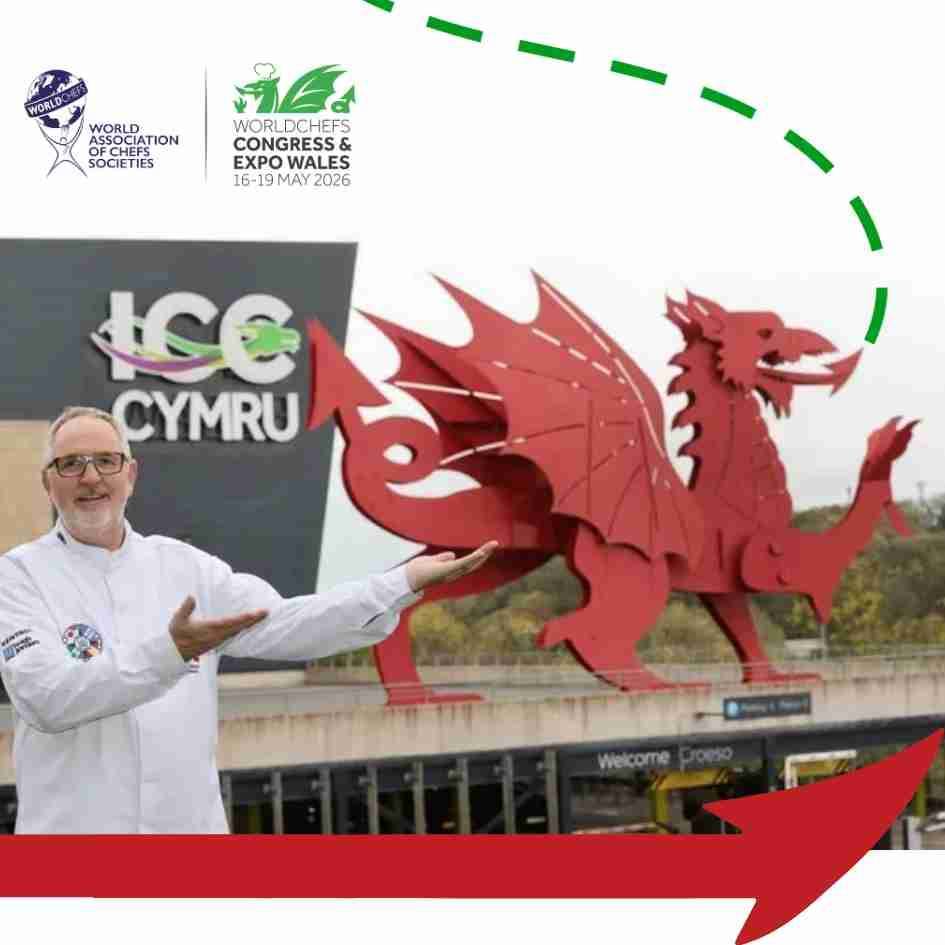
Trym Karlsen, Norway (Global Young Chefs Challenge) – Trym has developed an impressive culinary career at a young age. Growing up with a chef father, he quickly developed a strong passion for food, focusing on pure ingredients, sustainability, and flavor balance. He has experience in top-level competitions and as part of the Norwegian National Culinary Team.
Professional Kitchen Sustainable Practices
“It is an honor to recognize the global top chefs who go beyond delivering exceptional culinary experiences and embed meaningful sustainable practices into their kitchen” states Ana Aragón, Head of Sustainability & Nutrition, Nestlé Professional.
The recognized chefs demonstrated leadership across key sustainable practices for the professional kitchens, including:
Energy Use & Cooking Methods: Optimizing energy-efficient equipment, meal planning, favoring cold and fermented dishes, keeping lids on pots, and shifting to electric power where possible.
Responsible Sourcing: Increasing plant-based options, and using fresh, local, seasonal, and ingredients from farms applying regenerative agriculture practices.
Water Conservation: Using right-sized pans, steaming and pressure-cooking, and minimizing running water.
Food Waste Reduction: Measuring waste, creative repurposing of scraps, accurate portioning, and menu design focused on whole-ingredient use.
Balanced Plate: Designing proportions that follow nutritional guidelines and give vegetables more room on the plate.
Background of the Award
Launched in 2024 at the Worldchefs Congress in Singapore, the award has grown rapidly. This year it was integrated into the Regional Semi-Finals across Asia, the Americas, Africa, and the Middle East. Competitors in the Global Chefs Challenge, Global Young Chefs Challenge, and Global Vegan Chefs Challenge were automatically considered, with winners selected by a jury based on waste management, energy & water optimization, and overall sustainable approach.
Paris, France – May 11, 2026 – Worldchefs and Nestlé Professional are delighted to announce that Nestlé Professional will once again serve as the official partner of the Bill Gallagher Young Chefs Forum (BGF) at the Worldchefs Congress & Expo 2026, taking place 16–19 May 2026 in Newport, Wales.
This marks the sixth consecutive year of the partnership. Since the passing of Dr. Bill Gallagher in 2016, Nestlé Professional has proudly supported the continuation of his vision, playing a key role in the skill development and global opportunities available to the next generation of culinary professionals.
The Bill Gallagher Young Chefs Forum is a dedicated program for chefs under 25, integrated into every Worldchefs Congress & Expo since its founding in 2012. It provides young talent with tailored networking, masterclasses, workshops, and direct exposure to international industry leaders.
“Nestlé Professional has been an instrumental partner in the development of the Bill Gallagher Young Chefs Forum and past Congresses,” said Andy Cuthbert, Worldchefs president. “Their support for skills workshops, expert speakers, and interactive programs continues to empower the future of our industry. We thank Nestlé Professional for supporting the ongoing legacy of our dear friend Dr. Bill Gallagher.”
A Legacy of Mentorship
Dr. Bill Gallagher, known as the “Chef of Chefs,” dedicated his life to mentoring young chefs. The former Worldchefs President (1996–2000) and long-time leader of the South African Chefs Association believed passionately in giving emerging talent hands-on training, guidance, and real career opportunities.
Nestlé Professional’s involvement brings this legacy to life. At the 2026 event under the theme “Pasture, Passion, Plate”, the company will support young chefs in sustainability, responsible sourcing, and creative plate excellence — areas critical to the future of professional kitchens.
“Young chefs are the future of food service,” said Reinhold Jakobi, SVP and Head of Nestlé Professional’s Strategic Business Unit. “By powering the Bill Gallagher Young Chefs Forum, we help them gain practical skills, global insights, and meaningful connections. This sponsorship aligns perfectly with our purpose: creating shared value by developing the sustainable culinary leaders of tomorrow.”
Beyond the Forum, Nestlé Professional demonstrates its commitment through programs such as the Worldchefs Academy, YOCUTA (Young Culinary Talents), the Nestlé Professional Green Spatula Award for sustainability in culinary competitions, and International Chefs Day initiatives.
The partnership strengthens ties between Nestlé Professional and the global chef community, building long-term credibility and authentic relationships with tomorrow’s decision-makers in hotels, restaurants, and food service operations.
– END –
About Nestlé Professional
Nestlé Professional is the dedicated food service division of Nestlé, providing high-quality products, solutions, and expertise to help food service operators succeed.
About Worldchefs
The World Association of Chefs’ Societies, known as Worldchefs, is a federation made up of 110 national chef associations. A leading voice in the hospitality industry, Worldchefs carries years of history since its founding in 1928 at the Sorbonne by the venerable Auguste Escoffier.
Representing a mobilized international membership of culinary professionals, Worldchefs is committed to advancing the profession and leveraging the influence of the chef jacket for the betterment of the industry and humanity at large.
Worldchefs is dedicated to raising culinary standards and social awareness through these core focus areas:
Education – Worldchefs offers support for education and professional development through the landmark Worldchefs Academy online training program, a diverse network of Worldchefs Education Partners and curriculum, and the world’s first Global Culinary Certification recognizing on-the-job skills in hospitality;
Networking – Worldchefs connects culinary professionals around the world through their online community platform and provides a gateway for industry networking opportunities through endorsed events and the biennial Worldchefs Congress & Expo;
Competition – Worldchefs sets global standards for competition rules, provides Competition Seminars and assurance of Worldchefs Certified Judges, and operates the prestigious Global Chefs Challenge;
Humanitarianism & Sustainability – Worldchefs Feed the Planet and World Chefs Without Borders programs relieve food poverty, deliver crisis support, and promote sustainability across the globe.
The 41st biennial Worldchefs Congress & Expo 2026 will arrive in Wales from May 16-19.
Paris, France | 4 May 2026 – This month, the biggest global event for chefs lands in the UK for the first time in its 98-year history. The World Association of Chefs’ Societies (Worldchefs), the largest international membership organization in the food and beverage industry, is set to host its biennial Congress & Expo networking and learning event in Newport, Wales, from 16-19 May.
Recognized as the Most Influential Culinary Profession Development Organization in 2025, Worldchefs is a global authority and opinion leader on food. The 41st Worldchefs Congress & Expo this May, themed ‘Pasture, Passion, Plate’, is expected to attract up to 800 attendees to Wales. Delegates will have a chance to network with the world’s top chefs, hear a stellar line-up of speakers including world-renowned chef Marco Pierre White, watch talented competitors in the Global Chefs Challenge Finals, and visit a wide range of exhibits in the Expo village.
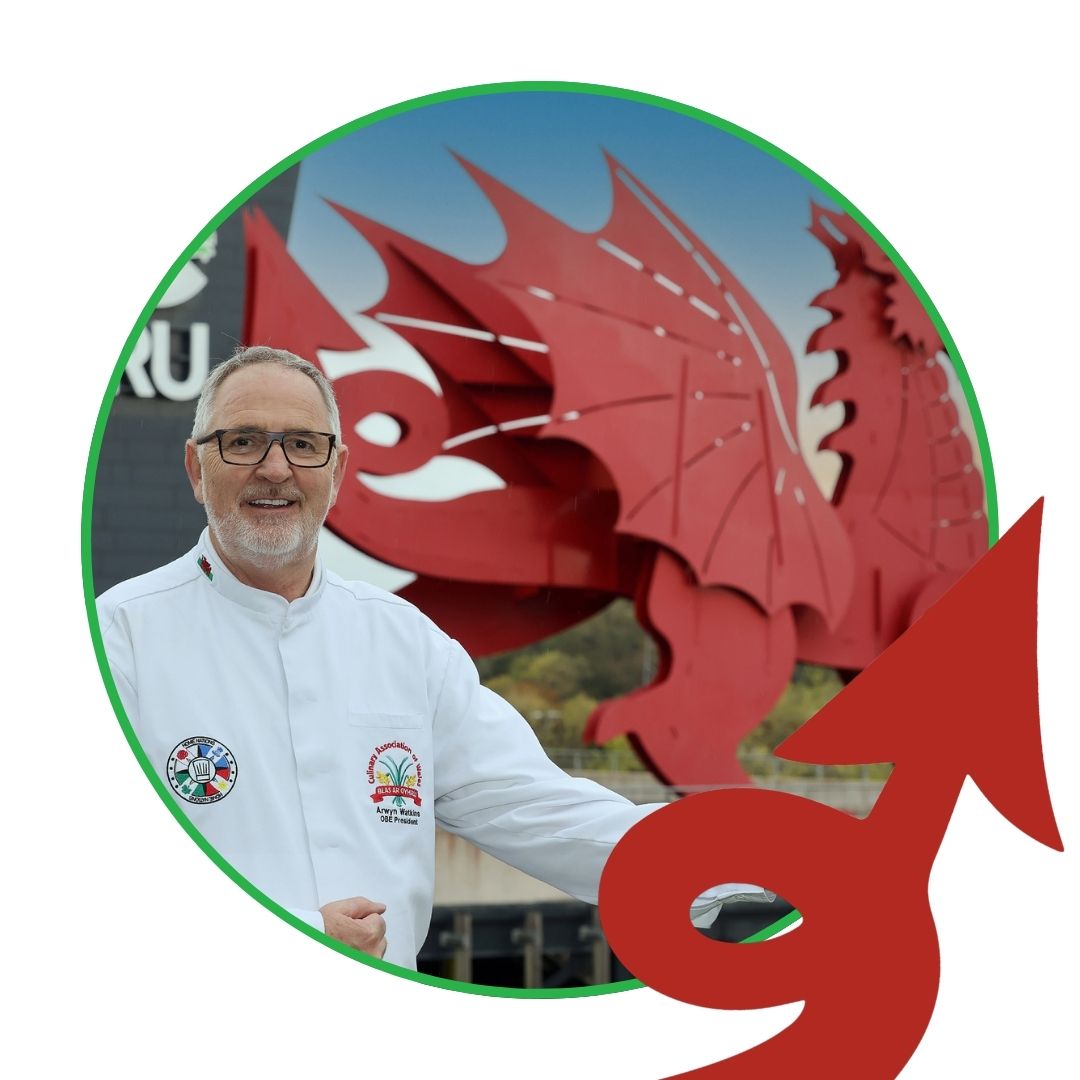
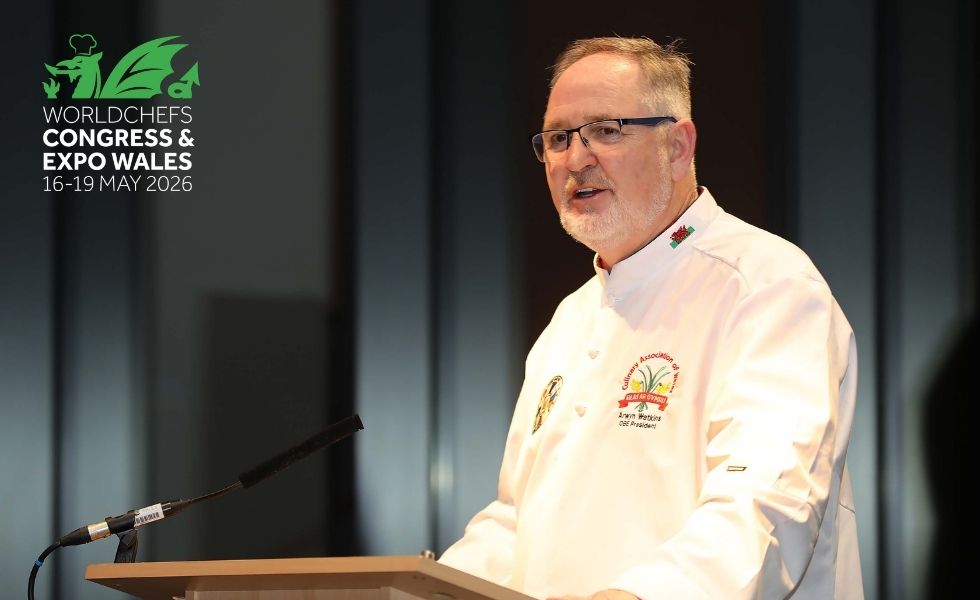
Arwyn Watkins, OBE
This is a golden opportunity to engage face to face with some of the most influential chefs from around the globe.
Culinary Association of Wales (CAW) President Arwyn Watkins, OBE
A Landmark Moment for Worldchefs Congress
The 2026 Worldchefs Congress & Expo is the first in the event’s 98-year history to be held in any part of the United Kingdom, hosted in partnership with the Culinary Association of Wales (CAW).
“This is a golden opportunity to engage face to face with some of the most influential chefs from around the globe”, says Culinary Association of Wales (CAW) President Arwyn Watkins, OBE. “Nearly 800 attendees from around the globe will be in attendance, with 60% identified as buyers and influencers within their own country. Delegates will hear insights from experts, have a chance to take part in immersive workshops to spark new ideas for their business or career, and expand their network at official events with the largest culinary body worldwide.”
2026 Program Highlights
Worldchefs Congress & Expo is designed to bring together chefs, educators, and hospitality professionals from nearly 100 countries for three days of learning, networking, and global culinary exchange. This year’s theme, ‘Pasture, Passion, Plate,’ celebrates the journey of food from its origins to the final dish and how it connects us all—from farm to fork, across borders and cultures.
The program, a collaborative effort between Worldchefs, CAW and event partners, delivers on this theme through keynote speakers— including Michelin-starred Marco Pierre White, Tom Phillips and Sian Wyn Owen—networking events, the Global Chefs Challenge Finals, and an international trade exhibition.
In addition to a lineup of engaging speaker presentations, the program also features culinary demos from guests including One Michelin-starred Hywel Jones, Dilmah Tea, pastry chef Pierre Abi Hayla, and sustainability expert Colin Wheeler-James.
Sustainability is a central theme throughout the program, with dedicated sessions focused on protecting the planet and supporting the people behind the industry. Attendees will discover the latest about sustainability-driven Worldchefs programs, including Feed the Planet initiatives and the EU co-funded project FoodChoices4LIFE, with opportunities to learn more and get involved.
The program will also offer exclusive, tailor-made programming for young chefs and educators.
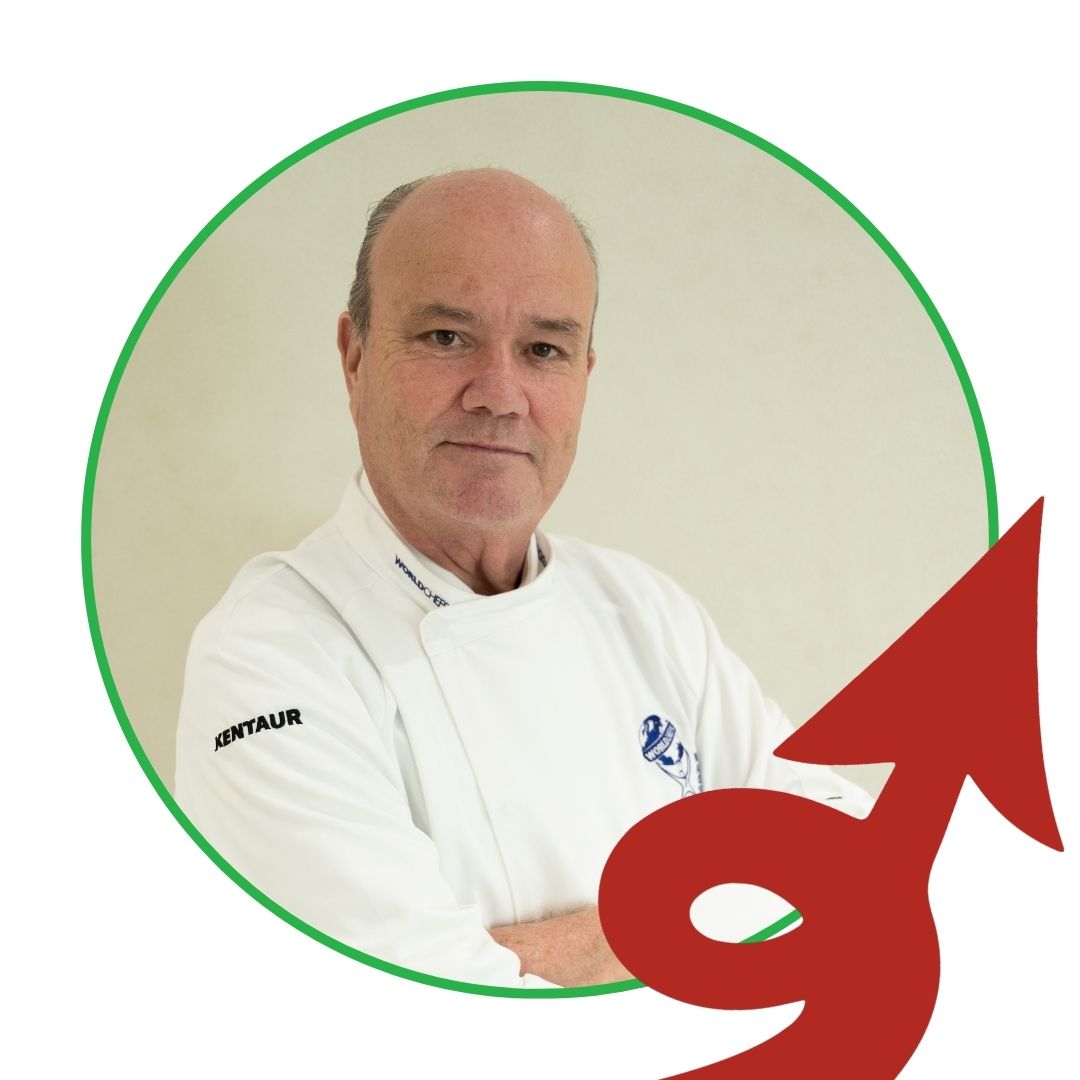
Andy Cuthbert
The Congress program is packed with information on a wide variety of topics. Some of the most prominent chefs to have graced the stoves of Wales and England will be there to share their journeys and insights.
Opening Ceremony – Featuring Worldchefs representatives, Arwyn Watkins, the First Minister of Wales, UN representative Kazuki Kitaoka, and the Azerbaijan Tourism Board
Culinary Demonstration by Hywel Jones, Executive Chef/Director of Food & Beverage of One Michelin-starred Lucknam Park
A Pastry Journey Built on Discipline, Passion & People by Eric Lanlard, Chef Owner of Cake-Boy ltd
Running A World-Famous Restaurant With A Menu That Changes Twice A Day by Sian Wyn Owen, Executive Head Chef of One Michelin-starred The River Café
Day 2
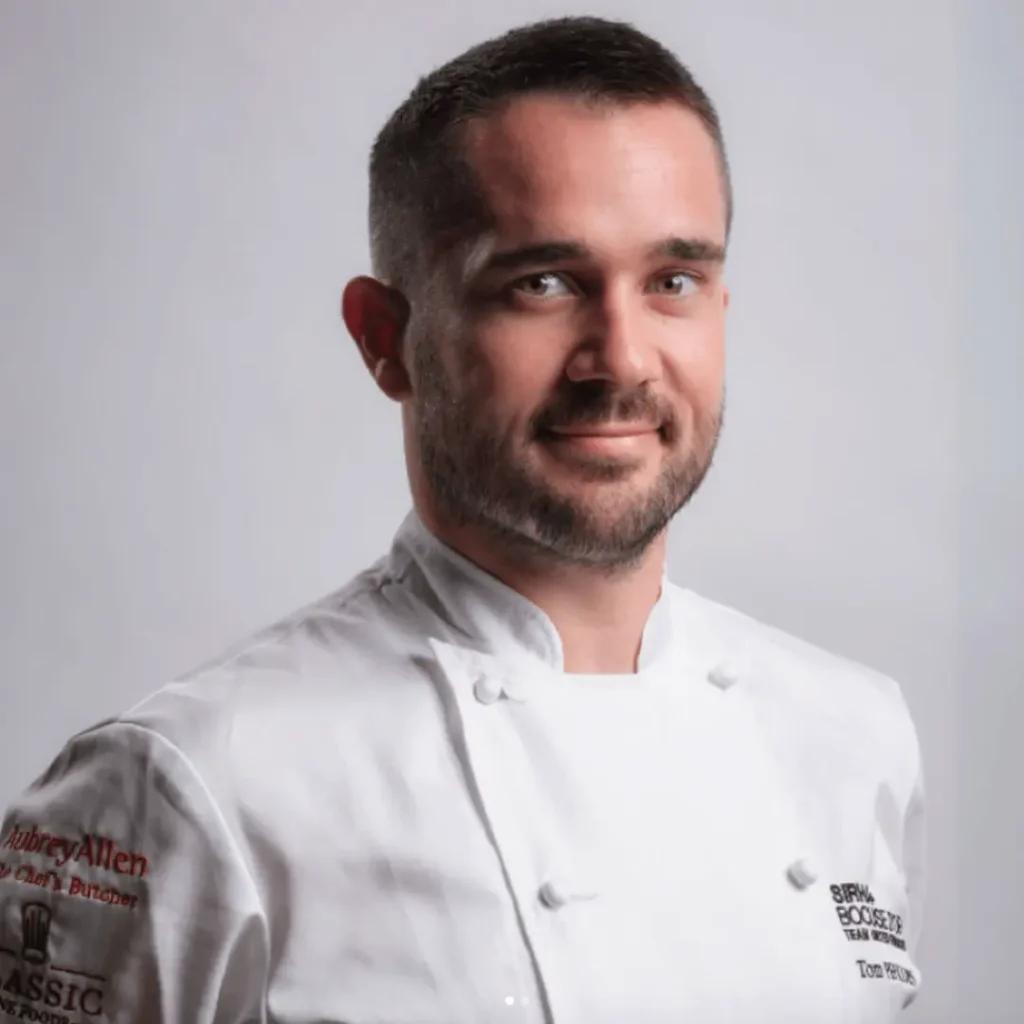
From Newport to the Bocuse d’Or Stage by Tom Phillips, Executive Chef of Two Michelin-starred Story
Worldchefs Educators’ Forum – Redesigning the Culinary Curriculum: What Must Change by 2030? – A panel on what must change in culinary curriculum and how top educators are rethinking training for the next generation of chefs
The Making of a Culinary Icon by Marco Pierre White, Chef, Restaurateur & Television Personality and the first British chef – youngest ever – to achieve three Michelin stars
DAY 3
Menu 2050 – A panel on the menus of the future and how industry can adapt in the wake of climate change
Burnout Isn’t a Badge of Honour: Rewriting Hospitality’s Culture by Kris Hall, Founder & CEO of The Burnt Chef Project
Cooking Up the Future: What’s in Store for the Next Gen – A panel discussion to explore what lies ahead for young chefs, with insights from talent experts and global voices on how to support the next generation
FoodChoices4Life: A new opportunity to connect, act, and inspire – A panel discussion about the FoodChoices4LIFE initiative and how you can get involved to inspire healthier, more sustainable food choices
Day 4
Worldchefs Committee Updates and membership voting
Introduction of Worldchefs’ collaboration with World Central Kitchen
Worldchefs Congress Paris 2028 – Handing over the Bell – Wales will be handing over the Congress bell to France, who will host the 2028 centenary event in Paris, where Worldchefs was formed in 1928 by Auguste Escoffier and other European chefs
Gala Dinner and announcement of Global Chefs Challenge Finals results
“The programming of the Congress is packed with information on a wide variety of topics. Some of the most prominent chefs to have graced the stoves of Wales and England will be there to share their journeys and insights,” says Andy Cuthbert, President of Worldchefs. “We also have our sustainability programming, and inputs about the pressures and concerns we all have for our people, which will also be explored through our collaborative partner, the UK-based Burnt Chef Project. The Bill Gallagher Young Chefs Forum will be running once again, and this is a fantastic opportunity for our member association’s young chefs to meet and collaborate with their peers, and to meet senior members, leadership, and potential future employers.”
For Chefs at Every Career Stage
As part of Worldchefs’ mission to empower the next generation of industry leaders, the 2026 Congress program was thoughtfully created to provide transformative experiences for chefs at all stages of their careers, with special opportunities for young chefs.
During the May 2026 event, the Worldchefs Global Development of Young Chefs Committee will unveil a new Young Chef mentorship toolkit, developed to provide structured guidance to culinary associations so that they can better resource young chefs globally.
Bill Gallagher Young Chefs Forum
The Bill Gallagher Young Chefs Forum, powered by Nestlé Professional for the 6th consecutive edition, provides exclusive sessions for young chefs. Youth delegates will have full access to the Congress & Expo programming, as well as tailored sessions and excursions, including a trip to Newport Market, a foraging outing, and an exclusive dinner at Tiny Rebel.
Face-to-face sessions with some of the event’s key headliners will be available only for youth delegates, providing young chefs with remarkable access to leading voices to help shape their careers. Michelin-starred chefs including Marco Pierre White, Tom Phillips, and Sian Wyn Owen, are part of the unique Young Chefs Forum program.
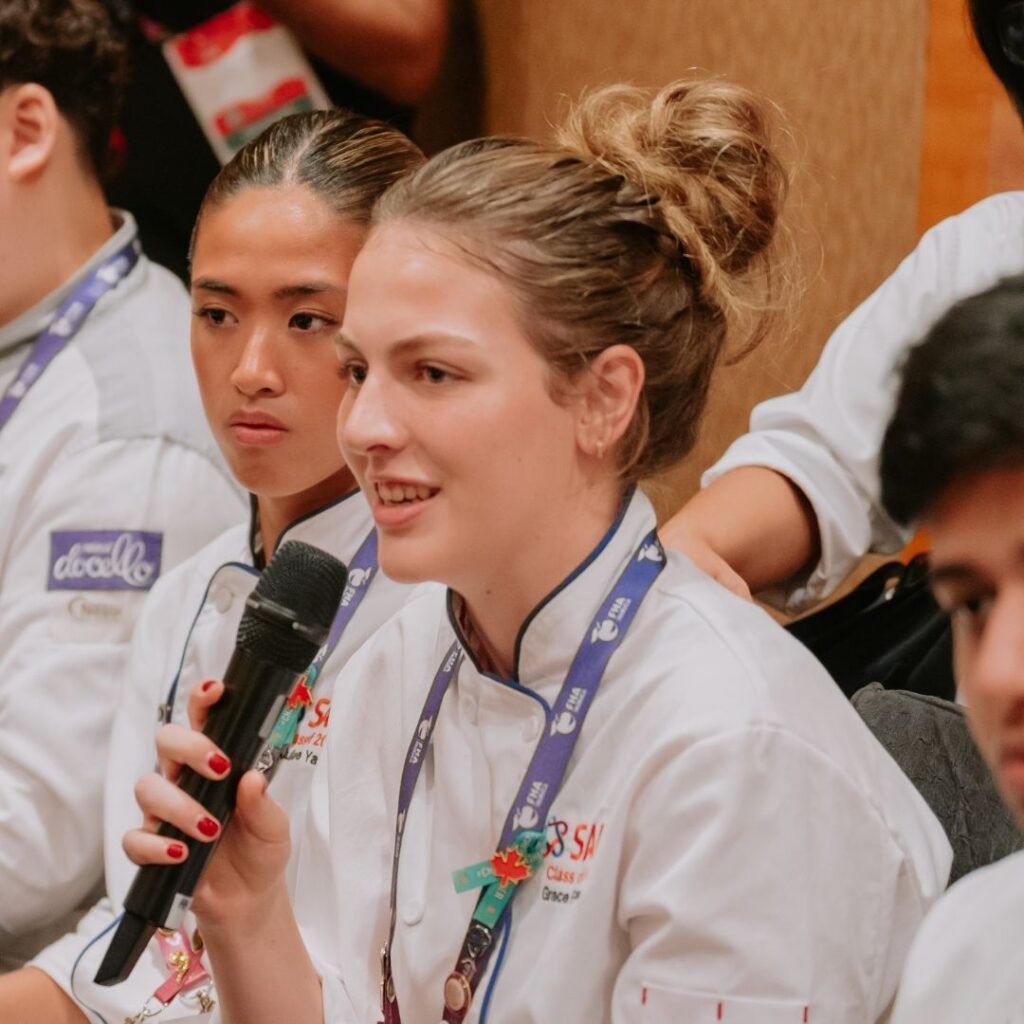
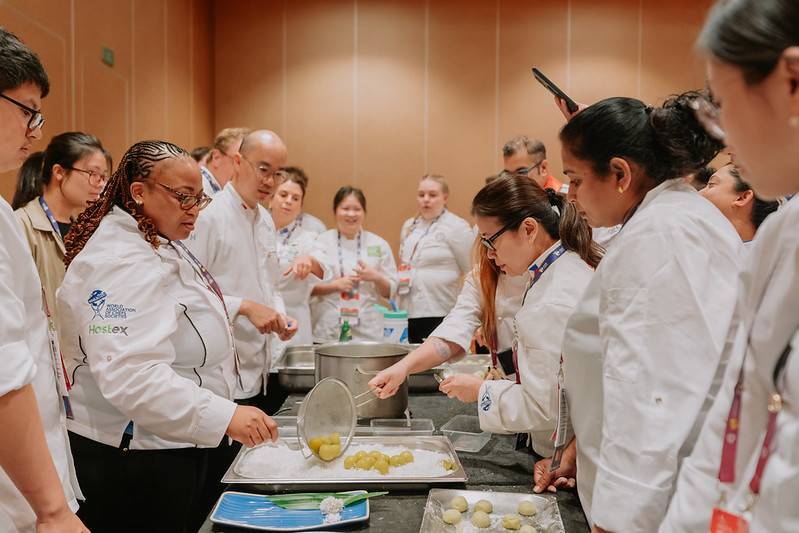
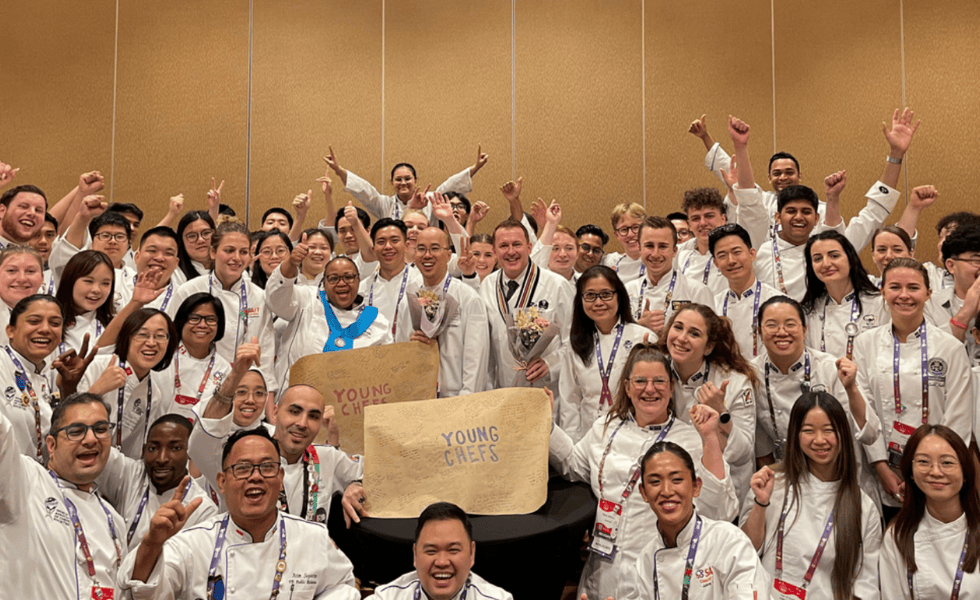
Young chefs in face-to-face session during Worldchefs Congress 2024.
“I’ve been lucky enough to go to Worldchefs Congress two times… and they were two of the most incredible experiences that I’ve had. Being able to meet other young chefs from different countries and nationalities with the same common goal of learning—it’s such a fun experience.”
– Angelica Iuliano, Worldchefs Young Chefs Ambassador Mentor
SESSIONS to unite global movements
The Bill Gallagher Young Chefs Forum is one of the ways in which Worldchefs Congress & Expo 2026 builds upon Worldchefs’ ongoing efforts to empower the next generation. This includes its collaboration on the World Food Forum’s Young Chefs Programme, launched in 2025, which engages young culinary professionals worldwide to inspire and guide other chefs to advocate for more sustainable and healthier consumption habits.
Through projects like this, Worldchefs has strengthened its collaboration with key international bodies including the Food and Agriculture Organization of the United Nations (FAO) and other global coalitions.
Reflecting these growing partnerships, Worldchefs Congress & Expo 2026 will mark the first time that United Nations leadership will be present, with Kazuki Kitaoka, Director for Youth & Women at FAO, addressing delegates and participating in the session Cooking Up the Future: What’s in Store for the Next Gen.
Further highlighting international collaboration, the session FoodChoices4Life: A new opportunity to connect, act, and inspire will also provide delegates with insights and ways to get involved in FoodChoices4LIFE, a new initiative co-funded by the European Commission that empowers citizens to accelerate climate action and behavioral change in food systems.
On the final day of the program, Worldchefs will also introduce its collaboration with World Central Kitchen, building upon the current efforts of World Chefs Without Borders to proactively position chefs to play a powerful role in disaster response across the globe.
A Platform for Learning
Knowledge-sharing and skill building are essential functions of Worldchefs Congress & Expo, with educational sessions allowing all delegates to engage with leading experts at presentations and masterclasses.
Specialized programming is also offered to culinary educators, including Worldchefs extensive global network of Education Partners.
“Worldchefs Congress is, at its core, an educational event. Every session is a chance to learn, either from some of the most respected leaders in our industry or from new and diverse voices bringing fresh perspectives in. It’s an opportunity for exchange between chefs from around the world, sharing ideas, experiences, and cultures. With our education partners also playing a key role, Congress becomes a truly global classroom and inspires, challenges, and helps move our profession forward. Nothing like breaking bread with all your friends from around the world! Don’t get left behind.”
– Charles M. Carroll CEC, AAC, Worldchefs Congress Committee Chairman
educators’ Forum
The Worldchefs Educators’ Forum is built for culinary educators and academic leaders to explore how culinary education must evolve to meet the realities of today’s industry, and tomorrow’s.
The forum’s 2026 theme, Redesigning the Culinary Curriculum: What Must Change by 2030?, brings together voices from across the association’s global network to ask the question: If we designed culinary schools’ curriculum from scratch today, what would it look like?
Attendees are invited to participate and contribute their diverse perspectives for a global dialogueon how educators, training institutions, and industry leaders can proactively shape curricula for the next generation of chefs.
The Forum, along with extensive programming geared towards education and future-proofing skills, is a key venue for conversation around the future of culinary education and career pathways during Worldchefs Congress & Expo.
4 Days of Conversation & Connection
Worldchefs Congress & Expo is a platform for chefs to expand their professional bonds with the most influential culinary body worldwide. Networking events run throughout the event, providing delegates with the chance to be a part of a global gathering of colleagues in a variety of settings.
With up to 800 attendees joining from nearly 100 countries, networking opportunities from receptions, breakout sessions and side events offer different ways for attendees to connect and exchange, including:
Arrival and pre-session networking sessions
Curated coffee breaks and daily lunches
One-on-One Meetings with Worldchefs Presidium (by RSVP)
Ice Breaker Reception on May 15
Welcome Reception on May 16
Worldchefs Gala Dinner on May 19, where the Global Chefs Challenge Finals results will be announced
Held every two years, the Worldchefs Congress provides for an unforgettable moment where cultures unite and industry professionals and enthusiasts exchange on what’s ahead, fostering a shared vision for the future of the industry.
In partnership with the Celtic Manor Resort, CAW is kicking off the Congress with the launch of the first ever Worldchefs Golf Tournament, which will take place ahead of the event on Thursday, May 14.
The Home Nations will also host a charity dinner on Sunday, May 17 at ICC Wales, with each country cooking a course on the four-course menu. The dinner will raise funds for The Burnt Chef Project and Hospitality Action, as well as highlight the profile of the four Worldchefs member organisations from the Home Nations.
Culinary Competition at Its Best: Global Chefs Challenge Finals
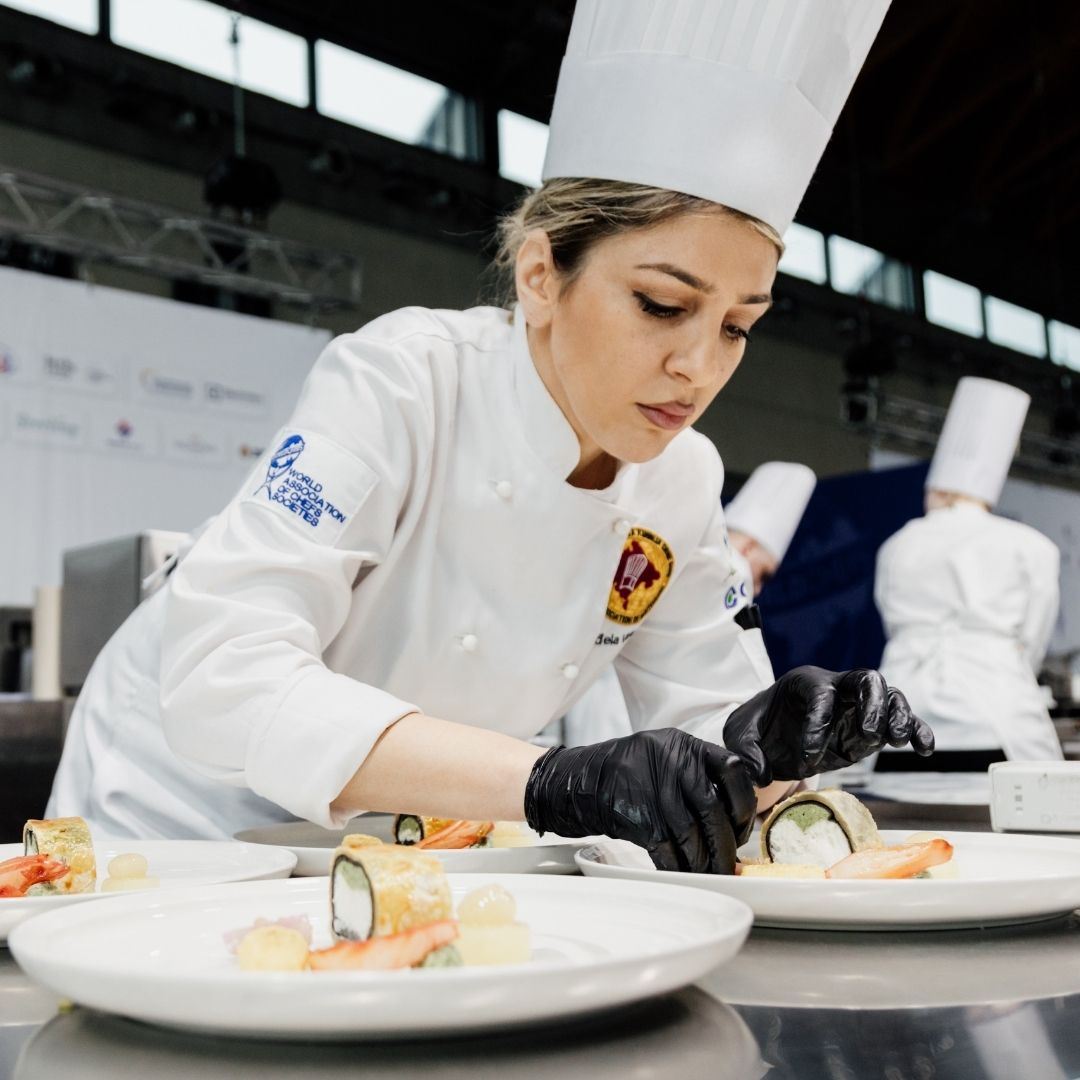
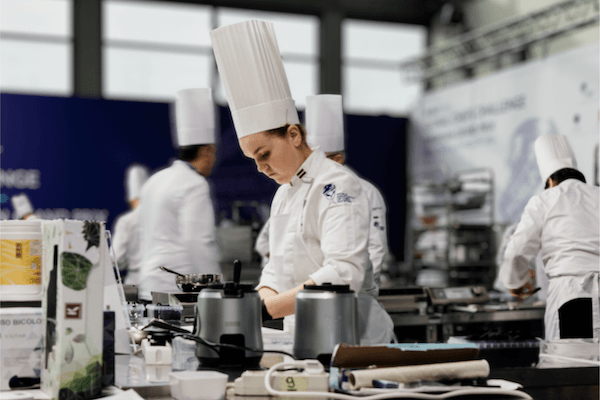
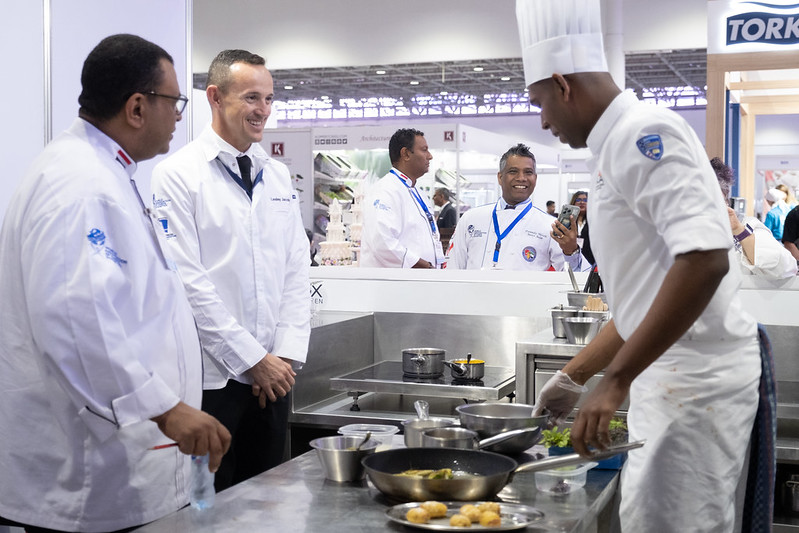
Competitor at the Global Chefs Challenge Regional Semi-Finals, 2025.
The Congress & Expo event also incorporates the 2026 Global Chefs Challenge Finals, where the world’s top chefs convene. Selected through regional competitions, qualifying teams go head-to-head at the Global Chefs Challenge Finals to show mastery in the culinary arts.
Competitors representing qualifying teams from across continents are met with a renowned panel of judges and four days of intense competition.
Following an extraordinary season of Worldchefs Regional Semi-Finals in the lead-up to the Congress & Expo, the Finals bring together top chefs from around the globe to compete across four categories: Global Chefs, Global Pastry Chefs, Global Vegan Chefs, and Global Young Chefs.
While Worldchefs awards gold, silver, and bronze in each category, a series of special partner awards will once again highlight outstanding achievements in sustainability, creativity, and ingredient excellence. This includes the Nestlé Professional Green Spatula Award, inaugurated in 2024, as well as other partner awards celebrating technical expertise, innovation, and craftsmanship.
Trading Industry Insightsat a World-Class Expo
Alongside the Congress networking and education programming, the Expo spotlights the latest trends in HoReCa innovation.
Delegates can network with leading providers of professional industry solutions, sample products and learn about up-and-coming ingredients, innovative products, and industry trends, and gain a first-hand look at the future tools of the trade.
The Full Delegate Package offers comprehensive immersion and access to all Congress & Expo events, including lunches and a ticket to the Worldchefs Gala Dinner, as well as discounts on Eurostar fares.
The Limited Access Delegate tickets offer flexible access to selected days or key networking events for professionals unable to attend the full program. Day and social event passes are also available, offering customizable access.
Groups of 10 or more can also benefit from a 10% discount.
View all ticket types at worldchefscongress.org/register
Making the Most of the Biggest Chef Event of the Year
The 2026 Worldchefs Congress & Expo this month will be a global meeting point for industry leaders, offering world-class educational sessions, culinary competitions, and networking opportunities. The full program is available at www.worldchefscongress.org.
Ahead of the event, attendees can discover recommendations for restaurants, tourism activities, and more, from our Welsh chef members, as well as read why Wales is a world-class destination to host the Congress & Expo. Delegates can use this link to announce their attendance via social media and make the most of a key opportunity to network.
Don’t miss this opportunity to be part of a global gathering that shapes the future of food, plus all that Welsh hospitality has to offer. Tickets are still available at www.worldchefscongress.org/register.
The global leading platform that brings together chef delegates and professionals from across the five continents, Worldchefs Congress & Expo delivers a unique program to help industry players network and expand their professional bonds.
This includes presentations and workshops from leading experts in the industry, impactful educational programs including the Worldchefs Educators’ Forum, specialized events designed to uplift the next generation of chefs such as the Bill Gallagher Young Chefs Forum, the Global Chefs Challenge Finals culinary competition, an international trade exhibition, and diverse activities to enhance both your personal and professional network.
Thank you to Nestlé Professional, Electrolux Food Foundation, and the Azerbaijan Tourism Board, along with all of our valued sponsors, for making the Worldchefs Congress & Expo 2026 possible.
And thank you to our Global Chefs Challenge Finals sponsors:
Business owners and people working in the hospitality, food and drink and tourism industries across the UK and Ireland are being encouraged to attend the biggest global event for chefs, which is being held in Wales in May.
Day and social event passes are now available for Worldchefs Congress & Expo 2026 at ICC Wales, Newport from May 16-19 – the only global event being held in Wales this year.
It’s a once in a generation opportunity to attend the event which is coming to the UK for the first time in its 98-year history.
The 41st Worldchefs Congress & Expo 2026, themed ‘Pasture, Passion, Plate’, is expected to attracted around 800 chefs worldwide to Wales and provides a huge opportunity to showcase hospitality and food and drink business in the UK and Ireland.
Whilst the Culinary Association of Wales (CAW) is hosting the event in partnership with Worldchefs, all the Home Nations – The British Culinary Federation, Federation of Chefs Scotland, The Panel of Chefs Ireland – are contributing.
Delegates will have a chance to network with the world’s top chefs, hear a stellar line-up of speakers, including world-renowned chef Marco Pierre White, watch talented chefs in global competition finals and visit a wide range of exhibits in the Expo village.
A Limited Access Delegate ticket offers flexible access to selected days or key networking events for professionals unable to attend the full congress.
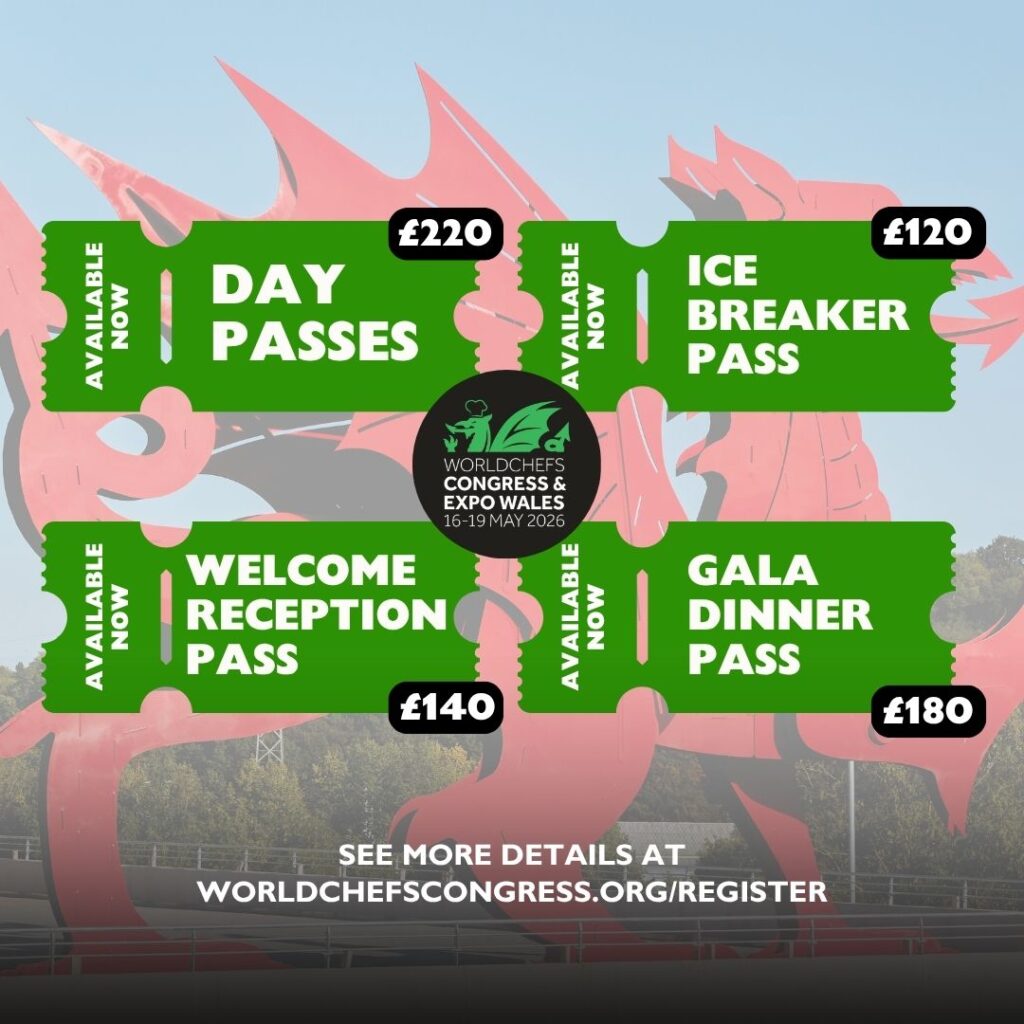
Costing £220, the Day Pass includesaccess to Plenary Sessions, Expo and Global Chefs Challenge Finals together with lunch and coffee breaks on the selected day
The Ice Breaker Pass reception pass on May 16 costs £120, the Welcome Reception Pass on May 17 costs £140 and the Gala Dinner Pass on May 19 costs £180, There is a 10% discounts for groups of 10 or more.
In partnership with the Celtic Manor Resort, CAW is holding the first ever Worldchefs Golf Tournament on Thursday, May 14. Chefs from all the Home Nations will each cook a course for a charity dinner on May 17 at ICC Wales, with money raised going to The Burnt Chef Project and Hospitality Action.
CAW president, Arwyn Watkins, OBE, is urging businesses and people working in the hospitality, food and drink and tourism industries across the UK and Ireland to ensure that the Worldchefs Congress & Expo 2026 is a big success.
“This is golden opportunity to engage face to face with some of the most influential chefs from around the globe,” he said. “If a business is interested in exporting and finding new markets within Great Britian in the food service sector, then this is the event to attend in 2026
“More than 800 delegates from around the globe will be in attendance with 60% of the delegates identified as buyers and influencers within their own country. Original ideas start with interesting conversations.
“Delegates will hear insights from experts, have a chance to take part in immersive workshops to spark new ideas for their business or career and expand their network at official events with the largest culinary body worldwide.”
Team Wales – the CAW, ICC Wales, Celt Manor Resort and Welsh Government – has worked tirelessly since 1999 to secure the Worldchefs Congress & Expo. Even King Charles supported the bid whilst he was HRH The Prince of Wales.
– END –
Notes for Editors:
Culinary Association of Wales:
The Culinary Association of Wales promotes excellence in the art of professional cookery within Wales. A partnership of professional chefs and caterers, the CAW’s mission is to develop and raise the culinary profile of Wales, its establishments and those working within them.
Worldchefs Congress & Expo
Worldchefs Congress & Expo brings together chef delegates and professionals from across the five continents to network and expand their professional bonds.
The event programme delivers presentations and workshops from leading experts in the industry, the Worldchefs Educators’ Forum, the Bill Gallagher Young Chefs Forum, the Global Chefs Challenge culinary competitions, an international trade exhibition and diverse networking activities.
Over the course of 96 years of history, Worldchefs Congress & Expo has been organized in 39 cities around the globe.
Worldchefs
The World Association of Chefs’ Societies, known as Worldchefs, is a dynamic global network of 110 chef associations worldwide.
A leading voice in the hospitality industry, Worldchefs carries 91 years of history since its founding at the Sorbonne by the venerable Auguste Escoffier.
Representing an international membership of culinary professionals, Worldchefs is committed to advancing the profession and leveraging the influence of the chef jacket for the betterment of the industry and humanity at large.
Worldchefs is dedicated to raising culinary standards and social awareness through four core focus areas: education, networking, competition and humanitarian and sustainability programmes.
For more information, please contact Arwyn Watkins, Culinary Association of Wales president, on Tel: 01938 555893 or Duncan Foulkes, publicity officer, on Tel: 01686 650818.
More than half of the hospitality workforce are women, yet they remain hugely underrepresented in leadership roles. To fix the gender equity gap in our industry, we need systemic change.
The hospitality industry runs on talent, creativity, and care, and globally, women provide more than half of it. They make up over 50% of the hospitality and F&B workforce. Yet despite being the majority to help power the industry, women are significantly underrepresented in leadership and decision-making roles. This paradox is at the heart of hospitality’s gender gap; one that the industry can no longer afford to ignore.
In this article, we explore why gender disparity persists regardless of the critical role women play in the culinary world, and what that means for the industry in practical terms.
Leaving Talent on the Table: Today’s Hospitality Workforce
LABOR FORCE & LEADERSHIP GAP
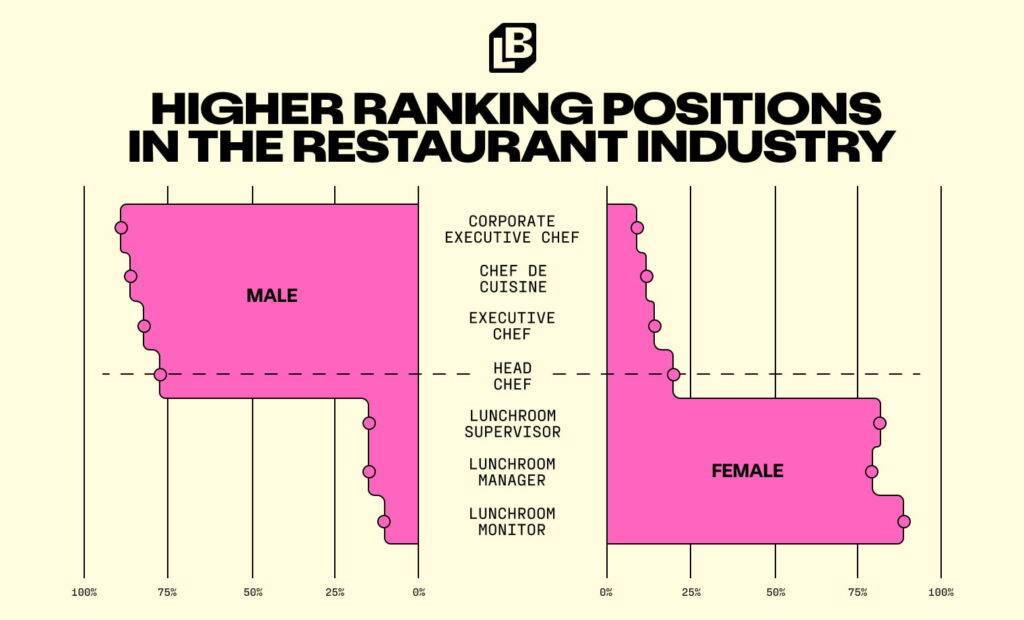
In the hospitality industry, women hold one leadership position for every 10.3 men. Women make up just 33% of management positions in restaurants, and only 19% of chefs and head cooks are women. In the US, 79.3% of chefs identify as male, while 35.6% identify as female. 9.1% of corporate executive chefs are women, while 90.9% are men.
Fewer higher ranking positions in the restaurant industry, such as head chef or executive chef, are held by women, from Zippia 2022 data.
RECOGNITION GAP
Representation in awards and recognition also lags behind. Just 6% of Michelin-starred restaurants are led by women. In 2025, of the 22 new one-starred restaurants in the UK, only one was awarded to a female chef patron – Chef Emily Roux. The percentage of the World’s Best 100 restaurants with a female head chef scratches by at 6.5%. For every female-led Michelin-starred establishment, there are 16 run by men.
Leaving the stars aside, the 2024 State of Gender Equality in the Travel and Hospitality Industry report found that a staggering 63% of female respondents believe they must work harder for recognition and acceptance because of their gender compared to 22% of male respondents who feel the same. A 2022 study from MIT found that female employees are also less likely to be promoted than their male counterparts, despite outperforming them and being less likely to quit.
GENDER-BASED PAY GAP
The gender-based pay gap is persistent in the hospitality industry, and it’s moving in the wrong direction. A 2023 report found that the gender pay gap in hospitality increased from 4.2% to 5.2% over the previous year. According to Equality in Tourism, women in tourism earn approximately 14.7% less than men.
In the US, the average annual salary for chefs and head cooks in 2025 was $45k for men versus $35k for women. In Europe, a study published in 2025 found that the gender wage gap in hospitality management ranges from 5.1 % to 23.8%.
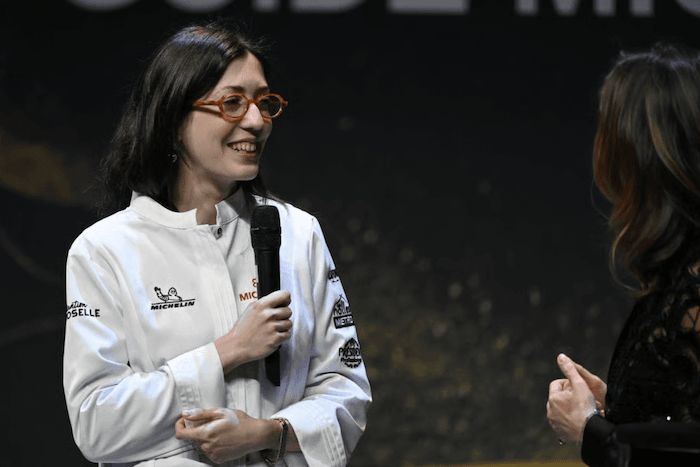
Chef Valentina Giacobbe, winner of the 2025 MICHELIN Young Chef Award for her restaurant Ginko in Lille, France. Photo credit: AFP
Invisible Labor, Not-So-Invisible Problems
In hospitality, some of the most essential leadership work is rarely listed on a job description. Culture building, conflict mediation, keeping a team calm under pressure, and so many more tasks, are the invisible backbone of a thriving kitchen team. Research shows that this invisible labor disproportionately falls on women, who are expected to absorb stress, maintain morale, and smooth interpersonal dynamics while their contributions remain undervalued. When structural systems fall short, women pick up the slack.
The qualities most associated with effective leadership today – emotional intelligence, adaptability, cross-functional collaboration, and long-term thinking – are the very qualities that have historically been feminized and dismissed as “soft skills.” Yet modern leadership science has made clear that these are high-impact competencies linked to stronger team performance, resilience, and innovation.
Studies show that purpose-driven women leaders consistently rely on empathy, calculated risk-taking, a bias toward action, and achievement orientation across their careers. They excel in both generating ideas and executing them, driven by a deep commitment to purpose and to the people around them. Broader organizational research echoes this: women leaders are more likely to demonstrate participative decision-making, ethical sensitivity, and collaborative leadership styles – traits that correlate with stronger organizational outcomes.
Despite this, what problems are still preventing women from rising to the top?
FALSE STEREOTYPES
A study published in the European Journal of Travel Research found that ingrained stereotypes and sexism continue to be a huge issue in the culinary field. False gender stereotypes, like being less resilient to stress, lacking in authority, or emotional sensitivity, negatively impact women’s career advancement, leaving many on the lower rungs of hospitality roles. What chefs wear can come under scrutiny, too, with something as simple as a sequined chef jacket causing a stir.
All too often, women in kitchens, even those in change, are overlooked in search of a male authority figure. The McKinsey’s 2024 Women in the Workplace study found that women leaders are 1.5x more likely than male leaders to have their judgment questioned, and are twice as likely to be called “too aggressive” when demonstrating the same assertiveness valued in their male counterparts.
THE “OLD BOY’S CLUB”
Studies also show that the “old boy’s club” continues to pose a problem for women working in the hospitality industry. It excludes women from informal and formal networks, making the glass ceiling further out of reach. With mentorship a key ingredient to a successful career, inclusive networking plays a critical role in helping women advance in the hospitality sector.
Deep Dive: A Data-Informed Look at Why Gender Disparity Is Bad Business
Women in Leadership: A Good Decision
Research has found that women in leadership improve decision-making. A 2023 study, conducted by the University of California and Copenhagen Business School and published in the Harvard Business Review, listened to board members from more than 200 publicly traded companies in the US and Europe.
The results? Women come to meetings better prepared, more willing to ask in-depth questions, more open to different points of view, and concerned with accountability and making the right choice as a group rather than worrying about how they might be perceived.
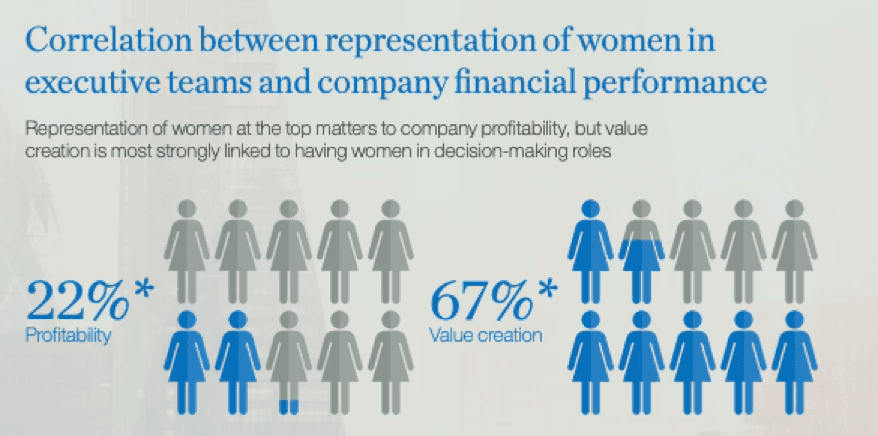
Having more women in decision-making roles matters most for long-term value creation, from McKinsey & Company.
Bias is Expensive
Inclusive environments equals better performance. Research shows that the firms with higher gender diversity in upper management are more likely to achieve better financial and sustainability performance. Inclusive, gender-diverse workplaces drive measurable performance gains and are significantly more likely to outperform less inclusive peers, with higher productivity, increased innovation, stronger employee retention, and nearly 63% greater profitability and productivity.
Side Dish: How do men and women see these barriers differently? A recent study offers insights.
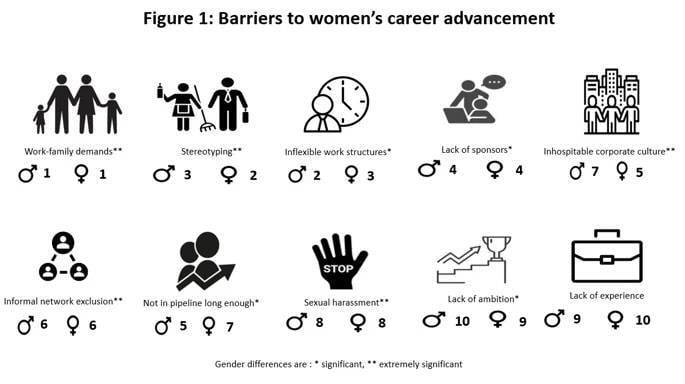
A recent study by EHL Insights found substantial differences in the way male and female hospitality managers understand research-backed factors related to women’s career advancement. While women (and substantial data) report that opportunities have stagnated, men perceive that women’s opportunities to reach top management levels have greatly improved.
While men still hold much of the decision-making power, how will anything change if they don’t see the not-so-invisible problem?
Barriers to women’s career advancement, from EHL Insights.
On the Line: Lessons from Women Who Lead
Let’s hear from female voices on the line. What have they learned from their experience in leadership?
Executive Committee Member at Worldchefs and Head of Innovation at NorgesGruppen, Norway’s largest grocery company
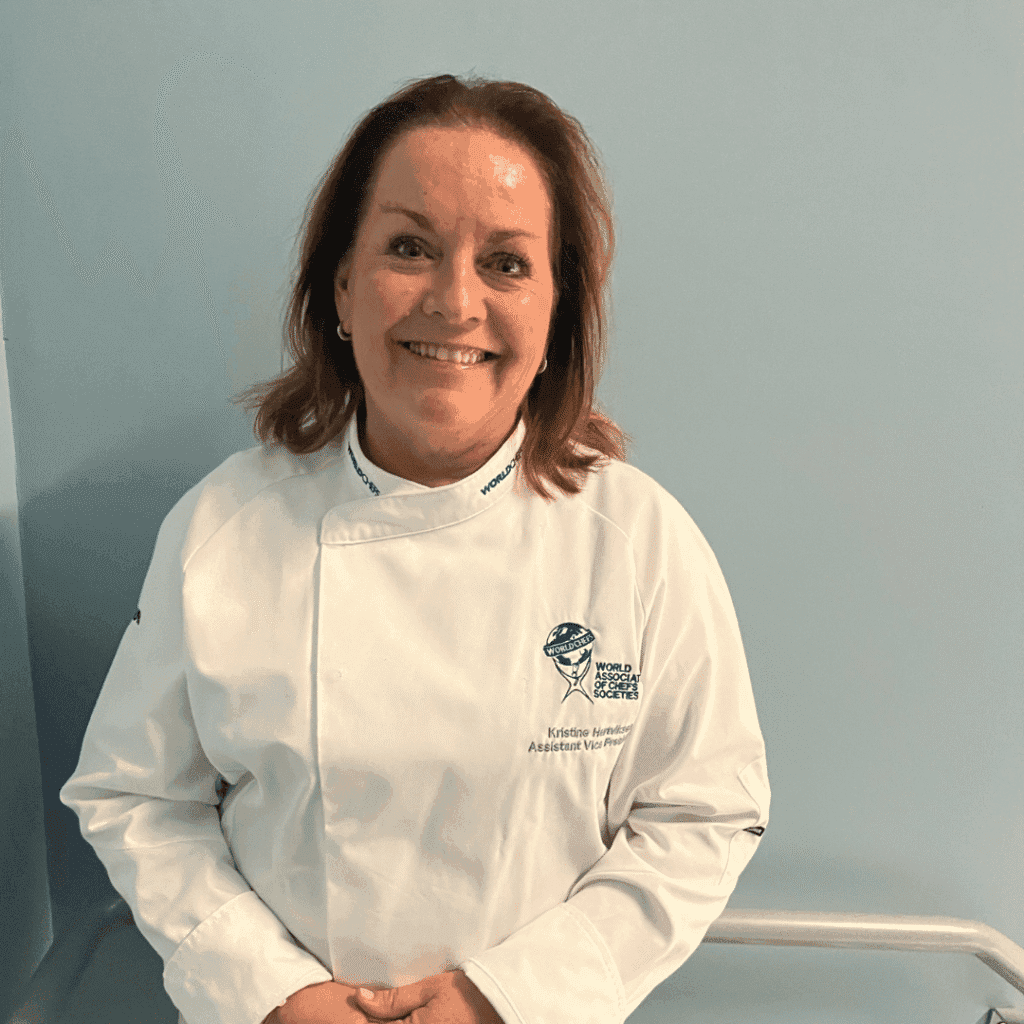
WHAT WE NEED: I was the first woman in the Nordics to be president of their chef association. I have been fighting and I thought at times “Oh, I don’t want to do this anymore.” It has been tough. When I started [my career], I must be honest, [Worldchefs] was an old gentlemen’s club. It’s different now. We still need to have more of a mix on the board, a mix of age, women and men, experiences–more voices. Everyone is important. Women and men, we think differently, so the mix is important.
HER ADVICE: It only takes one idiot in the room to try to break you down, so have good mentors, people who you can trust, and then ignore the idiots. You must trust yourself and have a mentor. Call me, I’m going to help. We are stronger together.
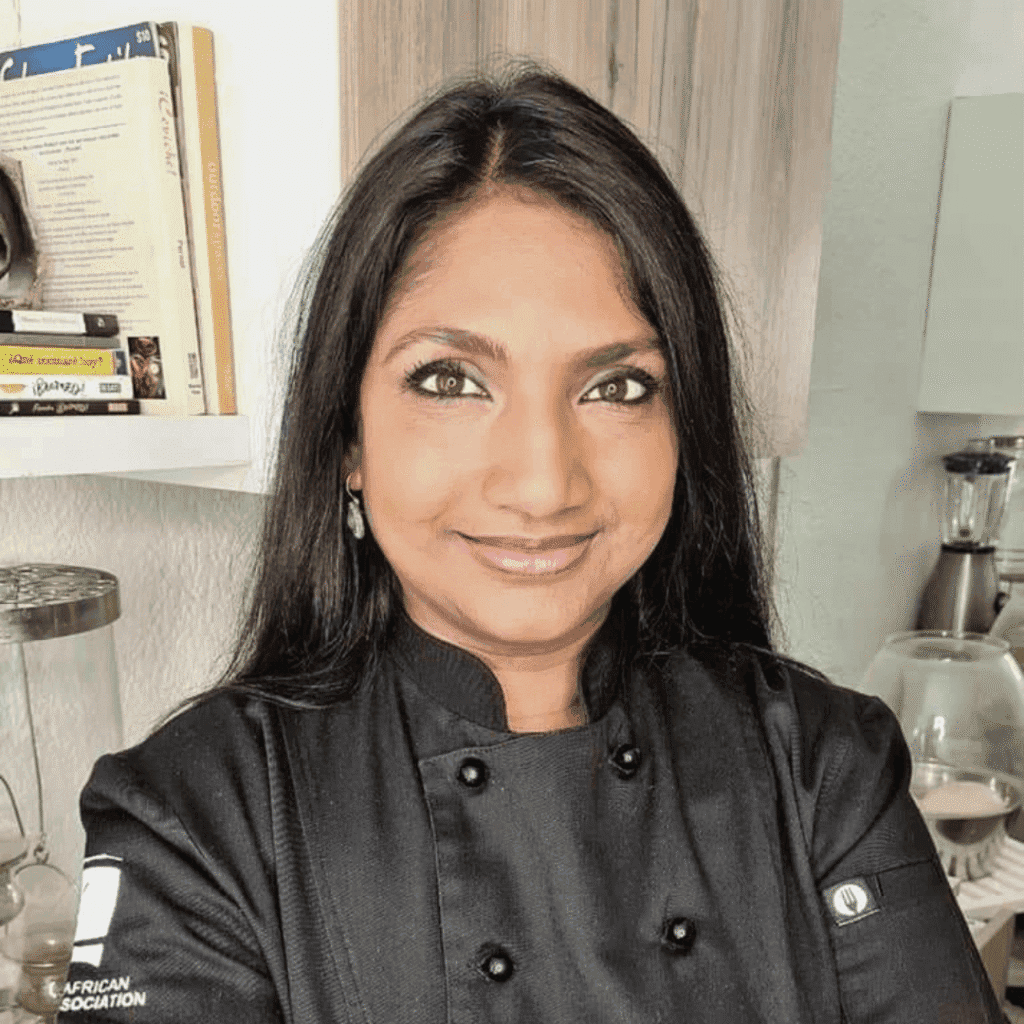
Director of Operations & Projects, Worldchefs (World Association of Chefs’ Societies), France
WHAT WE NEED: We need to stop treating gender equity as a “women’s issue” and start treating it as a leadership and governance standard. That means transparent pathways to senior roles, fair recognition of contribution, and leadership cultures that value both results and people. There isn’t one “correct” way to manage; it depends on the situation, the culture, and the people in front of you and women should not have to lead like men to be taken seriously. In a global chefs’ association, cross-cultural intelligence matters: respect is built through tone and intent. Most importantly, leadership is never about one person. It is about the team you build and the trust you earn.
HER ADVICE: Find mentors and sponsors who could actively advocate for you and create opportunities, not just offer guidance. And when you can, do the same for someone else. Don’t wait to be “ready”; take the seat, do the work, and build credibility through consistency. Be firm when the situation requires it, but don’t confuse toughness with effectiveness. Stay curious, learn, and adapt to today’s realities and never forget that real leadership is measured by the people you develop and bring along with you.
Young Chefs Club Australia Co-Chair & World Chefs Without Borders Committee Member
WHAT WE NEED: The workplace is really responsible for creating that positive culture. Getting rid of harassment in workplaces. It’s about creating stronger mentorship with senior chefs and junior chefs and getting rid of that divide.
HER ADVICE: I definitely have to thank all the mentors I’ve had previously to make up the chef I am today and the person I am today. The mentors that have guided me through these competitions made me want to also mentor future generations.
2026 Global Young Chefs Challenge Competitor, National Culinary Team of Cyprus She will compete at the Finals during the 2026 Worldchefs Congress & Expo in Wales this May.
WHAT WE NEED: The industry is in need of many other female chefs and leaders. Growing up I was very lucky to have various female mentors around me such as my grandmother who inspired me to keep going and follow my dream.
HER ADVICE: My advice to other female chefs is to always believe in yourself and keep trying to achieve your goals.
Breaking the Demi-Glace Ceiling: Systemic Change or Bust
Dig into the history of the culinary profession and you’ll find it’s riddled with the same story. We know the Auguste Escoffiers, and the Rosa Lewises and Marthe Distels of the world are forgotten. Search for related articles and you will come up with thousands, hundreds of thousands, of related writing.
The pandemic undid years of progress towards gender parity in leadership. While brands including Marriott, Hilton and Accor have pledged to increase female representation in leadership roles, according to the 2025 Women in the Workplace study, only half of companies are prioritizing women’s career advancement, part of a multi-year trend in declining commitment to gender diversity.
Despite the challenges faced, women aren’t going to stop at the demi-glace ceiling. They’re taking their chefs’ knives to it, from smashing stereotypes in corporate kitchens to owning their own businesses. In the US, one-half of restaurant businesses are owned by women and 49% of restaurant firms are at least 50% owned by women, according to recent data from the National Restaurant Association. Women entrepreneurs in culinary are hungry for change, and they aren’t waiting for someone else to make it happen.
Mentorship & networking are key
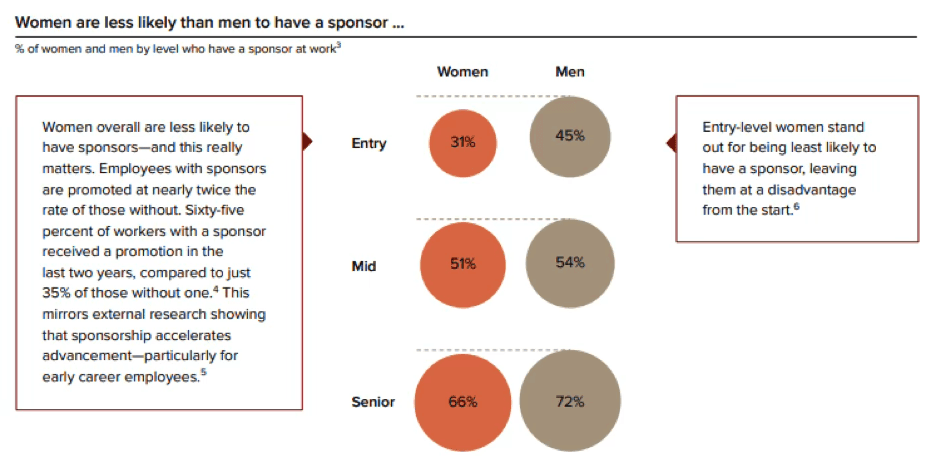
Many women in hospitality attribute their achievements to mentorship. Look no further than the women profiled above for evidence of the impact a support network can have on navigating challenges and seizing new opportunities. In a global survey, 71% of businesswomen said their mentor was influential in their career advancement. Women with mentors are promoted five times more often and are 33% more likely to be seen as strong performers in the workplace.
Then there is this statistic: Men apply for jobs when they meet 60% of the qualifications, while women wait until they meet 100%. Mentorship can help address this, providing women with the right kind of support to ensure they go after what they deserve.
Access to strong professional networks is overall one of the most powerful accelerators of women’s career growth in hospitality. Mentorship, in particular, gives women the guidance, visibility, and confidence needed to navigate structural barriers. When women are connected to peers and seasoned leaders who champion their development, they are far more likely to advance. Expanding these networks and ensuring women have real pathways into them is essential for progress.
More than anything, we need to address the structural barriers holding women back. As long as the systems shaping career progression remain biased, women will continue to do the work without receiving the power, recognition, or opportunity that matches their contribution. Addressing these structural barriers means redesigning how we hire, promote, mentor, and value leadership itself. It requires shifting from relying on the invisible labor of women to building cultures where emotional intelligence, collaboration, and inclusive leadership are recognized as strategic assets, not gendered expectations.
When the industry embraces structures that support women’s advancement, it’ll do more than correct an imbalance. We need more women to unlock the full creative and economic potential of the global hospitality workforce.
Despite the figures and the major work still left to overcome regarding gender, there is so much inspiring action from individuals and organizations committed to closing the gender gap in hospitality. With passion and persistence, women won’t be stopped. Where they don’t have a seat at the table, they’re setting their own.
Check out the resources below for more.
More Women!
Looking for more on women in the industry? Keep reading:
While the kitchen has long been perceived as a male-dominated space, the tides are shifting, and together we are building a better, more inclusive future.
Discover the dedication, resilience, talent, and innovation of women shaping our industry today.
Mentorship could be a key piece of the puzzle to solving the gender gap, making sure that the industry doesn’t leave talent on the table when it comes to hiring for leadership roles.
In an exclusive interview, Chef Zana Alvarado of SA Chefs highlights key action points to address gender disparities in the culinary world and support equity in a male-dominated industry.
Find your next mentor at Worldchefs Congress in May. In addition to connecting directly with industry experts and experienced professionals, you’ll hear from several female leaders, including:
Sian Wyn Owen, the Executive Head Chef of The River Cafe, one of London’s most iconic Michelin-starred Italian restaurants. Sian is a regular guest on Ruth Rogers’ podcast Ruthie’s Table 4.
Chef Shonah Chalmers CCC, B.A.Sc., WCCE, the Chair of the Worldchefs Feed the Planet and Sustainability & Inclusivity Committee. A culinary educator and sustainability advocate, Shonah is known for championing regenerative and locally sourced “hero ingredients” in modern recipe development.
Rosalyn Ediger, the founder and CEO of The Culinary Diplomacy Foundation of Canada. In addition to this role, since 2017 Rosalyn has been a passionate Culinary Arts Instructor at her alma mater, Southern Alberta Institute of Technology.
Mentorship: the secret ingredient to industry success?
When you read a chef’s bio, it usually includes who they worked for. If they’ve been lucky, it might read something like this:
Tom Phillips trained at The Ritz in London, before moving on to Simon Rogan’s L’Enclume in the Lake District and Thomas Keller’s Per Se in New York. He later returned to London to join Restaurant Story, working alongside chef patron Tom Sellers.
While this might not be immediately read as mentor-protégé relationships, the value is clear. Where a chef worked and for whom is a big part of how their skills are perceived. For some, it’s like a badge of honor. A well-known mentor can signal potential, legitimize a chef in the eyes of colleagues and consumers, and inspire culinary professionals to aspire to excellence in an effort to be a part of a shared legacy.
A big-name mentor in your bio might get you noticed, but the benefits run a lot deeper than PR. In this article, we’ll explore why mentorship matters now more than ever in the culinary world.
An Underrated Resource for Today’s Hospitality Landscape
Mentoring is an underrated resource and an under-recognized skillset. According to recent data, 76% of people think mentors are important, but only 37% actually have one.
You can be a great chef but not know a thing about how to inspire someone or guide them towards a long-term perspective on career. It takes time to cultivate skills to mentor and manage people, and the willingness to continue to learn from protégés, too. According to the latest data from Deloitte, many managers only spend 13% of their time developing the people who work for them, and more than one-third (36%) are not sufficiently prepared to be people managers, suggesting that more learning and development is needed across each stage of a person’s career.
Mentoring represents one of many skills that are increasingly expected by today’s hospitality landscape. Culinary professionals need to be multifaceted to respond to an evolving industry, one changed by the pandemic and shifting generational expectations. From small businesses to large commercial kitchens, chefs need to demonstrate strong managerial and leadership skills, as well as operational and administrative skills. Success also often depends on being savvy when it comes to social media, culinary arts tourism, and the latest culinary trends. With so many things to consider in building a successful career, culinary professionals need diverse guidance.
While the culinary arts has traditionally been rooted in vocational training and hands-on apprenticeship, across the globe, industry leaders, educators, and employers report that traditional technical training alone is insufficient to meet these shifting demands.
The need for meaningful and intentional mentorship is stronger than ever, a kind of mentorship to strengthen career development by offering specific expertise, insights, and opportunities, whether near or far.
Worldchefs Certified Judges with Global Chefs Challenge competitors.
Deep Dive: A Data-Informed Look at Why Mentorship Matters Now More Than Ever
Mentorship delivers clear strategic value, for employers, mentors, and mentees alike. It’s no wonder why 98% of Fortune 500 companies invest in structured mentorship programs and report higher engagement, stronger pathways for leadership development, and higher retention rates as a result.
Especially now, with automation and AI quickly reshaping day-to-day activities, both employers and customers are searching for connection and adaptive, human-centric skills. Mentorship can help to keep a balance in check by creating opportunities for dialogue around new technologies, approaches, and ways of working. By bridging tradition and innovation and helping to connect perspectives across generations, cultures, and specializations, mentorship can be a key driver for growth, for both the industry and its individuals.
Strengthening Team Culture and Employee Retention
Studies show workplaces with structured mentorship see higher retention rates for mentees (72%) and mentors (69%) compared to other employees. Especially for the new generation of workers, a focus on learning is essential. In a 2025 survey from Deloitte, when asked the strongest reasons for choosing to work for their current employer, Gen Z put learning and development in the top three, with specific mention of wanting greater guidance, inspiration, and mentorship from their managers.
Mentorship also can also be a part of efforts to address mental health in the kitchen. Mental wellness is an increasingly visible challenge for chefs worldwide, and the value of mentor relationships shows up in this area as well. Studies show 45% of employees feel uncomfortable discussing mental health concerns with their managers. Mentorship builds trust and provides emotional scaffolding, reminding chefs that they are not alone and that their contributions are valued. Data shows that 89% of employees with mentors say colleagues value their work, versus 75% without mentors. All this from knowing someone has their back.
Side Dish: Gen Z’s Career Expectations
86% of Gen Z and 84% of millennials consider mentorship from experienced colleagues to be a key tool for career growth.
9 in 10 Gen Zs (89%) and millennials (92%) consider a sense of purpose to be important to their job satisfaction and well-being.
Promoting Skills Transfer
Mentorship is at the heart of craft, with one person’s mastery becoming the next person’s foundation. According to the Harvard Business Review (HBR), global research shows structured mentoring accelerates skill development by 30% or more. In a study by the HBR, across 19 countries, 84% of workers said that mentors helped them achieve competence in their roles faster.
It’s also a two-way exchange. Seasoned chefs can share their insights and offer actionable guidance to their mentees. Mentees in exchange bring new perspectives and skills to the table, challenging their predecessors with fresh questions, ideas, and innovations.
And mentorship isn’t just for young chefs. It can benefit chefs at every point in their career. Beyond age and traditional kitchen hierarchy, mentorship promotes mutual learning across generations, cultures, and disciplines. Peer-to-peer mentoring has its place, too, with more experienced colleagues helping others to grow confidence, and encourage collaboration.
The American Culinary Federation celebrates International Chefs Day with young chefs.
Fostering Inclusive Leadership Development
Mentorship is also one of the most effective tools for advancing diversity, equity, and inclusion in the workplace, which leads to many more gains. Research has shown that mentorship programs can increase minority representation in management positions more effectively than many standalone diversity initiatives, with studies reporting improvements in leadership representation for underrepresented employees when mentoring is part of the strategy. What’s more, the data shows that when employees feel represented, innovation improves by an astonishing 83%.
A recent survey by the Gallup Center on Black Voices found that employees with a mentor are 1) more than twice as likely as those without to strongly agree that their organization provides a clear plan for their career development, 2) twice as likely to strongly agree that they have had opportunities to learn and grow at work in the last year, 3) twice as likely to be engaged, and 4) 98% more likely to strongly agree that they would recommend their organization as a great place to work.
For women, mentorship has huge potential, too. A recent study from MIT found that female employees are less likely to be promoted than their male counterparts, despite outperforming them and being less likely to quit. Research also shows that women are less likely to self-promote. In a DDI Women in the Workplace Global Research study, a survey from 19 different countries found that 63% of women have never had a formal mentor.
Despite women making up more than half of the restaurant and foodservice workforce (52.6% in 2022, according to DataUSA), their representation sharply declines as seniority rises. Only 21.6% (down from 22.6% in 2022) of head chefs and cooks identified as women in 2024, revealing a persistent gender gap in leadership. Meanwhile, half of students at the Culinary Institute of America are female. Women occupy only 6.3% of the head chef positions at prominent U.S. restaurant groups, whereas women CEOs run 11% of Fortune 500 companies in 2025, having made significant gains since 2018. As Fortune 500 companies continue to invest in structured mentorship programs, their strategy could be an important model to address gender representation in professional kitchens.
Mentorship could be a key piece of the puzzle to solving the gender gap, making sure that the industry doesn’t leave talent on the table when it comes to hiring for leadership roles. Across the culinary world, mentorship can help to ensure that chefs of all backgrounds and at all points in their career can rise with confidence and clarity.
Chefs gather at the Global Chefs Challenge Americas Semi-Finals in 2025.
Mentorship is Legacy and a Long-Term Strategy
Worldchefs and its members are not just looking to help create great chefs. Our community is here to foster leaders for a better culinary industry and food system at large. Going beyond technical skills, mentorship is about more than just imparting culinary expertise. By modeling and inspiring leadership qualities, mentorship also helps to ensure that we develop the strategic, professional, and personal competencies necessary to navigate today’s complex hospitality environment and beyond.
Through this support, we create a cycle of mentees who grow to become mentors, and an industry culture of learning and development. Mentorship is a legacy of leadership, one that branches out into the past, present, and future.
So, if a chef has been lucky, their bio might read something like this:
Marco Pierre White is a renowned chef, restaurateur and TV personality. A leading figure in the UK restaurant scene for over 25 years, he has been influential in the culinary careers of many including Gordon Ramsay and Heston Blumenthal. Marco’s rise to culinary acclaim began at 19, when he moved to London to study classical French cuisine under Albert and Michel Roux at Le Gavroche. He later honed his craft with Raymond Blanc and Pierre Koffmann, masters of French cooking technique.
Marco Pierre White Chef, Restaurateur, and TV Personality
The World Food Forum (WFF)’s Young Chefs Programme equips chefs aged 18-35 with skills, knowledge and networks to take a leading role in transforming agrifood systems through culinary practices.
Each participant will be paired with a mentor from the Worldchefs network to drive local food systems projects.
Young Chefs Clubs connect emerging culinary professionals within a global network, providing mentorship and leadership development through friendship, cuisine, and cultural exchange.
A toolkit is also currently being developed for rollout to national chef associations, offering guidance to launch and manage a mentorship program for young chefs.
At Worldchefs Congress & Expo, the Billy Gallagher Young Chefs Forum Program provides young up-and-coming chefs proper training, guidance, and learning opportunities.
At Worldchefs Congress 2026, the exciting young chefs program includes a trip to Cardiff Market, a foraging experience, face-to-face sessions with Michelin-starred chefs, and more.
Interested in being matched with a mentor — or becoming one? Get in touch with us.
Young Chefs and mentors at Worldchefs Congress & Expo 2024.
Photo credits and captions
Cover image: Billy Gallagher Young Chefs Forum at the 2024 Worldchefs Congress & Expo.
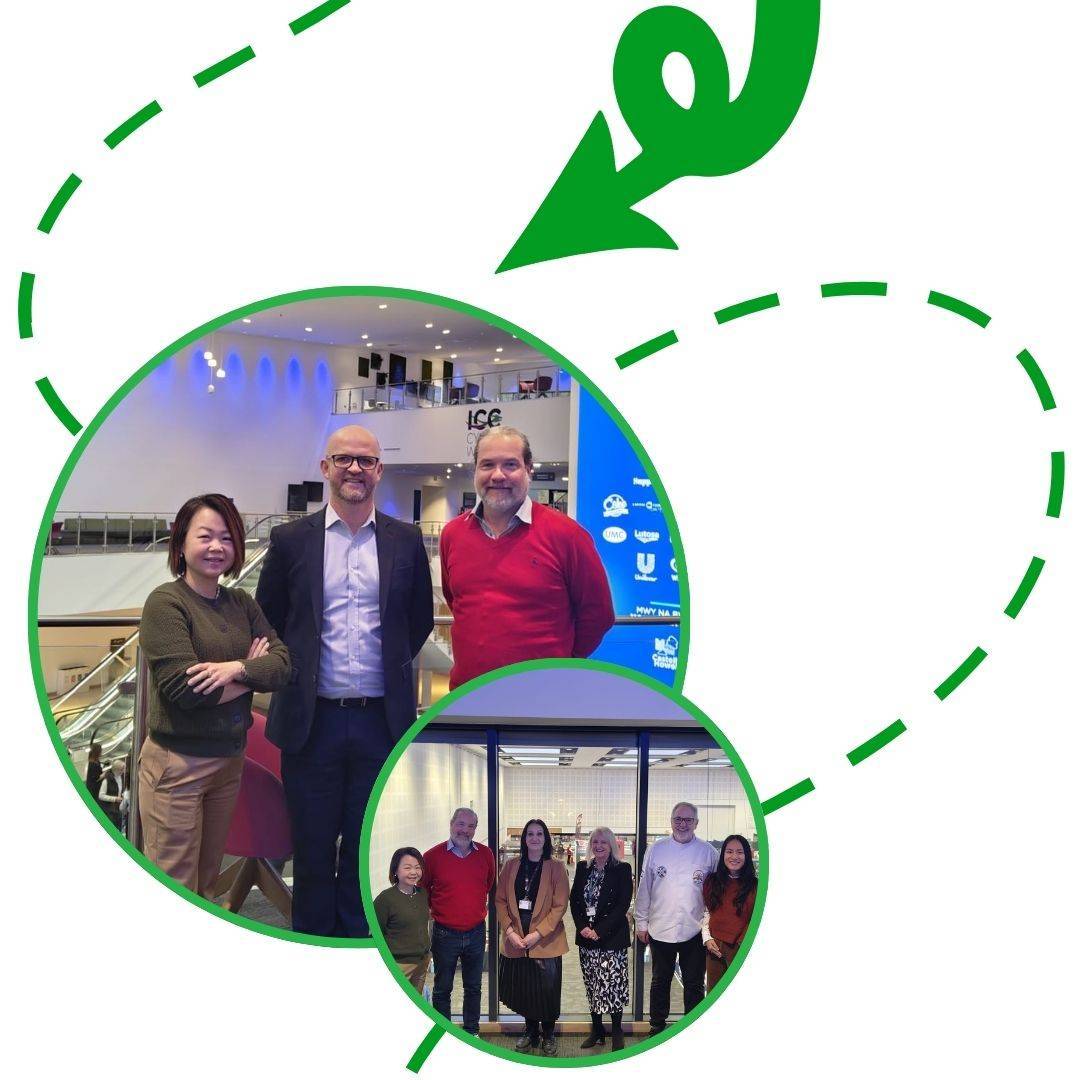
Last week the Worldchefs team headed to Wales for a site visit, with just three months before the anticipated 41st Worldchefs Congress & Expo event comes to Newport from 16-19 May.
With the Culinary Association of Wales (CAW), led by its President Arwyn Watkins OBE, and local collaborators preparing to welcome the global chef community to Newport in May 2026, the countdown to the 41st Worldchefs Congress & Expo is well underway.
And what’s better than one trip to Wales in 2026? Two. Last week, Worldchefs’ Ragnar Fridriksson, Connie Lau and Linh To visited Newport, Wales for a preview of Welsh hospitality ahead of the event.
After a full agenda of meetings with partners, delicious meals, and a glimpse of the destinations for delegates to explore around South Wales, we caught up with the Congress planning team for their highlights from the road to Wales.
Planning for ‘Pasture, Passion, Plate’
The 41st Worldchefs Congress & Expo, taking place from 16 to 19 May 2026 in Newport, Wales, is 98 years in the making and designed to address the opportunities and challenges of today. This edition’s theme, ‘Pasture, Passion, Plate,’ celebrates the journey of food from its origins to the final dish and highlights how food connects us all–from farm to fork, across borders and cultures, and a shared future.
Celebrating sustainability, craftsmanship, and the love of cooking:
Pasture represents the land, the source of our ingredients, and the commitment to sustainable agriculture. Wales’ lush landscapes and thriving farming traditions provide some of the world’s finest produce—from grass-fed lamb to artisan cheeses and fresh seafood.
Passion is the driving force behind every great chef, farmer, and food producer, fueling innovation while honoring tradition.
Plate is the final destination, where ingredients and creativity come together to tell a story of culture, history, and sustainability.
Coming together to bring this theme to life, Worldchefs met with collaborators on the ground in Newport, including the Culinary Association of Wales (CAW), the International Convention Centre Wales (ICC Wales), Food&Drink Wales, the Celtics Collection, Visit Wales, the Newport City Council and MICEConcierge.
The site visit highlighted Newport’s world-class infrastructure, vibrant food culture, and shared commitment to delivering a memorable international congress for Worldchefs’ 41st Congress & Expo event.
“The site visit to Wales confirmed why it will be a great host destination for Worldchefs Congress 2026,” said Ragnar Fridriksson, Managing Director at Worldchefs. “We appreciated the enthusiasm of the local partners and the quality of the facilities at ICC Wales.” Over the course of two days, meetings and site tours brought the collaborative energy between Worldchefs and its Welsh partners from the virtual to the real world, with a first-hand chance to preview the destination’s readiness to host a global culinary event of this scale.
“It was a productive and inspiring two days of meetings. We were warmly welcomed by CAW, ICC Wales, and the local government,” said Linh To, Program and Event Manager at Worldchefs. “The visit reinforced our confidence in the success of Worldchefs 2026 in Newport, Wales, with consistent support from all partners.”
With this momentum and spirited partner support leading up to the May event, anticipation is building in Newport, with an exciting Congress program and rich destination experiences on offer to delegates from around the world. “The level of support is very strong, and we’re looking forward to welcoming our global network to Wales this May,” shared Connie Lau, Director of Operations and Projects at Worldchefs. “We explored the venues and met with key partners, including local government bodies like Visit Wales and Food & Drink Wales, and local suppliers like ICC Wales and The Celtic Collection, to align on how to maximize the collaboration of this flagship event.”
Visiting Wales, we were able to truly envision how Worldchefs Congress & Expo 2026 will come to life.
Connie Lau, Director of Operations and Projects at Worldchefs
Seeing Stars: A Michelin-Led Line Up
The planning team for Worldchefs Congress & Expo 2026 has created a renowned lineup of speakers, ensuring that delegates learn from cross-industry leaders about emerging trends set to shape the world of hospitality. With six Michelin stars between them, here are just three of the trailblazers sharing their ideas at Congress 2026.
Marco Pierre White
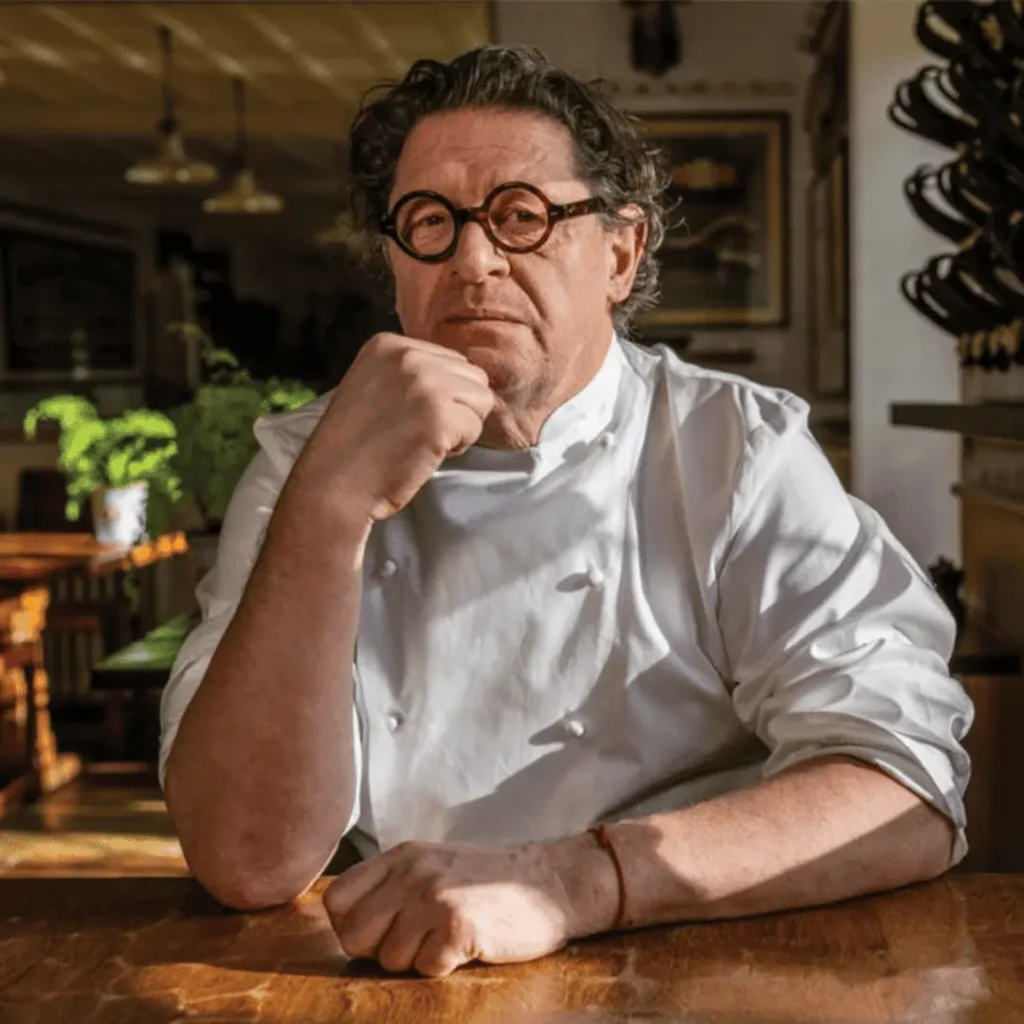
Marco Pierre White is a renowned chef, restaurateur and TV personality. A leading figure in the UK restaurant scene for over 25 years, he has been influential in the culinary careers of many including Gordon Ramsay and Heston Blumenthal.
At Worldchefs Congress & Expo 2026, hear Marco Pierre White reflect on the importance of provenance, traceability, and respect for ingredients from their origins to the final dish, speaking to our Congress theme of ‘Pasture, Passion, Plate.’
Tom Phillips
Originally from Newport, Wales, Tom Phillips is Executive Chef of the Michelin-starred Restaurant Story.
In 2019, he joined Team UK at the prestigious Bocuse d’Or competition, becoming the youngest-ever competitor. Tom returned to the Bocuse d’Or arena in 2025.
At Worldchefs Congress & Expo 2026, Tom will share his personal journey from growing up in Wales to competing on the international stage, explaining the impact of competitions in his session “From Newport to the Bocuse d’Or Stage.”
Sian Wyn Owen
Sian Wyn Owen is the Executive Head Chef of The River Cafe, one of London’s most iconic Michelin-starred Italian restaurants.
Outside of the kitchen, Sian is a proud and passionate advocate for sustainability, ethical sourcing, and food education.
At Worldchefs Congress & Expo 2026, join Sian and learn more about The River Cafe in her session, “Running a World-Famous Restaurant with a Menu That Changes Twice a Day.”
This year’s host city, Newport, is a city and county borough in Wales, situated on the River Usk close to its confluence with the Severn Estuary, 12 miles northeast of Cardiff. With its rich culinary heritage and warm hospitality, it’s a place to explore timeless traditions and innovative cuisine.
Top chefs in Newport and around Wales shared some of their favorite restaurants with us. Here’s a shortlist of where to go for a taste of Wale’s culinary culture.
We enjoyed getting a small taste of the culinary culture that delegates will soon experience during the event.
Ragnar Fridriksson, Managing Director at Worldchefs
Hwyl: Fully Experiencing Wales
Besides rubbing shoulders with Michelin-starred chefs and eating at world class restaurants, Wales offers countless ways to live each moment there to the fullest. So much so that they’ve got their own word for it.
The word hwyl, pronounced ‘hoo-eel’, is uniquely Welsh. It means a deep state of joy from being present in the moment. Achieving hwyl can come from the adrenaline rush of a cold plunge, in a busy pub with friends or looking out at Roman ruins.
When you come for Worldchefs Congress 2026, you’ll experience hywl for yourself. Whether you’re looking for Michelin-stars or stargazing, Wales has you covered. Check out some ideas to add to your itinerary to make the most of your moment in Wales.
We look forward to returning to fully experience the natural beauty and gastronomic scene of Wales.
Linh To, Program and Event Manager at Worldchefs
A Warm Welsh Welcome Awaits
The Welsh are ready for you. “I want to invite you all to join us and be here with us to experience our fantastic Welsh hospitality,” said Peter Fuchs, Group Culinary Director at The Celtic Collection and ICC Wales.
We’re looking forward to meeting all of you in May 2026!
Peter Fuchs, Group Culinary Director at The Celtic Collection and ICC Wales
“We want to showcase what Wales has to offer; we want to give you a warm Welsh welcome,” said Arwyn Watkins OBE, President of the Culinary Association of Wales (CAW). “We’re very critical on ourselves about making sure that we create this real sense of place, so that you know that you’re in Wales and not just another conference venue in any part of the world.”
“We’ve got a hugely successful Welsh food and drink sector, and we want to make sure we tap into that. We want you all to leave knowing that you’ve experienced Wales.” You can hear more from Arwyn Watkins OBE on Episode 134 of World on a Plate, A Welsh Welcome: Bringing Worldchefs Congress 2026 to Wales.
As the excitement continues to build, our teams in Paris and Wales are working tirelessly to ensure the Worldchefs Congress & Expo 2026 is an incredible and unforgettable event. Register now at the button below and secure your spot today.
Cover image: The Worldchefs team meets on site with the ICC Wales and the Newport City Council to discuss the delegate and event experience for Worldchefs Congress & Expo in May 2026.
First image, left: Connie Lau and Ragnar Fridriksson meet with the Welsh government’s Jason Thomas, the Director of Visit Wales, Event Wales and Creative Wales, to discuss the legacy of Worldchefs Congress 2026 in Newport and long-term collaboration with Worldchefs.
First image, right: The Worldchefs team meets with the Newport City Council.
Businesses connected to the hospitality industry are being urged to support a global culinary event being hosted in Wales next spring which has been described as “a once in a generation opportunity.”
The 41st Worldchefs Congress & Expo2026, themed ‘Pasture, Passion, Plate’, is being hosted by the Culinary Association of Wales (CAW) at ICC Wales, Newport from May 16-19, 2026.
CAW President Arwyn Watkins, OBE, says the global event provides an opportunity for businesses to place their products in front of the culinary world. There will be opportunities to engage face to face with some of the most influential chefs from around the globe.
“If a business is interested in exporting and finding new markets within Great Britian in the food service sector, then this is the event to attend in 2026,” he stressed. “It’s an opportunity for Wales to take centre stage across Worldchefs’ 110 member countries. More than 800 delegates from around the globe will be in attendance with 60% of the delegates identified as buyers and influencers within their own country.”
More than 200 early bird tickets to the full congress programme were purchased by the end of October for the four-day event. Delegates for the Young Chef programme have until December 31 to purchase their early bird tickets.
A highlight will be CAW ambassador Katherine Jenkins, OBE, founder of Cygnet Gin, performing her specially written anthem, ‘When you return to Wales’, at the opening ceremony.
The event incorporates the Global Chefs Challenge Finals in four categories – pastry, senior chef, vegan chef and young chef.
In partnership with the Celtic Manor Resort, CAW is launching the first ever Worldchefs Golf Tournament which will take place on Thursday, May 14.
The CAW has received great support from chefs in all the Home Nations – The British Culinary Federation, Federation of Chefs Scotland and The Panel of Chefs Ireland – to host the event.
The CAW is one of the founding members of the Home Nations who will be hosting a charity dinner on Sunday, May 17 at ICC Wales with each country cooking a course on the four-course menu.
The dinner will raise funds for The Burnt Chef Project and Hospitality Action, as well as raising the profile of the four Worldchefs member organisations from the Home Nations.
It’s the first time in its 98-year history that this biannual congress has been held in any part of the United Kingdom. Wales will be handing over the congress bell to France who will host the centenary congress in Paris where Worldchefs was formed in 1928 by Auguste Escoffier and other European chefs.
“This is a once in a lifetime opportunity for chefs, businesses and governments to get involved in what I believe is the only global event being held in Wales next year,” added Mr Watkins. “A global event of this magnitude provides a fantastic platform for Wales to showcase its food, drink, hospitality and tourism industries. We are bringing together the best businesses in Wales to partner with us. We must ensure that this is an event that showcases all that Wales has to offer to the world and give all delegates a real sense of place when they arrive in May 2026. We aim to deliver a legacy that supports the ambition of Wales on the world stage, not only making memories but also business partnerships that will support the Welsh economy.”
Team Wales – the CAW, ICC Wales and Welsh Government – has worked tirelessly since 1999 to secure the Worldchefs Congress & Expo. Relationships have been built with Worldchefs presidents, resulting in Wales winning a closely contested vote against Italy in December 2022.
As the countdown begins to the Worldchefs Congress & Expo 2026, we reached out to the chefs of the Culinary Association of Wales to get their insider recommendations. From where to eat and what to see, to the must-try dishes that define Welsh hospitality, keep reading to discover what makes Wales a world-class culinary destination.
A full list of recommendations is provided at the end.
Explore the Best of Wales
James Ward, Chef Lecturer, recommends making the most of the local attractions while you’re here.
“Take a walk through Beechwood Park, explore the historic Cardiff Castle, or even visit the Medieval Ship exhibition. And if you’re a golfer, you’re in the right country.”
For dining, James suggests The Whitebrook, The Walnut Tree, and Gem42, and says you can’t leave without trying traditional Welsh cakes.
Where Tradition Meets Passion
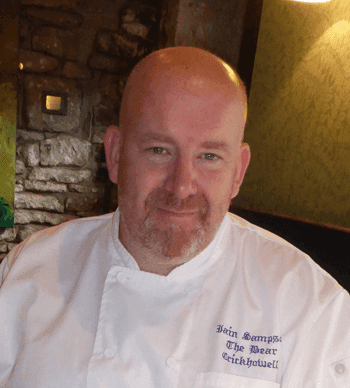
Iain Sampson, Chef at The Bear, Crickhowell, former Welsh Chef of the Year, and Global Vegan Chefs Challenge 2026 Finalist, brings his deep roots in Welsh cuisine — and love of golf — to his recommendations.
“You can’t beat a round in the Brecon Beacons, then stop at The Bear for a classic meal or visit The Vine Tree in Llangattock for something special.”
His must-try Welsh dishes? Undoubtedly, you must try Welsh Lamb, and of course, a taste of tradition at The Bear.
Pastry chef and Bake Off: The Professionals 2021 winner Andrew Minto, owner of a Cardiff café-patisserie and Global Pastry Chefs Challenge 2026 Finalist, highlights the charm of the region:
“Start your day at Buds Café, just 20 minutes from Celtic Manor. If you love nature, take a walk at Symonds Yat for the fantastic views and river canoeing.”
For dining, Andrew recommends Gorse, Cardiff’s first Michelin-starred restaurant, and Ynyshir, a globally acclaimed fine-dining experience.
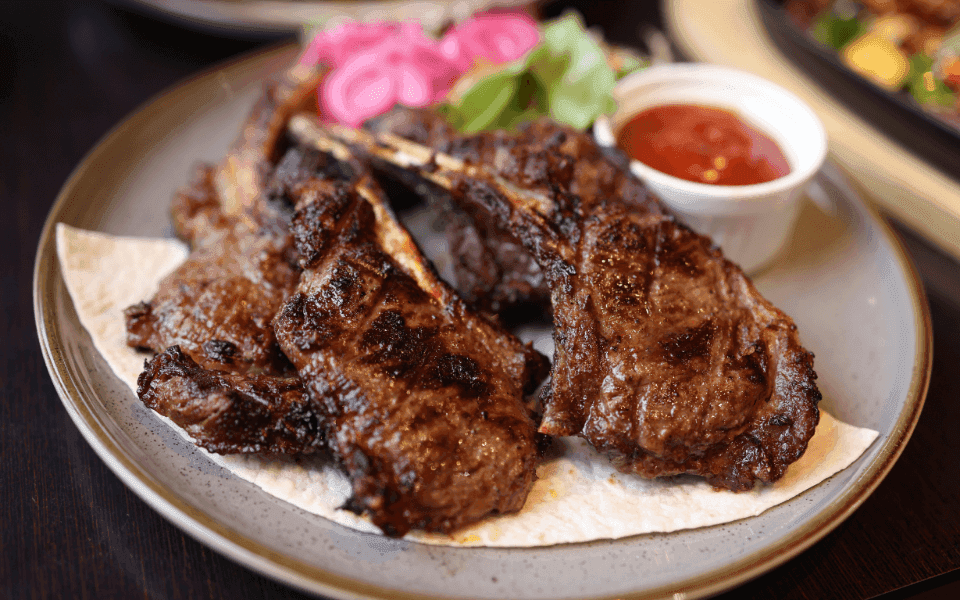
“Try our Welsh Lamb and local cheeses, both are exceptional.”
Welsh Lamb’s unique heritage has been recognized with the coveted status of Protected Geographical Indication.
Cardiff’s Culinary Icons
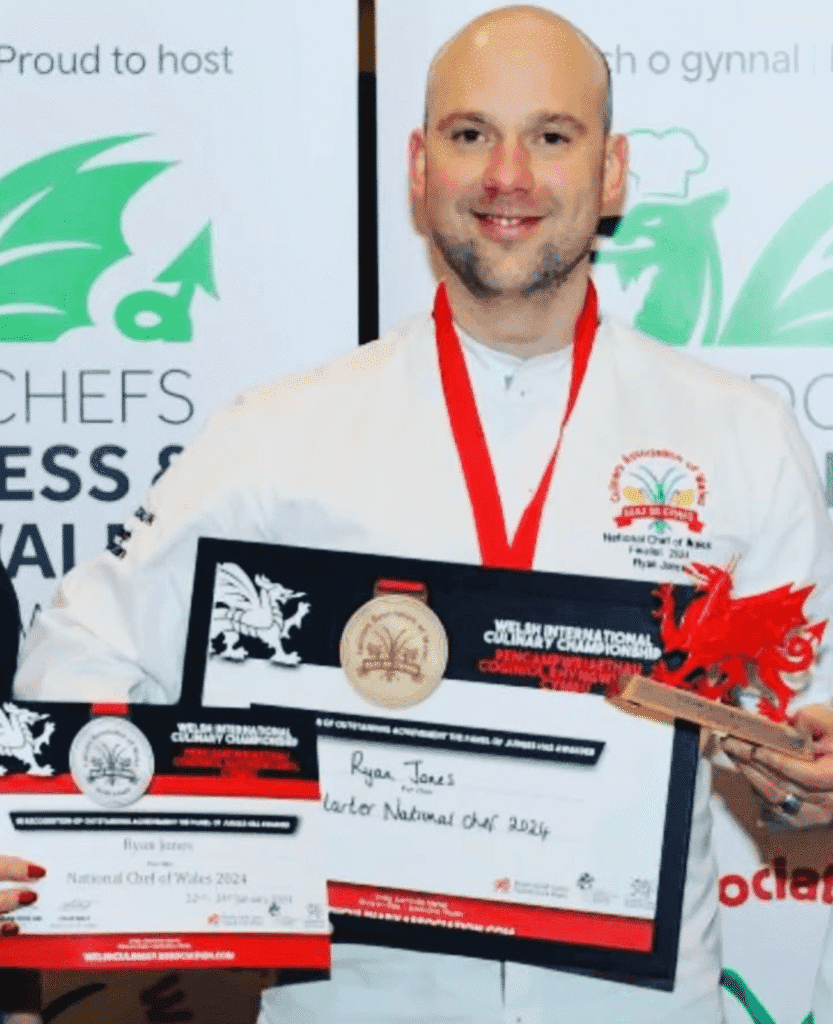
Ryan Jones, Head Chef at Principality Stadium and former National Chef of Wales, proudly invites visitors to his city.
“You have to visit the Principality Stadium, it’s the best stadium in the world!”
When it comes to dining, Ryan points to Home by James Sommerin and Heaneys in Cardiff, and recommends tasting Welsh cakes from Fabulous Welsh Cakes and Welsh beef from Castell Howell.
From Whisky to Welsh Rarebit
For Peter Fuchs, Group Culinary Director at ICC Wales & The Celtic Collection, the key is variety:
“Visit the Penderyn Whisky Distillery, stop by Tiny Rebel Brewery, explore Cardiff and Newport’s indoor food hall, and definitely fit in a round of golf at the resort.”
When it comes to dining, Peter also suggests exploring any of the seven restaurants across the Celtic Collection, or enjoying Gem42, Thomas by Tom, Gorse, or Home by James Sommerin.
“And don’t miss Welsh rarebitorcawl, they truly showcase the heart of Welsh cooking.”
Why Wales?
Wales is not just the next host of the Worldchefs Congress & Expo, it’s a destination that blends natural beauty, deep-rooted culinary heritage, and modern innovation. From Michelin-starred dining and craft distilleries to ancient castles and mountain views, it’s a place where chefs can come to be inspired.
Join chefs from around the world in Newport, Wales in 2026, to celebrate culinary excellence, discover Welsh flavors, and connect with the global culinary community!
For a £200 discount, register by October 31 and enjoy early bird rates.
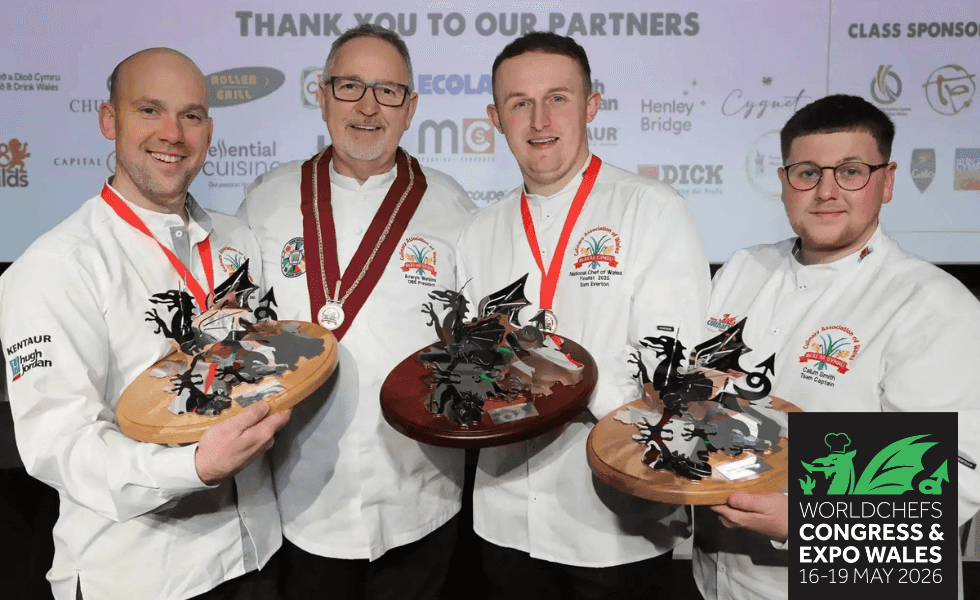
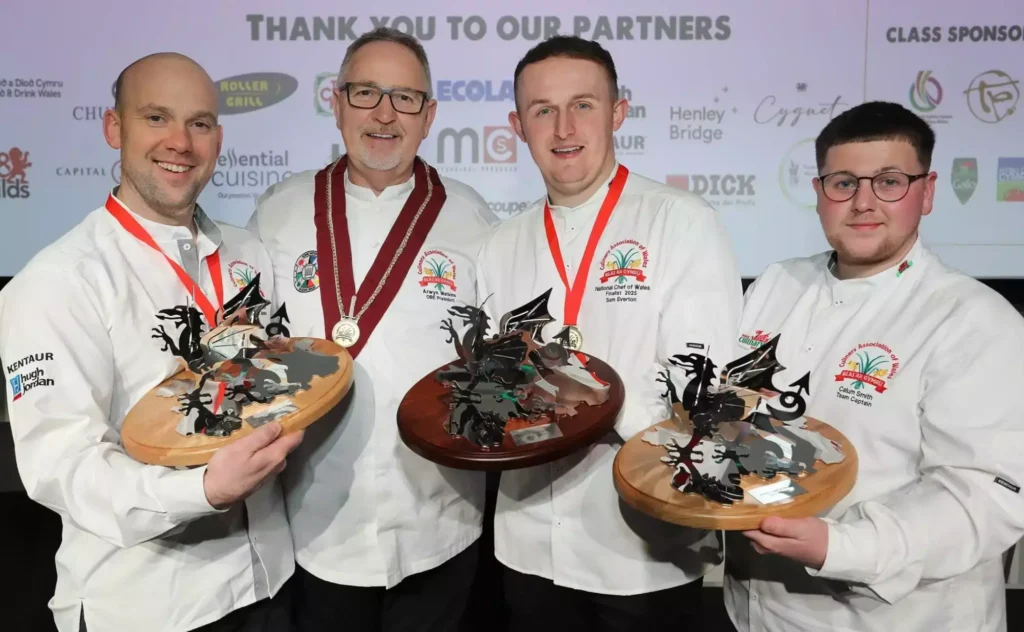
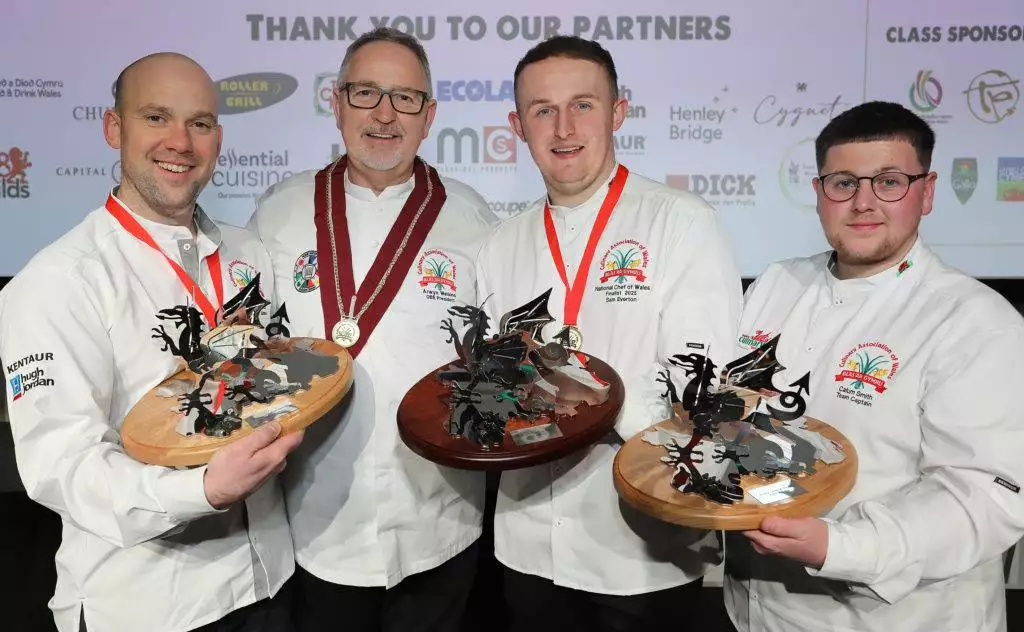
Arwyn Watkins, OBE, Culinary Association of Wales president (second from left), with Welsh Vegan Chef of the Year winner Ryan Jones, National Chef of Wales winner Sam Everton and Junior Chef of Wales winner Calum Smith.
Recommendations
Food/Dining
The Whitebrook: A Michelin-starred restaurant with rooms in the Wye Valley, offering modern British cuisine with locally sourced ingredients. Website: thewhitebrook.co.uk
The Walnut Tree: A Michelin-starred inn near Abergavenny, serving contemporary British dishes in a relaxed setting. Website: thewalnuttreeinn.com
Gem42: An Italian restaurant in Newport, known for its seasonal tasting menus and commitment to sustainability. Website: Gem42
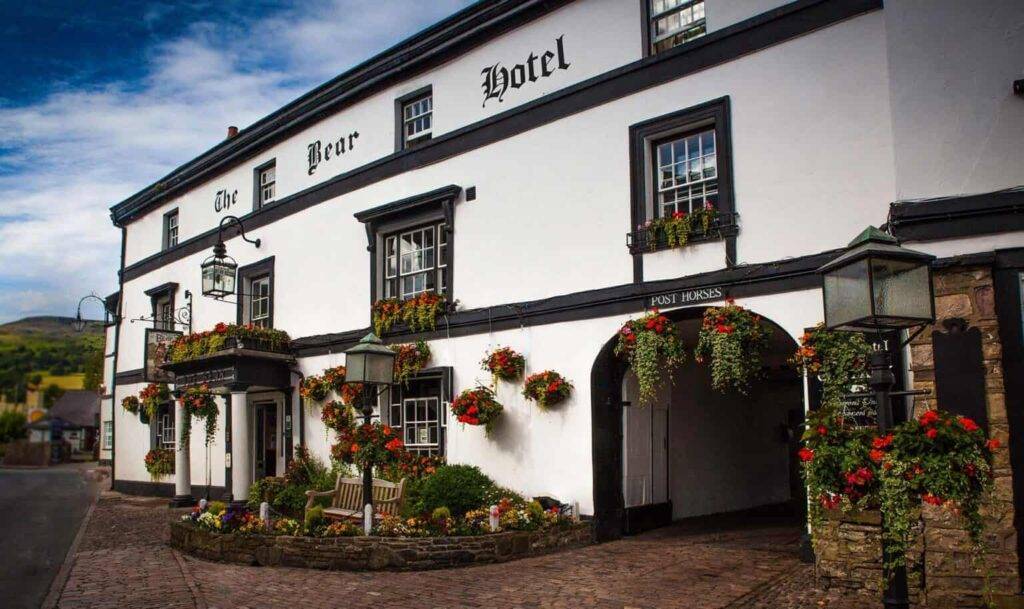
The Bear Hotel, Crickhowell: A historic coaching inn dating back to 1432, offering traditional Welsh hospitality and cuisine. Website: The Bear Hotel Crickhowell
The Vine Tree, Llangattock: A 19th-century coaching inn on the River Usk, providing a farm-to-table dining experience with locally sourced produce. Website: thevinetreellangattock.co.uk
Buds Café, Radyr: A café and patisserie in Cardiff, serving brunch, small plates, and a variety of sweet treats in a relaxed atmosphere. Website: Buds Cafe
Gorse: A Michelin-starred modern Welsh restaurant in Cardiff, offering seasonal tasting menus that celebrate local produce. Website: Gorse
Ynyshir: A two Michelin-starred restaurant in Machynlleth, known for its 30-course tasting menu with Japanese influences. Website: ynyshir.co.uk
Home by James Sommerin: A fine dining restaurant in Penarth, offering modern Welsh cuisine with a focus on seasonal ingredients. Website: homebyjamessommerin.co.uk
Heaneys: A contemporary restaurant in Cardiff, known for its innovative dishes and commitment to sustainability. Website: heaneys.co.uk
Fabulous Welsh Cakes: A bakery in Cardiff specializing in traditional Welsh cakes made with locally sourced ingredients. Website: fabulouswelshcakes.co.uk
Castell Howell Foods: A food wholesaler in Wales, supplying quality Welsh produce to restaurants and retailers. Website: castellhowellfoods.co.uk
Cardiff Indoor Food Hall: A food hall in Cardiff, offering a variety of street food vendors and local produce. Website: cardiffindoorfoodhall.co.uk
Newport Indoor Food Hall: A food hall in Newport, featuring diverse food stalls and a community-focused atmosphere. Website: newportindoorfoodhall.co.uk
Alcohol /Beverage
Penderyn Whisky Distillery: A distillery in the Brecon Beacons, producing award-winning single malt whiskies. Website: penderyn.wales
Tiny Rebel Brewery: A craft brewery in Newport, known for its innovative beers and vibrant taproom. Website: tinyrebel.co.uk
Places to visit
Cardiff Castle: A historic castle in the heart of Cardiff, offering a glimpse into 2,000 years of history, including Roman walls, medieval keep, and Victorian Gothic interiors. Website: cardiffcastle.com
Symonds Yat: A picturesque village in the Wye Valley, renowned for its stunning natural beauty and outdoor recreational opportunities. Website: symonds-yat.co.uk
Principality Stadium: An iconic stadium in Cardiff, hosting major sporting events and concerts. Website: visitcrickhowell.wales
Thank you to Peter Fuchs, Ryan Jones, Andrew Minto, Iain Sampson and James Ward for sharing their Welsh recommendations.
More Resources
A Welsh Welcome: Bringing Worldchefs Congress to Wales with Arwyn Watkins OBE | World on a Plate Ep 134
On this episode, Ragnar speaks with Arwyn Watkins OBE, President of the Culinary Association of Wales and the driving force behind bringing the Worldchefs Congress & Expo 2026 to the UK for the first time in its 98-year history.
Every two years, Worldchefs’ member associations gather in cities around the globe to chart the future of food and drink at Worldchefs Congress. Together, leadership from culinary associations representing 110 countries come together to vote on key industry issues, including the location of upcoming Congresses.
Tastemakers from every continent decide on a location to host the leading event for the world’s culinary community, choosing from top destinations. And for 2026, they chose South Wales.
Why? With its rich culinary heritage and warm hospitality, a landscape of rugged coastlines and castles, and ancient traditions coupled with innovative solutions inspiring the future of food, let’s discover everything Wales has to offer.
Hwyl: Only in Wales
The Welsh word hwyl (pronounced ‘hoo-eel’) has no direct English, but it means a deep state of joy from being present in the moment.
Hywl is deeply rooted in Welsh culture. It can come from the adrenaline rush of a cold plunge or from a quiet retreat to rest, in a busy pub with friends or looking out at Roman ruins.
When you come for Worldchefs Congress 2026, experience hywl for yourself. Here are a few of our favorite ways to make the most of your time in Wales.
Ziplining in South Wales
City Standouts
With the 2026 Congress hosted in Newport, South Wales, you’ve got a strong starting point for your Welsh adventure. A small city that packs a big punch, Newport offers a lively cultural scene, rich history, and easy access to natural and cultural wonders across South Wales.
Start at the heartbeat of the city center, Newport Market, a traditional covered market where you’ll meet food & drink traders, sample Welsh classics under one roof, and find shopping stalls with something for everyone.
Wander through the walkable city center to admire public art installations, or for more art, head to the Newport Museum and Art Gallery, home to an incredible collection of classic and contemporary art, or the Riverfront Arts Centre on the River Usk for concerts and exhibitions.
For a spot of tea, make a trip to Tredegar House, one of the British Isle’s most significant late 17th-century houses, situated on 90 acres of beautiful gardens.
A quick coastal ride and you can explore Cardiff, too. Wales’ capital city is a place where old meets young, full of culture and heritage, from museums, places to catch a show or a gig, boutique shopping in Victorian arcades, and even Cardiff Castle, right in the center of the city.
Newport Market
Castle Craft
South Wales is spotted with castles, all just a short drive, tour, or bike ride away. Whether you’re in it for thousands of years of history, a look at elaborate artistry, or just an epic photoshoot, choose from over 30 castles to add to your itinerary.
Caerphilly Castle, the largest castle in Wales, has just reopened after two years of extensive conservation and refurbishment, featuring state-of-the-art digital exhibits to bring history to life. Caldicot Castle is rumored to be haunted, but it’s also one of the best places to view the Severn estuary, with 55 acres of gardens and country park.
Or if you’re looking for something to sweeten the deal, enjoy a history lesson and a tipple at the craft spirit distillery in Hensol Castle, where you can enjoy a G&T on arrival.
Caerphilly Castle
Nature NEXT DOOR
In South Wales, nature is never far away. Wander hiking trails for all levels, from forest to coast.
You can even find beachside saunas, and finish your walk with a wood-fired sauna after a cold dip.
If you want to combine the outing with history, check out the Celtic Trails – Three Castles Walk. If you like more structured gardens, there’s plenty to discover in South Wales, too. And for those looking for nature on the manicured grass of a luxury golf course, Celtic Manor Resort, is just a few minutes’ drive from Newport.
Newport Wetlands Nature Reserve
A FOODIE HAVEN
From Michelin stars to hidden gems, Wales’ food scene gives you a taste of the Welsh landscape and waters. There is so much to dig into, starting with local traditions of Welsh cheese, ales, cakes, and cawl, a traditional Welsh stew.
With so much to try, stay tuned for recommendations from Wales’ top chefs.
Culinary Association of Wales
Pasture, Passion, Plate: Coming Together in Wales
When is the best time to visit Wales? May is one of the best months to visit, with warmer spring temperatures and more dry days, and without hordes of tourists. The countryside is blanketed in wildflowers, and the sea is welcoming enough for surfing, kayaking, and cold plunges.
In the middle of the month, combine work and play at with Worldchefs Congress 2026 in Newport. From 16 to 19 May 2026, celebrate ‘Pasture, Passion, Plate,’ with the beautiful backdrop of Welsh culture and country.
For a £200 discount, register by October 31 and enjoy early bird rates.
We use cookies on our website to give you the most relevant experience by remembering your preferences and repeat visits. By clicking “Accept All”, you consent to the use of ALL the cookies. However, you may visit "Cookie Settings" to provide a controlled consent.
This website uses cookies to improve your experience while you navigate through the website. Out of these, the cookies that are categorized as necessary are stored on your browser as they are essential for the working of basic functionalities of the website. We also use third-party cookies that help us analyze and understand how you use this website. These cookies will be stored in your browser only with your consent. You also have the option to opt-out of these cookies. But opting out of some of these cookies may affect your browsing experience.
Necessary cookies are absolutely essential for the website to function properly. These cookies ensure basic functionalities and security features of the website, anonymously.
Cookie
Duration
Description
cookielawinfo-checkbox-analytics
11 months
This cookie is set by GDPR Cookie Consent plugin. The cookie is used to store the user consent for the cookies in the category "Analytics".
cookielawinfo-checkbox-functional
11 months
The cookie is set by GDPR cookie consent to record the user consent for the cookies in the category "Functional".
cookielawinfo-checkbox-necessary
11 months
This cookie is set by GDPR Cookie Consent plugin. The cookies is used to store the user consent for the cookies in the category "Necessary".
cookielawinfo-checkbox-others
11 months
This cookie is set by GDPR Cookie Consent plugin. The cookie is used to store the user consent for the cookies in the category "Other.
cookielawinfo-checkbox-performance
11 months
This cookie is set by GDPR Cookie Consent plugin. The cookie is used to store the user consent for the cookies in the category "Performance".
viewed_cookie_policy
11 months
The cookie is set by the GDPR Cookie Consent plugin and is used to store whether or not user has consented to the use of cookies. It does not store any personal data.
Functional cookies help to perform certain functionalities like sharing the content of the website on social media platforms, collect feedbacks, and other third-party features.
Performance cookies are used to understand and analyze the key performance indexes of the website which helps in delivering a better user experience for the visitors.
Analytical cookies are used to understand how visitors interact with the website. These cookies help provide information on metrics the number of visitors, bounce rate, traffic source, etc.
Advertisement cookies are used to provide visitors with relevant ads and marketing campaigns. These cookies track visitors across websites and collect information to provide customized ads.