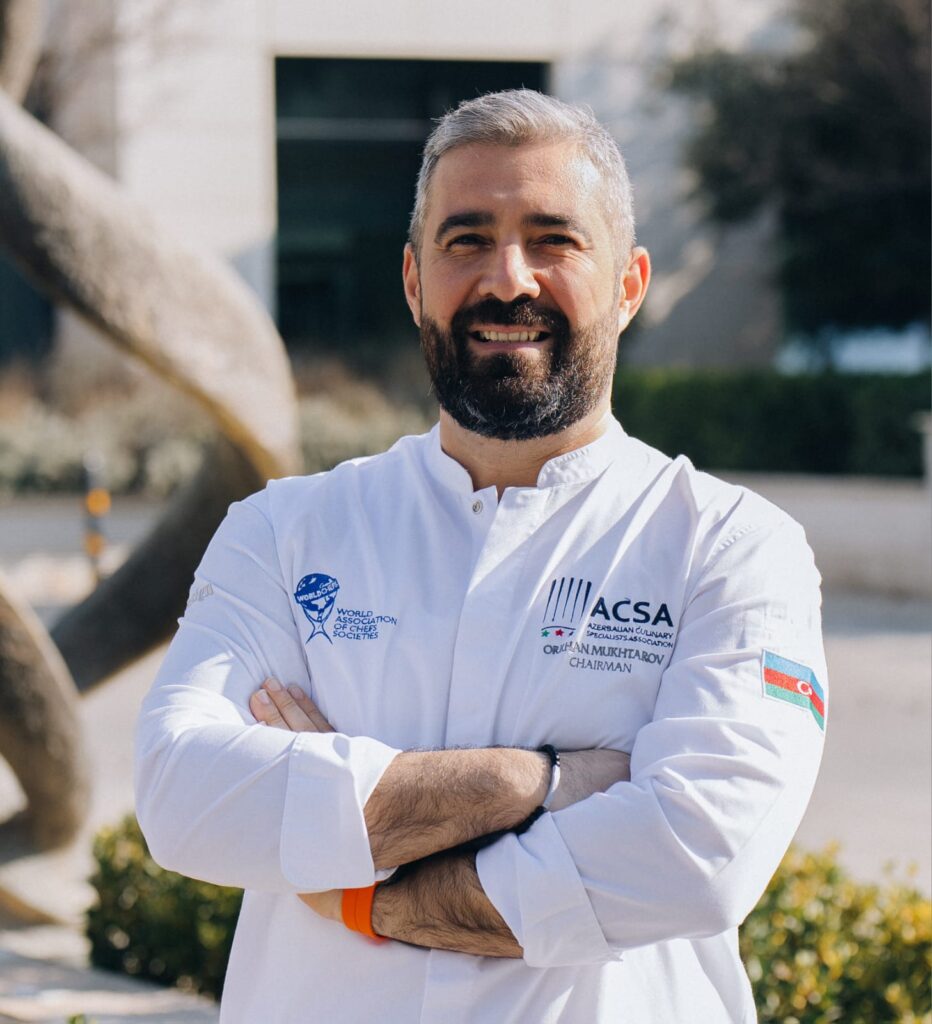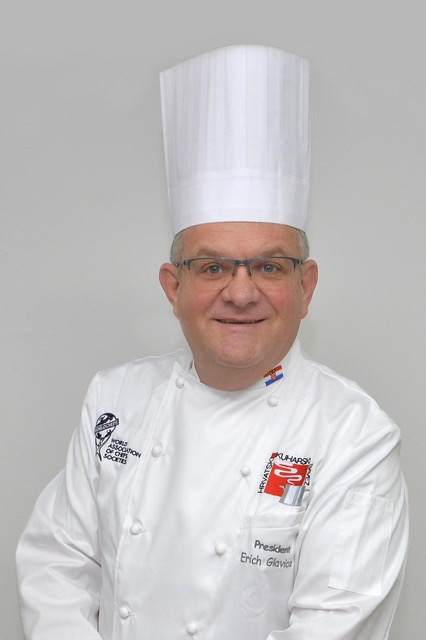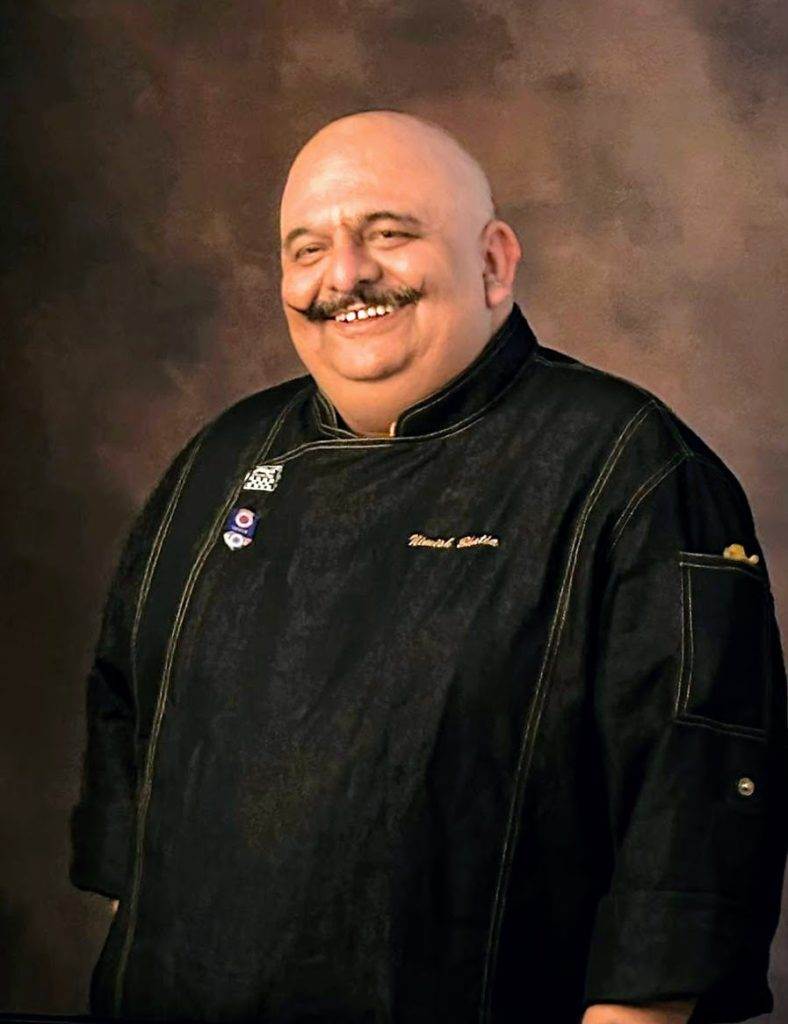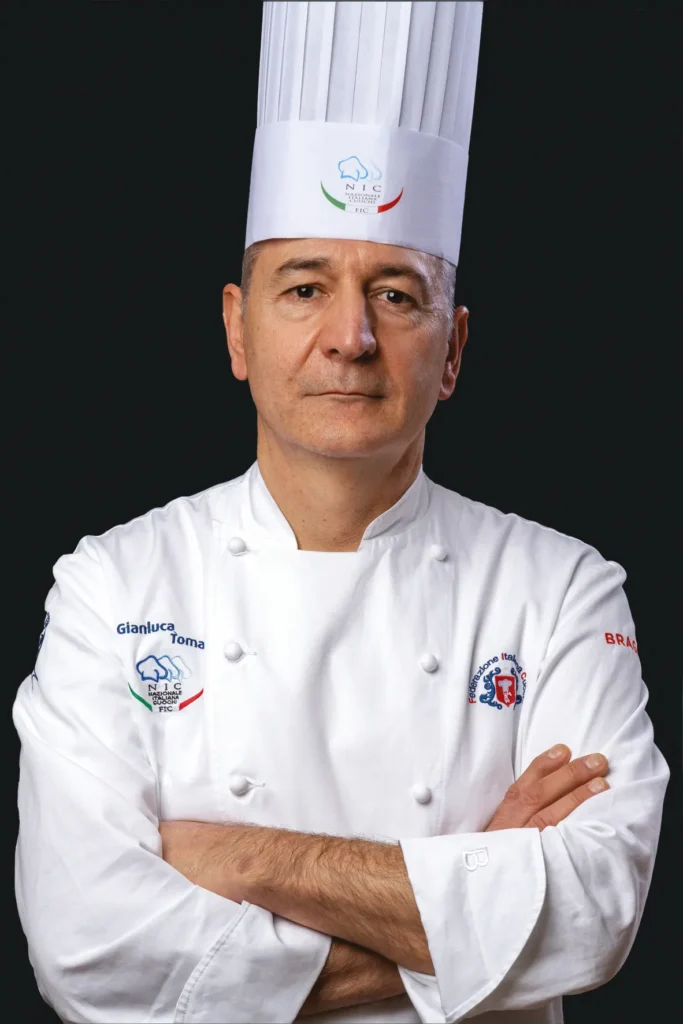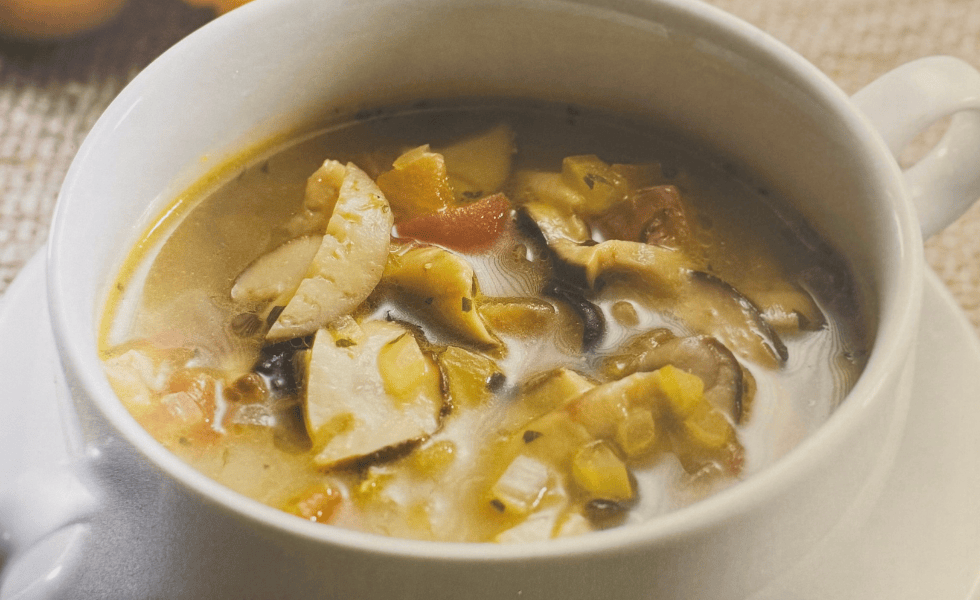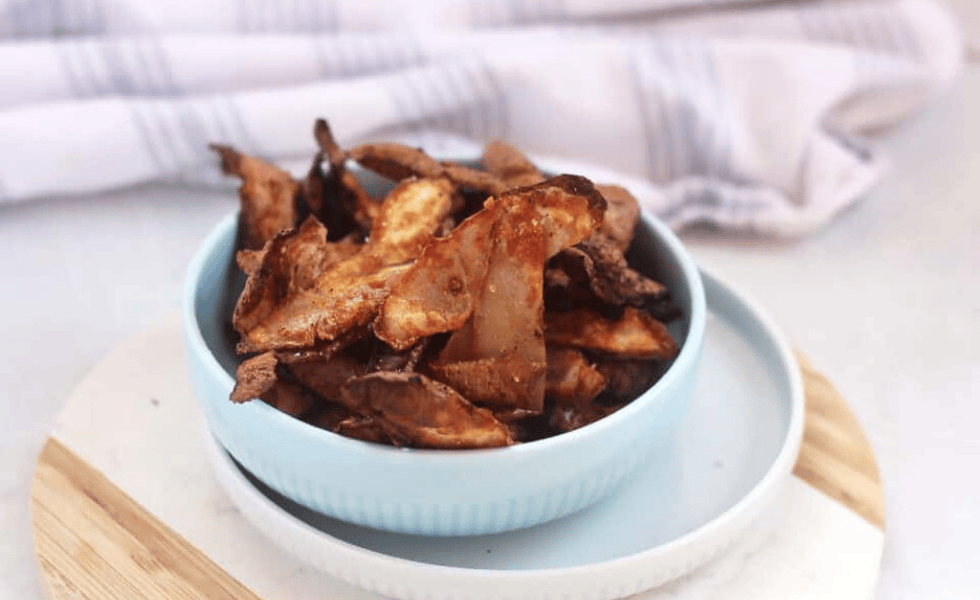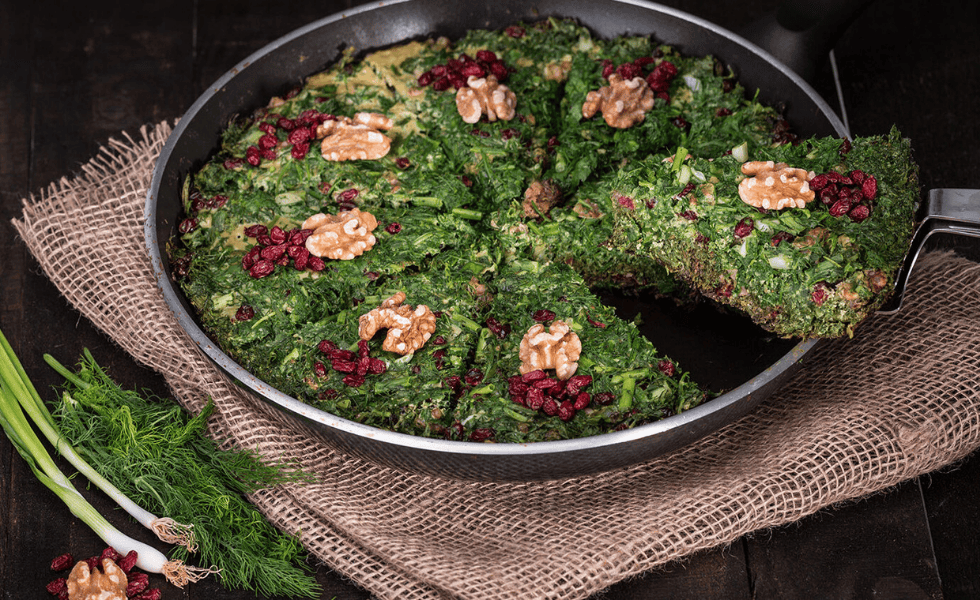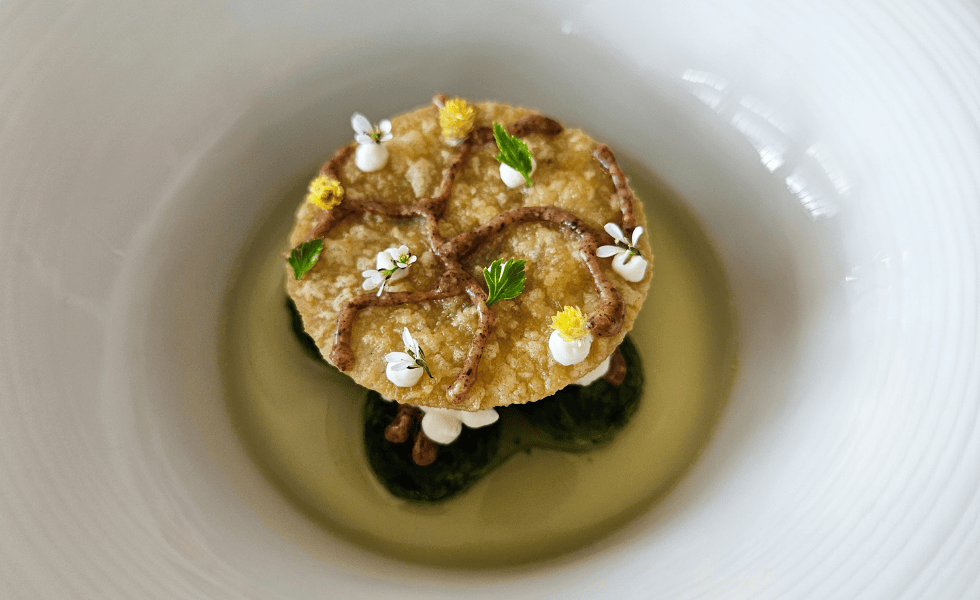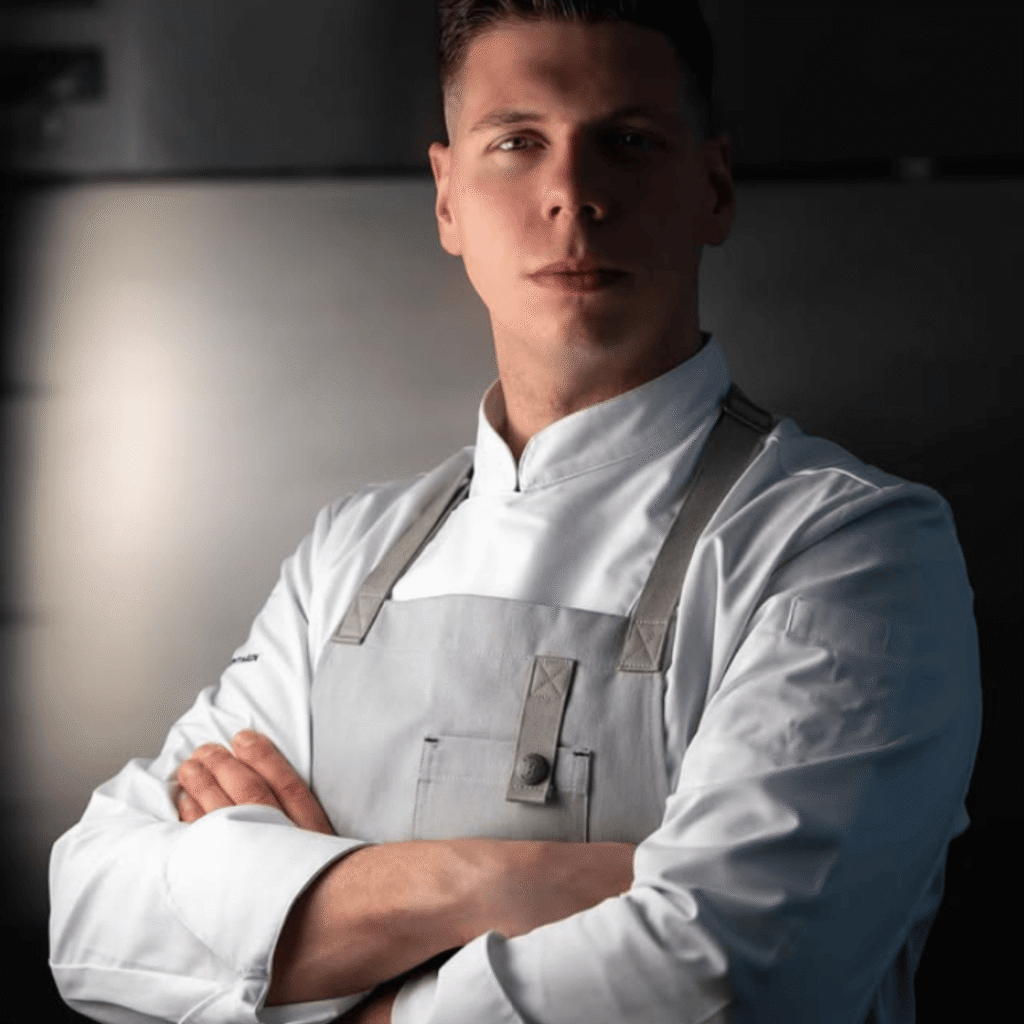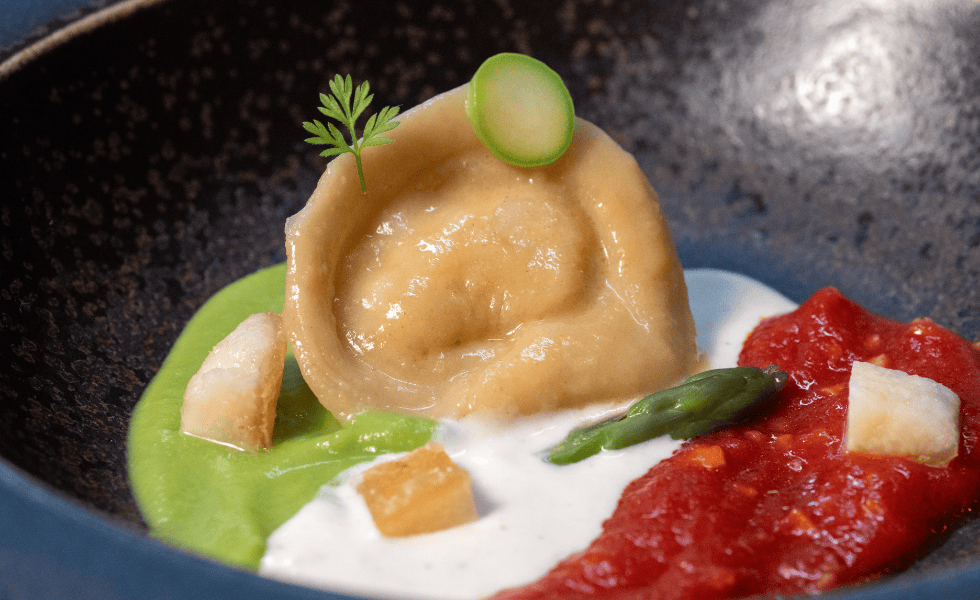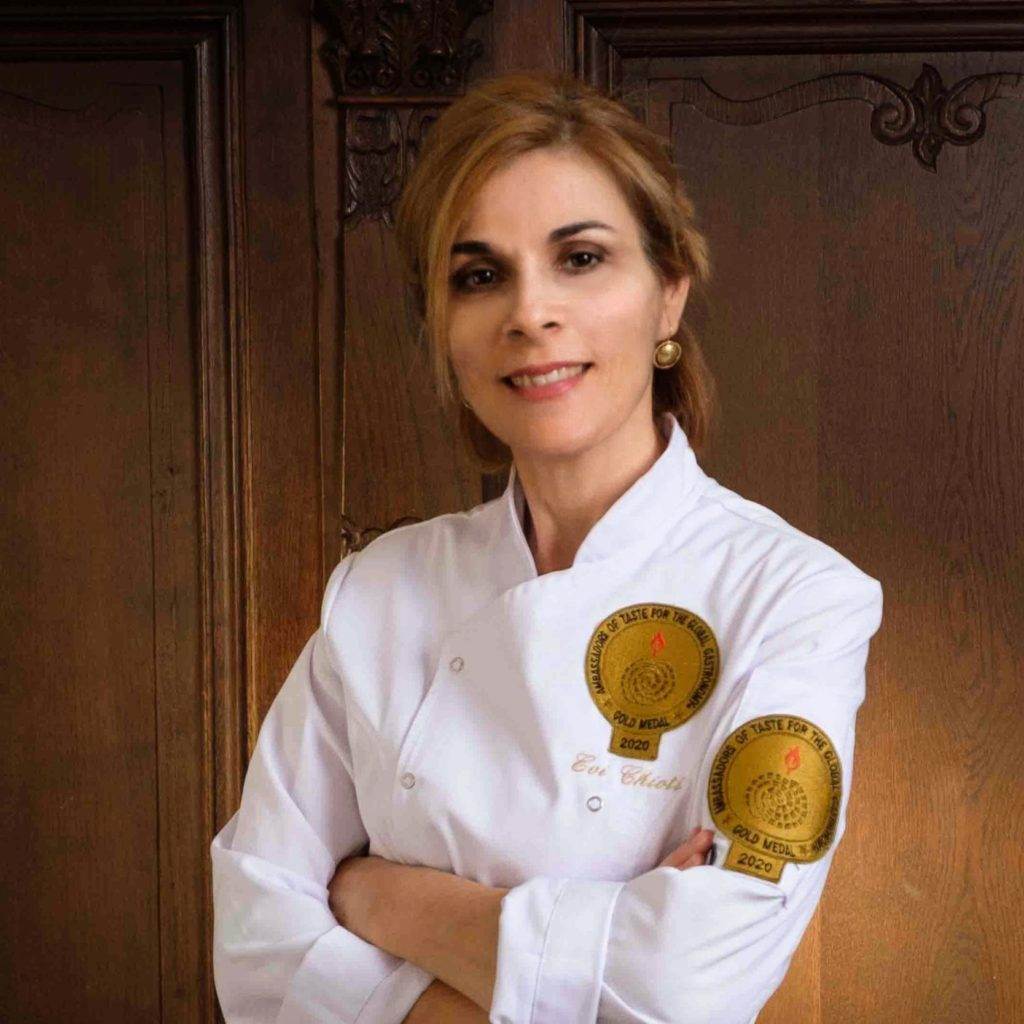

Tortellini in capon broth is a traditional dish served on Christmas Day in many areas of Northern Italy, especially in Veneto, Emilia-Romagna and the Marche region. Carefully prepared in the days leading up to Christmas, it brings families together and reflects a cuisine rooted in tradition, patience, and simple, high-quality ingredients. The rich, fragrant capon broth perfectly enhances the delicate tortellini, making this dish a true symbol of the holiday season.
Tortellini In Capon Broth– Recipe
RECIPE Adapted by Gianluca Tomasi
Ingredients
1 capon (about 2–2.5 kg)
3 liters of water
300 g carrots
100 g celery
200 onion
n° 1 clove
For the cappelletti
300 g fresh meat-filled tortellini Fresch egg pasta tortellini filled with pork, beef and Parma ham
Instructions
Preparing the saffron infusion
Clean the capon and place it in a large pot with cold water.
Add carrots, celery, onion, and a clove
Slowly bring to a boil, then simmer gently for about 3 hours, skimming when necessary.
Strain the broth and adjust seasoning.
Bring the broth back to a boil and cook the tortellini according to package instructions (usually 2–4 minutes).
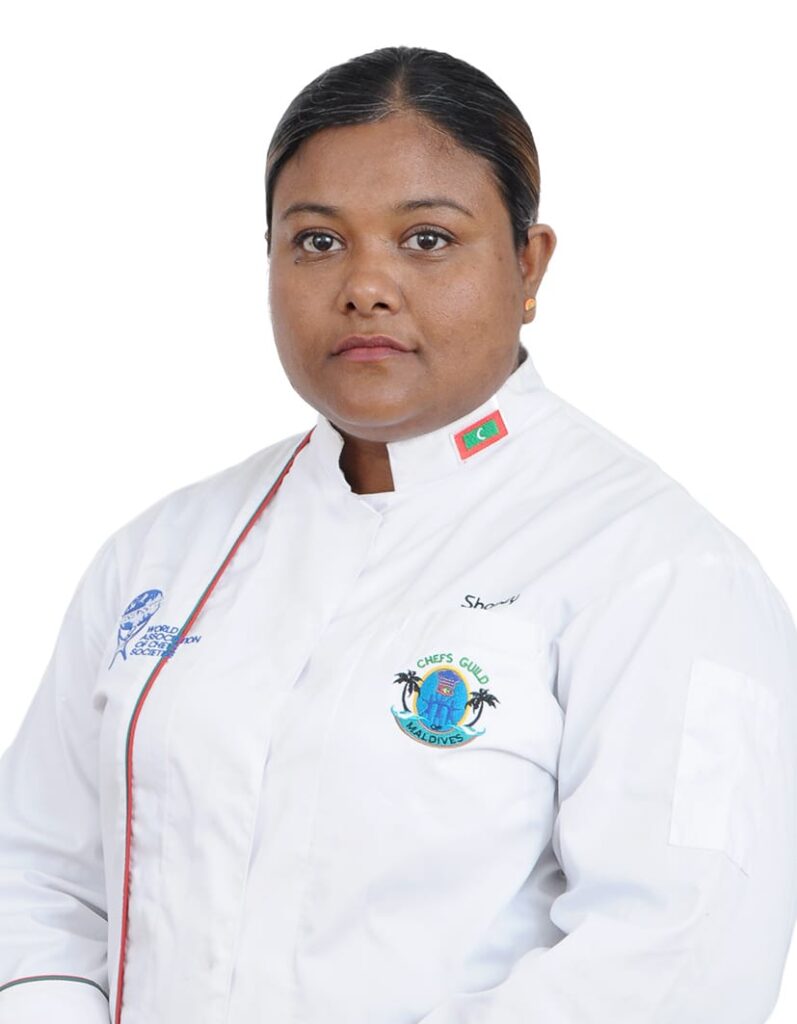
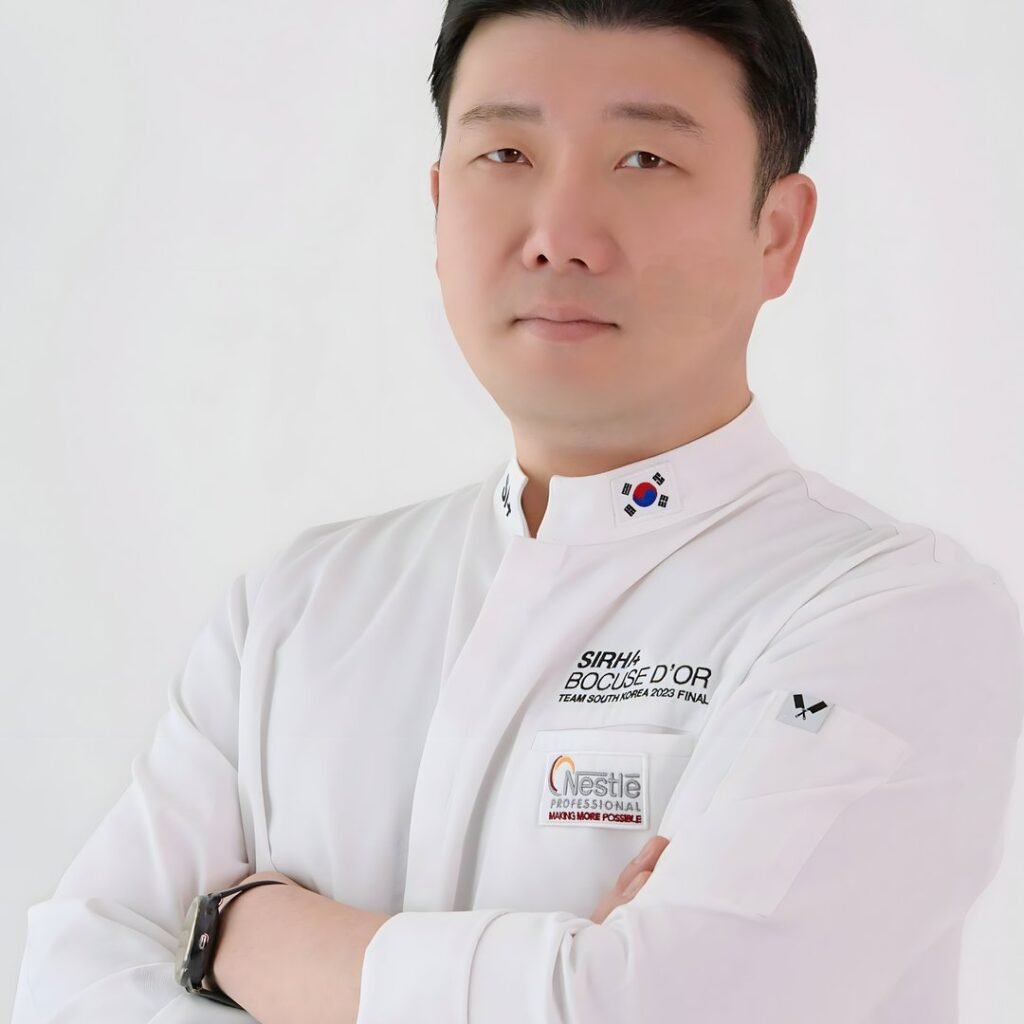
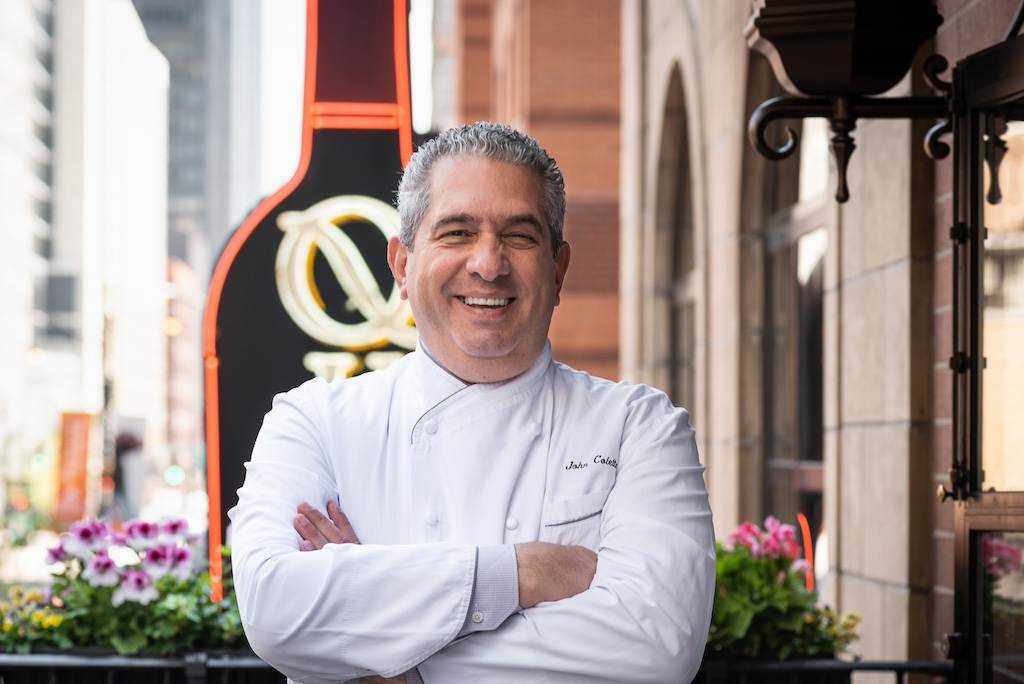
In the December 2025 edition of HospiBuz Hospitality Lexis Media, hear from Worldchefs President, Andy Cuthbert, and Worldchefs Vice President, Rick Stephen!
Christmas traditions, and the food we prepare for the holidays, have, over the past twenty years, shifted noticeably away from tradition and the deeper meaning of Christmas. As commercialization grows stronger each year, it becomes easier to lose sight of what this season truly stands for: peace, love, family togetherness, and the traditional gastronomic treasures that belong to our heritage.
And yet, holidays would not be holidays without family — and without the food that gathers us around a shared table. Unlike in earlier times, today’s festive spread is often far more abundant. With so many dishes on offer, we hardly know what to taste first. The expansion of retail chains and large shopping centers across Croatia, combined with aggressive marketing campaigns and the availability of inexpensive goods (especially imported products), has profoundly reshaped the way Croatians celebrate: how we shop, what we cook, and what we serve at Christmas.
Not so long ago, holiday customs and meals were closely tied to regional production. Each part of Croatia relied mostly on what was locally available — foods rooted in local farming and seasonal rhythms. Short supply chains mattered, even if we didn’t call them that: people bought from neighbors who produced something, from local markets, and often through workplaces and unions that sourced goods (especially meat) from nearby farmers and traders.
Today, Christmas in Croatia increasingly resembles Christmas elsewhere in the world. Still, subtle regional differences remain — and their roots run deep. So what do we actually eat for the holidays across Croatia?
Holiday Dishes Across Croatia
Christmas preparations begin weeks in advance. Menus are planned, old cookbooks are pulled from shelves, yet most of us already know what will be on the table in the days leading up to Christmas and on Christmas Day itself. Nearly everyone has at least one dish without which Christmas simply would not feel like Christmas — a dish most often made in the region we come from.
Christmas Eve (Badnjak) is typically marked by meatless dishes, fish, and a variety of salads. People rarely overindulge, because the following day brings a celebratory feast — often several courses, with roast at the center. And what turns in the oven depends on the region.
Slavonia — Rakija and Strict Fasting on Christmas Eve
In Slavonia, Christmas Eve begins ceremonially, already at breakfast, often with a glass of rakija — very commonly a honey rakija — and simple meatless food. An old custom was to eat nothing until the evening meal, which would be plentiful and fish-based; today, many families prepare fiš paprikaš already for lunch. Alongside fiš, the menu may include freshwater fish such as trout, catfish, or carp. One of the best-known specialties is carp on the forked stake (šaran s rašlja).
On Christmas Day, the table most often features roast pork or roast chicken. In recent years, turkey with mlinci has also become more common. Desserts are plentiful: walnut roll (orahnjača), poppy seed roll (makovnjača), and an array of traditional cookies (such as tašne and šape) — often with a festive cake as well.
Central Croatia — Duck as a Festive Favorite
Across Central Croatia, Christmas Eve is also typically celebrated with freshwater fish dishes and salads, led by bean salad, but also French salad and other legume-based variations.
In Međimurje, families may roast duck for Christmas; geese and turkeys are also popular, and sarma often appears in the days after Christmas.
Zagreb — Turkey with Mlinci
In Zagreb, Christmas Eve menus feature many kinds of fish — freshwater and sea fish alike. Squid is common in various preparations, and cod is increasingly present. Side dishes often include bean salad, as well as French salad or cabbage salad.
For Christmas roast, the centerpiece is most often turkey, paired with the indispensable mlinci. Many households also serve roast potatoes and štrukli, and sometimes aspic (hladetina) as a starter. Desserts include walnut and poppy seed rolls and plenty of dry cookies.
Istria and Kvarner — Cod, Fish Soup, and Maneštra
Along with roasted sea fish, Istrians often prepare cod on Christmas Eve. Fish soup and meatless pasta dishes are common, too. Traditional Istrian meatless holiday foods include maneštra with chickpeas, posutice (homemade pasta), broskva na padelu (greens braised with potatoes), and cod. In earlier times, supa — a warm mix of wine, bread, and sugar — was also prepared.
For Christmas Day, Istrians often roast turkey and bake homemade bread. Desserts may include kroštule, crescent cookies and rolls, čupavci, walnut roll, or bishop’s bread with dried fruit.
Lika — Sarma, Lamb, and “Pole” Potatoes
Christmas Eve in Lika often features meatless dishes with sea fish. On Christmas Day, sarma is common, followed by lamb or roast piglet. A signature side dish is pole — potatoes cut in half and roasted, especially delicious when baked on the hearth in embers.
Dalmatia — From Cod on Christmas Eve to Pašticada and Fritule
In Dalmatia, cod is a must on Christmas Eve — most often “na bijelo”, gently cooked with wine, spices, and potatoes. Alongside cod, households may serve other sea fish depending on availability.
For Christmas Day, many families roast tuka (turkey), and pašticada (slow-cooked beef in a rich sauce) is a classic festive dish. Desserts often feature dried fruit sweets such as mandulat (Split and surrounding area) or hiba (fig-based sweets) and koromač on Vis. In many places, fritule are still made — often after the Christmas Eve dinner.
With our warmest wishes for the season ahead, we hope you enjoy the richness and diversity of Croatia’s holiday table — and the true spirit of Christmas.
As I reflect on this past year — often from kitchens, classrooms, and conversations with young chefs finding their voice — I am filled with gratitude and pride for the opportunity to serve as Chair of Feed the Planet. It has been a true honor to step into this role this past year and to build upon the incredible foundation laid by our former chair and my very beloved friend, Chris Koetke. Having worked closely alongside him since 2016, including serving as Vice Chair, I carry forward not only his vision, but his deep belief that education, when rooted in values, can truly change lives. I am grateful for our shared commitment and the strong foundation we continue to build on together as this important work moves forward.
None of what we do would be possible without the extraordinary Feed the Planet Committee. Our 18 members, representing countries across the globe, volunteer their time, expertise, and passion to advance our mission. From early-morning calls across time zones to thoughtful debate on how best to serve diverse communities, this group of chefs shows up with generosity and purpose. Their willingness to collaborate across cultures and continents is a powerful reminder that meaningful change happens when people unite around shared values.
This year has been one of real impact. Through the Sustainability Education for Culinary Professionals course, more than 2,300 chefs and culinary professionals graduated in 2025,professionals who are now returning to their kitchens better equipped to make decisions that respect both people and planet. Five new active trainers were onboarded, and we took an important step forward by adapting the course into Spanish on Worldchefs Academy, expanding accessibility and reach. Our Food Heroes Workshops educated 670 children,from Namibia, to Pakistan, from Ireland to UAE, empowering children not just with information, but with a sense that their choices matter about food, sustainability, and responsibility. Meanwhile, the award-winning Like a Chef program continued to change lives through skills and opportunity, with 1,790 graduates,from Brazil, Argentina, and. Poland completing the program this year. Graduates leave not only with skills, but with confidence and a pathway into an industry that needs their talent, advancing diversity, equity, and inclusion within our industry.
Our 10 Sustainability Around the Worldwebcasts brought global perspectives to the forefront, featuring everything from Italy’s Ristolab and sustainable gastronomy research, to Zimbabwean chefs driving food education through Whatz Cooking, and bold conversations on insect protein innovation with Third Millennium Farming. My sincere thanks to the Worldchefs office team, whose behind-the-scenes support makes these webcasts and our FTP initiatives possible.
Looking ahead, the momentum continues. At the Worldchefs Congress & Expo 2026, Feed the Planet will lead three dedicated sustainability sessions, including:
Hero Ingredients — a concept born from my own work in sustainability education and developed in collaboration with Mark Serice, Vice President of Griffith Foods. This session will explore ingredients that drive sustainability, nutrition, and resilience, and will form the basis of a new chapter added to the Sustainability Education for Culinary Professionals course in 2026.
Menu 2050 – a panel discussion examining how menus of the future must evolve in response to climate change, resource constraints, and shifting consumer expectations.
Feed the Planet Committee – highlighting how chefs and culinary education can be powerful tools for advancing equity, opportunity, and positive community impact.
These sessions will bring together chefs, educators, and industry leaders to share knowledge, spark dialogue, and inspire action, because sustainability is not a trend, it is our responsibility.
As we close the year, I want to extend my heartfelt thanks to our committee members, partners, trainers, and participants. Your dedication proves that chefs are uniquely positioned to lead positive change for people and planet. As a chef and professor, I continue to be inspired by the belief that what we teach, cook, and model today shapes the food systems of tomorrow.
With appreciation and renewed purpose, Shonah Chalmers Chair, Feed the Planet
As 2025 comes to a close, Worldchefs’ Food Heroes program continues to grow in reach and impact, reinforcing the importance of early food education around the world. What children learn about food at a young age shapes the choices they make for the rest of their lives, and this belief sits at the heart of Food Heroes, a global education initiative under Worldchefs’ Feed the Planet sustainability programs. Delivered in collaboration with the Electrolux Food Foundation and AIESEC, Food Heroes empowers children to become active participants in positive food change.
Developed as part of UNICEF’s World’s Largest Lesson, Food Heroes delivers engaging, interactive workshops that help young people understand the relationship between food, health, and the planet in a fun and accessible way. Since its launch in 2018, the program has reached more than 300,000 children across over 30 countries, made possible through the long-standing collaboration between Worldchefs, Electrolux Food Foundation, and AIESEC, three organizations united by a shared commitment to building a more sustainable food future. Through hands-on activities, videos, workbooks, and creative challenges, children earn their Food Hero certificate while gaining the knowledge and confidence to make better food choices for themselves and the planet.
A Global Movement in Action
In 2025 alone, the Food Heroes program has continued to expand across regions, led by passionate chefs and community leaders determined to drive change.
This year, Worldchefs highlighted impactful Food Heroes initiatives in Ireland, where the program inspired healthy futures, and in Sri Lanka, home to the largest Food Heroes workshop to date. Beyond these stories, Food Heroes activations have also taken place in countries including Ghana, Namibia, Hungary, the Philippines, and the UAE, among others, reinforcing the program’s growing international impact and relevance.
Food Heroes workshop in Sri Lanka, 2025
Badya Khiraldeen and chefs in the UAETerry Jenkinson and students in NamibiaAldina Plaza Jimenez and students in the Philippines
Food Heroes on the Ground
For many facilitators, Food Heroes is an opportunity to create lasting impact within their own communities. One example is Joseph Chelala, who delivered two Food Heroes workshops at Rafic Hariri High School II in Lebanon.
Food Heroes workshop in Lebanon, 2025
The workshops took place in October, with each session engaging approximately 25 students aged seven. Reflecting on his involvement, Joseph shared:
“I joined AIESEC as a member in August, and when the Food Heroes program was announced, I immediately applied to take part. Before delivering the sessions, we went through training sessions to learn how to effectively engage and educate kids about sustainability and responsible food habits.”
During the sessions, Joseph guided students through topics such as reducing food waste, eating healthily, and supporting local producers, key actions aligned with SDG 12: Responsible Consumption and Production.
“While giving the lesson, students were really engaged and enthusiastic about the topics…even though it was sometimes quite a challenge to get their full attention! Students especially enjoyed the interactive activity where they had to draw their own plate, which helped them stay focused for the rest of the lesson, and express their ideas creatively.”
For Joseph, the experience underscored the power of early education and collaboration:
“It honestly felt very rewarding to know that I was contributing, even in a small way, to shaping how students think about sustainability and food choices. I’m grateful for this opportunity to create impact within my community and inspire change around me.”
Stories like Joseph’s highlight how through Food Heroes, local leaders can turn global goals into meaningful, on-the-ground action.
Inspiring a Better Food Future
Across the globe, the Food Heroes program is helping shape the next generation of informed, empowered food citizens. Through Feed the Planet, Worldchefs, Electrolux Food Foundation and AIESEC continue to demonstrate how chefs, young leaders, and educators can work together to inspire healthier choices and a more sustainable future.
To learn more about Food Heroes and Worldchefs’ Feed the Planet programs, click here.
This year, Worldchefs proudly welcomed five new Certified Sustainability Education Trainers, strengthening our global network of 163 trainers dedicated to empowering culinary students and professionals with the knowledge and tools to build more sustainable kitchens. Together, these trainers play a vital role in delivering Worldchefs’ sustainability education curriculum across regions and cultures.
Sustainability Education for Culinary Professionals is a course designed to help chefs think and act sustainably in their daily work. Delivered by Worldchefs’ Certified Trainers as well as available online through Worldchefs Academy, the course supports students and professionals in applying sustainability principles to real-world culinary environments, encouraging meaningful change that begins in the kitchen and extends throughout the food system.
An Impact Spanning the Globe
In 2025, Worldchefs’ Sustainability Education program continued to take root in new regions while deepening its impact in established communities. This year saw the program expand in Pakistan, introducing sustainability education to new culinary audiences, while ongoing initiatives across Africa demonstrated how chefs are driving meaningful change through education and leadership.
Today, Worldchefs’ Certified Sustainability Education Trainers represent an extraordinary global network, with trainers based across Africa, Asia, Europe, the Americas, the Middle East, and Oceania. From Canada and Ireland to South Africa, India, the Philippines, Australia, the United States, and more, this diverse community underscores the truly international reach of Worldchefs’ sustainability mission.
Sustainability Education graduates in Pakistan, led by trainer Tahir Ali Khan
With such a global audience, accesibility remains key. Following the Arabic translation of the curriculum completed in 2024, Sustainability Education for Culinary Professionals was translated into Spanish in 2025 with the support of three of our talented certified trainers. This milestone now provides Spanish-speaking trainers, students, and institutions with greater access to sustainability education, helping extend the program’s reach to new classrooms and communities around the globe.
Say Hello to our Newest Trainers
Worldchefs is pleased to welcome the following professionals as Certified Sustainability Education Trainers of 2025:
Carmela Beatrice-Canta – Lyceum of the Philippines University–Laguna, Philippines
Sydney S. Roque – St. Catherine Institute of Technology, Philippines
Driselle P. Pajuyo – Far Eastern University, Philippines
Jorge Adeodatus M. Bautista – Youngsan University, South Korea
Luisa Rizzi – NAIT, Canada
Already active within the program, these trainers have delivered sustainability education sessions throughout the year, already graduating over 100 students in the Philippines, and others in Canada and South Korea.
Sydney Roque’s students in the PhilippinesJorge Bautista and students in South KoreaLuisa Rizzi’s students in Canada
Be Part of theMission
With the collective support of both new and experienced trainers worldwide, the Sustainability Education program has now reached nearly 16,000 graduates since its launch. Each training represents another step toward a more informed, responsible, and resilient global food industry.
Worldchefs invites culinary educators and professionals to join this growing global network. To learn more about becoming a Worldchefs Certified Sustainability Education Trainer, click here or on the button below.
Congratulations once again to the five professionals who have joined our network of certified trainers in 2025! We looks forward to seeing sustainability education initiatives continue to take shape in your countries and beyond.
The following message was shared by the Association of Cooks of Uzbekistan
Dear Colleagues, Worldchefs!
It is with immense pride and joy that we address you not as an invitation, but as a report on a mission accomplished. The 2nd International Culinary Championship “Delicious Uzbekistan 2025,” held from November 27 to 29 at the Central Asian Expo Uzbekistan Exhibition Center in Tashkent, has concluded, leaving an indelible mark on the global gastronomic map. This event transcended a mere competition; it was a vibrant celebration of culinary arts, cultural exchange, and the unifying power of food, successfully bringing together 32 country teams from across four continents: Asia, Europe, Australia, and Africa.
Under the esteemed guidance of Chief Judge Thomas Gugler, and the visionary leadership of the President of the Association of Cooks of Uzbekistan, Akbar Umarov, the championship floors transformed into a spectacular theatre of skill, innovation, and passion. The presence of such a diverse international contingent, from seasoned culinary nations to emerging gastronomic voices, underscored the universal appeal of Uzbekistan’s culinary call and the growing prestige of this young championship.
Supported wholeheartedly by the State Committee for Tourism Development of the Republic of Uzbekistan, 2nd International Culinary Championship “Delicious Uzbekistan 2025” fulfilled its core mission: to be a platform for chefs worldwide to discover the soul of our nation through its cuisine, culture, and legendary hospitality. For three dynamic days, Tashkent buzzed with the energy of clinking pans, the aromatic symphony of spices from a hundred different kitchens, and the focused intensity of masters at work. The event served as a powerful engine to open new perspectives for tourism development, expand the horizons of gastronomic travel, and firmly position our national cuisine as a cornerstone of the Uzbek brand on the world stage.
The championship was a testament to exceptional organization and heartfelt hospitality. As pledged, participating teams were seamlessly integrated into the fabric of the event. From the moment of arrival, the comprehensive registration package ensured a smooth experience, including airport and hotel transfers, and accommodation for the core team members from November 27-29. This logistical framework allowed chefs to focus entirely on what they do best: creating culinary magic.
The competition itself was a breathtaking display of global talent meeting local inspiration. Judges presided over a stunning array of dishes where classic techniques fused with innovative interpretations. Participants were not only competitors but also ambassadors of their own culinary heritage, engaging in a continuous, unspoken dialogue of flavors and presentations. Beyond the stoves, the event fostered profound professional connections and friendships, building a true community united by a common passion.
The presence of Thomas Gugler as Chief Judge lent the championship unparalleled authority and alignment with Worldchefs standards, ensuring fairness, excellence, and a globally recognized benchmark for quality. His leadership, alongside the dedicated efforts of our national association’s president and the entire organizing committee, guaranteed an event of the highest professional integrity.
2nd International Culinary Championship “Delicious Uzbekistan 2025” has unequivocally proven itself as a major international culinary event. From a successful inaugural chapter, it has now solidified its status as a must-attend gathering in the Central Asian region. The participation of chefs from four continents signals a bright future, pointing towards even greater diversity and influence in the years to come.
We extend our deepest gratitude to every participating nation, every chef, every judge, and every supporter who contributed to making this championship a resounding success. You brought your talent, your spirit, and your palates to our table, and in return, we hope you carry with you the warm memories of Uzbek hospitality, the unforgettable tastes of our land, and the certainty that you have helped forge a new culinary bridge between continents.
This event is completed, but the journey has just begun. The connections made, the inspiration shared, and the standards set in Tashkent will resonate throughout the global culinary community. We look forward to continuing this delicious dialogue and welcoming the world back to Uzbekistan for future chapters of this growing legacy.
With culinary respect and camaraderie, The Association of Cooks of Uzbekistan
In a resounding testament to the dynamic growth of Uzbekistan’s culinary scene, the Uzbekistan Chefs Association proudly hosted a landmark Worldchefs Culinary Arts & Hot Kitchen Competition Seminar on December 2, 2025, in Tashkent. This event, held in collaboration with Worldchefs, was a profound declaration of intent, a gathering that underscored the nation’s commitment to excellence, standardization, and its ascendant role on the global gastronomic stage.
For the passionate chefs, seasoned judges, and culinary enthusiasts who filled the venue, the day represented a crucial bridge between national prowess and international benchmarks. The atmosphere was electric with a shared purpose: to learn, to refine, and to align with the universal standards that define world-class culinary competition.
The Guiding Hand of a Master
The seminar was graced by the presence and unparalleled expertise of Domenico Maggi, a Honorary Life Member of Worldchefs, an international judge, and a revered instructor. Chef Maggi’s journey, spanning over half a century from the kitchens of Italy to captaincy of the Italian National Culinary Team, provided a living library of knowledge. His role transcended that of a teacher; he was a bridge connecting Uzbekistan’s rich culinary heritage with the nuanced demands of international competition. His vast experience, shared with generosity and precision, transformed complex criteria into actionable wisdom, inspiring attendees to view their craft through a new, globally-focused lens.
Deconstructing Excellence: A Curriculum for Success
The seminar’s structure was meticulously designed to cater to a dual audience: the aspiring competitor seeking to dazzle on the world stage, and the future judge dedicated to upholding the integrity of these prestigious events. Under Chef Maggi’s guidance, participants engaged in a deep and multifaceted exploration:
Mastering the Universal Code: The cornerstone of the day was a thorough immersion into Worldchefs international judging standards. Participants moved beyond subjective opinion to understand the objective framework—hygiene, organization, technique, taste, and presentation—that ensures fairness and consistency from Singapore to Paris to Tashkent.
The Art of the Plate: In an era where visual storytelling is paramount, the seminar dedicated significant focus to modern approaches to food presentation and plating. This went beyond aesthetics, exploring how visual composition communicates a chef’s skill, creativity, and respect for ingredients to the judging panel.
Inside the Judge’s Mind: A detailed, line-by-line analysis of the evaluation criteria used at world championships demystified the scoring process. Participants learned not just what judges look for, but how they weigh each element, providing invaluable insight for both creating competition entries and assessing them.
From Theory to Practice: The learning was cemented through hands-on training and dynamic discussion. This interactive environment allowed for real-time feedback, clarification of rules, and the sharing of tactical advice on navigating the high-pressure environment of a competition kitchen.
A Mandatory Step Toward Global Recognition
A critical message resonated throughout the day: this seminar is far more than an inspirational workshop. For culinary professionals aiming to achieve Worldchefs Certified Judge status, participation is a mandatory and pivotal step in the accreditation journey. The certificate awarded at its conclusion is a key credential, a formal recognition of foundational knowledge required for inclusion in the prestigious global Worldchefs registry. For current judges, the seminar served as an essential update, ensuring their expertise remains at the cutting edge of evolving trends and regulations, a requirement to maintain their certified status every five years.
Why This Matters: Building Uzbekistan’s Culinary Future
The significance of this event extends far beyond the individual certificates earned. It represents a strategic investment in the collective future of Uzbekistan’s culinary arts. By equipping its chefs and judges with this world-class education, the Association of Cooks of Uzbekistan is:
Elevating National Standards: Raising the bar for culinary excellence across the country.
Fostering International Competitiveness: Preparing Uzbek chefs to compete and triumph with confidence at international olympiads and championships.
Creating a Self-Sustaining Ecosystem: Developing a local cadre of certified experts who can mentor the next generation, judge national competitions with global acuity, and continuously propagate a culture of excellence.
Gratitude and Forward Momentum
The Association of Cooks of Uzbekistan extends their deepest gratitude to Worldchefs for their partnership and trust, to the incomparable Domenico Maggi for his transformative instruction, and to Akbar Umarov and the entire team at the Association of Cooks of Uzbekistan for their impeccable organization. Above all, they thank every participant whose engagement, insightful questions, and palpable enthusiasm made this seminar a vibrant hub of professional growth.
The Uzbekistan Chefs Association is committed to fanning this flame through continued educational programs, initiatives, and support for our culinary community. They’re building a future where the flavors of Uzbekistan are not only celebrated in the country, but are consistently recognized and revered in the highest echelons of global gastronomy.
Plov is a truly creative dish made from rice, which is served alongside aromatic herbs, dried fruits, meat or fish, and other ingredients. It comes in all varieties and is always around during any Azerbaijani holiday. Some of the most popular types are ‘fisinjan’ (with meatballs in a pomegranate and nut sauce), ‘shirin’ (with raisins and dried apricots), and ‘shah’, which is encased in layers of buttered lavash bread.
1 quart (1 liter) water + 1 tbsp salt for soaking rice
3 quarts (3 liter) water + 3 tbsp salt for cooking rice
8 oz (225 g) clarified unsalted butter
½ tsp saffron threads
5-6 medium size round flour tortillas (or thick lavash)
1 cup dried apricots
1 cup golden raisins
1 cup walnuts (or cooked chestnuts)
Instructions
Preparing the saffron infusion
Place saffron threads into a shot glass. Then, pour about two tablespoons of boiling water and let it sit. The water will turn an opulent yellow color immediately, deepening over the next few minutes until it becomes a clear, bright orange.
In a frying pan, melt two tablespoons of butter, add two tablespoons of water, add the dried apricots (cut them in half if they are too large), raisins, and nuts. Simmer the fruit over low heat for a few minutes until they are plump. Stir constantly to prevent them from burning.
Preparing Pilaf
Rinse the rice thoroughly in cold water several times until the water stays clear, to remove excess starch. Then, soak the rice overnight in salty water at room temperature (or at least 1 hour in very hot salty water) for a truly great, fluffy, and evenly cooked rice. Before cooking the rice, pour out the water straining the rice with a colander.
Fill a pot (or saucepan) with water, add salt, and bring it to a boil. Place the rice into the boiling water. Stir, lower the heat to medium, and let it cook for 5-10 minutes (depending on the quality of your rice). Cooked rice should be soft on the outside and hard inside (not raw.)
Strain the rice using a colander, and rinse with a hot water to wash out an extra salt.
Melt two tablespoons of butter in a saucepan and grease the pan thoroughly. Spread butter evenly on bottom and sides of the pan using fingers. Grease each lavash with melted butter. Place one round tick lavash (flour tortilla) on the bottom of the pan. Arrange remaining lavash (tortillas) around the sides of the pan, overlapping each other. Do not leave any open spaces, the bottom and sides of your pan must be fully covered with lavash.
Place a layer of the rice (approximately quarter) and pour 2-3 tablespoons of melted butter on this layer. Then, place another layer of rice on top and follow up with more butter. Repeat the procedure with all your rice. On the last layer, pour your saffron infusion along with more butter.
Cover the rice with lavash (tortilla) and grease it with melted butter.
Put the pilaf in the pre-heated to 350F (180C) oven for about an hour. Cook until lavash is golden-brown. Then, remove the pilaf from the oven and leave it for about five minutes to rest.
Turn the pan upside down on a serving plate. Remove the pan from the pilaf. Cut the crust into portions, and serve Shah Plov with sweet fruit and nuts, or with any qovurma of your choice.
With 2026 right around the corner, chefs around the world are in the middle of a busy season and an essential time to think about the year ahead.
There’s a lot to consider. Diners’ expectations are changing, purse strings are tighter, and the balance between tradition, health, and innovation is reshaping menus everywhere. With consumers looking for more out of their meals, foodservice businesses need to stay ahead of the curve to drive success in 2026.
Here are five 2026 trends backed by market research that should be on every chef’s radar.
1. Purposeful Protein: A Return to Humble Ingredients
Protein continues to drive menu development, but the path forward is changing. Forecasts for 2026 show a clear movement away from highly processed plant-based meat alternatives.
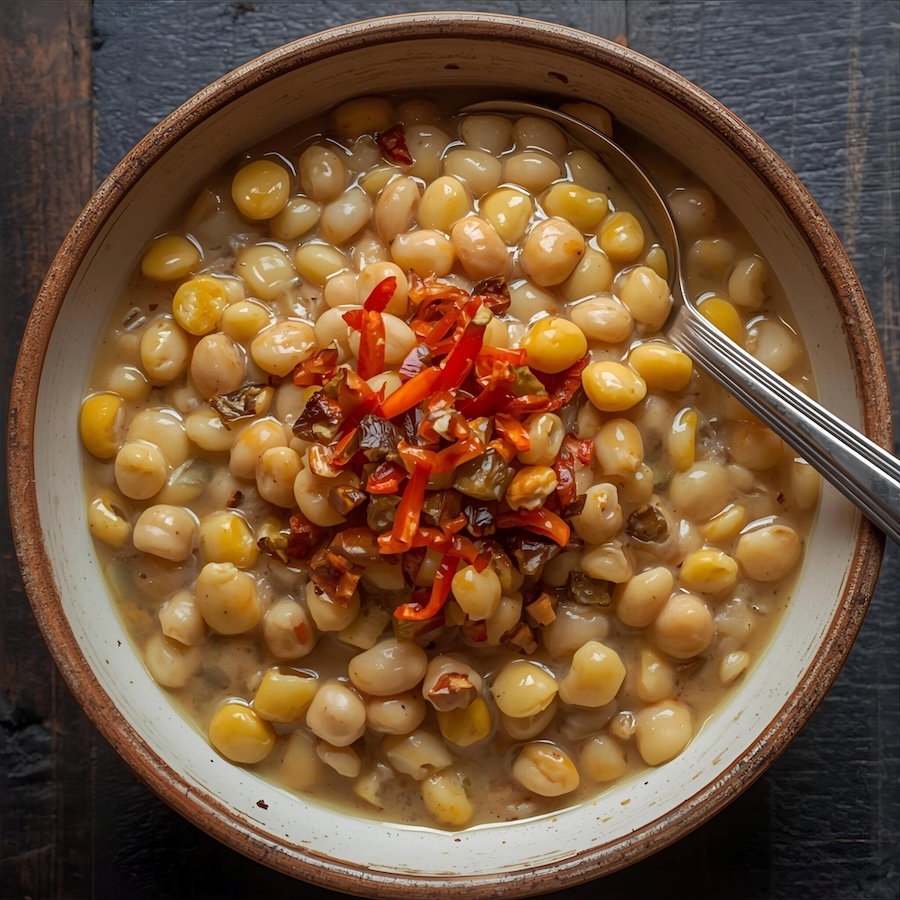
Where are we headed? Protein-rich ingredients such as beans, lentils, chickpeas, and heritage pulses are taking center stage. With traditional roots and a whole lot of versatility and culinary depth to offer, these ingredients are having a major moment.
For chefs, that means a creative comeback for beans, turning humble pulses into ingredients of purpose. Explore this trend plus five others in Custom Culinary’s 2026 Food & Flavor Outlook.
2. Fiber & Gut Health: Elevated Through Craft and Technique
Right on protein’s tails is fiber. Digestive wellness continues to influence food choices, and fiber is fast emerging as a leading priority for 2026. Fiber-rich whole foods like oats and lentils are capturing greater attention, particularly as diners look for meals that offer both satiety and nutritional benefit. Rather than positioning fiber as a “health” feature alone, chefs are integrating it through technique and craft. Fermenting, sprouting, roasting, milling, and blending to create dishes that are flavorful, layered, and texturally dynamic, this trend offers a lot of room for creativity while serving more gut-health-minded consumers1.
Aseeda Bobbar is a traditional Emirati dessert made with pumpkin, saffron, and cardamom. Find the recipe here.
3. Heritage Recipes & Culinary Traditions: Authenticity with a Modern Twist
Across markets, diners are reconnecting with culinary heritage, sparking a resurgence of traditional recipes, techniques, and regional flavors. This global return to ancestry-driven cooking reflects a desire for authenticity and cultural grounding. From street food favorites and near-forgotten recipes to Taste Globes, cuisine diversity is key to feeding consumer curiosity around spicy and global flavors.
For chefs, this is a great moment to reconnect the past and present, honor culinary roots, and build dishes with cultural context and meaning.
4. Immersive Dining: Experience as the New Value Driver
Dining in 2026 moves further into experiential territory. Guests continue to look for experience, from chef-led tastings and open-kitchen formats to thematic menus, multisensory activations, and community-driven gatherings. Cost-of-living is rising, and more diners, especially young people, want the most of their money when eating out, fueling an appetite for novel experiences.
Chefs who embrace immersive dining, whether through storytelling menus, communal dishes, sensory pairings, or culturally rooted tasting journeys, will meet a growing guest demand for meaningful, memorable meals and likely have some fun while doing it.
“I think we all assume that taste comes from our tongues… In fact, all of your senses are involved. Everything from the color of the plate to the weight of the cutlery in your hands, from the background music to any ambient scent, as well as the lighting and even the softness of the chair you are sitting on.”
– Charles Spence, Professor of Experimental Psychology at the University of Oxford and author of Gastrophysics: The New Science of Eating
5. AI in the Kitchen: Powerful Tools, but Creativity Must Lead
Artificial intelligence is accelerating rapidly across the foodservice sector, appearing everywhere from menu engineering and forecasting to inventory management, training, and guest personalisation. In 2026, AI-supported systems will continue to become more accessible to kitchens of all sizes, offering chefs new capabilities to streamline operations, reduce waste, and analyse consumer behavior with greater accuracy.
But there’s a critical caveat. While AI can optimise, predict, and streamline, it can’t replicate human intuition, cultural sensitivity, or culinary artistry. Chefs must lead tech integration thoughtfully, using it to support but not replace skill, craftsmanship, and identity.
“You’d be amazed to know how many people are using it. There are a lot of egos in the business. They’re not going to make a big thing about it.”
– Chef Matan Zaken, from Michelin-starred Nhome in Paris, on ChatGPT
The future looks bright. Worldchefs’ Global Chefs Challenge competitors’ plating prep at the 2025 European Grand Prix.
Trend Takeaways: A New Year for Learning
These five trends reflect a global shift in how the industry approaches flavor, identity, sustainability, and innovation. The landscape will keep shifting, so get equipped with these early trends and be sure to stay informed as the year goes on.
Don’t miss the 2026 Worldchefs Congress & Expo in Wales, where industry leaders will guide essential discussions around the future of culinary education, workforce development, operational models, and flavor innovation. Check out the program for sessions related to these trends and many more, including 2050 Menu, Shaping the Future of the Culinary Industry, The AI-Powered Chef, Cooking with Natural Plants: Extracting Aromas and Flavours, and so much more.
We use cookies on our website to give you the most relevant experience by remembering your preferences and repeat visits. By clicking “Accept All”, you consent to the use of ALL the cookies. However, you may visit "Cookie Settings" to provide a controlled consent.
This website uses cookies to improve your experience while you navigate through the website. Out of these, the cookies that are categorized as necessary are stored on your browser as they are essential for the working of basic functionalities of the website. We also use third-party cookies that help us analyze and understand how you use this website. These cookies will be stored in your browser only with your consent. You also have the option to opt-out of these cookies. But opting out of some of these cookies may affect your browsing experience.
Necessary cookies are absolutely essential for the website to function properly. These cookies ensure basic functionalities and security features of the website, anonymously.
Cookie
Duration
Description
cookielawinfo-checkbox-analytics
11 months
This cookie is set by GDPR Cookie Consent plugin. The cookie is used to store the user consent for the cookies in the category "Analytics".
cookielawinfo-checkbox-functional
11 months
The cookie is set by GDPR cookie consent to record the user consent for the cookies in the category "Functional".
cookielawinfo-checkbox-necessary
11 months
This cookie is set by GDPR Cookie Consent plugin. The cookies is used to store the user consent for the cookies in the category "Necessary".
cookielawinfo-checkbox-others
11 months
This cookie is set by GDPR Cookie Consent plugin. The cookie is used to store the user consent for the cookies in the category "Other.
cookielawinfo-checkbox-performance
11 months
This cookie is set by GDPR Cookie Consent plugin. The cookie is used to store the user consent for the cookies in the category "Performance".
viewed_cookie_policy
11 months
The cookie is set by the GDPR Cookie Consent plugin and is used to store whether or not user has consented to the use of cookies. It does not store any personal data.
Functional cookies help to perform certain functionalities like sharing the content of the website on social media platforms, collect feedbacks, and other third-party features.
Performance cookies are used to understand and analyze the key performance indexes of the website which helps in delivering a better user experience for the visitors.
Analytical cookies are used to understand how visitors interact with the website. These cookies help provide information on metrics the number of visitors, bounce rate, traffic source, etc.
Advertisement cookies are used to provide visitors with relevant ads and marketing campaigns. These cookies track visitors across websites and collect information to provide customized ads.