More than half of the hospitality workforce are women, yet they remain hugely underrepresented in leadership roles. To fix the gender equity gap in our industry, we need systemic change.
The hospitality industry runs on talent, creativity, and care, and globally, women provide more than half of it. They make up over 50% of the hospitality and F&B workforce. Yet despite being the majority to help power the industry, women are significantly underrepresented in leadership and decision-making roles. This paradox is at the heart of hospitality’s gender gap; one that the industry can no longer afford to ignore.
In this article, we explore why gender disparity persists regardless of the critical role women play in the culinary world, and what that means for the industry in practical terms.
Leaving Talent on the Table: Today’s Hospitality Workforce
LABOR FORCE & LEADERSHIP GAP
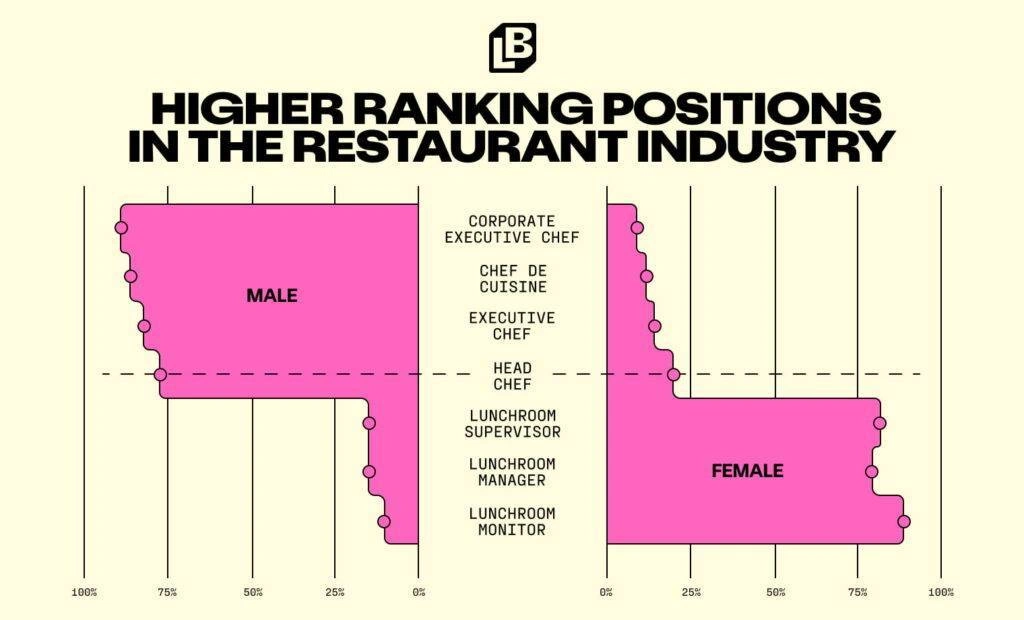
In the hospitality industry, women hold one leadership position for every 10.3 men. Women make up just 33% of management positions in restaurants, and only 19% of chefs and head cooks are women. In the US, 79.3% of chefs identify as male, while 35.6% identify as female. 9.1% of corporate executive chefs are women, while 90.9% are men.
RECOGNITION GAP
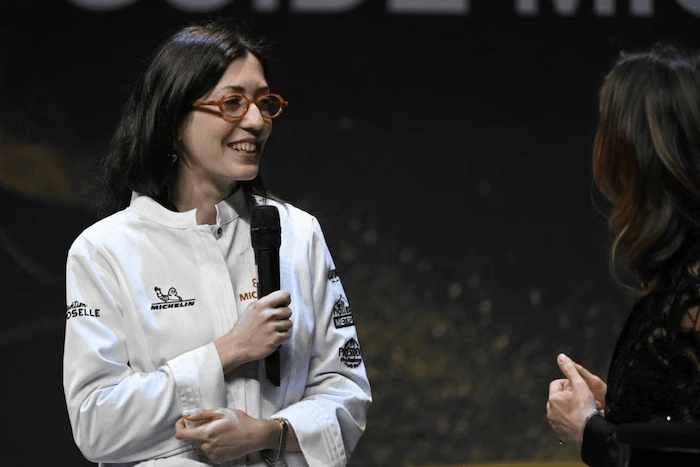
Representation in awards and recognition also lags behind. Just 6% of Michelin-starred restaurants are led by women. In 2025, of the 22 new one-starred restaurants in the UK, only one was awarded to a female chef patron – Chef Emily Roux. The percentage of the World’s Best 100 restaurants with a female head chef scratches by at 6.5%. For every female-led Michelin-starred establishment, there are 16 run by men.
Leaving the stars aside, the 2024 State of Gender Equality in the Travel and Hospitality Industry report found that a staggering 63% of female respondents believe they must work harder for recognition and acceptance because of their gender compared to 22% of male respondents who feel the same. A 2022 study from MIT found that female employees are also less likely to be promoted than their male counterparts, despite outperforming them and being less likely to quit.
GENDER-BASED PAY GAP
The gender-based pay gap is persistent in the hospitality industry, and it’s moving in the wrong direction. A 2023 report found that the gender pay gap in hospitality increased from 4.2% to 5.2% over the previous year. According to Equality in Tourism, women in tourism earn approximately 14.7% less than men.
In the US, the average annual salary for chefs and head cooks in 2025 was $45k for men versus $35k for women. In Europe, a study published in 2025 found that the gender wage gap in hospitality management ranges from 5.1 % to 23.8%.
Invisible Labor, Not-So-Invisible Problems
In hospitality, some of the most essential leadership work is rarely listed on a job description. Culture building, conflict mediation, keeping a team calm under pressure, and so many more tasks, are the invisible backbone of a thriving kitchen team. Research shows that this invisible labor disproportionately falls on women, who are expected to absorb stress, maintain morale, and smooth interpersonal dynamics while their contributions remain undervalued. When structural systems fall short, women pick up the slack.
The qualities most associated with effective leadership today – emotional intelligence, adaptability, cross-functional collaboration, and long-term thinking – are the very qualities that have historically been feminized and dismissed as “soft skills.” Yet modern leadership science has made clear that these are high-impact competencies linked to stronger team performance, resilience, and innovation.
Studies show that purpose-driven women leaders consistently rely on empathy, calculated risk-taking, a bias toward action, and achievement orientation across their careers. They excel in both generating ideas and executing them, driven by a deep commitment to purpose and to the people around them. Broader organizational research echoes this: women leaders are more likely to demonstrate participative decision-making, ethical sensitivity, and collaborative leadership styles – traits that correlate with stronger organizational outcomes.
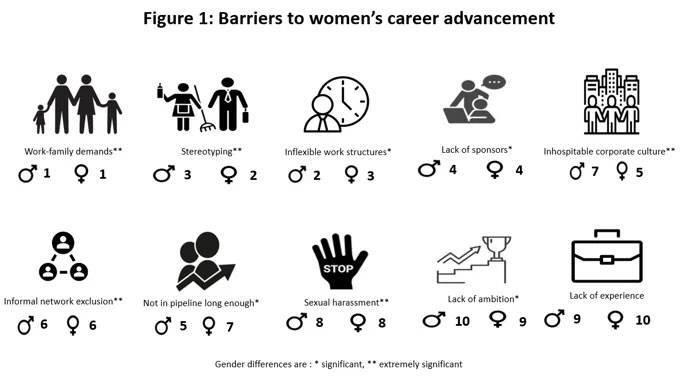
Despite this, what problems are still preventing women from rising to the top?
FALSE STEREOTYPES
A study published in the European Journal of Travel Research found that ingrained stereotypes and sexism continue to be a huge issue in the culinary field. False gender stereotypes, like being less resilient to stress, lacking in authority, or emotional sensitivity, negatively impact women’s career advancement, leaving many on the lower rungs of hospitality roles. What chefs wear can come under scrutiny, too, with something as simple as a sequined chef jacket causing a stir.
All too often, women in kitchens, even those in change, are overlooked in search of a male authority figure. The McKinsey’s 2024 Women in the Workplace study found that women leaders are 1.5x more likely than male leaders to have their judgment questioned, and are twice as likely to be called “too aggressive” when demonstrating the same assertiveness valued in their male counterparts.
THE “OLD BOY’S CLUB”
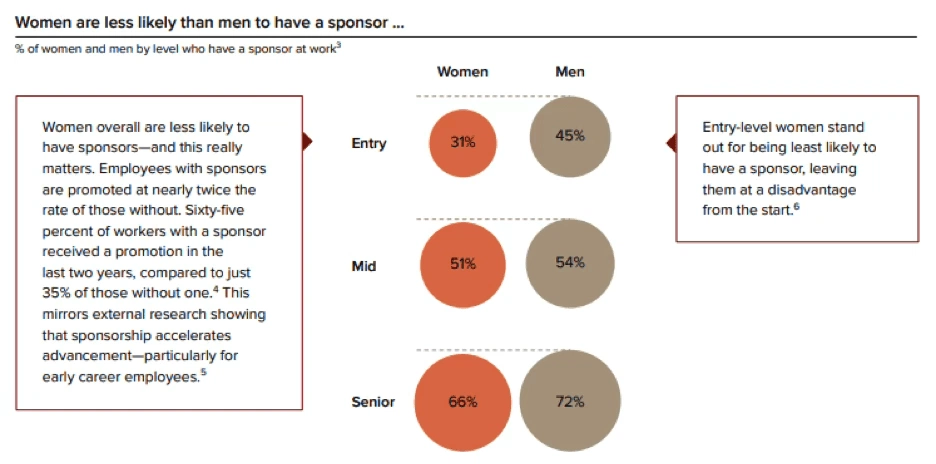
Studies also show that the “old boy’s club” continues to pose a problem for women working in the hospitality industry. It excludes women from informal and formal networks, making the glass ceiling further out of reach. With mentorship a key ingredient to a successful career, inclusive networking plays a critical role in helping women advance in the hospitality sector.
Deep Dive: A Data-Informed Look at Why Gender Disparity Is Bad Business
Women in Leadership: A Good Decision
Research has found that women in leadership improve decision-making. A 2023 study, conducted by the University of California and Copenhagen Business School and published in the Harvard Business Review, listened to board members from more than 200 publicly traded companies in the US and Europe.
The results? Women come to meetings better prepared, more willing to ask in-depth questions, more open to different points of view, and concerned with accountability and making the right choice as a group rather than worrying about how they might be perceived.
Bias is Expensive
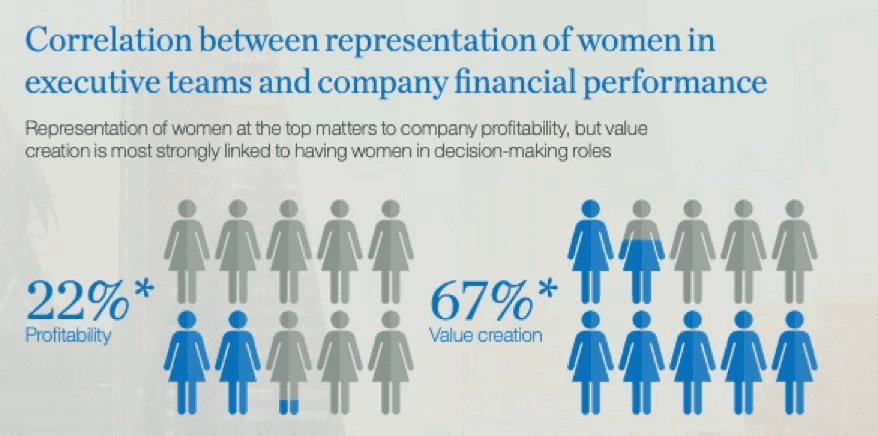
Inclusive environments equals better performance. Research shows that the firms with higher gender diversity in upper management are more likely to achieve better financial and sustainability performance. Inclusive, gender-diverse workplaces drive measurable performance gains and are significantly more likely to outperform less inclusive peers, with higher productivity, increased innovation, stronger employee retention, and nearly 63% greater profitability and productivity.
Side Dish: How do men and women see these barriers differently? A recent study offers insights.
A recent study by EHL Insights found substantial differences in the way male and female hospitality managers understand research-backed factors related to women’s career advancement. While women (and substantial data) report that opportunities have stagnated, men perceive that women’s opportunities to reach top management levels have greatly improved.
While men still hold much of the decision-making power, how will anything change if they don’t see the not-so-invisible problem?
On the Line: Lessons from Women Who Lead
Let’s hear from female voices on the line. What have they learned from their experience in leadership?
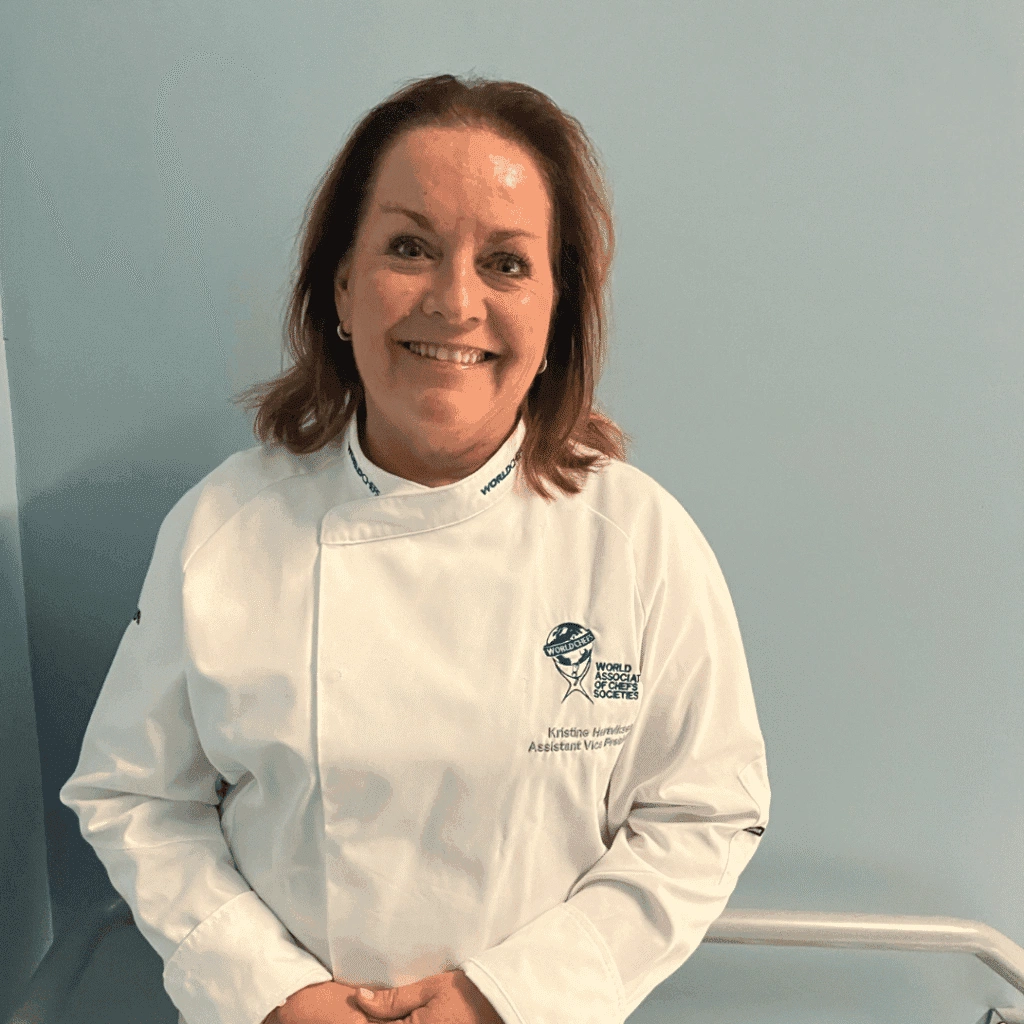
WHAT WE NEED: I was the first woman in the Nordics to be president of their chef association. I have been fighting and I thought at times “Oh, I don’t want to do this anymore.” It has been tough. When I started [my career], I must be honest, [Worldchefs] was an old gentlemen’s club. It’s different now. We still need to have more of a mix on the board, a mix of age, women and men, experiences–more voices. Everyone is important. Women and men, we think differently, so the mix is important.
HER ADVICE: It only takes one idiot in the room to try to break you down, so have good mentors, people who you can trust, and then ignore the idiots. You must trust yourself and have a mentor. Call me, I’m going to help. We are stronger together.
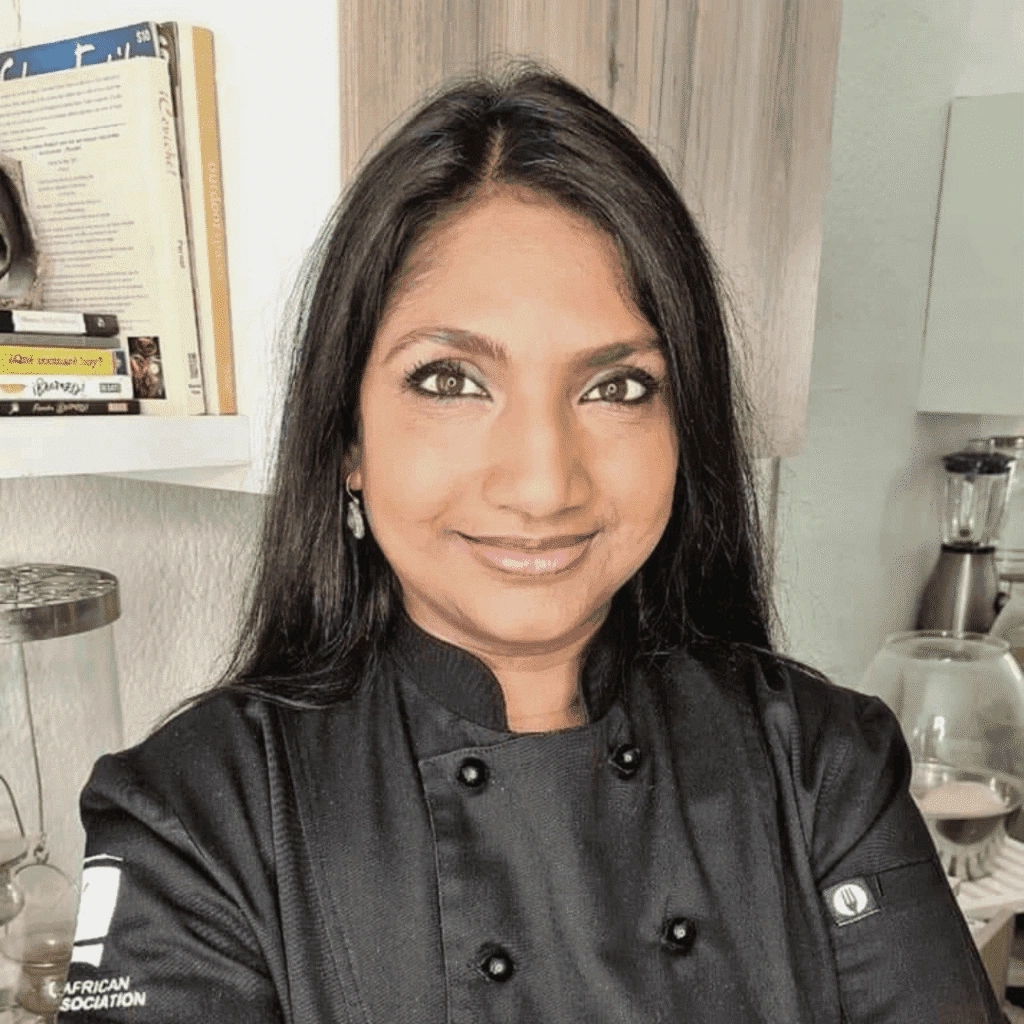
WHAT WE NEED: We need to speak up. Because if it’s not just your colleague today, it could be your daughter or your wife next month.
HER ADVICE: We need to focus more on mentorship. That is incredibly vital for career growth.
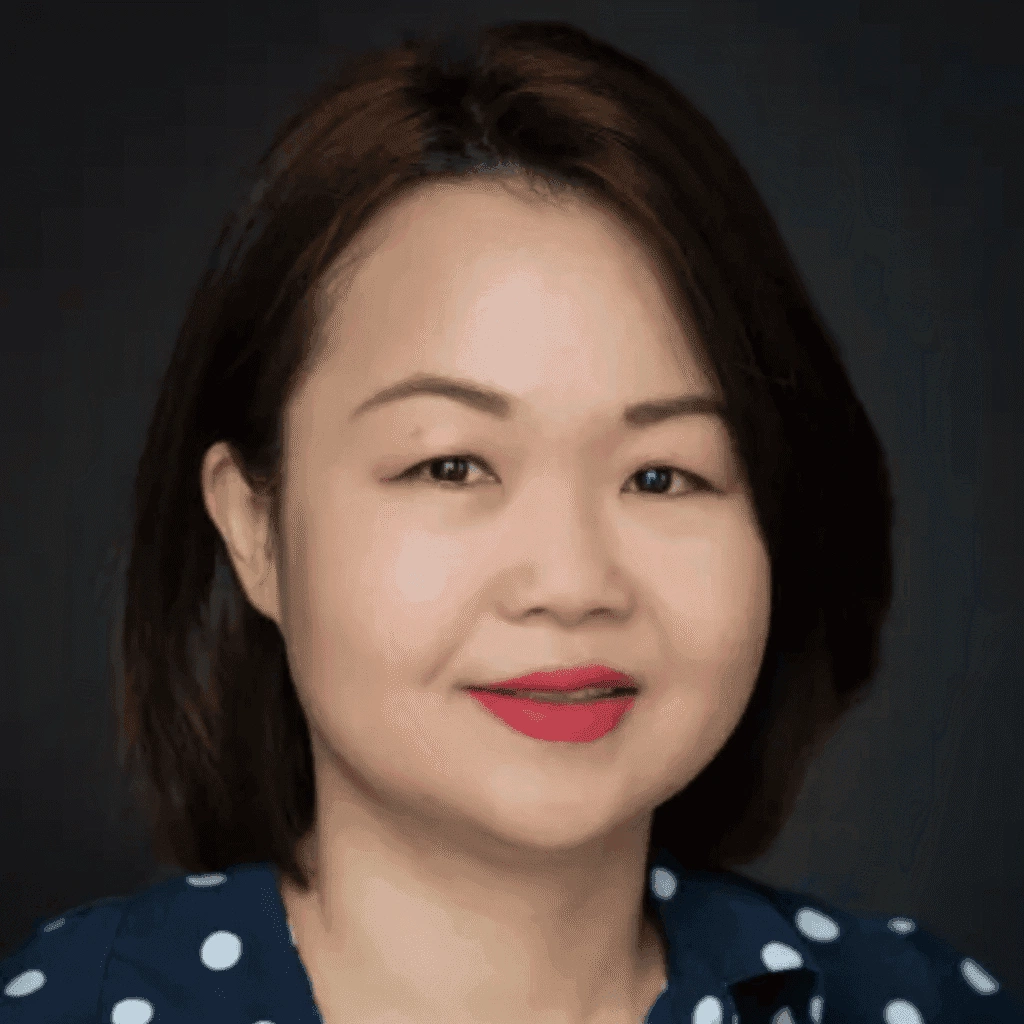
WHAT WE NEED: We need to stop treating gender equity as a “women’s issue” and start treating it as a leadership and governance standard. That means transparent pathways to senior roles, fair recognition of contribution, and leadership cultures that value both results and people. There isn’t one “correct” way to manage; it depends on the situation, the culture, and the people in front of you and women should not have to lead like men to be taken seriously. In a global chefs’ association, cross-cultural intelligence matters: respect is built through tone and intent. Most importantly, leadership is never about one person. It is about the team you build and the trust you earn.
HER ADVICE: Find mentors and sponsors who could actively advocate for you and create opportunities, not just offer guidance. And when you can, do the same for someone else. Don’t wait to be “ready”; take the seat, do the work, and build credibility through consistency. Be firm when the situation requires it, but don’t confuse toughness with effectiveness. Stay curious, learn, and adapt to today’s realities and never forget that real leadership is measured by the people you develop and bring along with you.
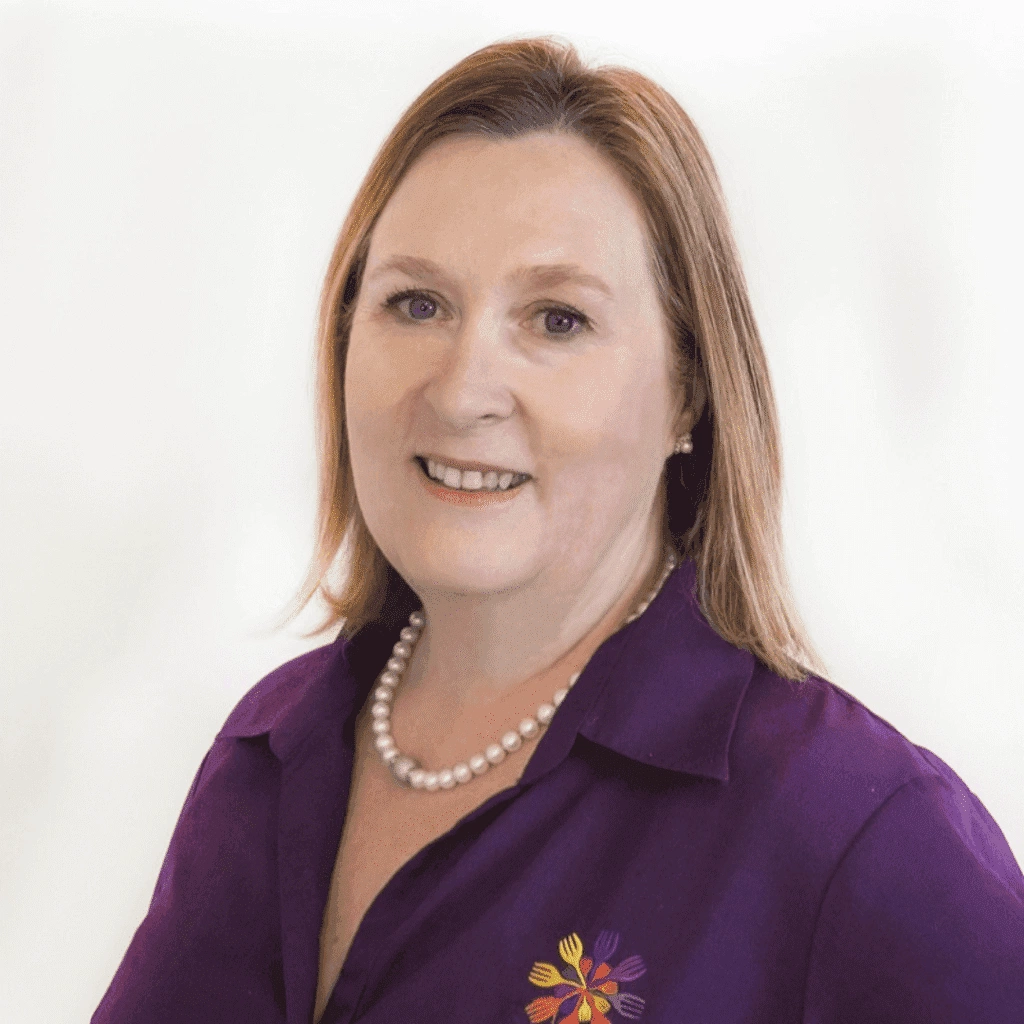
WHAT WE NEED: The biggest challenge is breaking down the ‘old boys’ club’ mentality in the industry.
HER ADVICE: The mentorship experience [is] transformative.
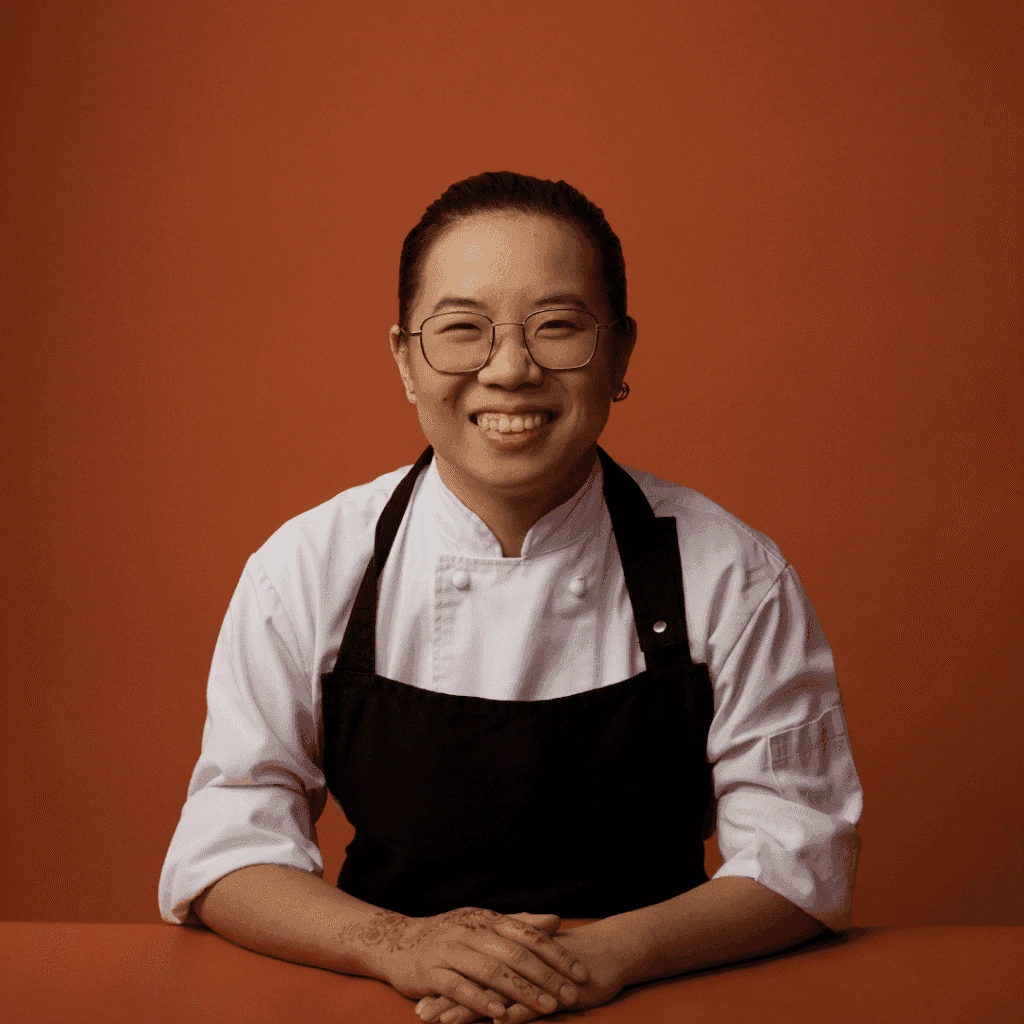
WHAT WE NEED: The workplace is really responsible for creating that positive culture. Getting rid of harassment in workplaces. It’s about creating stronger mentorship with senior chefs and junior chefs and getting rid of that divide.
HER ADVICE: I definitely have to thank all the mentors I’ve had previously to make up the chef I am today and the person I am today. The mentors that have guided me through these competitions made me want to also mentor future generations.
Young Chef Constantina Papaioannou
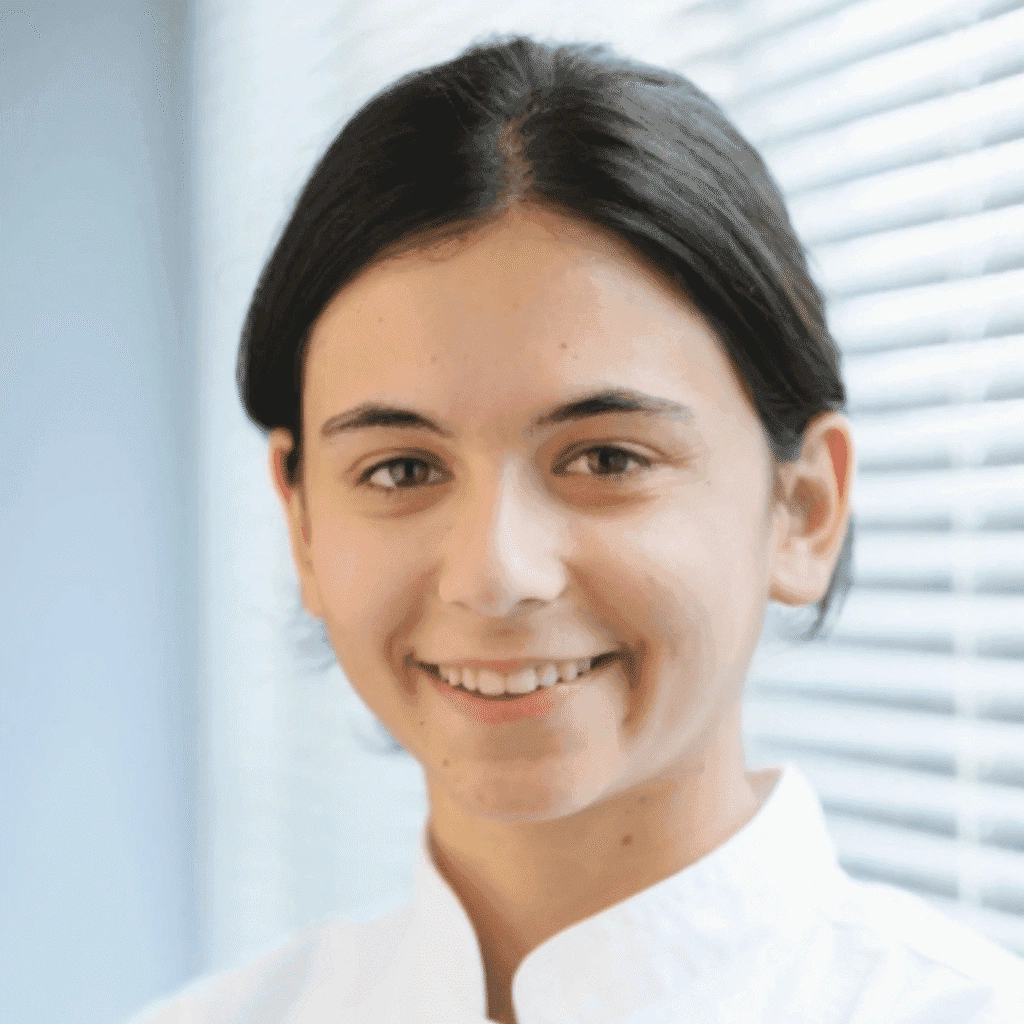
She will compete at the Finals during the 2026 Worldchefs Congress & Expo in Wales this May.
WHAT WE NEED: The industry is in need of many other female chefs and leaders. Growing up I was very lucky to have various female mentors around me such as my grandmother who inspired me to keep going and follow my dream.
HER ADVICE: My advice to other female chefs is to always believe in yourself and keep trying to achieve your goals.
Breaking the Demi-Glace Ceiling: Systemic Change or Bust
Dig into the history of the culinary profession and you’ll find it’s riddled with the same story. We know the Auguste Escoffiers, and the Rosa Lewises and Marthe Distels of the world are forgotten. Search for related articles and you will come up with thousands, hundreds of thousands, of related writing.
The pandemic undid years of progress towards gender parity in leadership. While brands including Marriott, Hilton and Accor have pledged to increase female representation in leadership roles, according to the 2025 Women in the Workplace study, only half of companies are prioritizing women’s career advancement, part of a multi-year trend in declining commitment to gender diversity.
Despite the challenges faced, women aren’t going to stop at the demi-glace ceiling. They’re taking their chefs’ knives to it, from smashing stereotypes in corporate kitchens to owning their own businesses. In the US, one-half of restaurant businesses are owned by women and 49% of restaurant firms are at least 50% owned by women, according to recent data from the National Restaurant Association. Women entrepreneurs in culinary are hungry for change, and they aren’t waiting for someone else to make it happen.
Mentorship & networking are key
Many women in hospitality attribute their achievements to mentorship. Look no further than the women profiled above for evidence of the impact a support network can have on navigating challenges and seizing new opportunities. In a global survey, 71% of businesswomen said their mentor was influential in their career advancement. Women with mentors are promoted five times more often and are 33% more likely to be seen as strong performers in the workplace.
Then there is this statistic: Men apply for jobs when they meet 60% of the qualifications, while women wait until they meet 100%. Mentorship can help address this, providing women with the right kind of support to ensure they go after what they deserve.
Access to strong professional networks is overall one of the most powerful accelerators of women’s career growth in hospitality. Mentorship, in particular, gives women the guidance, visibility, and confidence needed to navigate structural barriers. When women are connected to peers and seasoned leaders who champion their development, they are far more likely to advance. Expanding these networks and ensuring women have real pathways into them is essential for progress.
More than anything, we need to address the structural barriers holding women back. As long as the systems shaping career progression remain biased, women will continue to do the work without receiving the power, recognition, or opportunity that matches their contribution. Addressing these structural barriers means redesigning how we hire, promote, mentor, and value leadership itself. It requires shifting from relying on the invisible labor of women to building cultures where emotional intelligence, collaboration, and inclusive leadership are recognized as strategic assets, not gendered expectations.
When the industry embraces structures that support women’s advancement, it’ll do more than correct an imbalance. We need more women to unlock the full creative and economic potential of the global hospitality workforce.
Despite the figures and the major work still left to overcome regarding gender, there is so much inspiring action from individuals and organizations committed to closing the gender gap in hospitality. With passion and persistence, women won’t be stopped. Where they don’t have a seat at the table, they’re setting their own.
Check out the resources below for more.
More Women!
Looking for more on women in the industry? Keep reading:
Building a More Inclusive Future in the Culinary Industry
While the kitchen has long been perceived as a male-dominated space, the tides are shifting, and together we are building a better, more inclusive future.
Discover the dedication, resilience, talent, and innovation of women shaping our industry today.
Why Mentorship Matters Now More Than Ever in the Culinary World
Mentorship could be a key piece of the puzzle to solving the gender gap, making sure that the industry doesn’t leave talent on the table when it comes to hiring for leadership roles.
Read our recent article to learn more.
Empowering Women in the Culinary Industry
In an exclusive interview, Chef Zana Alvarado of SA Chefs highlights key action points to address gender disparities in the culinary world and support equity in a male-dominated industry.
Additional Resources
- James Beard Women’s Entrepreneurial Leadership program
- Women’s Foodservice Forum
- Women in Hospitality Leadership Alliance
- 10 women in F&B and their commitments to empowerment
- WiRL 2025 Year in Review: Celebrating the Women Shaping the Future of Restaurants
- The 2025 Power List: Women in foodservice
Have a resource or women-led initiative to share? Get in touch.
Network at Worldchefs Congress 2026
Find your next mentor at Worldchefs Congress in May. In addition to connecting directly with industry experts and experienced professionals, you’ll hear from several female leaders, including:
- Sian Wyn Owen, the Executive Head Chef of The River Cafe, one of London’s most iconic Michelin-starred Italian restaurants. Sian is a regular guest on Ruth Rogers’ podcast Ruthie’s Table 4.
- Chef Shonah Chalmers CCC, B.A.Sc., WCCE, the Chair of the Worldchefs Feed the Planet and Sustainability & Inclusivity Committee. A culinary educator and sustainability advocate, Shonah is known for championing regenerative and locally sourced “hero ingredients” in modern recipe development.
- Rosalyn Ediger, the founder and CEO of The Culinary Diplomacy Foundation of Canada. In addition to this role, since 2017 Rosalyn has been a passionate Culinary Arts Instructor at her alma mater, Southern Alberta Institute of Technology.
And so many more.
Register now to join the international chef community for Worldchefs Congress & Expo 2026, taking place 16 -19 May 2026 in Newport, Wales.
Photo credits and captions
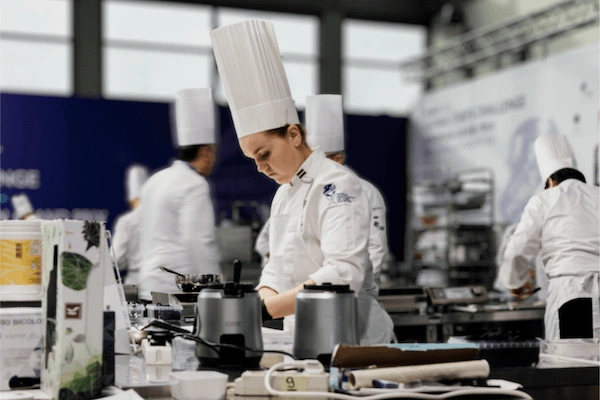
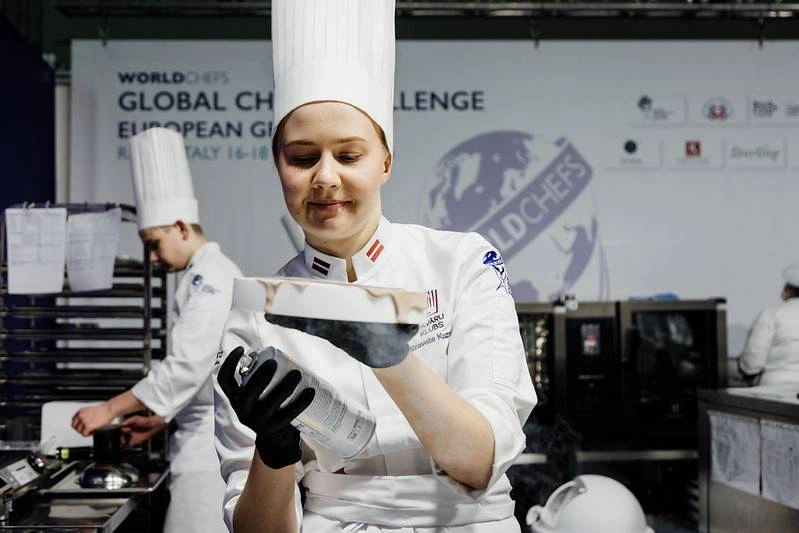
Featured image: Competitor at the 2025 Global Chefs Challenge European Grand Prix semi-finals.
Written by Clare Crowe Worldchefs Editor.