
Categories
Member News

Building Creative Cities Through Gastronomy: CCA Releases Taizhou Initiative at 2026 Roundtable

The China Cuisine Association (CCA), a Worldchefs national member, brought together culinary, diplomatic, government, industry, and academic representatives in Taizhou, Zhejiang Province, for the 2026 Roundtable on Food Creativity and Sustainable Urban Development.

Held on 14 June 2026, ahead of the 10th anniversary of the United Nations Sustainable Gastronomy Day, the event focused on strengthening knowledge exchange and multilateral cooperation in gastronomy creativity, positioning gastronomy as a driver of sustainable urban development.

A key outcome of the roundtable was the release of the Taizhou Initiative on Sustainable Gastronomy Practice in Creative Cities, calling for greater collaboration between cities and global partners through sustainable gastronomy, cultural exchange, and creative development.

The Taizhou Initiative on Sustainable Gastronomy Practice in Creative Cities released during the 2026 Roundtable

The roundtable welcomed representatives from the Consulates General of Argentina, Chile, and Malaysia in Shanghai, alongside government, industry, and academic delegates from five UNESCO Creative Cities of Gastronomy in China — Chengdu, Shunde, Yangzhou, Chaozhou, and Quanzhou — as well as distinguished practitioners from Taizhou.

“We have supported cities nationwide in systematically advancing food heritage preservation, culinary industry cultivation, and international exchange. While presenting Chinese gastronomy to the world, we actively benchmark against global best practices in creative cities — learning from each other and continuously elevating the international profile of China’s gastronomic cities,” said Yang Liu, President of the China Cuisine Association.

Yang Liu, President of the China Cuisine Association, delivers opening remarks

Cheng Weibo, Vice Mayor of Taizhou Municipal Government, highlighted Taizhou’s three-pillar approach to sustainable gastronomy: ecological stewardship through globally recognized agricultural heritage systems, industrial leadership in kitchenware manufacturing and culinary technology export, and cross-sector cultural diplomacy that elevates local cuisine into a vehicle for international exchange.

Professor Jia Yunfeng, UN Tourism Expert and Senior Researcher at the University of Münster, Germany, delivered the keynote address “Food Creativity and Sustainable Urban Development: An International Perspective.”

Two thematic dialogues, “Gastronomy: Driving Sustainable Urban Development” and “Food × Creation: Cross-sector Innovation and Diverse Symbiosis,” explored cross-sector integration, culinary diplomacy, communication strategies, and international collaboration in the “Gastronomy+” ecosystem. The discussions also featured vivid, on-the-ground case studies from Taizhou and development pathways shared by representatives from China’s five Creative Cities of Gastronomy.

Representatives and delegates at the 2026 Roundtable

Looking ahead, the China Cuisine Association will continue to leverage multiple UN international days as anchor points to build regularized exchange and cooperation mechanisms with global partners. Through multilateral platforms, CCA will work hand-in-hand with cities to tell China’s gastronomic story, strengthen China’s culinary industry, and elevate China’s gastronomic city brands, contributing to global sustainable development in creative cities.

Categories
Member News

In Memoriam – Kurt Pozzato

June 23, 2026 – Worldchefs is deeply saddened to learn of the passing of Chef Kurt Pozzato, a respected Swiss chef and mentor whose career and influence touched culinary communities across Asia and beyond.

Born in Switzerland, Chef Kurt built a remarkable career in Asia, a region he called home for much of his life. His professional journey took him through senior culinary roles in Bangkok, Jakarta, Seoul, and Manila, before joining CPC in Korea in 1984 and later serving as the first Executive Chef for Caterplan Asia.

Throughout his career, Chef Kurt was known for his dedication to culinary training, mentorship, and the development of young chefs. An Honorary Life Member of the Emirates Culinary Guild, he remained closely involved in the wider culinary competition community, reflecting a lifelong commitment to sharing knowledge and strengthening the profession.

Kurt Pozzato will be remembered as a generous mentor and a true gentleman of the kitchen. His legacy lives on through the many chefs he guided, encouraged, and inspired throughout his life.

Thoughts and condolences from all chefs of the World Association of Chefs Societies to the friends and family of Chef Kurt.

Categories
Member News

Innovation, Culture and Sustainability: China Cuisine Association Hosts the 19th China Catering Industry Development Conference in Taizhou

More than 600 representatives from across China’s catering sector gathered in Taizhou, Zhejiang Province, for the 19th China Catering Industry Development Conference, held from 15 to 16 June 2026.

Organized by the China Cuisine Association (CCA), a Worldchefs national member, the conference brought together government authorities, industry associations, leading catering enterprises, supply chain companies, educational institutions, and media organizations to discuss the future development of China’s catering industry.

Under the theme “Strengthening Domestic Demand through Catering Development and Improving People’s Livelihood through Quality Enhancement,” the conference focused on the high-quality development of China’s catering industry and explored new pathways for innovation, digital transformation, cultural communication, and sustainable growth.

19th China Catering Industry Development Conference in Taizhou

At the opening ceremony, Yang Liu, President of the China Cuisine Association, released the annual report “Expanding Capacity, Enhancing Quality, and Moving Forward through Innovation – Analysis of China’s Catering Industry in 2025 and Outlook for 2026.” The report highlighted that China’s catering industry has entered a new stage driven by quality, efficiency, and value creation rather than scale expansion.

Distinguished speakers from the Ministry of Commerce of China, the Zhejiang Provincial Department of Commerce, the China General Chamber of Commerce, and the Taizhou Municipal Government discussed industry trends, consumption recovery, service-sector innovation, and the role of catering in stimulating domestic demand. Taizhou’s growing position as a culinary destination was also highlighted, as the city advances its application to become a UNESCO Creative City of Gastronomy, supported by over 60,000 catering businesses and a food industry value chain exceeding RMB 60 billion.

A series of keynote presentations addressed topics such as artificial intelligence, platform economy development, food safety management, and consumer behavior. Experts from academia, industry research institutes, and leading technology platforms shared insights on how emerging technologies are reshaping the future of hospitality and food service. The nationwide public welfare initiative “China Catering Industry Against Food Waste Action” was also launched during the conference, reaffirming the industry’s commitment to sustainability, responsible consumption, and green development.

Yang Liu, President of the China Cuisine Association
AI Empowerment Marks New Milestone

A major highlight of the conference was the establishment of the CCA Artificial Intelligence + Catering Working Committee, marking a significant step in the digital transformation of China’s catering sector.

The committee aims to develop industry standards for AI applications, promote AI talent cultivation, accelerate technology adoption across restaurant operations and supply chains, and foster innovative business models driven by intelligent technologies.

During the meeting, CCA also released a national research report on artificial intelligence adoption in the catering industry based on 2,446 valid survey responses, providing valuable guidance for future digital transformation initiatives.

Strengthening Cultural Communication through Gastronomy

The conference also witnessed the establishment of the CCA Food Culture Communication Working Committee, reflecting the industry’s growing emphasis on cultural storytelling, brand building, and international communication.

The committee brings together media professionals, culinary experts, cultural scholars, tourism representatives, and content creators to promote Chinese food culture through innovative communication channels and international cooperation.

During the inaugural Food Culture Communication Dialogue, participants explored culinary storytelling and cultural heritage, food tourism integration, youth engagement and culinary innovation, and the international communication of Chinese cuisine.

The event concluded with the launch of the CCA Food Culture Communication Matrix, a collaborative platform dedicated to enhancing the global visibility and influence of Chinese culinary culture.

On 16 June, the “Food Power on Screen, Taste Shared Worldwide” dialogue was held in Taizhou, along with the launch of a China Cuisine Association food communication committee and platform. The event explored how cuisine connects with culture, art, and sports, emphasizing storytelling as a tool to globalize regional Chinese food.

“Food Power on Screen, Taste Shared Worldwide” dialogue in Taizhou
Industry Collaboration and Sustainable Development

The conference also launched the nationwide public welfare initiative “China Catering Industry Against Food Waste Action,” reaffirming the industry’s commitment to sustainability, responsible consumption, and green development.

Several specialized industry forums were held alongside the conference, including the 2026 Catering Entrepreneurs Conference and the 2026 Catering Brand Conference. Business leaders discussed quality development, brand innovation, international expansion, supply chain modernization, and AI-driven business transformation.

In addition, the CCA Rural Banquet and Catering Services Committee was formally established, aiming to standardize and modernize China’s rapidly growing rural banquet and off-premise catering sector while strengthening food safety and industry professionalism.

Looking Ahead

The 19th China Catering Industry Development Conference demonstrated the Chinese catering industry’s determination to embrace innovation, digital intelligence, cultural confidence, and sustainable development.

As China’s catering industry continues to evolve, the China Cuisine Association remains committed to promoting international exchange, advancing industry standards, fostering innovation, and sharing the richness of Chinese culinary culture with the world.

Categories
Member News

Gulf Gourmet Magazine – June 2026

In the June 2026 edition of Gulf Gourmet Magazine, celebrate 20 years of countless stories from the Emirates Culinary Guild, united by one passion.

To learn more about Worldchefs, click here.


About the Emirates Culinary Guild (ECG)

An Overview of the Emirates Culinary Guild

The Emirates Culinary Guild (ECG) is the association of professional chefs of the UAE. It is a non-profit-making organisation, organised by volunteers dedicated solely to the advancement of culinary art in the UAE.

The World Association of Chefs Societies (Worldchefs) (www.worldchefs.org) is the 105-nation fellowship of the world’s various professional chefs’ organisations.

The ECG received its charter into Worldchefs at a ceremony in Stavanger, Norway on June 28, 1994, during the Worldchefs 26th World Congress. Worldchefs endorses the ECG as the authorized professional culinary association for the UAE. The ECG, thereby, has an international culinary focus and multi-national support for the staging of its various competitions, seminars and events.

The aims of the ECG, broadly, are:

  • To encourage and inspire young chefs through training and competition.
  • To enhance internationally the culinary prestige of the UAE.
  • To encourage UAE nationals to consider a career within the hospitality industry.

Social media plays a large part in the Guilds self-promotion and the Gulf Gourmet magazine drive awareness around the globe.

Follow these links for more information on the Emirates Culinary Guild:

www.emiratesculinaryguild.net/, www.facebook.com/Emirates-Culinary-Guild-763644223697376/timeline/, www.facebook.com/gulfgourmet?fref=ts

Membership of the ECG is open to all of those professionally and solely involved in the preparation of food.

Anyone interested in the ECG please find their contact below.

The Emirates Culinary Guild
PO Box 454922 – Dubai – UAE
Tel: + 971 56 8014089.
E-mail: emiratesculinaryguild@gmail.com

Categories
Member News

Gulf Gourmet Magazine – May 2026

In the May 2026 edition of Gulf Gourmet Magazine, meet Chef Soul AbouZahr, and discover how she built one of the Gulf’s most distinctive culinary identities.

To learn more about Worldchefs, click here.


About the Emirates Culinary Guild (ECG)

An Overview of the Emirates Culinary Guild

The Emirates Culinary Guild (ECG) is the association of professional chefs of the UAE. It is a non-profit-making organisation, organised by volunteers dedicated solely to the advancement of culinary art in the UAE.

The World Association of Chefs Societies (Worldchefs) (www.worldchefs.org) is the 105-nation fellowship of the world’s various professional chefs’ organisations.

The ECG received its charter into Worldchefs at a ceremony in Stavanger, Norway on June 28, 1994, during the Worldchefs 26th World Congress. Worldchefs endorses the ECG as the authorized professional culinary association for the UAE. The ECG, thereby, has an international culinary focus and multi-national support for the staging of its various competitions, seminars and events.

The aims of the ECG, broadly, are:

  • To encourage and inspire young chefs through training and competition.
  • To enhance internationally the culinary prestige of the UAE.
  • To encourage UAE nationals to consider a career within the hospitality industry.

Social media plays a large part in the Guilds self-promotion and the Gulf Gourmet magazine drive awareness around the globe.

Follow these links for more information on the Emirates Culinary Guild:

www.emiratesculinaryguild.net/, www.facebook.com/Emirates-Culinary-Guild-763644223697376/timeline/, www.facebook.com/gulfgourmet?fref=ts

Membership of the ECG is open to all of those professionally and solely involved in the preparation of food.

Anyone interested in the ECG please find their contact below.

The Emirates Culinary Guild
PO Box 454922 – Dubai – UAE
Tel: + 971 56 8014089.
E-mail: emiratesculinaryguild@gmail.com

Categories
Industry Trends Member News World

Word of the Moment: Chefs Share Theirs for Issue 32

Word of the Moment: Chefs Share Theirs for Issue 32

Worldchefs Magazine Issue 32
Executive Committee
Andy Cuthbert, President
UAE
Inclusion. We need to continually look at how we can improve this in Worldchefs and it will need all of us to be on board.
Dr. Rick Stephen AM, Vice President
Australia
Unity. A growing call across our global network is the need to stand together: chefs, educators, industry partners, and associations aligning around shared standards, shared purpose, and shared pride. It captures both the priority and the hope for Worldchefs as we shape a stronger, more connected future to be inclusive and not exclusive.
Alain Hostert, Secretary General
Luxembourg
Innovation. Young chefs are redefining the kitchen by blending tradition with new techniques, technology, and global flavors. Innovation represents the courage to try, create, and lead the future of gastronomy with fresh ideas.
Kristine Hartviksen, Assistant Vice President
Norway
Origin. Interest in the product’s history from farm to table. properties, taste and preparation.
Uwe Micheel, Assistant Vice President
Germany
Sustainability. Our association is working on different projects that support sustainability, all the way from food producers to our profession.

Member Associations

Unity and progress. Today more than ever, the words of “power of the white jacket” resonate.


Manuel Cuerno
Asociación de Chefs de El Salvador Acesa, El Salvador
Amaresh Bhaskaran, Emirates Culinary Guild
UAE
Vocal for local. Use locally-sourced ingredients.
Majed Alsabagh, Syrian Culinary Guild
Syria
We call it “Chef’s Society”, to bring Arabic chefs together and enable professional communication and collaboration.
Hossam Soliman, Egyptian Chefs Association
Egypt
Professional standards. Elevating standards remains a top priority. Through training, competitions, and knowledge exchange, we are reinforcing what professionalism, discipline, and excellence mean in today’s culinary world.
Nadim Milhim, Palestinian Chefs Association
Palestine
Culinary heritage. Our association is focused on protecting Palestinian culinary heritage while empowering chefs to innovate despite challenges. Through food, our members preserve identity, support local farmers, and use cuisine as a powerful voice for culture, dignity, and continuity.
Ricardo Kathan, Mauritian Chef’s Association
Mauritius
Advocating excellence. Inspiring the next generation of chefs through training, competitions, and global culinary exchanges.
Fraaz Kasuri,Chefs Association Of Pakistan (CAP)
Pakistan
Empower. CAP believes in empowering the youth and women of Pakistan by encouraging them to acquire culinary skills and start their professional journeys.
Engage. CAP keeps its members busy by engaging them in different healthy and professional activities like culinary competitions, workshops, focus groups etc.
Support. CAP runs a support system through which it helps the chefs with jobs both locally and internationally and other personal or professional issues.
Jenny Tan, Singapore Chefs’ Association
Singapore
Progress. We have launched the community membership this year which offers complimentary membership, and will be collaborating with government organizations on initiatives to serve our chef community.
Ben Ali, Maître des Saveurs et Gastronomie de la Tunisie
Tunisia
Gastronomic identity. Our association is focused on passing culinary knowledge from masters to young chefs, promoting responsible use of local resources, and safeguarding Tunisian gastronomic identity. Together, these priorities ensure our heritage evolves without losing its roots and remains relevant for future generations.
Kamal Rahal Essoulami, Fédération Marocaine des Arts Culinaires
Morocco
Transmission – Sustainability – Excellence. The Moroccan Culinary Arts Federation prioritizes preserving culinary heritage through knowledge transfer while promoting sustainable gastronomy based on local, seasonal, and responsibly sourced products. Through training, competitions, and international collaboration, the Federation strengthens professional excellence and supports the next generation of environmentally-conscious Moroccan chefs.
JJ Vitale, American Culinary Federation
USA
Passion. The American Culinary Federation is fueled by a passion for education, from certification through accreditation, and a belief in lifelong learning. We have a passion for competition from regional and national events to the global stage with ACF Culinary Team USA. And above all, we have a passion for our members, students to seniors, club chefs to educators, supporting them at every stage of their culinary journey.
Rodrigo Ibañez, Colegio Nacional De Chefs Profesionales De México A.C.
México
Collective purpose. Our association is prioritizing collaboration across chefs, producers, and regions to strengthen the industry as a whole. It reflects a shared belief that Mexican gastronomy grows stronger when progress is built collectively, with responsibility, inclusion, and long-term vision.
Cezar Munteanu, ANBCT Romania
Romania
Roots. Responsibility. Future. We believe gastronomy becomes meaningful when it understands its origins. Our association’s priority is education of children, students, and young chefs – so respect for food, seasonality, and resources is learned early. By shaping values before habits, we safeguard culinary heritage, strengthen sustainability, and ensure a future where cooking remains ethical, conscious, and deeply human.
Tomáš Popp, Association of Chefs and Pastry Chefs of Czech Republic (AKC CR)
Czech Republic 
Gastronomic memory. Our old guard of chefs and pastry chefs pass on their experience to the next generation of chefs and pastry chefs. They also tell stories that have shaped our gastronomic tradition.
Orkhan Mukhtarov, Azerbaijan Culinary Specialists Association (ACSA)
Azerbaijan
Growth and recognition. At this moment, ACSA is focused on sustainable growth and international recognition. We are strengthening professional standards, expanding educational initiatives, and creating more opportunities for Azerbaijani chefs to be visible, respected, and competitive on the global culinary stage.
Levani Meskhi, Chefs Association Georgia
Georgia
Opportunities. The Georgian Chefs Association aims to support young chefs by developing culinary education and professional opportunities in Georgia. It connects local talent with international standards and promotes Georgian gastronomy globally.
Hans Everse, Gastronomisch Gilde
The Netherlands
Events, connect, competition. We provide 10 events a year for our members. We connect professionals in our network with events and competitions. We provide national competition and join international competitions with our Culinary National Team.
David Sosson, Qatar Culinary Professionals
Qatar
Elevating standards. QCP is focused on elevating culinary standards in Qatar through structured competitions, global exposure, and strong industry collaboration. By supporting chefs from grassroots development to international platforms, QCP continues to raise professionalism, skills, and global recognition for Qatar’s culinary community.
Manuel Cuerno, Asociación de Chefs de El Salvador Acesa
El Salvador
Unity and progress. Today more than ever, the words of “power of the white jacket” resonate. El Salvador is working for the unification of the profession. Only together can we feed the world and be an example for future generations of chefs.
Paulinus Okon, Association of Professional Chefs Nigeria
Nigeria
Good chefs, healthy nation. When the system builds good chefs by building the culinary industry, then the country is sure to have very healthy citizens.
Chachaya Raktakanishta, Thailand Chefs Association
Thailand
Professional integrity. Professional integrity defines our current direction. We are committed to elevating ethical standards, craftsmanship, and accountability across our membership, ensuring Thai chefs are respected globally for both skill and character.
Sheraz Nair, Indian Federation of Culinary Associations
India
Collaboration. At IFCA, collaboration with industry and academia is practiced on the ground, not just stated in principle. Professionals from kitchens and institutions are actively incorporated across all IFCA task forces and working teams, ensuring that every initiative is shaped by practical industry insight and academic understanding.
Dr. Paulino Schembri, Malta Chefs Society
Malta
Sustainability, waste not, innovation.
Oliver Esser Soe Thet, Myanmar Chefs Association
Myanmar
Food security. Myanmar Chefs help to save lives while ensuring food security all over Myanmar, where chefs are free to provide food to children, elders, and refugees legally. 
Young chefs safety. We work to get as many chefs as possible out from danger zones – from warfronts to ensure good, safe work and jobs for Myanmar young chefs in foreign countries.
Disabled chefs inclusion. Myanmar Chefs work to give an independent future to war-disabled young people to become chefs through practical training.

Education Partners

Sustainability. From pasture to plate, we instill responsible practices that respect biodiversity, ethical sourcing, and environmental impact, preparing students to lead a more conscious and resilient food system.

Ximena Vicente
Universidad Latina De Costa Rica
Costa Rica
Janie Ogeah, Institute of Tourism Studies
Malta
Immersion. ITS places students inside professional environments where decisions carry consequences. From large-scale chocolate builds to live operations, learning happens through exposure, responsibility, and mentorship. Immersion turns education into preparation and students into professionals.
Janet Dyer, Heart College of Hospitality Services
Jamaica
Resilience. Coming out of category 5 Hurricane Melissa, aspiring chefs teamed up with World Central Kitchens to prepare meals for persons impacted by the hurricane.
Afaque Ahmed, Heart College of Hospitality Services
India
Innovation. Sustainability. Professionalism.Our school is focusing on shaping chefs who think creatively, respect ingredients and local food systems, and uphold industry-ready standards. These values prepare students not just to cook well, but to lead responsibly and adapt confidently in a rapidly evolving hospitality industry.
Agnese Mulatero, I.F.S.E. Italian Food Style Education
Italy
Professionalism. We aim to train professionals ready to enter the workforce with expertise.
Ambassadors. Our school shapes professionals capable of sharing and promoting the culture of Italian cuisine and its products worldwide.
Excellence. We are the only school to hold the Italian Excellence recognition issued by the General Secretariat of the Republic.
Nathan Armstrong, International Culinary Studio
New Zealand
Adaptability. The culinary industry is evolving rapidly. We are focused on helping students build adaptable skills and cultural awareness so they can confidently navigate change, seize new opportunities and thrive in diverse kitchens and food businesses around the world.
Ronny Albucci, Chef Academy
Italy
Professional qualification, star-studded internships, international collaborations. We bridge the gap between education and employment by offering a legally-recognized professional qualification valid across Europe. Our approach combines this academic rigor with international collaborations—such as our partnership with École Ducasse—and guaranteed star-studded internships in over 150 Michelin-starred restaurants, ensuring our students enter the workforce at the highest level.
Duane Riley, HTA School of Culinary Art
South Africa
Community and consistency. HTA School of Culinary Art believes chefs have a responsibility beyond the kitchen. Through ongoing community partnerships—including being the first partner school for the 67,000 Litres for Mandela charity—we instill the importance of showing up consistently and using culinary skills to ensure no one goes hungry.
Ailin Lee, Culinary Arts Center Of Azerbaijan (CÀSÀ)
Azerbaijan
Creativity, innovation, experiential learning, global exposure. CÀSÀ currently focuses on developing creativity and innovation through experiential learning initiatives, such as curating dining events and international study tours. These initiatives reflect industry trends toward creativity, sustainability, and global standards, equipping students with contemporary skills and exposure relevant to today’s hospitality sector.
Sasinaporn Yutsanong, Bangkok University
Thailand
Creativity. Our school’s focus is on developing industry-ready graduates through real-world exposure and hands-on learning with leading professionals, including Michelin-star chefs. We emphasize creativity in culinary arts and food design while strengthening management, leadership, and operational skills. This approach reflects current industry demands and prepares students to succeed in global hospitality, fine-dining, and innovative food businesses—today and in the future.
Heba Abu Al Rab, The Royal Academy of Culinary Arts
Jordan
Innovation. Our Academy is equipping aspiring chefs with the digital literacy and applied learning needed to integrate new technologies while advancing service excellence and guest experience.
Sustainability. Our Academy embeds responsible practices across our academic programs, equipping students to reduce waste, prioritize ethical sourcing, and apply resource efficient methods as a core professional standard.
Inclusion. Our Academy develops culturally intelligent professionals who lead diverse teams with respect, empathy, and consistent service standards, ensuring guest experiences are welcoming, authentic, and aligned with international hospitality expectations.
Carlos Mézquita, Anáhuac Cancún
México
Leadership: Our school is focused on developing culinary leaders, not only skilled cooks. We promote responsibility, teamwork, decision-making, and ethical awareness across our programs, preparing students to lead kitchens, projects, and teams with professionalism, respect, and a strong sense of social and industry responsibility.
Experience: Our school emphasizes that gastronomy goes beyond food—it is about creating memorable experiences. Students learn to design dishes, service, ambiance, and storytelling with the guest in mind, understanding emotions, expectations, and cultural context. We prepare future professionals to craft meaningful dining experiences, not just meals.
Social impact: Our school encourages students to engage in social projects that connect gastronomy with community needs. Through academic activities and initiatives, students apply their skills in real contexts, promoting food education, sustainability, and support for vulnerable groups, understanding that gastronomy can be a tool for positive social change.
Christian Schiering, B.H.M.S. Business & Hotel Management School / Swiss Culinary Academy
Switzerland
Passion. Our school is helping students to turn their passion and love for food into a successful career.
Practice. Our school is focusing on hands-on kitchen training to equip students with the essential skills to excel in the industry.
Potential. We nurture young culinary talents and provide opportunities for them to strive and excel in the industry in future.
Iliyana Tsvetanova, HRC Culinary Academy
Bulgaria
Care: for our students, the food we serve, and the ingredients we use. 
Respect: for the culinary profession. 
Traditions: honoring local cuisine and culinary heritage.
Ximena Vicente, Universidad Latina De Costa Rica
Costa Rica
Identity. We cultivate a strong Costa Rican culinary identity by honoring local products, traditions, and producers, helping students understand who they are as chefs and the cultural story behind every plate.
Innovation. Our program encourages creative thinking, modern techniques, and applied research, empowering students to reinterpret tradition and respond to the evolving global gastronomy industry.
Sustainability. From pasture to plate, we instill responsible practices that respect biodiversity, ethical sourcing, and environmental impact, preparing students to lead a more conscious and resilient food system.
Pichaya Noranitiphadungkarn, Dusit Thani College
Thailand
Turn your passion into your profession.
Dr Albeena Abbas, AAFT School Of Hospitality & Tourism, Noida
India
Research and authenticity. Our school emphasizes mastering classic recipes in their original form while building strong research skills, enabling students to innovate thoughtfully and create new dishes that respect tradition and meet future culinary trends.
Soon Pau Voon, Sunway University
Malaysia
Industry‑ready. We are focused on preparing students who can transition confidently from classroom to professional kitchens through structured industry exposure, real‑world learning, and strong employability skills.
Sustainability. Our programs emphasize responsible food practices, ESG awareness, and long‑term thinking—ensuring students understand their role in shaping a sustainable future for the culinary profession.
Partnership. We believe meaningful industry–academia collaborations, such as YOCUTA with Nestlé Professional, are essential to nurturing talent, relevance, and professional confidence.
Sukey Baker, Silwood School of Cookery
South Africa
Rooted – Flavor – Story. Food is more than flavour, it’s memory, culture, and identity. At Silwood, students learn to translate personal heritage, seasonal produce, and ethical choices into plates that speak with intention and authenticity, preparing them to cook food that resonates far beyond the table.
Sheraz Nair, Bangalore Culinary Academy
India
Discipline and consistency. We are reinforcing habits that sustain long careers, not short success. Daily discipline and consistent performance remain the strongest markers of professional reliability in today’s kitchens.
Employability. Our focus is on producing work-ready graduates who understand kitchen systems, time management, and accountability, aligning training closely with what employers actually expect on the floor.
Access and opportunity. Through scholarships and industry partnerships, we are widening access to specialised training for capable students who may otherwise be excluded from advanced professional pathways.
Wen Zhang, College of Culinary and Food Science Engineering – Lan Ming Lu Studio
China
Inherit – Promote – Innovate. Preserving culinary heritage through rigorous training in classical techniques, ensuring the mastery of the foundational skills like knife work and broth-building. Fusing tradition with modernity by experimenting with new ingredients and methods, such as plant-based cooking and molecular gastronomy. Driving industry evolution through research, global collaboration , and sustainable practices, shaping future culinary leaders.
John Piazza, Detroit Institute of Gastronomy
USA
Purpose. Our students learn not just skills, but the why behind them. DIG’s education is built on passion-driven learning, personal growth, and meaningful contribution to the culinary world—aligning with the idea that every plate tells a story worth sharing.
Meng Sen, Golden Chef College of Culinary Arts & Hospitality
Malaysia
Innovation. Industry-ready. Global. We are focusing on creative thinking, practical skills aligned with real industry needs, and international exposure. Our goal is to prepare students who can adapt, lead, and succeed in a fast-changing global culinary and hospitality landscape.
Patti Thomas, Auguste Escoffier School of Culinary Arts
USA
Purpose. Discipline. Responsibility. These values guide how students connect ingredients, technique, and leadership. Through strong foundations and real-world experience, they can develop confidence, sound judgment, and professional competence that support sustainable careers and meaningful contributions to the culinary profession.

Read more in Issue 32

Categories
Country Member News News Uncategorized World

Chapters: Meet the Michelin Green Star Restaurant Behind the Cover of Issue 32

Chapters: Meet the Michelin Green Star Restaurant Behind the Cover of Issue 32

An Interview with Chapters’ Charmaine McHugo

In the heart of the Welsh town Hay-on-Wye, you’ll find Chapters, the Michelin Green Star restaurant from Charmaine and Mark McHugo.

Highlighting the best the area has to offer with menus that showcase seasonal, locally-sourced, and often home grown produce, their food was a natural fit for a theme of “Pasture, Passion, Plate”.

We spoke with Charmaine about their work at Chapters. Read on to discover the story behind the cover of Worldchefs Magazine Issue 32.

How would you describe your food philosophy at Chapters, and how has it evolved over time?

Our philosophy has always been about using ingredients that are in season, so they are at their peak in flavor and wherever possible to support local producers. Over time our relationships with other businesses has grown and we work together closely to create the end result. 

Chapters in Wales Green Michelin star Worldchefs Magazine Issue 32 cover
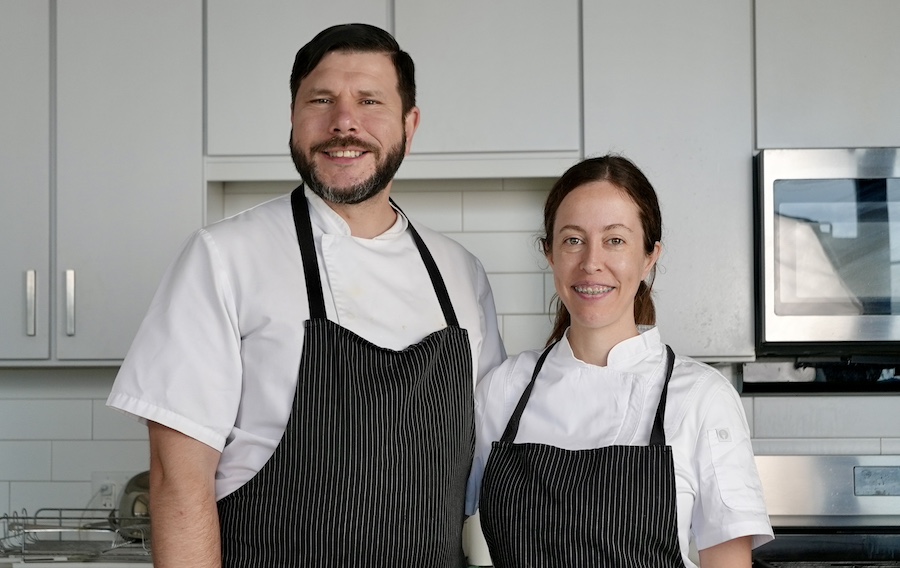
Charmaine and Mark at their restaurant, Chapters in Hay-on-Wye, Wales.

Creating a sustainable restaurant is not easy but it is very rewarding. Our view is that we shouldn’t negatively impact anything, whether this is people, planet, or our community. 

Charmaine McHugo
As a Michelin Green Star restaurant — one of only four restaurants in Wales to be awarded this accolade — how do you interpret the responsibility that comes with that recognition, and what does “sustainability” mean to you beyond the criteria itself?

We take the responsibility really seriously. There are guests who visit us because we have the accolade, and we fully respect the trust and belief that they have in us and the work that we do. 

Creating a sustainable restaurant is not easy but it is very rewarding. Our view is that we shouldn’t negatively impact anything, whether this is people, planet, or our community. 

Chapters in Wales Green Michelin star Worldchefs Magazine Issue 32 cover
Your restaurant is deeply rooted in place. We love to see your supplier shout outs, too. Can you share some stories of how you work with local producers to inform your seasonally-led menu development?

We have our core list of suppliers that we use year round. Many of our hyper-local drinks suppliers are based right in Hay-on-Wye. We have gotten to know them and their families really well over the years. For example, the person that supplies us with beer is also the person that looks after our cats when we go on holiday.

Having a restaurant in Hay means getting involved in the community, getting to know the people that also live and work there. 

What is one dish that expresses your approach to cooking? Can you share the story behind it from ingredient to plate?

A garden herb crème fraîche.

This is simple dish, full of flavor. We make a herb purée with numerous soft herbs and plants from the garden — chive, verbena, burnet, kale, and purple sprouting leaf. This is then whipped with crème fraîche from five miles down the road and set in metal rings. The herb crème fraîche is then topped with the same soft herbs dressed in a chive vinaigrette, pickled onions, linseed crackers, and cured egg yolk. 

You have an incredible regenerative restaurant garden just 8 miles from the kitchen. Can you share some of the planning behind planting local and biodiverse ingredients? 

Yes, there is a nice mix of planting things that Mark has previously worked with — items that are safe and we know we will have a use for, such as beetroot and kale, and then adding in some new curve balls for him to play around with. 

We grow a variety of produce and always encourage ingredients that have dual purpose, so flowers that will increase the pollinators (bugs, bees, and flies) to the garden but also look pretty and are edible, such as Calendula and Borage — in particular white borage which is just fantastic on salads and also self seeds, so we don’t have to grow it year on year, as it does it for us. 

Chapters in Wales Green Michelin star Worldchefs Magazine Issue 32 cover
How does this process impact your day-to-day choices in the kitchen?

It adds variety and flavor, but also it means that the kitchen team are always learning and have new products to play around with. 

Do you have any favorite ingredients to grow and/or source at the moment? We’d love to hear about one that you’ve worked with for a while, and perhaps another that you’ve discovered more recently. 

We focus our growing on vegetables that give you a high yield for the space, so beans, peas, and kale rather than cauliflower and large cabbages. Although, I will say my personal favorite is purple sprouting broccoli, as it is the first veggie in the spring that we harvest and is such a refreshing change to the winter vegetables.  

Something new for us was chicory — a root very similar looking to a parsnip, but when roasted and ground taste like coffee. We have used this in our tiramisu dessert, much to the delight of our guests. 

You use organic heritage seeds from Welsh suppliers, and have mentioned growing perennials. Why is this important to you, and what would you say chefs should know about the flavor potential of perennials?

Using perennials is less for the chefs and more for the soil. No dig gardening is all about soil health — the less we can disturb the soil the better, and as you leave perennials in the ground to do their thing year on year, this is ideal.  We love our herb patch, the roses, the fruit bushes, and our perennial kale.  We also class Jerusalem artichokes as a perennial, but they do require a bit of digging. 

What is one piece of advice you would give chefs looking to learn more about sustainable gastronomy?

Keep reading and talking to other chefs and people in the industry that are doing the same things. You have to keep learning as techniques and theories change and develop.  It’s easy to get stuck in a rut or think you know how to do it, but there is always something new going on and we can only improve…. Good luck!

Chapters in Wales Green Michelin star Worldchefs Magazine Issue 32 cover
About Charmaine and Chapters in Hay-on-Wye

Charmaine is the co-owner of Chapters in Hay-on-Wye, which she runs with her husband Mark.

Follow Chapters on Instagram at @chapters_hayonwye, and read more about their food philosophy, menus, and restaurant garden at www.chaptershayonwye.co.uk.

Chapters Green Michelin Star in Waales Issue 32 Worldchefs Magazine
Read more in Issue 32 of Worldchefs Magazine
Credits

Thank you to Charmaine for the interview and for being a part of Issue 32. Written by Clare Crowe Pettersson.

Cover photo by Ashleigh Cadet.

Categories
Member News

SA Chefs Magazine – Issue 01

Welcome to the new era of SA Chefs, with SA Chefs Magazine Issue 01. Relaunched, reimagined, and produced entirely as their official In-House Magazine, this is the heartbeat of their association. Dive into the edition below.

To learn more about Worldchefs, click here.

Categories
Competition Education GCC - Young Chefs Member News News

Korea’s New RQCE Students Shine with Outstanding Results at FHA 2026 Singapore

Written by Jake Kim

A new Worldchefs’ RQCE (Recognition of Quality Culinary Education)-accredited institution has emerged in South Korea. In March, following strong support from the school’s management and the dedicated efforts of its instructors, Korea Culinary Art Academy officially received its accreditation from Worldchefs, reflecting the institution’s alignment with Worldchefs’ quality standards of excellence in culinary education.

Soon after, the academy’s young chef competitors went on to challenge themselves at the “Young Chefs Grand Prix Team Challenge” held during FHA 2026 at Singapore Expo from April 21 to 24. The competition, jointly organized by Singapore Chefs Association and Informa Markets, is an international platform where promising young chefs from around the world compete and showcase their skills. 

While the school had previously gained extensive experience in individual competitions, this marked their first time competing as a team. The event brought together 15 teams from countries including the United States, Australia, Taiwan, Singapore, and Thailand. Following the preliminary rounds, only the top eight teams advanced to the finals, where they faced a high-level “mystery box” challenge. Preparing for their first team competition proved to be a demanding journey for both the students and their instructors. 

Korea Culinary Art Academy entered two teams in the competition, and both successfully advanced to the Top 8, earning their place in the finals. Composed of teenage high school students, the teams faced the intense pressure of the mystery box challenge. Nevertheless, they maintained focus, demonstrated strong teamwork, and delivered their best performance until the very end—ultimately earning the honor of becoming the inaugural champions. 

This achievement goes far beyond a simple victory. It reflects the passion and dedication of the young chefs, the commitment of their instructors, and the strength of a structured education system built upon Worldchefs’ RQCE (Recognition of Quality Culinary Education) framework. It is a showcase of the outcomes of strong training, mentorship, and professional development within the Worldchefs’ global community, and serves as a meaningful reminder of the importance of solid foundational training in culinary education.

About Korea Culinary Art Academy

Korea Culinary Art Academy is a professional culinary and food arts academy in South Korea that offers a wide range of courses in cooking, baking, and barista training. The academy operates multiple branch locations nationwide, all under the same corporate structure and educational standards. Students can enroll in certificate programs, as well as career development and skill-building courses. Alongside practical hands-on training, the academy also supports startup and employment opportunities, and hosts regular events and community activities to enrich the learning experience.

Currently, the RQCE (Recognition of Quality Culinary Education) accreditation applies to the Gangnam campus in Seoul, with plans to expand the accreditation to other branches in the near future.

Categories
Member News

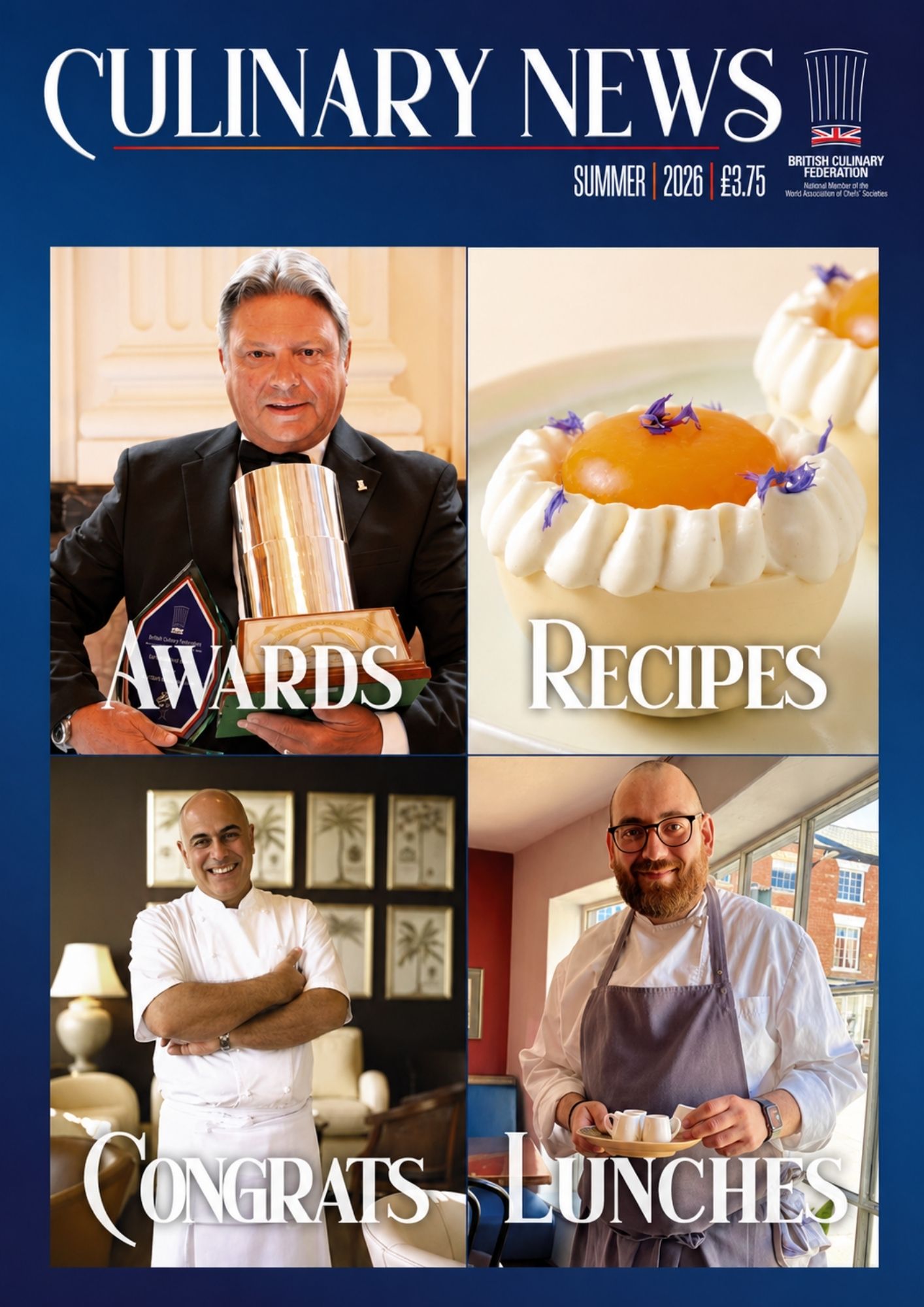
British Culinary Federation’s Culinary News Magazine – Spring 2026

In the Spring 2026 issue of British Culinary Federation’s Culinary News magazine, read about upcoming events, discover the latest stories, and more!

To learn more about Worldchefs, click here.

Subscribe

* indicates required

What are you looking for?

Generic selectors
Exact matches only
Search in title
Search in content
Post Type Selectors