See below for recipe
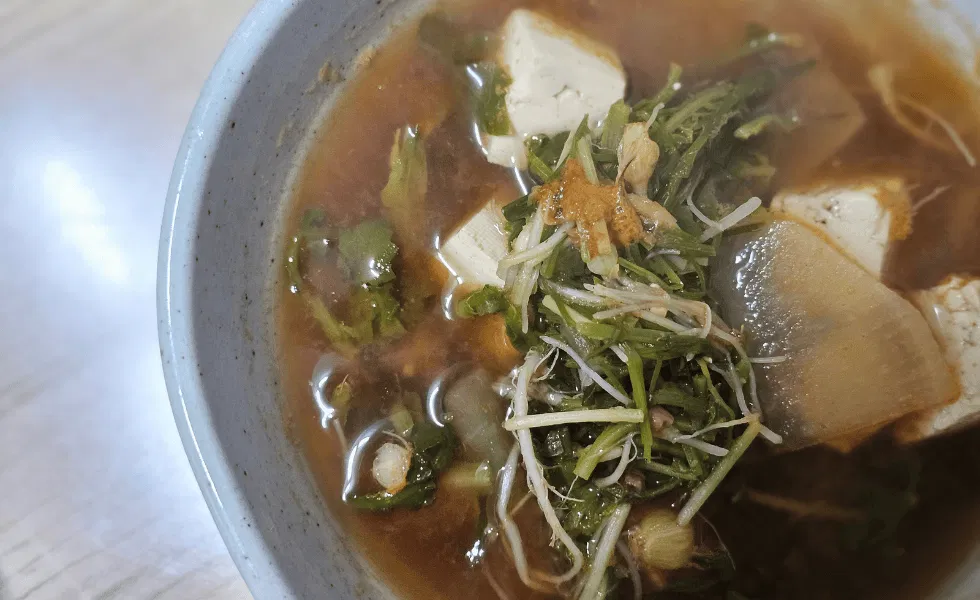
Traditional Korean soup made with sun-dried radish greens (siraegi) simmered in soybean paste broth. This dish reflects Korea’s long tradition of root-to-leaf cooking and seasonal food preservation, where the entire vegetable is utilized to minimize food waste.
Why This Dish Supports Planet Protection
• Root-to-Leaf Cooking: Siraegi uses radish leaves that are often discarded, demonstrating whole-ingredient utilization and reducing food waste.
• Low-Energy Preservation: The greens are preserved by natural sun-drying, requiring no refrigeration or industrial processing.
• Seasonal Sustainability: Radish greens are dried after harvest and used throughout the year, reducing reliance on imported or offnseason produce.
• Plant-Forward Cuisine: The dish is primarily vegetable-based, which is associated with lower environmental impact compared to meat-heavy dishes.
Korean Zero Waste Radish Leaf Soup – Recipe
Adapted by JAKE KIM
Yields 4 servings
Ingredients
- Dried radish greens (Siraegi), 120 g
- Water, 1.5 L
- Korean soybean paste (Doenjang), 80 g
- Anchovy kelp stock, 1 L
- Garlic, minced, 15 g
- Korean chili flakes (optional), 3 g
- Sesame oil, 10 g
- Tofu (medium firm), 150 g
- Spring onion, 20 g
- Soy sauce, 10 g
Instructions
1. Rehydrate the greens: Soak dried siraegi in warm water for about 30 minutes until softened.
Rinse thoroughly, squeeze out excess water, and cut into 4–5 cm pieces.
2. Prenseason the greens: Mix the rehydrated siraegi with minced garlic, sesame oil, and a small amount of doenjang so the seasoning penetrates the greens.
3. Prepare the broth: Bring anchovy kelp stock to a simmer and dissolve the remaining doenjang into the broth.
4. Simmer the soup: Add the seasoned siraegi and cook gently for about 20 minutes.
5. Finish: Add diced tofu and cook for 5 minutes. Adjust seasoning with soy sauce and finish with chopped spring onion.
For more recipes, visit www.worldchefs.org/news.