See below for recipe
History of Blueberry Pie
The legacy of those early recipes lives on, not solely in updated variations found in trendy cookbooks but additionally within the collective reminiscence and continued practice of those who cherish the tradition of untamed blueberry pie-making.
The availability of cultivated blueberries considerably impacted later recipes, allowing for bigger, extra uniform berries and facilitating mass production, but the essence of the early pie, with its focus on easy components and the celebration of the wild blueberry harvest, stays a priceless a half of culinary history.
The Evolution of Blueberry Pie in the 19th and 20th Centuries
The 19th century saw blueberries primarily utilized in a home context, with pies largely a product of house kitchens and regional variations.
Early blueberry pies likely relied on wild blueberries, plentiful in certain areas of the United States and Canada, resulting in distinct regional recipes and kinds.
These early pies lacked the uniformity and constant high quality of later iterations, reflecting the variability of untamed blueberry harvests.
Recipes had been handed down by way of families and communities, resulting in a range of pie crusts, fillings, and sweetness ranges.
The invention of high-bush blueberry cultivation within the early 20th century revolutionized the blueberry pie panorama.
Frederick V. Coville’s work with Elizabeth White, a New Jersey farmer, led to the event of superior high-bush blueberry cultivars.
These new cultivars supplied larger berries, higher yields, and improved taste compared to wild blueberries, dramatically impacting industrial viability.
The resulting enhance in commercial blueberry farming made blueberries a extra readily available and inexpensive ingredient.
This availability directly influenced the popularity of blueberry pie, making it a more common dessert throughout the nation.
The rise of canning and freezing technologies additional propelled the blueberry pie’s widespread adoption.
Canning allowed for year-round availability of blueberries, while freezing preserved freshness and flavor for later use.
These preservation methods eliminated seasonal constraints, making blueberry pie a consistent dessert option all yr long.
The early to mid-20th century saw the standardization of blueberry pie recipes, pushed by each business interests and the rise of printed cookbooks.
Standardized recipes usually featured a sweet, thick filling and a buttery, flaky crust, contributing to a extra consistent taste throughout completely different regions and home cooks.
The emergence of mass-produced pie crusts and pre-made fillings further streamlined the method of constructing blueberry pie.
These commercially produced elements made the creation of blueberry pie extra accessible, even for those without in depth baking experience.
The increased accessibility of blueberries and simplified preparation methods solidified the blueberry pie’s position as a classic American dessert.
Throughout the twentieth century, blueberry pie remained a staple at picnics, household gatherings, and holiday celebrations throughout the United States.
Its picture grew to become closely tied to notions of house, comfort, and traditional American values in well-liked tradition and promoting.
While regional variations continued to exist, the core elements of the blueberry pie – the sweet filling and flaky crust – remained consistent.
The influence of commercial blueberry farming on the evolution of the blueberry pie cannot be overstated.
It transformed the pie from a seasonal treat primarily based on wild berries into a widely out there and beloved dessert enjoyed year-round.
The ongoing evolution of blueberry cultivars and developments in meals processing technologies continue to shape the blueberry pie’s future.
From humble beginnings as a regional specialty, the blueberry pie has become a timeless American basic, reflecting the nation’s agricultural and culinary historical past.
The nineteenth century saw the burgeoning recognition of blueberry pie, fueled by elevated blueberry cultivation and the rise of home cookbooks. Early recipes often featured a simpler, less refined crust, possibly using lard or butter, and counting on instinct somewhat than exact measurements.
The crusts themselves were often quite thick, a practical necessity given the limited availability of refined flour and the necessity for a sturdy construction to hold the ample, juicy filling. The emphasis was largely on the taste of the recent, seasonal berries.
Fillings additionally various considerably, with some recipes relying heavily on sugar and spices, while others aimed for a extra tart and less candy style profile. The consistency of the filling, too, varied from recipe to recipe. Some favored a thicker, virtually jam-like filling, whereas others preferred a more unfastened and saucy consistency.
The creation of the 20th century brought about vital adjustments in pie crust methods, largely because of technological developments and changing cultural practices. The rise of commercially produced flour and shortening revolutionized pie-making. Pre-made pie crusts began to look on grocery shelves, offering a handy various to making crust from scratch.
The development of refined shortening, like Crisco, offered a more consistent and fewer labor-intensive different to lard and butter. This led to lighter, flakier crusts, shifting the major focus from a utilitarian crust to 1 that was each structurally sound and aesthetically pleasing. Cookbooks additionally turned more detailed and precise, guiding house cooks toward consistently profitable results.
The Twenties and 30s noticed a gradual improve in the utilization of blind baking strategies, stopping a soggy backside – a common drawback with juicy blueberry fillings. This approach involved partially baking the crust earlier than including the filling.
As the twentieth century progressed, the emphasis shifted from simple, rustic pies to extra refined and visually interesting desserts. The rise of food pictures and cooking exhibits further contributed to this trend. Pie crusts grew to become thinner, crisper, and sometimes featured decorative edges.
The introduction of meals processors in the latter half of the twentieth century additionally simplified the crust-making course of. The capability to quickly and effectively incorporate fats into the flour led to much more consistently flaky and tender crusts.
By the late twentieth century, the blueberry pie had turn into a quintessential American dessert, its evolution reflecting broader societal shifts in meals production, expertise, and culinary aesthetics. While the basic parts of a great blueberry pie—fresh berries, a sweet-tart filling, and a reliable crust—remained constant, the techniques and expectations surrounding its preparation underwent a big transformation.
The changes in pie crust methods weren’t only about comfort but also about achieving a selected texture and taste profile. The transfer from thicker, more rustic crusts to thinner, flakier ones reflected a shift in the course of a extra refined culinary strategy. The development of blind baking and different methods aimed at stopping sogginess showcased a growing understanding of the science behind baking.
Today, while many still cherish the normal methods of pie-making, the legacy of the 19th and 20th centuries continues to affect how we strategy making and having fun with blueberry pie. The accessibility of ingredients and instruments, coupled with a vast array of readily available data, allows for a level of creativity and precision beforehand unimaginable.
From humble beginnings with thick, hearty crusts to the refined, flaky creations of today, the story of the blueberry pie is a testament to the ongoing evolution of culinary practices and our enduring love for this traditional dessert.
The nineteenth century noticed blueberries, once a wild and less-accessible berry, steadily making their way into the burgeoning American pie-making custom. Early recipes had been usually simpler, reflecting the limitations of the time. The focus was on preserving the fresh, tart taste of the berries, rather than advanced layering or additions.
Sugar, available however still a luxury for a lot of, performed an important role in both preserving and enhancing the flavor of the pie fillings. Recipes from this period usually emphasized a generous amount of sugar, often alongside spices like cinnamon and nutmeg, to stability the pure tartness of the wild blueberries.
Crusts had been usually produced from simple lard-based recipes, handed down through generations. Regional variations existed, with some families favoring crispier crusts, while others preferred a extra tender, crumbly texture. The standardization of baking techniques and ingredients was still far off.
The rise of business baking and meals processing within the late 19th and early 20th centuries began to impression blueberry pie. The improvement of improved ovens and baking tins meant more consistent results and ease of preparation for house bakers.
Canning and freezing applied sciences revolutionized the supply of blueberries. No longer restricted to the quick harvest season, blueberries became a year-round ingredient, tremendously expanding the pie-making potentialities. This led to a proliferation of blueberry pie recipes in cookbooks and magazines.
The early twentieth century additionally noticed the emergence of commercially produced pie crusts and pre-made pie fillings, gradually changing the landscape of home baking. While many residence cooks still favored making their pies from scratch, these comfort merchandise supplied a quicker and easier various for busy families.
The influence of meals expertise prolonged beyond preservation and comfort. The growth of new sweeteners, similar to corn syrup, offered alternate options to granulated sugar, impacting the flavor and texture of the pies. The introduction of several varieties of flour also affected the quality of the crust.
Mid-20th-century cookbooks began to indicate higher creativity and variation in blueberry pie recipes. The addition of lemon zest, vanilla extract, and other flavorings grew to become extra commonplace. Variations such as blueberry cream pies and blueberry crumble pies gained popularity, reflecting a growing sophistication in dessert preparation.
The post-World War II era saw a rise in the utilization of processed components, together with synthetic flavors and preservatives. While these components made pies extra shelf-stable and handy, in addition they sparked debates about meals high quality and authenticity.
The late 20th century saw a counter-movement in path of easier, extra pure ingredients. The rise of the “farm-to-table” movement, along with rising consciousness of food provenance, influenced blueberry pie recipes. There was renewed interest in utilizing regionally sourced, natural blueberries and creating pies with minimal processed ingredients.
Throughout the 20th century, the evolution of blueberry pie was closely tied to advances in food know-how. From preservation methods that made blueberries obtainable year-round to the development of economic pie crusts and fillings, technological innovations formed each the accessibility and the number of this beloved dessert. The story of the blueberry pie is, in many ways, a reflection of the broader evolution of food production and consumption in America.
The nineteenth century noticed the burgeoning recognition of blueberry pie, although its exact origins remain considerably elusive. Early recipes relied closely on wild blueberries, available within the vast forests of New England and other parts of North America.
These early pies often featured a easy, rustic crust and a filling sweetened with beneficiant quantities of sugar, reflecting the prevalent culinary tastes of the time. The emphasis was on showcasing the pure sweetness and tartness of the berries, somewhat than on elaborate pastry techniques or complex taste profiles.
The growth of economic baking and canning applied sciences in the late 19th and early 20th centuries played a significant position in remodeling blueberry pie from a largely regional, seasonal treat to a more extensively accessible dessert. Mass-produced sugar and improved transportation networks enabled bakers to create and distribute pies more effectively.
The rise of home economics as a subject in schools throughout the early twentieth century also contributed to the standardization and widespread adoption of recipes for blueberry pie. Cookbooks that includes detailed directions and variations on the traditional recipe began proliferating, additional solidifying its place in American homes.
The twentieth century witnessed the evolution of blueberry pie into the dessert we all know today. Improvements in flour milling and baking strategies led to the development of flakier, tenderer pie crusts. Recipes incorporated new ingredients, similar to lemon zest or spices, to complement the berries’ taste.
The introduction of cultivated blueberry varieties yielded larger, sweeter berries, permitting for higher consistency in style and texture. This considerably impacted the quality and availability of blueberries for pie-making, further contributing to the dessert’s growing reputation.
Frozen blueberries grew to become broadly available within the mid-20th century, dramatically expanding the pie-making season and making it attainable to take pleasure in this dessert year-round. This also led to a broader geographical attain for blueberry pie, no longer limited by the provision of recent berries in particular areas.
The rise of economic food manufacturing meant that commercially made blueberry pies became a typical sight in supermarkets, bakeries, and restaurants. Variations on the basic recipe emerged, including pies with crumb toppings or lattice crusts, adding visible attraction and textural range.
Blueberry pie’s place in popular culture is simple. It’s frequently featured in nostalgic depictions of American life, typically related to household gatherings, holidays, and comforting home-cooked meals. It appears in countless books, movies, and television reveals, constantly portrayed as an emblem of healthful Americana.
From its humble beginnings as a regional delicacy made with wild blueberries to its current status as a ubiquitous dessert available year-round, the journey of blueberry pie reflects broader societal adjustments in food manufacturing, distribution, and consumption patterns. Its enduring appeal speaks volumes about its comforting qualities and talent to evoke sturdy feelings of nostalgia and belonging.
The enduring legacy of blueberry pie just isn’t simply in its scrumptious style, however in its consistent illustration of home, household, and conventional American values in well-liked culture. It continues to carry a particular place within the hearts and stomachs of many throughout generations.
Further analysis into particular regional variations and the effect of individual bakers and cookbook authors may present a richer, more nuanced understanding of the evolution of this beloved dessert.
Blueberry Pie Today: Modern Interpretations and Trends
The classic American blueberry pie, an emblem of home-baked goodness, is experiencing a renaissance, moving past its conventional kind into thrilling new territories.
Modern interpretations showcase progressive crusts, from gluten-free oat flour blends to flaky, buttery variations incorporating herbs like thyme or rosemary, adding surprising layers of flavor.
Fillings are additionally present process a metamorphosis. While the quintessential sweet-tart blueberry remains central, chefs are experimenting with additions like lemon zest, cardamom, or even a hint of balsamic vinegar to boost the complexity of the fruit.
The use of high-quality, regionally sourced blueberries is a burgeoning development, highlighting the distinctive traits of various varieties and emphasizing seasonality. This elevates the pie from a easy dessert to a celebration of regional produce.
Miniature blueberry pies, good for particular person servings, are gaining recognition, offering a handy and elegant presentation for each informal gatherings and formal occasions.
Furthermore, the presentation of the blueberry pie is becoming as important because the style. Expect to see beautifully rustic, free-form pies alongside meticulously crafted lattice tops, showcasing the baker’s artistry.
Gourmet blueberry pies are pushing culinary boundaries. Imagine a blueberry pie featuring a lavender-infused crust, paired with a creamy mascarpone filling, and topped with candied pecans. The prospects are infinite.
Some bakers are incorporating surprising textures, such as a crumble topping with toasted nuts and a hint of brown sugar, providing textural contrast to the gentle, juicy filling.
The rise of artisanal bakeries and pastry retailers is fueling this connoisseur development, providing customers with access to exceptionally crafted blueberry pies that includes unique taste combos and chic designs.
The influence of other culinary traditions can be evident. You would possibly find a blueberry pie with a hint of Asian spices, or a pie infused with parts from French patisserie, featuring delicate puff pastry and a sophisticated glaze.
Beyond the traditional round pie, inventive bakers are experimenting with different shapes and sizes, leading to unique and visually beautiful shows, including squares, rectangles, and even tartlets.
The rising curiosity in vegan and vegetarian options has led to the development of dairy-free and egg-free blueberry pie recipes, guaranteeing that everybody can get pleasure from this traditional dessert.
Ultimately, the modern blueberry pie represents a delightful evolution of a beloved classic, merging conventional methods with innovative ideas and high-quality elements to create a very exceptional culinary experience.
The focus is shifting from mere sustenance to a holistic sensory expertise, encompassing taste, texture, visual enchantment, and the general narrative of the components and their origin.
From farm-to-table initiatives to the usage of heirloom blueberry varieties, the fashionable blueberry pie speaks to a renewed appreciation for quality and sustainability inside the culinary panorama.
This renewed emphasis on artisan strategies, unique flavor profiles, and beautiful presentation elevates the standard blueberry pie to a position of sophisticated culinary artistry.
The modern blueberry pie is not just a dessert; it’s a testament to the enduring appeal of a traditional, reimagined for a model new era of meals lovers.
While the specific historical origins of blueberry pie are troublesome to pinpoint definitively, its rise to reputation is intrinsically linked to the cultivation and widespread availability of blueberries.
Early American settlers found wild blueberries, and as cultivation methods improved, blueberries became more readily accessible, resulting in their increased use in pies and other baked goods.
Recipes for blueberry pies started appearing in cookbooks all through the nineteenth and early twentieth centuries, often variations on basic fruit pie recipes.
The growth of improved baking techniques and available ingredients contributed to the standardization and popularization of the blueberry pie as we all know it today.
The mid-20th century noticed blueberry pie firmly established as a classic American dessert, its presence in household gatherings, holidays, and cafes solidifying its cultural significance.
Today, the basic blueberry pie stays a beloved dessert, however its interpretations have diversified considerably.
Modern interpretations often focus on enhancing the blueberry filling’s flavor profile, using several varieties of blueberries for varied textures and sweetness ranges.
Some modern recipes incorporate spices corresponding to cinnamon, cardamom, or nutmeg to add complexity and warmth to the traditional blueberry taste.
The use of contemporary herbs, like lemon balm or thyme, also supplies a novel twist to the basic pie filling.
Crust innovation is one other significant development. Pastry chefs are experimenting with different types of flour, incorporating nuts or seeds into the crust for added texture and flavor.
Gluten-free crusts have become increasingly in style, accommodating dietary restrictions and preferences while maintaining the essence of the pie.
The rise of artisan baking has additionally led to more intricate and visually beautiful blueberry pies, with ornamental crimping, lattice tops, and creative designs.
Beyond the traditional pie, mini blueberry pies and hand pies provide particular person servings and increased portability, good for parties or on-the-go treats.
Fusion blueberry pies symbolize a major evolution, mixing the basic pie with flavors and strategies from different culinary traditions.
A lavender-blueberry pie, for instance, combines the floral notes of lavender with the sweetness of blueberries, resulting in a complicated and aromatic dessert.
Similarly, a balsamic-glazed blueberry pie may incorporate a discount of balsamic vinegar to add a tangy and sophisticated counterpoint to the blueberries’ sweetness.
The incorporation of worldwide spices, like star anise or ginger, displays the influence of worldwide cuisines on dessert creations.
The use of several types of crust, such as a phyllo dough base, provides one other avenue for fusion, introducing distinctive textural parts.
Cheesecake-blueberry pie hybrids, combining the creamy richness of cheesecake with the classic blueberry filling, provide a decadent and indulgent variation.
Ultimately, the evolution of the blueberry pie reflects changing tastes and culinary creativity. While the core essence of the pie remains—the pleasant mixture of sweet blueberries and a flaky crust—modern interpretations and fusion approaches showcase the boundless possibilities of this timeless dessert.
From delicate spice additions to complete culinary fusions, the modern blueberry pie is a testament to culinary innovation while retaining its beloved, classic standing.
Blueberry pie, a traditional dessert, continues to evolve, reflecting trendy culinary trends and a rising consciousness of health and wellness.
Gone are the days of solely relying on hefty lard-based crusts and overwhelmingly sugary fillings.
Today’s blueberry pies showcase progressive crusts, using different flours like almond, oat, or even coconut flour, leading to gluten-free and often nuttier profiles.
Many bakers are incorporating whole grains into the crust for added fiber and a extra complicated flavor, shifting away from refined white flour.
The pattern in course of more healthy fillings is equally outstanding. Reduced sugar content is a standard theme, with some recipes utilizing natural sweeteners like maple syrup, honey, or stevia to reduce the sweetness with out sacrificing taste.
Fruit purees, similar to apple sauce or prune puree, are typically added to the filling to scale back the overall sugar load while simultaneously contributing to a moister, extra intensely flavored pie.
The addition of spices like cardamom, cinnamon, or even a hint of ginger, enhances the blueberry’s pure sweetness and provides depth of taste, reducing the necessity for excessive sugar.
Miniature pies and particular person servings are gaining recognition, offering portion control and visual attraction. These smaller portions allow for indulgence without the guilt of consuming a large slice of a traditional pie.
Creative variations on the basic blueberry pie are also emerging. We see the incorporation of other fruits like raspberries, blackberries, or even a hint of lemon zest to enrich the blueberries’ tartness.
The use of fresh, locally sourced blueberries every time potential is a rising trend, reflecting a commitment to sustainability and superior flavor.
Some bakers are experimenting with unique textures, incorporating parts like crumble toppings made with nuts and oats, or maybe a streusel topping with a lighter touch than traditional streusel.
Vegan options are more and more well-liked, with recipes substituting butter and eggs for plant-based alternatives like vegan butter or applesauce. This allows for enjoyment by these following vegan or dairy-free diets.
The focus on presentation has also seen a shift. While rustic charm nonetheless holds a spot, many trendy blueberry pies emphasize clean strains, suave arrangements of the fruit, and visually appealing lattice tops or decorative crust edges.
Ultimately, the trendy blueberry pie represents a stability between tradition and innovation. It maintains the beloved comfort and acquainted style while embracing more healthy ingredients and progressive strategies to create a delicious and satisfying dessert that appeals to a wider range of preferences and dietary needs.
The evolution continues, promising exciting new interpretations and further advancements in more healthy and more artistic blueberry pie variations in the future.
From gluten-free crusts to lowered sugar fillings and ingenious taste combinations, the blueberry pie has tailored to trendy tastes and health consciousness while remaining a cherished culinary classic.
Blueberry pie, a seemingly simple dessert, boasts a rich history intertwined with the evolution of American baking and culinary trends.
While pinpointing an actual origin is troublesome, its rise to prominence coincides with the cultivation and elevated availability of blueberries, notably in the late 19th and early twentieth centuries.
Early recipes typically featured a more rustic strategy, with variations in crust thickness and sweetness, reflecting regional preferences and the available ingredients.
The standardization of baking strategies and ingredients throughout the 20th century led to a extra uniform, but nonetheless various, vary of blueberry pie recipes.
The introduction of ready-made crusts considerably impacted the convenience of preparation, making blueberry pie a more accessible dessert for house bakers.
Commercialization further propelled blueberry pie’s recognition, with its presence in bakeries, eating places, and eventually, frozen food aisles, making it a ubiquitous treat.
Modern interpretations of blueberry pie showcase creativity and a willingness to experiment with each the filling and the crust.
The traditional candy filling can be enhanced with spices like cinnamon, nutmeg, or cardamom, or complemented by a hint of lemon or orange zest for a brighter taste profile.
Some trendy recipes incorporate different sorts of berries, creating a pleasant mix of flavors and textures.
The crust itself has undergone transformations, with using various flours like almond or oat flour for gluten-free options, or the addition of nuts or seeds for added flavor and texture.
Lattice tops, ornamental cutouts, and even the incorporation of edible flowers have elevated the aesthetic enchantment of blueberry pie.
Miniature pies, particular person servings, and even hand pies have become well-liked, adapting the standard format to fulfill modern life and preferences.
The incorporation of fresh, regionally sourced blueberries has become a trend, further enhancing the flavour and supporting native farmers.
Beyond the normal pie, blueberry’s versatility extends to other desserts, corresponding to cobblers, crisps, and muffins, showcasing its enduring appeal.
The persevering with recognition of blueberry pie may be attributed to its easy but satisfying nature.
The mixture of candy and tart blueberries inside a flaky, buttery crust delivers a comforting and scrumptious expertise.
Its adaptability to completely different tastes and preferences, coupled with its suitability for each informal and formal occasions, solidifies its place as a beloved dessert.
From humble beginnings to modern culinary improvements, blueberry pie stays a timeless classic, regularly evolving while retaining its core attraction.
Its enduring presence displays not just a love for a specific dessert, but a connection to history, tradition, and the shared enjoyment of delicious meals.
The story of blueberry pie is a delicious testomony to the enduring power of easy components and the boundless creativity of bakers throughout the ages.
The Future of Blueberry Pie
The history of blueberry pie is intrinsically linked to the historical past of the blueberry itself. Early attempts at blueberry pies likely utilized wild blueberries, resulting in pies with a more tart and fewer predictable sweetness than their fashionable counterparts.
The development of cultivated blueberry varieties in the early twentieth century, significantly through the work of Elizabeth Coleman White and Frederick V. Coville, revolutionized blueberry pie making. Larger, sweeter, and extra uniform berries made for a extra constant and appealing product.
The rise of business baking and meals processing in the mid-20th century also profoundly impacted blueberry pie. Pre-made crusts and frozen blueberries simplified the method, making self-made blueberry pie accessible to a wider inhabitants.
Regional variations emerged, reflecting local preferences and out there ingredients. New England, for example, developed a popularity for its blueberry pies, usually incorporating local varieties and conventional recipes passed down via generations.
The latter half of the 20th century noticed the expansion of the blueberry pie’s reach by way of quick food chains and eating places. While usually a simplified version of the homemade pie, its inclusion on menus additional cemented its place in popular tradition.
The late 20th and early 21st centuries have witnessed a resurgence of curiosity in artisanal and gourmet baking, resulting in inventive improvements in blueberry pie. This contains using unique crusts (such as these incorporating nuts, herbs, or several sorts of flour), unusual fillings (such as including spices, liqueurs, or different fruits), and suave presentation techniques.
Modern tendencies also showcase a rising focus on regionally sourced elements and sustainable practices inside blueberry pie manufacturing. Farmers’ markets and direct-to-consumer sales of high-quality blueberries are fueling the demand for pies made with recent, locally grown ingredients.
Grandmother’s recipe, passed down through generations, holds a sacred place in many families. The familiar taste and texture, a consolation food synonymous with residence and heritage, are very important to preserving its legacy.
However, the long run cannot solely depend on nostalgia. Maintaining the core essence – that good mix of tart blueberries and sweet pastry – is paramount, however adapting to altering shopper demands is essential for its continued success.
One key adaptation lies in sourcing. The increasing concentrate on sustainable and ethical practices will influence blueberry cultivation. Consumers are extra conscious of the environmental impression of their meals decisions, and regionally sourced, organically grown blueberries will become increasingly fascinating ingredients.
Furthermore, transparency in sourcing and production might be crucial. Knowing the origin of the blueberries and the methods used in their cultivation and processing will improve the pie’s worth and enchantment to environmentally aware shoppers.
Innovation in pastry methods can even play a job. While the classic lattice-top pie remains a timeless favourite, experimenting with variations in crust ingredients – incorporating various flours or healthier fats – can broaden its appeal to health-conscious people without compromising taste.
Exploring new taste mixtures within the pie itself can also attract a wider audience. Infusing the filling with refined spices, similar to cardamom or cinnamon, or incorporating complementary fruits like raspberries or blackberries, can create thrilling variations without betraying the core blueberry experience.
The presentation of blueberry pie may even evolve. While the basic round pie remains iconic, showcasing the pie in artistic and visually appealing ways—individual portions, miniature pies, or unique serving vessels—can enhance its enchantment in a visually pushed world.
The rise of artisanal bakeries and farmers’ markets provides a novel opportunity to attach with shoppers instantly, emphasizing the story behind the pie and the dedication to quality ingredients and traditional methods. These settings present a platform to showcase the artistry and craftsmanship involved in creating a very exceptional pie.
Finally, embracing digital platforms shall be important for reaching new audiences and sustaining relevance. Sharing recipes, baking ideas, and the story behind the pie through blogs, social media, and online culinary communities can help join with a wider generation of pie lovers.
In conclusion, the future of blueberry pie rests on a cautious mix of custom and progress. By embracing sustainability, exploring creative variations whereas preserving the core essence, and adapting to evolving consumer preferences and technological advancements, we will ensure that this beloved dessert continues to thrill generations to return.
The enduring enchantment of blueberry pie lies not solely in its deliciousness however in its ability to evoke cherished recollections and create new ones. By preserving its heart while embracing its evolution, we safe its place as a timeless culinary treasure.
The journey forward requires a commitment to both upholding time-honored methods and welcoming innovative approaches that improve, somewhat than diminish, the pie’s essential character.
The story of blueberry pie is way from over; it is a continuing narrative woven with threads of tradition, innovation, and a shared love for a basic dessert.
The historical past of blueberry pie, while not as meticulously documented as some other baked items, reveals a captivating journey intertwined with the evolution of blueberry cultivation and American culinary traditions.
Early variations likely involved wild blueberries, available across North America. These pies would have varied wildly in style and texture, reflecting the various wild blueberry varieties and the inconsistent availability of the fruit.
The development of cultivated blueberry varieties within the early twentieth century, significantly via the groundbreaking work of Elizabeth Coleman White and Frederick Vernon Coville, revolutionized blueberry pie. Suddenly, a more consistent provide of bigger, sweeter berries turned available, leading to a more standardized and predictable pie.
The rise of house canning and freezing technologies further propelled the popularity of blueberry pie. Homemakers may now protect their summer time blueberry harvest, ensuring access to this scrumptious dessert all yr long.
The mid-20th century saw blueberry pie turn into a real American staple, a comforting and familiar dessert current at countless family gatherings and vacation celebrations. Its place in popular culture is cemented via numerous mentions in literature, movie, and television.
Commercialization played a major role. Mass-produced frozen blueberries and pre-made pie crusts made blueberry pie extra accessible to a wider inhabitants, altering the baking process and potentially influencing style and consistency.
Modern iterations of blueberry pie exhibit a outstanding diversity. From traditional recipes handed down through generations to revolutionary twists incorporating unique spices, fillings, and crust variations, blueberry pie continues to adapt and evolve.
The future of blueberry pie, however, faces challenges. Concerns concerning sustainability in blueberry manufacturing are paramount.
By embracing sustainable practices at every stage of the blueberry pie lifecycle – from cultivation to consumption – we can be sure that this beloved dessert stays a culinary delight for generations to come back without compromising the health of our planet.
The history of blueberry pie has been considered one of adaptation and innovation. The future requires an analogous spirit, however with a give attention to accountable production and aware consumption to ensure the enduring legacy of this basic dessert.
Appendix: Notable Blueberry Pie Bakers and Recipes
The history of blueberry pie is inextricably linked to the rise of the blueberry itself as a cultivated crop. Early makes an attempt at pie-making doubtless involved wild blueberries, resulting in pies with a more tart and fewer uniform flavor profile than their fashionable counterparts.
While exact information are scarce, anecdotal evidence means that blueberry pies gained recognition within the late 19th and early twentieth centuries, coinciding with developments in agricultural strategies that led to bigger, sweeter, and more available blueberries.
The rise of home economics schooling and readily available cookbooks played a significant position in disseminating blueberry pie recipes throughout the nation. These publications standardized recipes, resulting in a more consistent and predictable consequence for house bakers.
The improvement of commercial pie crusts and the widespread adoption of canning and freezing technologies additional fueled the recognition of blueberry pie. It became a staple dessert, an emblem of home-style baking, and a frequent characteristic at picnics, potlucks, and household gatherings.
Notable Blueberry Pie Bakers and Recipes: While specific names of early “famous” blueberry pie bakers could be lost to time, many notable bakers and chefs have since put their very own unique spin on the traditional recipe. Numerous cookbooks feature heirloom household recipes passed down by way of generations, each with delicate variations in crust texture, filling sweetness, and the addition of spices like cinnamon, nutmeg, or allspice.
The proliferation of baking blogs and online assets in recent times has led to a resurgence in the creativity surrounding blueberry pies. Many contemporary bakers experiment with distinctive crusts, such as those made with completely different flours, incorporating nuts or seeds, or creating lattice-top designs.
Some bakers additionally incorporate other fruits or flavors into their blueberry pies, creating revolutionary blends similar to blueberry-apple or blueberry-lemon pies. Others concentrate on highlighting the pure sweetness of the blueberries by reducing the amount of added sugar.
Famous Pie Shops and Bakeries: Many bakeries throughout the United States have established reputations for his or her wonderful blueberry pies. These bakeries usually use locally sourced ingredients and time-honored recipes, emphasizing quality and traditional strategies.
Some establishments may have particular seasonal blueberry pies, leveraging the height freshness of the berries. Others give consideration to a signature blueberry pie recipe, passed down by way of household possession or developed over years of perfecting the craft.
Regional variations in blueberry pie recipes exist, influenced by native agricultural practices and cultural preferences. New England, with its rich blueberry farming history, is particularly recognized for its blueberry pies, and lots of regional bakeries in this space have turn into legendary locations for pie enthusiasts.
Unfortunately, a definitive record of “well-known” blueberry pie shops and bakeries is difficult to compile, as fame is commonly subjective and geographically restricted. Local publications and online critiques are often the most effective assets for discovering highly-rated blueberry pie locations in particular areas.
The enduring recognition of blueberry pie is a testament to its easy class and scrumptious taste profile. The evolution of the pie, from its humble beginnings utilizing wild blueberries to the varied and creative variations out there today, displays both the developments in food production and the enduring enchantment of this classic dessert.
The continuing innovation and fervor of bakers throughout the globe ensures that the tradition of the blueberry pie will proceed to thrive for generations to come.
Tracing the historical past of blueberry pie requires acknowledging the evolution of each the blueberry itself and the art of pie-making. Early iterations probably weren’t what we might acknowledge at present, given the limited availability and cultivated varieties of blueberries in earlier centuries.
Native American groups in North America, lengthy earlier than European colonization, utilized wild blueberries in varied dishes. While concrete recipes are unavailable, their data of preserving and using these berries undoubtedly laid the groundwork for later culinary developments. Their methods, doubtless involving drying, freezing, or simple stewing, impacted the later growth of pie fillings and baking methods.
The earliest documented recipes resembling fashionable blueberry muffin recipe healthy pie seem in colonial American cookbooks, although usually featuring a much less refined crust and a simpler, extra rustic filling. These early pies generally included different fruits alongside the blueberries, reflecting the challenges of securing a constant provide of the berries.
The 19th century witnessed improvements in both blueberry cultivation and baking expertise. The development of improved oven designs and available components allowed for more refined pies with flakier crusts and richer fillings. Recipes began to emphasize the unique flavor of the blueberries, shifting away from the addition of different fruits and focusing on a stability of sweetness and tartness.
Notable bakers and recipe builders of this period, although largely nameless in written information, performed a pivotal position in standardizing the preparation and presentation of blueberry pie. Their contributions may be seen within the evolution of regional variations. New England, for example, developed its signature fashion, often emphasizing a thicker, extra strong crust to enrich the tartness of local wild blueberries.
The twentieth century brought in regards to the rise of economic baking and available ingredients. Published cookbooks featured refined blueberry pie recipes, emphasizing precise measurements and baking occasions, catering to a broader viewers. These recipes often showcased variations in crust preparation – from simple butter crusts to extra elaborate creations involving lard or shortening – each contributing to the pie’s general texture and flavor profile.
The introduction of frozen blueberries revolutionized house baking, allowing access to the fruit year-round. This impacted the consistency and high quality of homemade blueberry pies, providing a extra reliable source for bakers regardless of seasonality. This convenience also allowed for higher experimentation with variations in filling and crust ingredients.
While pinpointing particular individuals as “influential bakers” throughout historical past is troublesome due to a lack of detailed data, we will determine influential publications and cookbooks that popularized specific recipes and techniques. These publications served as gateways to disseminating information and standardizing recipes, shaping the collective understanding and appreciation of blueberry pie.
Some notable examples might embody regionally-focused cookbooks from the early to mid-20th century, showcasing variations in crust recipes and filling types based on regional blueberry availability and culinary traditions. These local adaptations, though usually undocumented in formal historical archives, nonetheless contribute to the wealthy tapestry of blueberry pie’s history.
Modern blueberry pie bakers usually draw inspiration from these historic recipes, adapting them to suit contemporary tastes and preferences. The continued evolution of the blueberry pie recipe demonstrates its enduring attraction and flexibility, showcasing its enduring position as a beloved basic dessert.
Exploring the history of blueberry pie reveals not only the evolution of a beloved dessert but additionally the broader history of agriculture, meals preservation, and the cultural trade of culinary traditions. The seemingly simple act of baking a blueberry pie encapsulates a rich and interesting story.
Blueberry Pie – Recipe
Adapted by JOHN COLETTA
Yields 2 individual 22 cm pies
Ingredients
Pie Crust
- 720g. Flour, All Purpose; Sifted;
- 5g. Salt; Kosher
- 300g. Shortening; Vegetable; Cold; Cut into Small Cubes
- 300g. Butter; Salted; Cold; Cut into Small Cubes
- 2 Egg; Fresh; Large
- 120ml. Water; Ice Cold
- 30ml. Vinegar; White Wine
- 100g. Flour; All Purpose; Sifted; For Dusting
Pie
- 2 (22cm.) double crust
- 130g Sugar; Granulated
- 30g Cornstarch
- 5g. Lemon; Fresh; Fine Zest from a Microplane
- 1g. Cinnamon; Ground
- 1g. Allspice; Ground
- 1g. Salt; Sea; Fine Grind
- 900g Blueberries; Fresh; Washed
- 14g. Butter: Unsalted; Cut into small squares
- 1 Egg; Yolk
- 15ml. Heavy Cream
- 15g. Sugar; Coarse Ground
Instructions
Pie crust
- In a large bowl, mix together the flour and salt. Add the shortening and butter. With a pastry cutter or your fingers, work the shortening and butter into the flour until the mixture resembles coarse crumbs, 3 to 4 minutes.
- In a small bowl, beat the egg with a fork and pour it into the flour mixture. Add the ice water and vinegar. Stir gently until just combined and the dough holds together when pinched. If the dough does not hold together when pinched, add more water, 1 teaspoon at a time. Place into a storage container and refrigerate overnight.
- Roll out half of the pie dough to fit a 9-inch pie dish (keep the remaining dough chilled). To prevent sticking, sprinkle flour on your work surface and rolling pin. Roll from the center outwards for even thickness, lifting and rotating the dough by a quarter turn as you go. Check the size by inverting the pie dish over the dough (it should be about 5 centimeters larger).
- Carefully place the dough into the pie dish without stretching it, and trim the edges to within 3 centimeters of the dish. Refrigerate while you prepare your filling.
Blueberry Pie Filling
- In a large bowl, combine the sugar, cornstarch, lemon zest, cinnamon, allspice, and salt. Add the blueberries and gently toss to coat them evenly.
- Transfer the blueberry filling to the prepared pie crust, and then place the pie back into the refrigerator while you prepare the lattice crust.
Add Lattice Crust
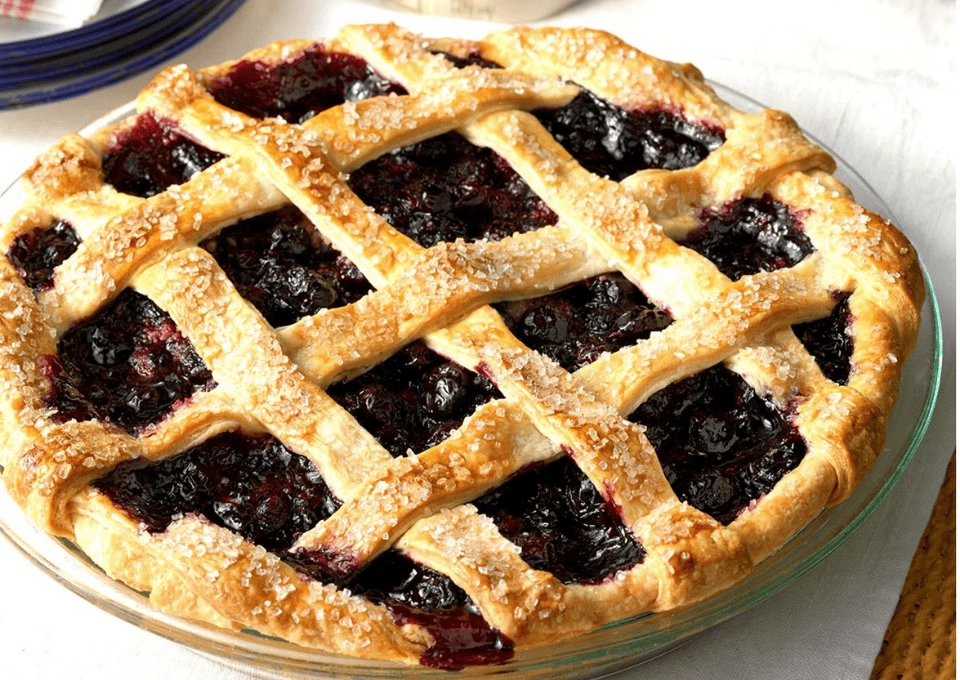
- Roll out the remaining dough to a similar size as the first piece and cut it into 2 centimeter wide strips. Lay five strips over the filled pie, keeping them parallel and evenly spaced.
- Gently fold back the second and fourth strips, then lay another strip of dough perpendicular to them. Unfold the folded strips. Repeat folding back the first, third, and fifth strips and laying another perpendicular strip. Continue until the pie is covered.
- Trim any excess dough to 2 centimeters from the dish edge. Fold the edges of the lattice and the bottom crust under, making a thicker border on the dish’s lip. Crimp the edges as desired.
- Dot the butter over the open lattice areas.
- Whisk the egg yolk and cream to create an egg wash, then brush it over the crust. Sprinkle with coarse sugar and refrigerate the pie for 10 minutes before baking.
Bake the Pie
- Before baking, position an oven rack in the lower third of the oven and place a baking sheet on it. This will catch any potential drips from the pie. Preheat the oven to 200°C.
- Place the pie on the hot baking sheet and bake for 20 minutes. Then, reduce the oven temperature to 175°C and continue baking for another 35 to 45 minutes. The pie is done when the crust is golden brown and the filling is bubbling enthusiastically.
- If you notice the crust edges browning too quickly, cover them with aluminum foil and continue baking until the pie is fully cooked.
- Allow the pie to cool for two to three hours before cutting for the best results (this gives the filling time to thicken and set properly).
For more recipes, visit www.worldchefs.org/news.