Championing indigenous ingredients with Young Chefs Programme’s Eniola Okeola
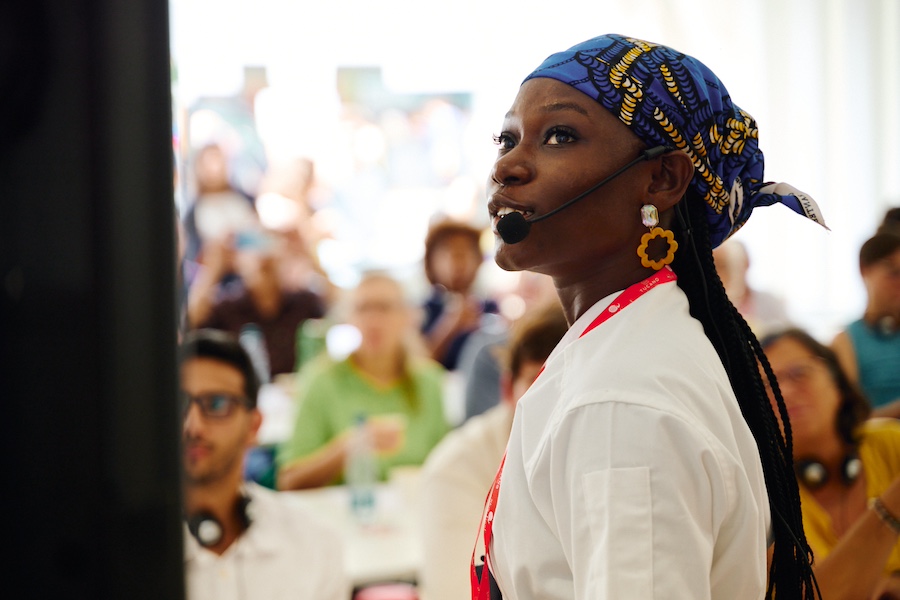
To celebrate World Food Day and the International Year of the Woman Farmer, we caught up with Young Chef Programme’s Eniola Okeola (Chef Neeola) en route to Rome for the World Food Forum’s flagship event.
A Nigerian chef, writer, and food advocate working at the intersection of culinary heritage, biodiversity and sustainable food systems, Chef Neeola explores how culinary practice can strengthen local food systems and preserve indigenous food knowledge.
As part of the our 2026 Young Chefs Programme cohort, Eniola is developing Reclaiming Indigenous Fats and Oils for Sustainable Nigerian Food Systems, a project exploring the culinary use of indigenous fats, particularly shea butter, and creating new connections between women producers, chefs, and consumers.
In this interview, we hear how she is bringing indigenous fats back into contemporary kitchens and advocating for new pathways to support the people behind the ingredients.
Nigeria is the world’s largest producer of shea in the world, yet it’s often missing from urban kitchens. When did you first become aware of this gap, and what inspired you to put indigenous fats like shea butter and Atili oil at the center of your cooking?
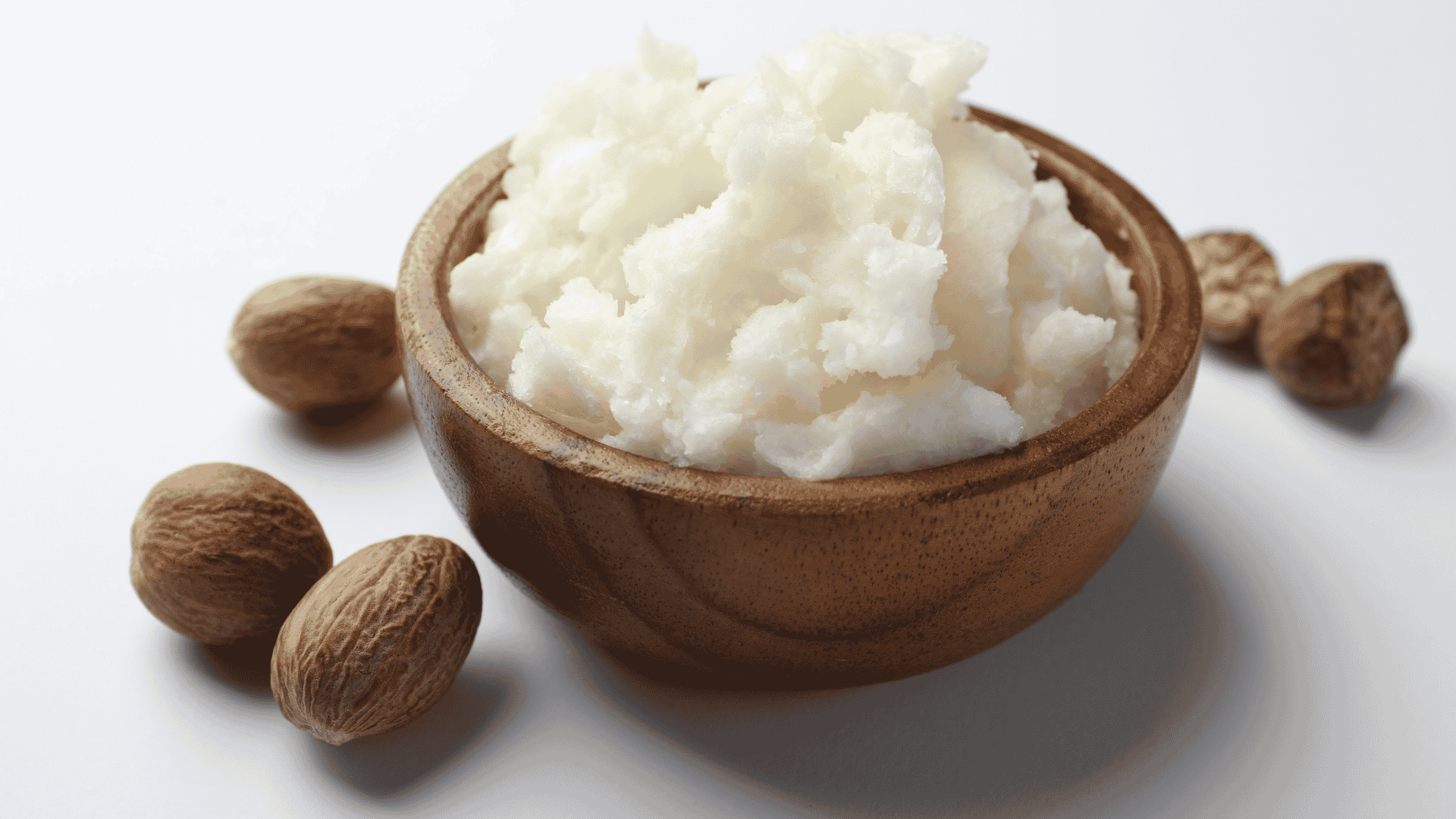
My interest in indigenous fats and oils started with curiosity. Growing up in an urban environment, I was familiar with the fats and oils we used at home, but shea butter was not one of them. My mum had mentioned eating shea butter and I had met other people who cooked with it, but I had never really thought about its place in our food culture. I only began to understand the extent of the gap between its production and its use in urban kitchens when I started researching for this project.
Around the same time, I visited Òfìkì through a Slow Food Farms project. I had been told that shea trees grew there and that shea butter was produced in the community, but I learnt that production had moved to neighbouring Tédé. I saw the trees in Òfìkì and eventually visited Tédé, which further deepened my interest in the ingredient and its significance to these communities.
The more I researched, the more I wanted to understand how an ingredient so deeply rooted in some communities could be largely absent from the everyday cooking of many urban Nigerians. I was also drawn to the history of Òfìkì and Tédé and the importance of shea butter and Atili oil in their food cultures.
This curiosity led to my project, “Reclaiming Indigenous Fats and Oils for Sustainable Nigerian Food Systems”. My work currently focuses on shea butter, while Atili oil remains part of the wider scope of my interest. I want to explore how we can bring these indigenous fats back into contemporary kitchens, reconnect consumers with their culinary heritage, and create greater appreciation for the people and knowledge behind their production.
You’ve worked with shea-producing communities, chefs, and urban consumers. What has been the most rewarding moment so far, and what have rural women producers taught you that has shaped your approach?
Every part of this journey has been rewarding, but one of the things I find most satisfying is being able to connect urban consumers and chefs with the women who produce shea butter. Many of these women supply companies and industries that use shea butter for cosmetics, so creating another pathway through culinary use, even on a smaller scale, has been encouraging. I am beginning to see chefs and individual consumers patronise them, their customer base grow, and the knowledge they have shared with me reach new audiences.
During one of my conversations with Alhaja Ajarat, a shea butter producer in Tedé, she spoke about how delicious shea butter was in their food and how it was one of their major cooking fats. She also expressed how much she would love to see younger generations use it more in cooking and that stayed with me because it reminded me that beyond introducing an ingredient to people who are unfamiliar with it, it is about helping to sustain a food culture that the producers themselves value. Although the demand for culinary shea butter is still small compared with its use in cosmetics, seeing people begin to explore it as food and purchase directly from the producers is a meaningful step.
The women have also taught me the importance of listening to the people who have worked with an ingredient long before I became interested in it. As a chef, it is easy to approach an ingredient through its culinary possibilities, thinking about what I can create with it or how I can introduce it to new audiences. However, speaking with producers has helped me appreciate the knowledge, experience and history that already exist around it. I have learnt that my role is also to help make existing knowledge more visible, connect it with new audiences and ensure that the women behind the ingredient are part of the opportunities that follow.
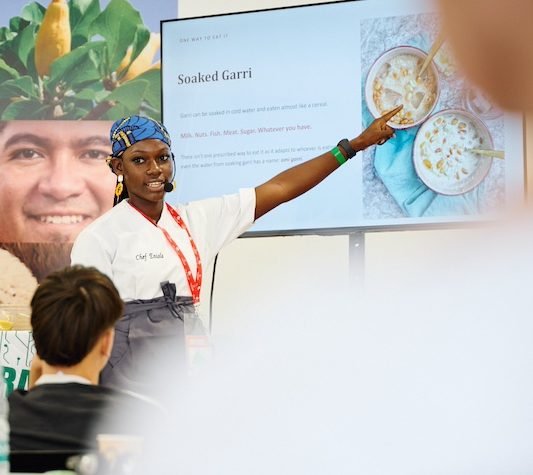
As a chef, it is easy to approach an ingredient through its culinary possibilities, thinking about what I can create with it or how I can introduce it to new audiences. However, speaking with producers has helped me appreciate the knowledge, experience and history that already exist around it. I have learnt that my role is also to help make existing knowledge more visible, connect it with new audiences and ensure that the women behind the ingredient are part of the opportunities that follow.
Chef Neeola
The Young Chefs Programme paired you with your mentor, Suhair Kilani, expert masterclasses, and an international platform. How has that support helped you grow, and what has it unlocked for your project?
Being paired with Dr. Suhair Kilani has been one of the most valuable parts of the Young Chefs Programme for me. She has been incredibly supportive, checking in on my progress, encouraging me, helping me think through my research and offering practical advice on how to move the project forward. Having someone who takes a genuine interest in what you are building and continues to cheer you on makes a difference, especially when you are still figuring things out and learning as you go. I feel very fortunate to have her as my mentor.
Another significant outcome has been the opportunity to take this work into wider conversations. The international exposure has been significant. It has opened up opportunities to speak on international platforms both physically and virtually, like the African Food Systems Forum in Kigali and the World Food Forum Flagship event. It has also helped me connect with people working across food systems and think more seriously about what the project could become. I have been able to take my work beyond Nigeria and introduce people from different backgrounds to indigenous Nigerian fats, particularly shea butter, and its culinary uses beyond cosmetics. These experiences have helped me see how a project rooted in a local food culture can contribute to wider conversations about biodiversity, food heritage and sustainable food systems.
The programme has also helped me move from having an idea I was curious about to implementing activities and securing grant support for the project. Beyond the visibility, I have grown in confidence and become more deliberate about how I communicate my work and the change I hope it can contribute to. For me, that has been one of the biggest things the programme has unlocked.
At the World Food Forum flagship event in Rome this October, what do you want policymakers, scientists, and investors room to take away from a young chef’s perspective, and what would you ask that they prioritize when they go back to their offices and boardrooms?
When policymakers, scientists and investors return to their offices and boardrooms, I would like them to consider these three questions:
- How can we strengthen existing efforts to preserve and promote local ingredients and food traditions that risk being undervalued or lost?
- How can we ensure that the producers and communities sustaining them benefit from the value their work creates, while also making room for chefs and young food professionals to contribute to the policies and decisions shaping these food systems?
- And what practical investments can help bring these ingredients into more of our everyday kitchens?
From my perspective as a young chef, we already have people doing important work to champion indigenous ingredients and preserve food traditions. The opportunity now is to build on that work and create more pathways for it to have a wider impact. We need to recognise that chefs contribute to food systems beyond cooking. Through our work with ingredients, producers, businesses and consumers, we can influence what people value, what they eat and what creates demand across the food chain.
I would therefore encourage greater investment in women-led food value chains and initiatives that connect producers with chefs, researchers and businesses. I would also like to see policies and funding mechanisms that allow young chefs and other food professionals to contribute to research, innovation and decision making, rather than limiting our participation to advocacy events and cooking demonstrations.
The future of food will be shaped by decisions made in policy rooms, laboratories, farms, markets and kitchens. Chefs should be part of those conversations, alongside the producers and communities whose knowledge sustains our food systems.
You’re putting the 2026 World Food Forum theme into action in your project, reclaiming indigenous fats and oils for sustainable Nigerian food systems through field documentation, sensory tasting sessions, and culinary activation. As someone who is helping to design the future now, what does ‘Innovate today. Nourish tomorrow.’ mean to you?
To me, “Innovate today. Nourishing tomorrow” means finding ways to make the knowledge, ingredients and food traditions we have today relevant to the generations that come after us. Innovation should not always mean looking for something entirely new. It should also mean looking at what we already have, understanding its value, and finding new ways to use it to meet the needs of the present and the future.
I am exploring how indigenous fats can be brought into contemporary kitchens and become part of how people cook and eat today. However, I believe this must go beyond creating new recipes or encouraging people to use these ingredients. We also need to understand their nutritional properties and communicate them accurately, so that people can make informed choices about what they eat.
Lastly, innovation should also consider the people who have sustained its use; the knowledge they carry, the food cultures it belongs to and the possibilities it holds for the future. If we can build on that knowledge, make it relevant to new generations and ensure that these ingredients continue to nourish us, then we are preserving our food heritage and giving it a future.
You coordinate the Slow Food Cooks Alliance in Nigeria, among a long list of other advocacy projects. What advice would you give to chefs, particularly women, who want to be a part of shaping how their communities eat? Can you share your favorite resources for people interested in taking action towards championing indigenous ingredients, documenting traditional recipes, and encouraging responsible sourcing?
My advice would be to start with what you have, stay curious about the food cultures around you, and do not underestimate the influence you can have as a chef. The ingredients we choose, the people we source from and the stories we tell through our food all influence how people eat and what they learn to value.
For women in particular, I would say that our knowledge and experience deserve a place in conversations that shape our food systems. We can contribute beyond the kitchen, whether through research, community initiatives, entrepreneurship or policy discussions. We do not have to know everything before we begin, but we must be willing to learn, collaborate and create opportunities for other women along the way.
For anyone looking to get started, I recommend a few resources:
- Indigenous Peoples’ Food Systems: Insights on Sustainability and Resilience from the Front Line of Climate Change, published by FAO and its partners, explores traditional knowledge, biodiversity and sustainable food systems.
- The FAO publication Indigenous Peoples’ Food Systems: The Many Dimensions of Culture, Diversity and Environment for Nutrition and Health is also worth exploring.
- Slow Food’s Ark of Taste is a useful reference for understanding how traditional food products, their histories and the people who sustain them can be documented and promoted.
- I recommend Slow Food and Terra Madre, the World Food Forum Young Chefs Programme, and the Chefs’ Manifesto for learning, collaboration and practical ways to connect culinary work with biodiversity and sustainable food systems.
Beyond these resources, speak to farmers, processors, market traders and home cooks; acknowledge the people who share that knowledge. Build relationships with producers and understand where your ingredients come from. Most importantly, look for ways to turn what you learn into action, whether by introducing indigenous ingredients to your menus, creating demand for local produce or helping pass traditional food knowledge on to younger generations.
With thanks to Chef Neeola for sharing her insights and recommendations, we wish our global community a happy World Food Day!
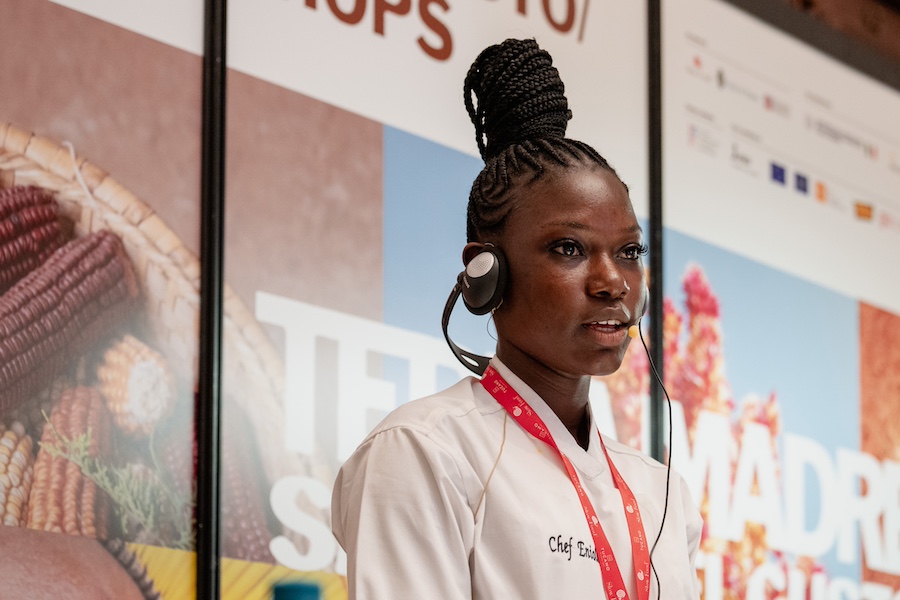
The future of food will be shaped by decisions made in policy rooms, laboratories, farms, markets and kitchens. Chefs should be part of those conversations, alongside the producers and communities whose knowledge sustains our food systems.
Follow Chef Neeola on:
About Eniola Grace Okeola
Eniola Okeola, (Chef Neeola), is a Nigerian chef, writer and food advocate working at the intersection of culinary heritage, biodiversity and sustainable food systems.
Professionally trained in culinary arts and patisserie, she worked her way from intern to commis chef, specializing in pastry while gaining experience across both hot and cold kitchen operations. She also managed her restaurant’s garden for a period, ensuring the availability of edible flowers and microgreens for its menus. She has since expanded her work beyond the kitchen to explore how culinary practice can strengthen local food systems and preserve indigenous food knowledge.
A 2026 participant in the World Food Forum Young Chefs Programme, Eniola is developing Reclaiming Indigenous Fats and Oils for Sustainable Nigerian Food Systems, a project exploring the culinary use of indigenous fats, particularly shea butter, and creating new connections between women producers, chefs and consumers. She also coordinates the Slow Food Cooks Alliance Nigeria, championing indigenous ingredients, food traditions and the people who sustain them.
Credits
Sincere thanks to Eniola for this interview.
Written by Clare Crowe Pettersson.